
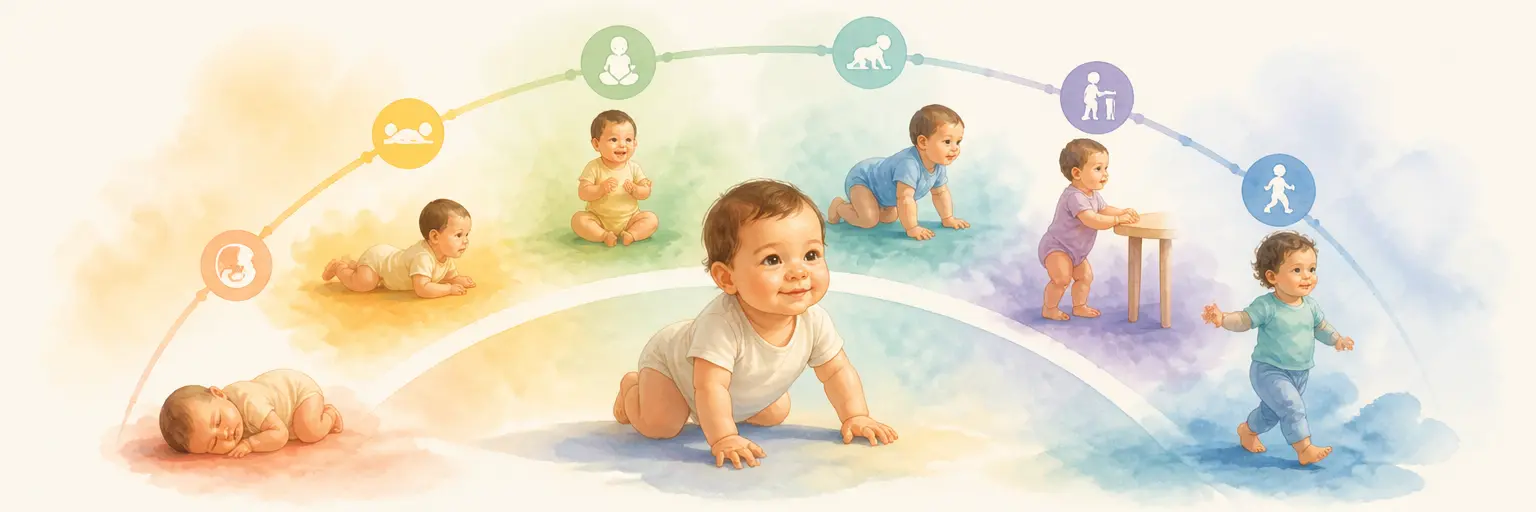
Tracking Baby's Progress: Identifying Cognitive Milestones and Seeking Support
Discover your baby’s developmental milestones with BabyCareHub! 🌟 Explore expert-backed guidance on language, movement, vision, hearing, cognition, social-emotional growth, and sensory skills from birth through the first year. Find practical play ideas, communication tips, reading recommendations, and age-appropriate activities to support healthy baby development while learning when to seek professional guidance. 👶✨
260 articles
Color Vision in Babies: When Do They See the Rainbow?
The Art of Active Listening: Understanding Your Baby's Language
The Role of Occupational Therapy in Addressing Fine Motor Challenges
Sensory Play: The Best Sensory Play Ideas for Each Season
Baby Talk Decoded: Understanding the Sounds and Meanings
How to Support Your Baby's Language Growth (012 Months)
Temperament and Colic: Is There a Connection?
What to Feed Your Baby for Optimal Gross Motor Skill Development
How to Create a Stimulating Environment for Social Development
When to Seek Help: Addressing Concerns About Baby's Social Development (012 Months)
The Joy of Baby's First Smiles: A Celebration of Early Connections
Recognizing Speech Delays: When to Seek Help for Your Baby
The Impact of Environment on Baby's Communication Skills
Object Permanence and Fine Motor Skills: The Unexpected Connection
Is My Baby Developing Normally? Recognizing and Addressing Delays
Reading Time with Baby: A Bonding Experience for Parents
The Power of Repetition: How Rhythmic Patterns Aid Baby's Learning
Playtime and Painting: Safe and Fun Ways to Explore Color
The Role of Music in Enhancing Baby's Language Skills
The Intriguing World of Baby Sign: Early Language Development
The Science of Movement: Understanding Baby's Physical Development
The Magic of "Mama" and "Dada": First Syllables and Their Significance (46 Months)
Baby Sign Language: A LongTerm Investment in Your Child's Future
Sound and Sensation: How Babies Process Auditory Input
Baby's Visual World: A Parent's Guide to Understanding
Stimulating Sight: Fun Activities to Boost Your Baby's Vision
Object Permanence: How to Support Your Baby's Cognitive Growth
The Journey of Language: From Gurgling to Talking
Newborn Vision: What Babies Can See Right After Birth
Developmental Milestones for Babies: A First-Year Guide for Parents
Welcome to BabyCareHub’s comprehensive guide to baby developmental milestones. During the first year, babies grow and learn rapidly, developing new skills in movement, communication, vision, hearing, thinking, social interaction, and emotional expression. Understanding typical infant milestones can help first-time parents support healthy development, enjoy everyday progress, and recognize when professional guidance may be helpful.
Every baby develops at an individual pace, so milestone ranges should be used as helpful guidelines rather than strict deadlines. This category provides practical, age-appropriate information about newborn development, baby learning activities, language growth, motor skills, sensory play, social development, and early communication. Explore each topic for simple ways to encourage your baby’s development through responsive caregiving, play, reading, music, movement, and daily routines.
🗣️ Baby's First Words and Language Growth
Learn how babies progress from crying and cooing to babbling, gestures, first words, and early conversations. This section explains common language development milestones and how babies communicate before they can speak clearly.
Discover practical ways to encourage speech through talking, singing, imitation, and responsive interaction. You’ll find guidance on building your baby’s vocabulary while recognizing that language skills develop at different rates.
👀 Baby's Vision Development: Milestones and Stimulation
Explore how newborn vision develops during the first year, including tracking objects, recognizing faces, judging distance, and noticing colors and patterns. This information helps parents understand what babies may see at different ages.
Learn safe activities that support visual development, such as face-to-face play, high-contrast images, and supervised reaching games. The focus is on simple visual stimulation that fits naturally into everyday baby care.
🎵 Music and Movement for Baby Development
Music and movement can support early learning, body awareness, rhythm, attention, and emotional connection. This section includes ideas for singing, gentle dancing, clapping, bouncing, and movement games suitable for babies.
Parents can discover how musical interaction encourages auditory development, gross motor skills, and social bonding. Activities are designed to be playful, flexible, and responsive to your baby’s mood and energy level.
😊 Early Social Interaction: Baby's First Smiles and Giggles
Learn about early social milestones, including eye contact, social smiles, laughter, imitation, and interest in familiar caregivers. These behaviors are important signs of growing connection and emotional awareness.
This section explains how responsive parenting supports social development through cuddling, talking, smiling, and turn-taking. You’ll learn why back-and-forth interaction is a foundation for communication and relationships.
🤲 Fine Motor Skills Development (0-12 Months)
Follow the development of small hand and finger movements, from opening the hands and grasping to transferring objects, pointing, and using a pincer grasp. These skills support later feeding, dressing, drawing, and self-care.
Find safe activities that encourage fine motor development in babies, including reaching games, texture exploration, stacking, and grasping age-appropriate toys. All activities emphasize supervision and appropriate toy size.
🔍 Milestones in Baby's Object Permanence
Object permanence is the growing understanding that people and objects still exist when they cannot be seen. This section describes how babies begin developing this cognitive skill through peekaboo, hiding games, and everyday experiences.
Parents can learn how to make object permanence activities enjoyable without causing unnecessary frustration. These games support memory, attention, problem-solving, and emotional confidence.
🌿 Understanding Temperament in Babies and Adapting Parenting Styles
Every baby has a unique temperament, including differences in activity level, sensitivity, adaptability, and reactions to new experiences. Understanding these traits can help parents respond more effectively to individual needs.
This section offers practical guidance for adapting routines, soothing strategies, and play environments. You’ll learn why responsive parenting does not mean using one approach for every baby.
🧠 Cognitive Development in Baby's First Year
Discover how babies learn through observation, memory, repetition, exploration, and cause-and-effect experiences. Cognitive milestones include increasing attention, recognizing familiar people, solving simple problems, and anticipating routines.
Explore everyday ways to support early brain development through talking, floor play, sensory activities, and responsive caregiving. The emphasis is on natural learning opportunities rather than formal lessons.
👂 Baby's Hearing Development and Stimulation
Learn how babies respond to voices, sounds, music, and changes in tone during the first year. Hearing development supports early bonding, listening, speech, and language learning.
This section includes safe ways to stimulate hearing through conversation, songs, rattles, and sound imitation. It also explains why parents should discuss concerns about hearing responses or auditory development with a healthcare professional.
💬 Language Development Milestones (0-12 Months)
Track early communication from reflexive sounds and cooing to babbling, gestures, vocal imitation, and meaningful sounds. This guide helps parents understand typical language milestones from birth to 12 months.
Learn how to create a language-rich environment by narrating routines, responding to vocalizations, and pausing for your baby to answer. These simple habits promote early speech and communication skills.
📚 Reading to Babies: Benefits and Book Recommendations
Reading aloud supports bonding, listening, vocabulary, attention, and early literacy from the newborn stage onward. Babies benefit from hearing a caregiver’s voice even before they understand the words.
Find guidance on choosing board books, cloth books, high-contrast books, rhyming stories, and interactive picture books. You’ll also learn how repetition and shared reading make story time more meaningful.
🧸 Playtime and Learning Through Play
Play is one of the most important ways babies learn about their bodies, surroundings, relationships, and abilities. This section explores floor play, imitation, exploration, sensory discovery, and simple cause-and-effect games.
Parents can find ideas for developmentally appropriate baby play using everyday objects and safe toys. Activities encourage curiosity while allowing babies to lead the pace and level of engagement.
🚩 Recognizing Developmental Delays and When to Seek Help
Learn which developmental differences may warrant a conversation with a pediatrician, including concerns involving movement, communication, hearing, vision, social interaction, or loss of previously acquired skills.
This section encourages early support without creating unnecessary alarm. Because early evaluation can connect families with helpful services, parents should share concerns with a qualified healthcare professional.
📅 Activities to Encourage Development by Month
Explore month-by-month baby activities designed to support motor, cognitive, sensory, language, and social development. Suggestions are organized around realistic skills that may emerge during the first year.
Each idea is adaptable to your baby’s abilities, interests, and energy level. You’ll find ways to turn feeding, diaper changes, tummy time, and daily routines into simple developmental learning opportunities.
🌍 Bilingual Baby Development: Milestones and Benefits
Learn how babies exposed to two languages develop communication skills and how bilingual language input can be part of healthy early learning. Families can use both languages naturally in daily routines.
This section explains how to support bilingual development through conversation, songs, books, and family interaction. Parents will learn why hearing multiple languages does not cause language delay, while also understanding the importance of considering total language exposure.
🏃 Gross Motor Skills Development (0-12 Months)
Follow major gross motor milestones such as head control, rolling, sitting, crawling, pulling to stand, and early supported walking. These movements build strength, balance, coordination, and body awareness.
Discover safe ways to encourage movement with supervised floor time, tummy time, reaching, and position changes. The guidance emphasizes freedom to move and active supervision rather than forcing a baby into a position.
❤️ Social and Emotional Milestones (0-12 Months)
Explore how babies develop attachment, emotional expression, trust, self-regulation, and interest in other people. Social and emotional milestones include smiling, seeking comfort, responding to caregivers, and showing preferences.
Learn how predictable routines and sensitive responses support healthy emotional development. This section also explains how caregivers can help babies feel secure while gradually introducing new people and experiences.
👶 Understanding Baby's Communication Cues
Babies communicate through crying, facial expressions, body movements, sounds, gaze, and changes in behavior. Understanding these cues can help parents respond to hunger, tiredness, overstimulation, discomfort, and the desire to interact.
Discover how observing patterns can improve caregiving and strengthen connection. The goal is to develop responsive communication while remembering that every baby has individual signals and needs.
🖐️ Sensory Play Ideas for Each Stage
Sensory play introduces babies to safe experiences involving touch, sound, sight, movement, and body awareness. Age-appropriate activities may include textured fabrics, water play, gentle sounds, and supervised exploration.
Find stage-based ideas that promote curiosity without overwhelming your baby. Safety is essential, so all sensory play should use non-toxic, age-appropriate materials and close supervision.
🤟 Baby Sign Language: Introduction and Benefits
Baby sign language can give babies additional ways to communicate basic needs and interests before they can pronounce words. Common signs may relate to milk, more, all done, help, sleep, or food.
This section explains how to introduce signs consistently alongside spoken words. Parents can learn that sign language supports communication but does not need to replace talking, listening, or natural speech development.
🌳 Outdoor Activities for Baby Development
Outdoor experiences provide opportunities for fresh air, movement, sensory exploration, and observation. Simple activities may include stroller walks, supervised grass time, looking at trees, listening to outdoor sounds, and visiting a quiet park.
Learn how to make outdoor play safe and developmentally valuable while protecting your baby from weather risks, insects, unsafe surfaces, and excessive sun exposure. Outdoor time can support physical development, attention, and family bonding.
❓ Frequently Asked Questions About Baby Developmental Milestones
What are the most important developmental milestones in a baby’s first year?
Key milestones include improved head control, rolling, sitting, reaching, grasping, babbling, responding to voices, smiling socially, recognizing familiar people, and exploring objects. Babies reach these skills at different times, so overall progress and skill development are more important than exact dates.
How can I support my baby’s development at home?
Talk, read, sing, cuddle, respond to sounds and gestures, provide supervised floor play, offer safe toys, and allow plenty of opportunities for movement. Everyday routines are excellent learning experiences, and responsive interaction is one of the most effective ways to support early development.
Should I worry if my baby skips a milestone?
Not necessarily. Some babies develop skills in a different order or focus on one area before another. However, discuss concerns with your pediatrician if your baby loses a skill, shows no progress, or you are worried about movement, communication, hearing, vision, or social interaction.
When should I contact a doctor about a possible developmental delay?
Contact your baby’s healthcare provider whenever you have concerns rather than waiting. Prompt evaluation is especially important if there is loss of skills, limited response to sound or people, unusual muscle tone, feeding difficulty, or significant difficulty with movement.
Can activities or toys make my baby develop faster?
Toys and activities cannot guarantee faster development, but they can provide valuable practice and enjoyment. Choose safe, age-appropriate experiences and follow your baby’s cues. The best approach combines play, rest, nutrition, responsive caregiving, and regular health visits.