
Baby's Visual World: A Parent's Guide to Understanding


Welcome to BabyCareHub, your ultimate guide to navigating the incredible journey of parenthood! Are you curious about the fascinating world your newborn baby is experiencing through their eyes? Our newborn vision development guide, part of our comprehensive Developmental Milestones section, unveils the secrets of your little one's visual journey, from blurry first impressions to recognizing your loving face. Discover the key milestones, potential challenges, and expert tips to nurture your baby's sight. Let's explore the captivating development of your baby's visual world together!
- Newborn Vision Development: A Comprehensive Guide
- Baby's Color Vision Development: From Grayscale to Rainbow
- Developing Depth Perception in Infants: The Importance of 3D Vision
- Protecting Your Baby's Eyesight: Safety and Health Tips
- Baby Vision Development Timeline: A Month-by-Month Guide
- Interactive Play and Vision Development: Engaging Activities for All Ages
- Addressing Common Concerns: My Baby's Vision Development
- Frequently Asked Questions
- Final Reflection: Nurturing the Seeds of Sight
- Unveil Your Baby's Amazing World of Sight!
Newborn Vision Development: A Comprehensive Guide
Navigating the world of newborn care can feel overwhelming, especially for first-time parents. Understanding your baby's development is key to providing the best possible care, and their visual development is no exception. This comprehensive guide will explore the fascinating journey of your baby's vision, from their initial blurry perceptions to the increasingly sharp world they'll experience in the first few months. We’ll delve into what your newborn can actually see, discuss key developmental milestones, and provide engaging activities to stimulate their visual growth.
This guide aims to empower you with the knowledge to support your baby's visual development and foster a strong foundation for their future visual capabilities. It's a crucial aspect of their overall development, impacting everything from social interaction to learning and exploration. This guide will help you understand the “newborn vision development” process and provide the tools to actively participate in your little one's visual journey.
Understanding Your Newborn's Visual Acuity: What Can They See?
Newborn vision is significantly different from adult vision. At birth, a baby's visual acuity is estimated to be around 20/400, meaning what an adult can see from 400 feet away, your newborn can only see from 20 feet. This is perfectly normal! Think of it as a slightly blurry image.
They can distinguish between light and dark and perceive movement quite well. However, clear and detailed vision is still developing. They'll see contrasts most easily, which is why high-contrast patterns and black and white images are often recommended in the early stages. Their ability to focus and track objects is also limited initially.
They may struggle to maintain focus on a single point for extended periods. Colors are not yet fully differentiated. They can perceive some colors, but their color vision will continue to improve over the first few months. Remember, this is a gradual process, and each baby develops at their own pace.
The following table summarizes the typical visual capabilities of a newborn:
| Visual Ability | Description |
|---|---|
| Acuity | Approximately 20/400; blurry vision |
| Color Vision | Limited; primarily perceives contrasts; color vision develops gradually. |
| Focus/Tracking | Difficulty maintaining focus; tracking objects is challenging initially. |
| Depth Perception | Developing; limited ability to judge distance. |
| Light/Dark | Can distinguish between light and dark; sensitive to bright light. |
| Movement Perception | Can detect movement easily. |
Early Visual Milestones: Tracking, Focusing, and Depth Perception
Tracking objects is a significant milestone in visual development. Initially, your baby might only follow a moving object with their eyes for a short distance or time. As they grow, you'll notice improved tracking abilities. By around two months, they should be able to follow moving objects more smoothly and across a wider range of motion. Focusing on nearby objects also improves significantly. Initially, they may only focus on objects held at a close distance (8-12 inches). Gradually, they'll be able to focus on objects further away.
Depth perception, the ability to judge distance, is a more complex process that develops gradually. Around three to four months, you might notice your baby showing increasing awareness of depth. They may start to reach for objects, demonstrating a better understanding of their spatial relationship. By six months, depth perception is usually more refined, allowing them to navigate their environment with more confidence.
Stimulating Your Baby's Vision: Engaging Activities for Visual Development
Stimulating your baby's vision is a fun and interactive process. Simple activities can significantly impact their visual development. High-contrast objects, such as black and white patterned mobiles or cards, are excellent for newborns. As your baby's vision improves, introduce colorful toys and objects with varying textures. Reading to your baby, even from birth, exposes them to different shapes, colors, and patterns. Engaging in face-to-face interactions, making eye contact, and talking to them are crucial for social and visual development. Remember to always supervise your baby during playtime and ensure their safety. Here are some examples of engaging activities:
- High-contrast mobiles: Hang a mobile with black and white patterns above the crib.
- Black and white image cards: Show your baby simple black and white images.
- Colorful toys: Introduce brightly colored toys with different textures.
- Face-to-face interaction: Spend time engaging with your baby, making eye contact, and talking.
- Reading books: Read books with colorful pictures and simple stories.
- Tummy time: Place your baby on their tummy for short periods to encourage head lifting and visual exploration.
Remember, every baby develops at their own pace. If you have any concerns about your baby's vision, consult with your pediatrician. They can perform a thorough eye examination and provide guidance based on your baby's individual needs. Enjoy this incredible journey of watching your little one's visual world blossom! 🎉
Baby's Color Vision Development: From Grayscale to Rainbow
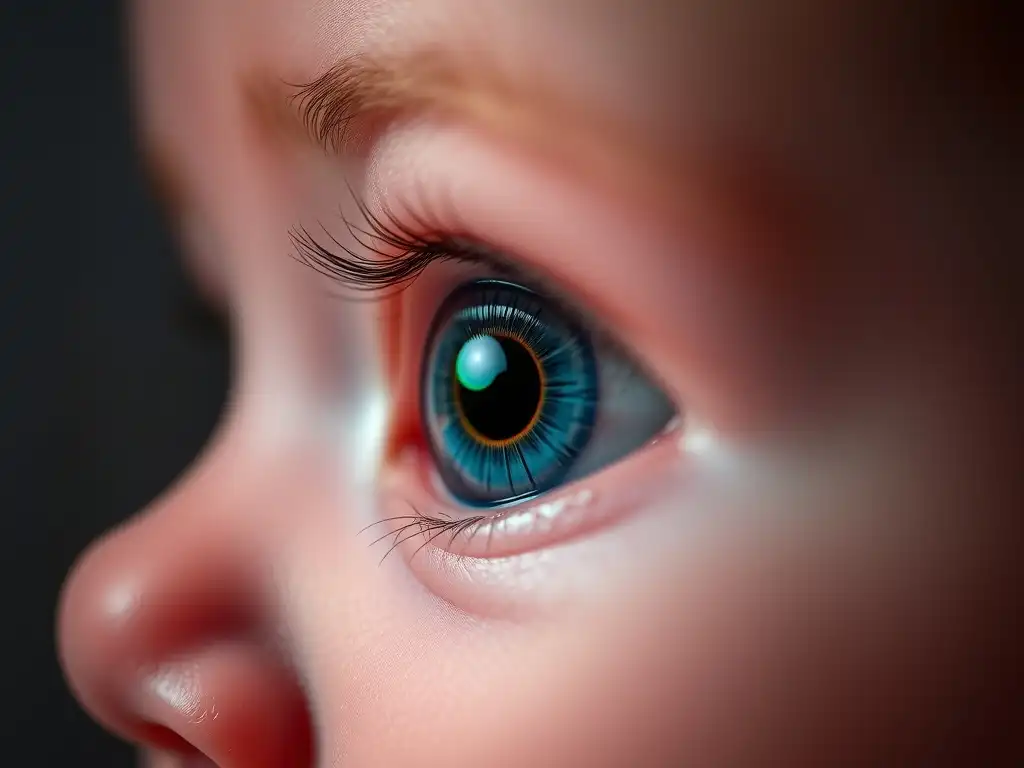
Newborn vision is surprisingly blurry and limited, often described as seeing the world in shades of gray initially. However, the development of color vision is a fascinating journey, rapidly progressing in the first few months of life. This section delves into the specifics of this development, providing a clearer picture of how your baby's perception of color transforms from a muted grayscale to the vibrant rainbow we experience as adults.
Understanding this process allows you to better engage your baby through appropriately stimulating activities. This guide provides a detailed understanding of newborn vision development, making it a valuable resource for any parent looking for a comprehensive newborn vision development guide.
When Do Babies See Color? Understanding Color Perception Milestones
While newborns can detect differences in light and dark, their ability to distinguish colors is limited at birth. They primarily perceive the world in shades of gray, with a preference for high-contrast patterns. This is because the cones, the photoreceptor cells in the retina responsible for color vision, are not fully developed at birth.
The development of color vision unfolds gradually:
- Birth - 2 months: Babies primarily see in grayscale or very muted colors. They can distinguish between light and dark but have difficulty differentiating between different hues. Think of it as a very low-resolution image. High contrast black and white patterns are most easily perceived.
- 2 - 4 months: Color perception begins to improve significantly. Babies start to distinguish between primary colors like red, green, and blue, although their perception might still be less vibrant than an adult's. They are increasingly attracted to brighter colors.
- 4 - 6 months: Color discrimination continues to develop, with babies becoming more adept at distinguishing a wider range of colors and shades. They begin to show a clear preference for certain colors, often bright and saturated hues.
- 6 months onwards: Color vision approaches adult levels of acuity. By this age, your baby should be able to discriminate most colors accurately. This is a crucial period for visual development, and engaging your baby with diverse colors is highly beneficial.
Color Stimulation Activities: Engaging Your Baby Through Color
Stimulating your baby's developing color vision is crucial for healthy visual development. Here are some age-appropriate activities to help your little one explore the world of color:
- Birth - 2 months: Focus on high-contrast black and white patterns. These are easier for newborns to see and help stimulate their visual system. Think black and white mobiles or books with bold patterns.
- 2 - 4 months: Introduce primary colors – red, blue, and yellow – in brightly colored toys, books, and mobiles. Move the objects slowly to track their gaze and engagement.
- 4 - 6 months: Expand the color palette to include secondary colors (orange, green, purple) and pastels. Use colorful rattles, teethers, and soft toys. Consider playing peek-a-boo with colorful cloths or scarves.
- 6 months onwards: Continue to provide a diverse range of colors. Introduce colorful blocks, stacking toys, and picture books with vibrant illustrations. Encourage your baby to reach for and explore colorful objects.
Remember to always supervise your baby during playtime and choose age-appropriate toys that are safe and non-toxic. The key is to provide a rich and stimulating visual environment that encourages your baby's color vision to flourish. By understanding the milestones of color vision development and engaging your baby with appropriate activities, you're actively contributing to their healthy visual development, setting a strong foundation for their future visual experiences. This detailed guide on newborn vision development provides parents with the tools and knowledge to nurture their baby's visual abilities effectively.
Developing Depth Perception in Infants: The Importance of 3D Vision
Depth perception, the ability to see the world in three dimensions and judge distances, is crucial for a baby's development. It's not a skill they're born with; rather, it's a gradually developing ability that's essential for everything from crawling and walking to reaching for objects and interacting with their environment. This crucial visual skill develops significantly during the first year of life, influenced by both nature and nurture.
While genetic predisposition plays a role, the environment plays a critical part in shaping a baby's ability to perceive depth accurately. A lack of sufficient visual stimulation can delay or impair this development, highlighting the importance of providing a rich and engaging visual experience for your little one. Think of it as exercising their visual muscles; the more they use them, the stronger they become.
This process isn't passive; it requires active engagement and interaction with their surroundings. We'll explore specific activities to foster this critical skill in the following sections. Understanding the developmental timeline and recognizing potential problems are key aspects of ensuring your baby's visual development progresses optimally.
Activities to Enhance Depth Perception: Creating a 3D Play Environment
Stimulating your baby's depth perception involves creating a three-dimensional play environment that encourages exploration and interaction. Avoid overly simplistic, flat surfaces. Instead, opt for environments with varied textures, patterns, and distances. Here are some practical ideas:
- Mobile with varying heights and textures: A mobile above the crib, featuring objects at different distances and with different textures (e.g., soft fabric, crinkly paper, smooth wood), can capture your baby's attention and stimulate their depth perception. Ensure the mobile isn't too close to their face.
- Black and white patterns: High-contrast patterns, especially black and white, are highly stimulating for newborns and help them begin to understand depth cues. Think of bold stripes, checkers, or simple shapes. These patterns help them differentiate foreground from background.
- Playmats with textures and objects: Choose playmats with varying textures and 3D objects attached or embedded. This allows your baby to explore different depths and distances while lying on their tummy.
- Interactive toys: Toys that move, make sounds, or change colors can help your baby learn about distance and movement. Consider toys that encourage reaching and grasping, such as rattles or soft blocks.
- Visual exploration during tummy time: Place interesting objects at varying distances during tummy time to encourage your baby to reach, stretch, and focus on objects at different depths. This strengthens their eye-hand coordination as well as depth perception.
Remember, consistency is key. Regularly engage your baby with these activities, adapting them as they grow and develop new skills. The goal isn't just to entertain, but to actively promote the development of their visual capabilities. Observe your baby's reactions; their engagement indicates successful stimulation. Moreover, remember to rotate toys and activities to prevent boredom and maintain engagement.
Signs of Potential Vision Problems: When to Seek Professional Help
While most babies develop depth perception normally, some may experience delays or difficulties. Early intervention is crucial, as addressing vision problems early can significantly improve a child's development. Here are some signs that warrant a visit to an ophthalmologist or optometrist:
- Constant eye-crossing or misalignment (strabismus): This is a common sign of vision problems that requires immediate attention. It can lead to amblyopia ("lazy eye") if left untreated.
- Excessive squinting or rubbing of the eyes: This could indicate discomfort or difficulty focusing.
- Lack of response to visual stimuli: If your baby doesn't seem to respond to bright lights, faces, or moving objects, it's important to consult a professional.
- Difficulty tracking objects: Babies typically learn to follow moving objects with their eyes fairly early on. If your baby struggles to track movement, it could be a sign of a vision problem.
- Head tilting or turning: If your baby frequently tilts their head or turns it at an unusual angle while looking at things, this might indicate a vision problem.
- Delayed development of depth perception: While the timeline varies, significant delays in reaching milestones like crawling and walking, which are heavily reliant on depth perception, should be evaluated.
It's vital to remember that this guide provides general information. Every baby develops at their own pace. However, if you have any concerns about your baby's vision development, consult a pediatrician or ophthalmologist. Early detection and intervention are crucial for optimal visual development and overall well-being. Don't hesitate to seek professional help if you notice any of the warning signs mentioned above. Early diagnosis can make a significant difference in your child's life. 👶
Protecting Your Baby's Eyesight: Safety and Health Tips
Protecting your newborn's vision is crucial for their overall development. A newborn's visual system is still developing rapidly, making them particularly vulnerable to certain risks. This section offers practical advice on safeguarding your baby's eyesight and ensuring healthy visual development. Remember, early intervention is key when it comes to addressing any potential vision problems. This newborn vision development guide emphasizes proactive measures for optimal eye health.
Safeguarding Your Baby's Eyes from Sunlight and Harmful Light
Sunlight, especially during peak hours (10 am to 4 pm), emits intense ultraviolet (UV) rays that can damage the delicate tissues of your baby's eyes. Prolonged exposure can increase the risk of cataracts later in life. Therefore, protecting your baby's eyes from excessive sun exposure is paramount. This includes using hats with wide brims and sunglasses specifically designed for babies. These sunglasses should offer 99-100% UV protection. Always check the label to ensure they meet this standard.
Furthermore, be mindful of other sources of intense light. Avoid exposing your baby to bright screens, such as smartphones or tablets, for extended periods. While technology is a part of modern life, it's crucial to limit your baby’s exposure, especially in their early months. The blue light emitted from these devices can be particularly harmful to developing eyes. Consider using a dimmer switch for overhead lights to create a softer, less intense lighting environment. 👶
Remember, a consistent and protective approach is the best strategy for safeguarding your baby's vision from the harmful effects of sunlight and other intense light sources. This proactive approach contributes significantly to a healthy visual development journey for your little one.
Regular Eye Exams for Babies: Importance of Early Detection
Regular eye exams are crucial for early detection of potential vision problems in babies. Many eye conditions, if left untreated, can lead to permanent vision impairment. While your pediatrician will perform a basic eye exam during routine checkups, a comprehensive eye examination by a pediatric ophthalmologist is highly recommended. The American Academy of Ophthalmology recommends a first comprehensive eye exam around 6 months of age. However, earlier intervention might be necessary if you notice any abnormalities in your baby's eye development.
Early detection is vital because many vision problems in infants are asymptomatic. This means your baby might not show any obvious signs of vision impairment. Conditions such as strabismus (crossed eyes), amblyopia ("lazy eye"), and congenital cataracts often require early intervention to prevent permanent vision loss. Early diagnosis allows for timely treatment, maximizing the chances of successful visual correction.
A pediatric ophthalmologist possesses the specialized knowledge and equipment to assess your baby's vision thoroughly and accurately. Don't hesitate to seek professional help if you have any concerns about your baby's eyesight. A proactive approach to regular eye exams is an investment in your child's future visual health. Consider this part of your comprehensive newborn vision development guide.
| Condition | Symptoms | Importance of Early Detection |
|---|---|---|
| Strabismus (crossed eyes) | Eyes don't look in the same direction | Early correction prevents permanent vision problems. |
| Amblyopia ("lazy eye") | One eye doesn't develop properly | Early treatment can often restore normal vision. |
| Congenital Cataracts | Clouding of the eye's lens | Timely surgery can prevent vision loss. |
This table summarizes some common conditions and highlights the importance of early detection. Remember, a healthy visual development journey requires proactive parental care and regular professional checkups. This is an essential aspect of your newborn vision development guide.
Baby Vision Development Timeline: A Month-by-Month Guide
This section provides a detailed look at your newborn's visual journey, offering a month-by-month guide to their vision development. Understanding these milestones can help you appreciate your baby's unique progress and offer appropriate stimulation. Remember, every baby develops at their own pace, so minor variations from these timelines are perfectly normal. This newborn vision development guide aims to provide a general framework for understanding this fascinating process.
Vision Development at 0-3 Months: Key Milestones and Expectations
The first three months of life are crucial for visual development. Newborns, while seemingly blurry-eyed, are actively absorbing visual information. Their vision is initially quite limited, but it improves rapidly during this period.
- Blurry Vision: At birth, a baby's vision is estimated to be between 20/200 and 20/400. This means they can see objects clearly only at a very close distance. Think of it like looking through a slightly foggy window. They can distinguish between light and dark and may show a preference for high-contrast patterns.
- Focusing Challenges: Focusing on objects is difficult at this stage. They may struggle to track moving objects consistently. However, you'll notice improvements as the weeks progress. They'll start to follow bright objects or faces with their eyes for short periods.
- Color Perception: While their color perception is not fully developed, they can distinguish between some colors, with a preference for high-contrast colors like black and white, or red and yellow.
- Stimulation: During this time, focusing on high-contrast visuals is beneficial. Black and white patterns, or toys with strong color contrasts, can help stimulate their developing visual system. Gentle face-to-face interaction, where you hold your baby close and make eye contact, is equally important. This close interaction promotes bonding and encourages visual engagement.
Vision Development at 3-6 Months: Focusing and Tracking Improvements
Between three and six months, a significant leap in visual acuity occurs. Your baby's vision is rapidly improving, and they become much more adept at focusing and tracking objects.
- Improved Acuity: Vision sharpens considerably, and they can now see objects more clearly at increasing distances. Their vision is likely to approach 20/100 by six months.
- Tracking Objects: They can now more easily track moving objects, following them with their eyes smoothly and accurately. This improved tracking is essential for developing hand-eye coordination.
- Depth Perception Development: The development of depth perception begins during this period. They start to understand that objects have three dimensions and are not just flat images. This is crucial for reaching for objects and navigating their environment.
- Color Vision Maturation: Color vision continues to mature, allowing them to differentiate a wider range of colors. Colorful toys and books become increasingly engaging.
- Stimulation: Provide opportunities for visual exploration. Hang mobile toys above their crib, roll balls back and forth, or play peek-a-boo. These activities help refine their focusing and tracking skills.
Vision Development at 6-12 Months: Depth Perception and Visual Exploration
By six months, your baby's visual development continues its remarkable journey. They'll display increasingly sophisticated visual skills, including improved depth perception and visual exploration.
- Near-Adult Vision: By the end of the first year, a baby's vision should be approaching 20/20. They can now see most things with the clarity of an adult.
- Depth Perception Refinement: Depth perception continues to develop, allowing your baby to accurately judge distances and navigate their surroundings with greater confidence. They'll become more adept at reaching for objects at different distances.
- Visual Exploration and Attention: They are now actively exploring their visual world, examining objects with intense curiosity. They'll follow objects with their eyes and reach out to touch them. Their attention span also increases considerably.
- Object Recognition: Their ability to recognize familiar faces and objects improves significantly. They'll show a clear preference for familiar people and objects.
- Stimulation: Continue to offer visually stimulating activities, such as playing with toys of different textures and colors, reading picture books, and providing opportunities for exploration in a safe environment. This helps to solidify their visual skills and cognitive development. Remember to always supervise your baby during playtime. 👶
This newborn vision development guide offers a general overview. Consult your pediatrician if you have any concerns about your baby's vision. Early intervention is key to addressing any potential issues.
Interactive Play and Vision Development: Engaging Activities for All Ages

Interactive play is crucial for a baby's visual development, providing opportunities to practice focusing, tracking, and perceiving depth. The activities you choose should be tailored to your baby's age and developmental stage. Remember, consistency is key; regular engagement significantly impacts their visual acuity and cognitive development. This section will outline age-appropriate activities to promote healthy newborn vision development. We'll explore how simple, everyday interactions can stimulate your little one's visual system and pave the way for a lifetime of clear vision. Think of this as your newborn vision development guide, packed with practical tips and engaging ideas.
Choosing Age-Appropriate Toys for Visual Stimulation
Selecting the right toys is essential for stimulating your baby's visual development. Newborns, with their limited visual range, benefit from high-contrast objects. Think black and white patterns, bold colors like red and yellow, and simple shapes. As they grow, introduce toys with more complex patterns, textures, and colors.
Here's a breakdown of suitable toys by age range:
| Age Range | Recommended Toys | Considerations |
|---|---|---|
| 0-3 Months | High-contrast mobiles, black and white patterned books, rattles with bold colors | Focus on simple shapes and high contrast; ensure toys are safe and durable. |
| 3-6 Months | Soft textured toys, brightly colored stacking rings, mirrors | Introduce textures and slightly more complex shapes; supervise play closely. |
| 6-12 Months | Shape sorters, picture books with simple images, balls | Encourage reaching, grasping, and manipulating objects; prioritize safety. |
Remember to always supervise your baby during playtime and choose toys that are age-appropriate and safe. Avoid small parts that could pose a choking hazard. The aim is to make playtime fun and engaging while supporting your baby's crucial visual development journey. This proactive approach contributes significantly to a comprehensive newborn vision development guide.
Creating a Stimulating Visual Environment at Home
Your home environment plays a significant role in your baby's visual development. By creating a stimulating visual environment, you can actively support their progress. This doesn't require expensive specialized equipment; simple adjustments can make a big difference.
Consider these tips for creating a visually enriching space:
- High-contrast mobiles: Hang a mobile above the crib with contrasting colors and patterns. This helps your baby track objects and develop their eye-hand coordination.
- Colorful wall decorations: Use colorful posters or wall hangings featuring simple shapes and patterns. Avoid overly busy or complex designs that might overwhelm your baby.
- Natural light: Maximize natural light in your baby's room. This helps them perceive colors and depth more accurately.
- Regular changes: Rotate your baby's toys and visual stimuli regularly to keep them engaged and prevent boredom. This constant novelty stimulates their visual processing skills. This is a key element of any effective newborn vision development guide.
- Mirrors: Placing a safe mirror where your baby can see their reflection can be fascinating and help them understand self-awareness and spatial relationships. Always supervise your baby near mirrors.
By implementing these simple strategies, you can create a visually stimulating home environment that supports your baby's visual development and makes a tangible difference in their progress. This holistic approach complements other aspects of a comprehensive newborn vision development guide. Remember, a stimulating environment, combined with interactive play, significantly enhances your baby's visual journey.
Addressing Common Concerns: My Baby's Vision Development
New parents often have questions and concerns about their baby's vision development. Understanding the typical milestones and recognizing potential issues is crucial for ensuring your little one's optimal visual health. This section addresses some common anxieties related to newborn vision development, providing guidance and reassurance. Remember, every baby develops at their own pace, but it's always best to seek professional advice if you have any significant worries. This newborn vision development guide aims to equip you with the knowledge to make informed decisions.
My Baby Doesn't Seem to Focus: Addressing Concerns About Eye Contact
Many parents worry if their newborn isn't making consistent eye contact. While eye contact is a significant developmental marker, it's important to understand that it develops gradually. Newborns have immature visual systems; their ability to focus and track objects is limited in the early weeks. Expect blurry vision and inconsistent eye contact initially. A newborn might fixate on a bright object momentarily, then lose focus. This is perfectly normal.
Instead of focusing solely on eye contact, observe other visual behaviors. Does your baby follow a moving object with their eyes, even if imperfectly? Do they seem to be visually aware of their surroundings, reacting to light and movement? These are more reliable indicators of developing vision than consistent eye contact in the first few months.
Consider these factors:
- Age: Eye contact improves significantly between 2 and 4 months. Before then, limited focus is expected.
- Stimulation: Providing appropriate visual stimulation (high-contrast patterns, mobiles) can encourage visual development, but don't overstimulate.
- Health: Underlying health issues can impact visual development. If you have concerns beyond typical developmental variations, consult your pediatrician.
Here's a table summarizing expected visual milestones:
| Age Range | Expected Visual Development |
|---|---|
| Birth - 1 Month | Limited focus, may track bright objects briefly, prefers faces. |
| 1 - 3 Months | Improved focus, tracks moving objects more effectively, begins to smile in response to faces. |
| 3 - 6 Months | Can follow objects smoothly, reaches for objects, depth perception develops. |
| 6 - 12 Months | Vision nearly fully developed, enjoys exploring visual details. |
Remember, this is a guideline; individual variations are normal. The most important factor is gradual improvement in visual skills. If your baby shows no improvement or exhibits concerning symptoms, seek professional medical attention.
When to Consult a Pediatrician or Ophthalmologist: Recognizing Warning Signs
While some variability in visual development is normal, certain signs warrant immediate professional attention. This newborn vision development guide highlights critical warning signs that require prompt consultation with a pediatrician or ophthalmologist:
- Constant crossed eyes (strabismus): If your baby's eyes consistently cross or turn inward or outward, it requires immediate evaluation. Untreated strabismus can lead to amblyopia ("lazy eye").
- Excessive tearing or eye discharge: Persistent tearing or discharge could indicate an infection or other eye problem.
- Sensitivity to light (photophobia): Unusual sensitivity to bright light might signal an underlying condition.
- White pupils (leukocoria): A white reflection in the pupil instead of the usual red reflex can be a sign of serious conditions like retinoblastoma. This is a critical warning sign and requires immediate medical attention.
- Lack of response to light or movement: If your baby consistently fails to respond to visual stimuli, such as bright lights or moving objects, it necessitates an evaluation.
- One eye consistently deviates: If one eye seems to consistently turn or wander, it is important to have it checked.
Don't hesitate to seek professional help if you notice any of these warning signs. Early intervention is crucial for addressing potential visual problems and ensuring your baby's optimal visual health. Early detection and treatment can significantly improve the outcome for your child. Remember, a proactive approach is always the best approach when it comes to your baby's health and wellbeing. This newborn vision development guide is intended to inform and empower you, but it's no substitute for professional medical advice.
Frequently Asked Questions
When can my newborn baby see clearly?
Newborns have limited vision at birth, seeing best at a distance of 8-12 inches. Their vision gradually improves over the first few months, reaching near-adult levels by around 6 months old. Focus and clarity will continue to develop beyond that.
What colors can my newborn baby see?
At birth, newborns can distinguish between light and dark, and can perceive some colors, but their color vision is not fully developed. They are most sensitive to high-contrast colors like black and white, and gradually develop the ability to see a wider range of colors over time.
How can I stimulate my baby's visual development?
Providing high-contrast toys and images, such as black and white patterns, can help stimulate visual development. Reading books with simple pictures, and gentle face-to-face interaction are also beneficial.
Are there any signs of vision problems I should watch out for?
Signs of potential vision problems include crossed eyes (strabismus), eyes that constantly wander, unusual head tilting, excessive blinking or eye rubbing, and difficulty tracking objects. If you notice any of these, consult your pediatrician.
When should I take my baby for their first eye exam?
While many babies have their first eye exam at their 6-month well-baby check-up, it's crucial to discuss any concerns with your pediatrician sooner if you notice any potential vision problems. Early intervention is key for optimal vision development.
Final Reflection: Nurturing the Seeds of Sight
Understanding a newborn's visual world is not merely an academic exercise; it's a crucial step in fostering their healthy development and building a strong parent-child bond. The seemingly blurry world your baby inhabits is far more complex and fascinating than we often realize, filled with potential for growth and connection. This understanding empowers parents to actively participate in their child's visual journey, enriching their lives from the very beginning.
The impact of early visual stimulation on a child's cognitive and emotional development is profound and far-reaching. It shapes their perception of the world, influencing everything from their ability to learn and interact to their overall sense of security and well-being. As the saying goes, The eyes are the windows to the soul,
and nurturing those windows from infancy allows for a richer, more vibrant inner life to flourish. Witnessing my own child's visual progress, from the initial blurry focus to the delighted recognition of faces, has been a deeply moving experience, reinforcing the importance of this journey.
Now, consider your own role in this incredible process. You are not simply a passive observer; you are an active participant in shaping your baby's visual world. By creating a stimulating environment rich in colors, textures, and engaging interactions, you are laying the foundation for a lifetime of learning and discovery. Take the time to observe your baby's responses, to marvel at their progress, and to cherish these precious moments of shared growth. Remember, the journey of visual development is a testament to the power of connection and the enduring beauty of the parent-child bond.
Unveil Your Baby's Amazing World of Sight!
Thank you for exploring the fascinating world of your baby's vision! We hope you've gained valuable insights into how they see and perceive the world around them. Now, let's put this knowledge into practice.
- Create a stimulating visual environment: A vibrant, colorful environment with contrasting patterns and interesting textures will significantly enrich your baby's visual development. This is the first step towards fostering their visual skills.
- Share your newfound expertise: Discuss what you've learned with other parents; you might be surprised by their questions and how much you can help them.
- Engage in playful visual activities: Simple activities, like showing your baby different shapes and colors, or even using everyday household items to create visually stimulating experiences, are a great way to encourage their development.
Ready to embark on this exciting journey of visual exploration with your little one? What exciting visual experiences will you share today?