
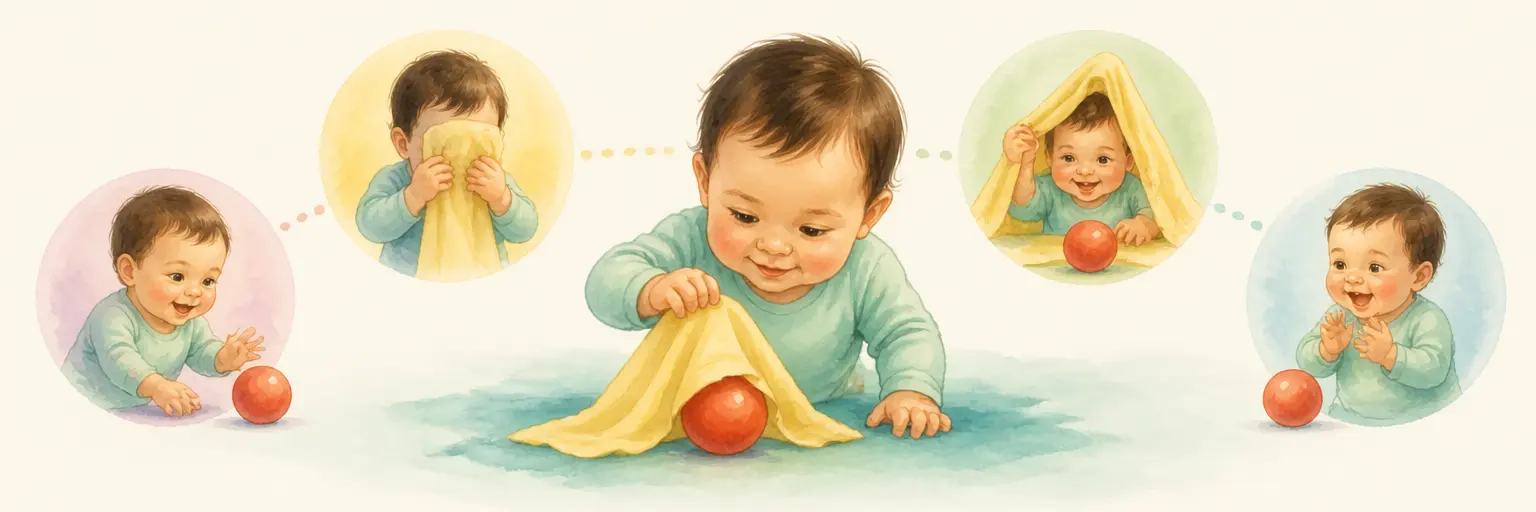
Object Permanence and Fine Motor Skills: The Unexpected Connection
Discover how your baby learns that favorite toys and familiar faces still exist even when out of sight! 🧸 Object permanence milestones offer valuable insights into cognitive development, memory, and early problem-solving skills. Explore age-by-age guidance, playful activities, and reassuring tips to support your baby’s learning journey with confidence. 👶✨
5 articles
Object Permanence: How to Support Your Baby's Cognitive Growth
The Object Permanence Puzzle: How Babies Learn That Things Still Exist
The Development of Object Permanence: A Timeline for FirstTime Parents
Decoding Baby's Object Permanence: What You Need to Know as a Parent
Milestones in Baby's Object Permanence: Understanding Early Cognitive Development
Welcome to BabyCareHub’s guide to milestones in baby’s object permanence, an important part of early cognitive development. Object permanence is the understanding that a person, toy, or object still exists even when it is temporarily out of sight. This skill develops gradually during infancy and helps babies build memory, attention, problem-solving abilities, and emotional security. Learn what to expect at each stage, how to support your baby’s learning through play, and when to discuss developmental concerns with a pediatrician.
🧠 What Is Object Permanence in Babies?
Object permanence is a developmental milestone in which babies begin to understand that objects continue to exist when they cannot see, hear, or touch them. Young newborns may appear to forget a toy as soon as it disappears, while older babies may search for a hidden object, look toward a missing caregiver, or uncover a toy placed beneath a blanket.
This ability is closely connected to infant memory, visual tracking, attention, and cognitive development. It also supports early problem-solving because babies learn that an action, such as lifting a cloth, can reveal something hidden. Every baby develops at an individual pace, so small differences in timing are usually normal.
👶 Object Permanence Milestones by Age
During the first months of life, babies usually focus on objects that are visible and nearby. Around 2 to 4 months, many infants begin tracking moving toys and showing interest when objects disappear briefly. At approximately 4 to 8 months, babies may start looking for partially hidden items, especially when a familiar toy remains visible.
Between about 8 and 12 months, babies often search more intentionally for completely hidden objects. They may lift a blanket, move a toy, or look for a parent who leaves the room. By the end of the first year and into the toddler period, many children demonstrate a stronger understanding that people and objects continue to exist even when they are out of sight.
🔍 Signs Your Baby Is Developing Object Permanence
Common signs of emerging object permanence include searching for a dropped toy, reaching toward a hidden object, pulling away a cloth, and watching where an object disappears. Your baby may also smile or vocalize when a toy reappears during peekaboo, showing growing anticipation and memory.
Another sign is separation awareness. A baby may look toward the door after a caregiver leaves, crawl after a parent, or become upset when a familiar person is no longer visible. These behaviors can reflect normal cognitive and emotional development rather than deliberate misbehavior.
🎭 How Peekaboo Supports Cognitive Development
Peekaboo is a simple and effective activity for teaching object permanence for infants. Cover your face with your hands, wait briefly, and then reveal yourself with a smile. Repeating this game helps babies notice patterns, predict what will happen next, and understand that a familiar person has not disappeared permanently.
As your baby grows, make the game slightly more challenging by hiding behind a doorway or placing a toy under a light cloth. Follow your baby’s cues and keep the activity playful. Short, positive interactions support learning without creating frustration or overstimulation.
🧸 Activities to Encourage Object Permanence
Parents can encourage object permanence through everyday play. Try hiding a favorite toy under a blanket, placing a toy inside a container, rolling a ball behind a cushion, or taking turns passing an object out of sight. Use safe, age-appropriate items that are large enough not to pose a choking hazard.
Give your baby time to solve the problem independently before helping. Use encouraging language such as, “Where did the ball go?” or “You found it!” These games promote early learning, cause-and-effect understanding, memory, and problem-solving skills while strengthening the parent-child bond.
💛 Object Permanence and Separation Anxiety
As babies begin understanding that people exist even when they are not visible, they may also become more aware when a parent leaves. This can contribute to separation anxiety, which commonly appears during the second half of the first year. Crying when a caregiver walks away is often a normal response to developing memory and attachment.
Offer calm, predictable departures and reunions. Tell your baby when you are leaving, avoid disappearing without warning when possible, and reassure them when you return. Consistent routines help babies learn that separation is temporary and that trusted caregivers come back.
⚠️ When to Discuss Developmental Concerns
Developmental timelines vary, and one skill by itself rarely indicates a problem. However, speak with your baby’s pediatrician if your child does not seem interested in people or objects, does not track moving items, rarely reaches for toys, or shows little response when familiar objects disappear over time.
It is also helpful to mention any loss of previously learned skills, limited eye contact, or concerns about communication, movement, hearing, or vision. A healthcare professional can review your baby’s overall development and recommend screening or support if needed. Early guidance can be reassuring and beneficial.
❓ Frequently Asked Questions About Baby’s Object Permanence
What age do babies develop object permanence?
Many babies begin showing early signs of object permanence between 4 and 8 months, while more intentional searching often develops around 8 to 12 months. The exact timing varies, and some children demonstrate this understanding gradually rather than all at once.
Is peekaboo good for teaching object permanence?
Yes. Peekaboo helps babies learn that a familiar face or object still exists after disappearing briefly. It also supports memory, attention, anticipation, social interaction, and emotional connection between babies and caregivers.
Why does my baby cry when I leave the room?
Crying when you leave may be related to developing object permanence and separation anxiety. Your baby is beginning to remember you when you are not visible but may not yet understand when you will return. Calm routines and reassuring goodbyes can help.
How can I practice object permanence safely at home?
Use simple games such as hiding a large toy beneath a cloth, placing an object in a container, or rolling a ball behind a cushion. Always supervise play, avoid small objects that could cause choking, and stop if your baby becomes frustrated or overstimulated.
When should I contact a pediatrician about object permanence?
Contact your pediatrician if you have ongoing concerns about your baby’s vision, attention, tracking, reaching, social responses, or overall development. Also seek advice if your child loses skills they previously had. A pediatrician can assess development in context and provide personalized guidance.