
What to Feed Your Baby for Optimal Gross Motor Skill Development
Support your baby’s first movements with trusted guidance on gross motor skills development from 0–12 months 👶✨ Explore age-appropriate activities, tummy time ideas, milestone insights, and practical tips to encourage stronger head control, rolling, sitting, crawling, and early walking—while celebrating every unique stage of your baby’s growth. Discover expert-informed advice from BabyCareHub to help first-time parents nurture healthy development with confidence.
7 articles
The Walking Wonder: How to Support Your Baby's First Steps
Playtime Power: Using Play to Enhance Your Baby's Gross Motor Development
Baby's Movement and Play: Fun Activities to Boost Gross Motor Skills
The MindBody Connection: Understanding Gross Motor and Cognitive Growth
The Secret to Baby's Movement: Understanding Gross Motor Skill Development
Sensory Play and Gross Motor Development: A Powerful Combination
Gross Motor Skills Development (0-12 Months) 🍼
Welcome to BabyCareHub’s guide to gross motor skills development from 0 to 12 months. Gross motor skills involve the large muscles used for head control, rolling, sitting, crawling, standing, and early walking. This subcategory helps first-time parents understand baby movement milestones, encourage healthy physical development, and recognize when to discuss concerns with a pediatrician. Explore age-by-age guidance, safe activities, tummy time ideas, and practical tips for supporting your baby’s strength, balance, coordination, and mobility.
👶 Gross Motor Milestones by Age
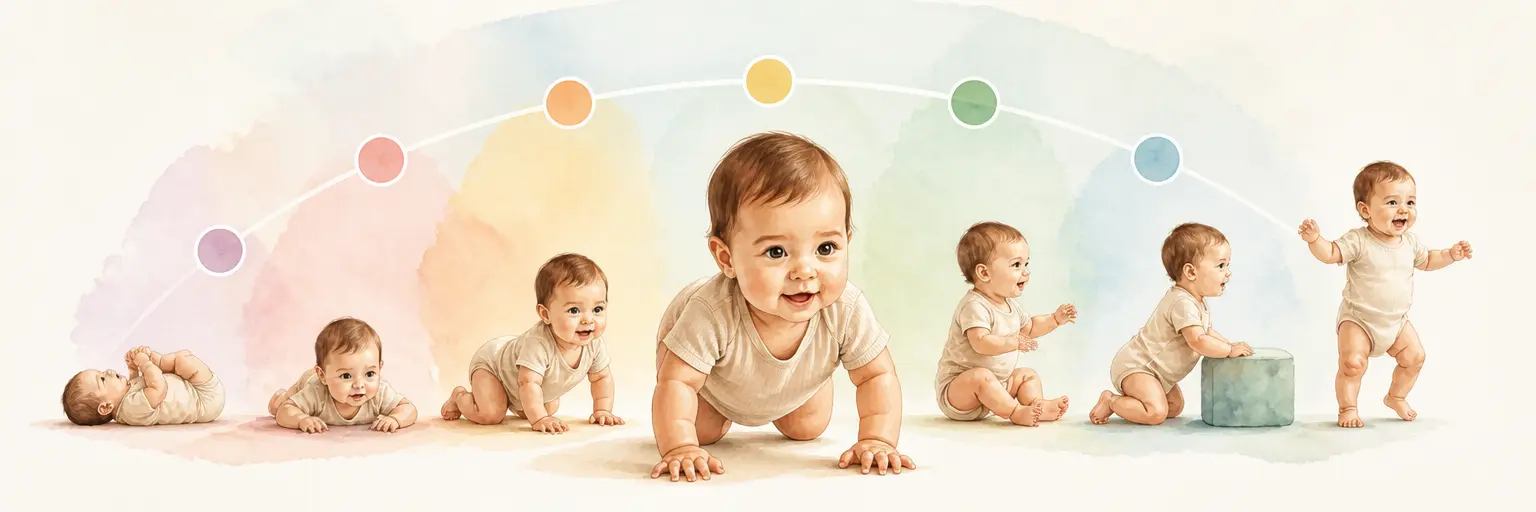
Every baby develops at an individual pace, but common gross motor milestones provide helpful guidance during the first year. You can learn what movements may appear from birth through 3 months, 4 to 6 months, 7 to 9 months, and 10 to 12 months, including improved head control, rolling, sitting independently, crawling, pulling to stand, and cruising.
Our age-based information is designed to help parents observe progress without unnecessary comparison. Developmental ranges are flexible, and factors such as temperament, birth history, opportunities for floor play, and individual readiness can influence when a baby reaches each milestone.
💪 Tummy Time and Early Strength
Tummy time is an important way to support early neck, shoulder, arm, back, and core strength. Short, supervised sessions while your baby is awake can help build the muscles needed for head lifting, rolling, reaching, and eventually sitting. BabyCareHub provides practical tummy time ideas for newborns and older infants.
Parents can make tummy time more enjoyable by placing a toy, mirror, or caregiver’s face within view, changing positions, and offering frequent breaks. Always follow safe sleep guidance: babies should be placed on their backs for sleep, while tummy time should take place only when they are awake and closely supervised.
🔄 Rolling, Sitting, and Balance
Rolling and sitting are major first-year movement milestones. Babies often develop the strength and coordination to roll from tummy to back, roll in both directions, sit with support, and later sit independently. This section explains how these skills typically emerge and how parents can provide safe opportunities for practice.
Encourage movement by offering supervised floor play on a firm, uncluttered surface. Avoid placing your baby in positions they cannot reach independently for extended periods, and allow them to explore body movement at their own pace. Active floor time supports balance, body awareness, and coordination.
🐛 Crawling and Independent Movement
Crawling may look different from baby to baby. Some infants crawl on hands and knees, while others bottom-shuffle, army crawl, roll, or move directly from sitting to standing and walking. These variations can still reflect healthy gross motor development, especially when your baby is using both sides of the body and gradually becoming more mobile.
Prepare a safe exploration area by securing furniture, covering electrical outlets, removing small objects, and blocking stairs. Encourage your baby to reach for safe toys placed nearby, but avoid forcing a particular crawling style. Movement should be encouraged through play, not pressure.
🧍 Pulling to Stand and Cruising
Near the end of the first year, many babies begin pulling up on stable furniture, standing with support, bending to pick up toys, and cruising sideways while holding on. These activities strengthen the legs and trunk while improving balance and confidence for future independent steps.
Use sturdy, stable furniture and remain close whenever your baby is standing. Baby walkers with wheels are not recommended because they can increase injury risks and do not help babies learn to walk safely. Bare feet on safe indoor surfaces can help babies feel the floor and practice balance.
🧸 Safe Activities for Gross Motor Development
Simple games can support infant motor development without expensive equipment. Try supervised tummy time, reaching for toys, kicking during diaper changes, rolling games, supported sitting, crawling over a firm cushion, and placing toys just beyond reach. These activities encourage strength, flexibility, coordination, and problem-solving.
Keep practice sessions brief, positive, and responsive to your baby’s cues. Stop when your baby becomes tired, distressed, or overstimulated. Daily opportunities for free movement are generally more valuable than structured drills, and caregivers should always prioritize a safe, age-appropriate environment.
🩺 When to Discuss Motor Development With a Pediatrician
Parents should contact a healthcare professional if their baby loses a skill, appears unusually stiff or floppy, consistently uses one side of the body much more than the other, or shows limited progress over time. Concerns may also include difficulty holding the head up, an inability to sit with support when expected, or a lack of attempts to move and explore.
Milestone checklists are helpful conversation starters, not diagnostic tools. If you have concerns about infant physical development, speak with your pediatrician or child health provider. Early evaluation and support can be valuable, and seeking advice does not mean that something is definitely wrong.
❓ Frequently Asked Questions About Gross Motor Skills
What are gross motor skills in babies?
Gross motor skills are movements that use the large muscles of the body, including the neck, shoulders, arms, back, abdomen, hips, and legs. In babies, examples include lifting the head, rolling, sitting, crawling, standing, and walking.
How much tummy time should my baby have?
Begin with short, supervised tummy time sessions when your newborn is awake and alert, gradually increasing the total time as your baby becomes comfortable. Follow your healthcare provider’s advice, and always place your baby on their back for sleep.
Is it normal if my baby skips crawling?
Yes. Some babies use alternative movements, such as rolling, bottom-shuffling, or pulling to stand, and may not crawl on hands and knees. Discuss your baby’s overall movement, symmetry, strength, and progress with a pediatrician if you have concerns.
When do babies usually sit, stand, or walk?
Many babies sit independently during the second half of the first year, pull to stand and cruise later in infancy, and take independent steps around the end of the first year or afterward. Developmental timing varies, so consider the overall pattern of progress rather than one exact age.
When should I be concerned about my baby’s motor development?
Speak with your pediatrician if your baby loses previously acquired skills, seems unusually stiff or floppy, has persistent difficulty controlling the head, uses one side noticeably more than the other, or is not making progress toward age-appropriate movement skills. Professional guidance can help identify whether further assessment is needed.