
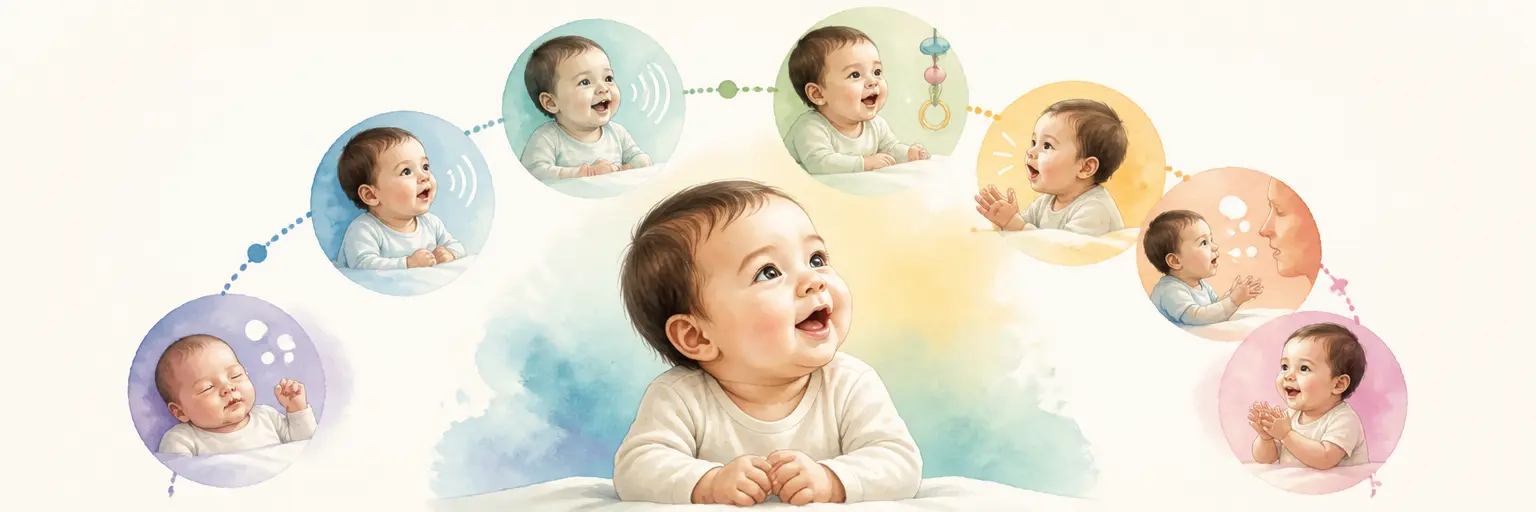
How to Support Your Baby's Language Growth (012 Months)
Track your baby’s early language development milestones from 0–12 months with confidence 👶✨ Discover age-by-age guidance on cooing, babbling, gestures, responding to sounds, and first words, plus practical tips to encourage communication through talking, singing, reading, and play. BabyCareHub helps first-time parents understand what to expect, celebrate progress, and recognize when to seek professional advice for healthy speech and language development.
7 articles
The Magic of "Mama" and "Dada": First Syllables and Their Significance (46 Months)
The Journey of Language: From Gurgling to Talking
The Magic of Baby Talk: Understanding Its Importance
Unlocking the Babble: Supporting Your Baby's PreSpeech Development (46 Months)
The Key to Baby's Language Development: Interaction and Stimulation
The Secrets Behind Baby's Babbling: What It Means for Development
Language Development Milestones (0–12 Months) 👶🗣️
Welcome to BabyCareHub’s guide to language development milestones from birth to 12 months. This subcategory helps first-time parents understand how babies communicate through crying, facial expressions, cooing, babbling, gestures, and early words. Explore age-by-age information about infant communication, speech development, receptive language, expressive language, listening skills, and early social interaction so you can support your baby’s progress with confidence.
👂 0–3 Months: Early Communication and Listening Skills
During the first three months, babies communicate mainly through crying, body movements, facial expressions, and changes in behavior. They may startle at loud noises, calm when they hear a familiar voice, make eye contact, smile socially, and produce early vocal sounds such as coos. These behaviors are important pre-language milestones and show that your baby is beginning to connect sounds, emotions, and relationships.
Readers can expect practical guidance on responding to newborn cries, talking during feeding and diaper changes, singing, reading aloud, and encouraging face-to-face interaction. Consistent conversation helps strengthen auditory attention, bonding, turn-taking, and early receptive language development, even before your baby says recognizable words.
😊 4–6 Months: Cooing, Vocal Play, and Social Sounds
From four to six months, many babies become more vocal and expressive. They may laugh, squeal, coo with different sounds, respond to voices, watch moving mouths, and experiment with volume and pitch. Babies often begin to recognize familiar people and may use sounds to gain attention, making this an exciting stage for early speech and communication development.
This section explains how parents can encourage vocal play by imitating sounds, pausing for a response, naming everyday objects, and using animated facial expressions. You will also learn how responsive communication supports listening comprehension, emotional connection, and the foundation for future babbling and spoken language.
🔊 7–9 Months: Babbling and Understanding Familiar Words
Between seven and nine months, babies commonly begin repetitive babbling, such as “ba-ba,” “da-da,” or “ma-ma.” They may respond to their name, recognize frequently used words, react to changes in tone, and use sounds, eye contact, or body movements to express interest. Some infants also begin using gestures such as reaching, waving, or lifting their arms.
Parents can support this stage by describing routines, repeating simple words, responding to babbling as if it were a conversation, and pointing out familiar people and objects. BabyCareHub provides ideas for building receptive vocabulary, joint attention, gesture communication, and early conversational turn-taking through everyday play.
👋 10–12 Months: Gestures, First Words, and Intentional Communication
By the end of the first year, many babies communicate intentionally using gestures, sounds, facial expressions, and sometimes one or more meaningful words. They may point, wave, imitate sounds, follow simple directions, understand familiar names, and use “mama,” “dada,” or another consistent word for a parent or caregiver. Development varies, so the timing and number of first words can differ widely between babies.
This section helps families recognize early expressive language milestones while creating a supportive home environment. Learn how to expand your baby’s vocabulary through shared reading, songs, naming games, imitation, and positive responses to communication attempts. Frequent interaction—not pressure to speak—is one of the best ways to encourage healthy language development.
📚 Activities That Encourage Baby Language Development
Simple daily activities can promote communication from birth. Talk through routines, describe what your baby sees, read colorful board books, sing repetitive songs, copy vocalizations, and leave quiet pauses for your baby to respond. These activities encourage language-rich interaction, sound imitation, listening comprehension, and social communication.
Parents can also use gestures, pointing, facial expressions, and predictable phrases to make meaning easier to understand. Follow your baby’s interests and respond warmly to every attempt to communicate. Regular, enjoyable interaction is more beneficial than formal lessons and helps build a strong foundation for future speech and language skills.
🚩 When to Discuss Language Milestones With a Pediatrician
Every baby develops at an individual pace, but parents should discuss concerns with a pediatrician if their baby rarely reacts to sounds, does not appear to recognize familiar voices, avoids eye contact consistently, does not smile socially, stops using previously gained communication skills, or shows little vocal development. Concerns about hearing can also affect speech and language progress.
Early support can be helpful and may include a hearing evaluation, developmental screening, or referral to a qualified speech-language professional. Milestone information is not a diagnosis, but it can help parents notice patterns and seek guidance promptly when needed.
❓ Frequently Asked Questions About Language Development Milestones
What language milestones should a baby reach by 3 months?
By three months, many babies react to sounds, recognize familiar voices, make eye contact, smile socially, and produce cooing sounds. Some babies vocalize more than others. If your baby rarely responds to sound or does not make eye contact, discuss your observations with a pediatrician.
When do babies usually start babbling?
Babbling often becomes noticeable between six and nine months, although early vocal play can begin sooner. Repetitive sounds such as “ba-ba” or “da-da” are common. Babbling patterns vary, so focus on steady progress and responsive interaction rather than comparing your baby with others.
How can I encourage my baby to talk?
Talk, sing, read, imitate your baby’s sounds, name objects, and pause to allow a response. Follow your baby’s attention and use simple, repeated words. Warm, two-way interaction supports communication more effectively than asking your baby to repeat words repeatedly.
Should my baby say words by 12 months?
Some babies use one or more meaningful words by 12 months, while others communicate mostly through babbling, gestures, pointing, and sounds. Language development can vary. If your baby is not vocalizing, responding to sounds, using gestures, or showing interest in interaction, contact your healthcare provider for advice.
Can delayed speech be related to hearing problems?
Yes. Hearing difficulties can affect a baby’s ability to notice, imitate, and understand speech sounds. If your baby does not startle or respond to loud sounds, turn toward voices, or react to familiar sounds, request a professional hearing assessment and discuss developmental screening with your pediatrician.