
Unlocking the Babble: Supporting Your Baby's PreSpeech Development (46 Months)

Welcome to BabyCareHub, your ultimate guide to navigating the incredible journey of parenthood! Are you curious about the fascinating world of your baby's communication? We delve into the intriguing baby prespeech development stages, uncovering the milestones from birth to 46 months and offering practical tips to foster your little one's language skills. Discover how to understand and support this crucial developmental leap – your baby's first steps towards conversation await! Let's explore the exciting world of pre-speech together.
- Understanding Baby Prespeech Development Stages: 0-6 Months
- Baby Prespeech Development Stages: 6-12 Months
- Supporting Your Baby's PreSpeech Development: Practical Tips
- Milestones and Red Flags: When to Seek Professional Advice
- Building a Strong Foundation for Language Acquisition: Beyond 46 Months
-
Frequently Asked Questions
- What are the key stages of pre-speech development in babies?
- When should I be concerned about my baby's pre-speech development?
- How can I stimulate my baby's pre-speech development?
- What are some common pre-speech milestones I should look for?
- My baby isn't babbling as much as other babies. Should I worry?
- Final Reflection: The Unspoken Symphony of Early Communication
- Unlock Your Baby's Communication Potential!
Understanding Baby Prespeech Development Stages: 0-6 Months
Navigating the world of newborn care can feel overwhelming, but understanding your baby's development is key to providing the best possible support. This article focuses on the crucial pre-speech development stages in babies from birth to six months, a period brimming with incredible linguistic growth.
We’ll explore the fascinating journey from early vocalizations to the beginnings of understanding and responding to language, equipping you with the knowledge to nurture your little one's communication skills. This detailed guide will help you recognize key milestones in your baby's pre-speech development, empowering you to foster a strong foundation for future language acquisition.
Remember, every baby develops at their own pace, but understanding these stages helps you appreciate the amazing progress your child is making and provides valuable insights into how to best interact and support their journey. This information is vital for parents seeking to understand and encourage their baby's language development, ultimately contributing to their overall well-being.
Early Vocalizations: Cooing, Gooing, and Grunting
During the first few months of life, your baby's vocalizations will primarily consist of reflexive sounds like crying. However, soon you'll hear the delightful sounds of cooing, gooing, and grunting. These aren't just random noises; they represent the early stages of your baby experimenting with their vocal cords and exploring the sounds they can produce. These sounds are crucial for developing the muscles needed for speech later on. You might notice different sounds depending on your baby's mood; happy coos are often different from the frustrated grunts they might make when uncomfortable.
Observe these sounds carefully! Note the frequency, pitch, and intensity of your baby’s vocalizations. This seemingly simple observation can provide valuable insights into your baby’s communication attempts and overall well-being. For example, a sudden decrease in the frequency of vocalizations might warrant attention. Remember, consistent monitoring is crucial for early identification of potential developmental delays.
Recognizing Sounds and Responding to Voices
While your baby is producing their own sounds, they are also actively listening and absorbing the sounds around them. Between 2 and 4 months, you might notice your baby starting to turn their head towards sounds, particularly voices. This is a significant milestone, showing that they are beginning to associate sounds with their source. They are also becoming more sensitive to the nuances of human speech, starting to differentiate between different tones and rhythms.
Encourage this development by talking, singing, and reading to your baby frequently. Use a variety of tones and inflections in your voice. Make eye contact and engage with your baby during these interactions. The more exposure your baby has to language, the better their ability to recognize and respond to sounds will become. This consistent interaction lays the groundwork for future language comprehension. Remember, even simple interactions like reciting nursery rhymes can significantly contribute to this early language development.
The Importance of Interaction During Early Stages of Language Development
The early months are a critical period for language development. Your active participation in your baby's communication journey is paramount. Responding to your baby's coos and gurgles with your own vocalizations creates a positive feedback loop, encouraging them to continue experimenting with sounds. This interactive communication fosters a sense of connection and security, laying a strong foundation for future language acquisition.
Remember that even seemingly simple acts like talking to your baby while changing their diaper or singing lullabies before bedtime are incredibly beneficial. These interactions stimulate their brain and help them learn the rhythm and patterns of speech.
This period is not just about your baby passively receiving information; it's about creating a dynamic, responsive environment where they feel encouraged to communicate and are consistently rewarded for their attempts. The more you interact with your baby, the better their language development will be. This early bonding through communication is essential for their overall emotional and cognitive development. So, talk, sing, and play with your baby often—it's the best gift you can give them.
Baby Prespeech Development Stages: 6-12 Months
This section details the crucial pre-speech development milestones your baby will likely reach between 6 and 12 months of age. Understanding these stages will help you support your little one's journey towards speaking. Remember, every baby develops at their own pace, so don't compare your baby to others. Focus on celebrating their individual achievements. This information focuses on baby prespeech development stages, providing a clear roadmap for parents.
Babbling: Expanding Vocal Repertoire
Between 6 and 12 months, your baby's babbling will significantly evolve. Initially, it might be just repetitive consonant-vowel combinations like "baba" or "dada," but you'll soon notice more complex sounds and variations. They'll start experimenting with different intonations, mimicking the rhythm and pitch of your voice. This is a key stage in baby prespeech development stages.
Think of it as their vocal playground! They're learning to control their vocal cords and explore the possibilities of sound production. You might even hear them combining consonants and vowels in more intricate ways, such as "bababa-dada," showing a growing understanding of sound sequencing. This stage is crucial for later speech development. By 12 months, many babies exhibit a wide range of sounds, laying the foundation for the eventual production of words. This expanded vocal repertoire is a significant indicator of healthy baby prespeech development stages.
Understanding Simple Words and Gestures
Alongside babbling, your baby will begin to understand simple words and gestures. Around 9 months, they might start associating words like "mama," "dada," or "bye-bye" with their meanings. This understanding isn't necessarily about speaking the words, but rather recognizing them when used in context. This is a vital step in the baby prespeech development stages.
They'll also start responding to simple gestures, like waving goodbye or pointing at objects. For instance, if you point to a toy and say "ball," they might look at the ball or even reach for it. This demonstrates their growing comprehension of language and the connection between words and objects. This receptive language development is just as important as expressive language, as it shows a clear understanding of the baby prespeech development stages.
Here's a table summarizing common comprehension milestones:
| Age (Months) | Milestone | Example |
|---|---|---|
| 6-8 | Understands simple words like "no" or "bye" | Responds to "no" by stopping an action. |
| 9-12 | Understands simple instructions | Follows a simple instruction like "give me the ball." |
| 9-12 | Responds to their name | Turns their head when you call their name. |
Encouraging Communication Through Play and Interaction
Active participation is key to supporting your baby's baby prespeech development stages. Here are several ways to encourage communication through play and interaction:
- Talk, talk, talk! Narrate your daily activities, describe what you're doing, and name objects.
- Engage in interactive games: Play peek-a-boo, sing songs, and read books together. These activities stimulate language development.
- Use simple, clear language: Avoid baby talk, but speak clearly and use age-appropriate vocabulary.
- Respond to your baby's vocalizations: Even if they're just babbling, acknowledge their attempts at communication.
- Point and name objects: Point to objects and say their names, helping your baby connect words with their referents.
- Follow your baby's lead: Engage with them in activities they initiate, showing that you value their communication attempts.
Remember, consistent interaction and a stimulating environment are crucial for fostering healthy language development. Celebrate every milestone, and enjoy this exciting journey of watching your little one's language skills blossom. This active engagement is a fundamental aspect of supporting the crucial baby prespeech development stages.
Responding to Baby's Vocalizations and Gestures
Between six and twelve months, your baby's communication skills explode! They're moving beyond simple cries and coos, venturing into babbling, experimenting with sounds, and even starting to understand the connection between their actions and your responses. This period is crucial for fostering their pre-speech development, and your active participation is key. Responding promptly and enthusiastically to your baby's vocalizations and gestures strengthens their communication confidence and encourages further exploration of language.
Think of it like a playful conversation, even if it's one-sided at first. When your baby babbles – "ba-ba-ba," "da-da-da," or even a string of seemingly random sounds – respond with similar sounds, mirroring their intonation and enthusiasm. This back-and-forth interaction teaches them the rhythm and patterns of conversation, laying a critical foundation for future language acquisition. For instance, if your baby makes a "ma-ma" sound, you could respond with "Ma-ma! Yes, that's Mama!" This simple interaction is incredibly powerful in reinforcing their attempts at communication.
Beyond vocalizations, pay close attention to your baby's gestures. Pointing, reaching, and waving are all early forms of communication. If your baby points to a toy, name the toy and encourage them to interact with it. This connects their gesture with the object's name, expanding their vocabulary indirectly. If they reach for you, offer a cuddle and verbal reassurance. These seemingly small actions are crucial building blocks in their understanding of communication and the world around them. Remember, consistency is key; responding consistently to their attempts at communication, no matter how small, strengthens the bond and encourages continued efforts.
Furthermore, consider incorporating interactive games that encourage vocalization and gesture. Simple games like peek-a-boo not only build a strong parent-child bond but also stimulate language development. The anticipation, the sounds, and the gestures involved all contribute to the development of pre-speech skills. The repetition and predictability of these games also help babies learn the patterns of language and communication.
Remember to exaggerate your facial expressions and vocalizations to make the interaction even more engaging for your baby. This playful approach makes learning fun and encourages them to participate actively. This responsive and engaged approach significantly impacts a baby's "baby prespeech development stages".
Supporting Your Baby's PreSpeech Development: Practical Tips
This section focuses on practical strategies to nurture your baby's pre-speech development, laying a strong foundation for future language acquisition. We'll explore how to create a rich language environment, engage in interactive communication, and utilize engaging activities like reading and singing. Remember, consistent and loving interaction is key to fostering healthy baby prespeech development stages.
Creating a Stimulating Language Environment
A rich linguistic environment significantly impacts a baby's language development. Think of it as providing fertile ground for language seeds to sprout and flourish. This isn't about overwhelming your baby with complex vocabulary, but rather about consistently exposing them to language in various forms.
Several key elements contribute to creating this optimal environment:
- Talk, talk, talk! Narrate your daily activities. Describe what you're doing, what you see, and what you're feeling. Even mundane tasks like changing a diaper become opportunities for language enrichment: "Let's get your diaper changed. See this soft wipe? We'll use it to clean you." This constant verbal interaction is crucial for early baby prespeech development stages.
- Label objects. Point to objects and name them clearly and repeatedly. "That's a ball. It's round and red." Use simple, repetitive language.
- Respond to your baby's sounds. Babies communicate before they can speak. Gurgles, coos, and babbles are their attempts at communication. Respond enthusiastically to these sounds, mirroring them back and expanding upon them. This shows you're actively listening and engaging in a conversational exchange, even before actual words are exchanged. This is a key aspect of healthy baby prespeech development stages.
- Use varied tones and expressions. Inflection and intonation add richness to your voice, making language more engaging and easier to understand. Sing songs, tell stories, and use playful sounds to keep your baby captivated.
- Minimize screen time. While educational apps can be helpful, excessive screen time can hinder language development. Prioritize face-to-face interactions and hands-on activities. This is particularly important during the crucial baby prespeech development stages.
Engaging in Conversational Turn-Taking
Turn-taking is a fundamental aspect of communication, even before your baby can fully participate in a conversation. It's about establishing a back-and-forth interaction where your baby learns to anticipate responses and engage in a reciprocal exchange.
Here's how to encourage turn-taking:
- Pause and wait. After you speak, pause to give your baby a chance to respond. This might involve a gurgle, a coo, or a point. Acknowledge their response, even if it's not a word. "You're gurgling! That's a great sound!"
- Use simple questions. Ask simple questions that your baby can respond to nonverbally, such as "Where's your nose?" or "Do you want more milk?". They might point, reach, or make a sound to indicate their answer. This simple interaction is key in the baby prespeech development stages.
- Play games. Games like peek-a-boo and pat-a-cake are excellent for teaching turn-taking. These simple games involve anticipation, response, and a back-and-forth exchange. This facilitates the development of communication skills essential for later speech.
- Model turn-taking. Show your baby how turn-taking works by engaging in conversations with other adults. Let your baby observe and learn from these interactions. This observational learning is a powerful tool in the baby prespeech development stages.
Reading Aloud and Singing Songs
Reading aloud and singing songs are powerful tools for stimulating language development. These activities expose your baby to a wide range of vocabulary, rhythm, and intonation, all crucial for language acquisition.
Consider these points:
- Choose age-appropriate books. Board books with bright pictures and simple text are ideal for babies. Focus on books with repetitive phrases and predictable patterns.
- Use expressive voices. Make reading aloud fun and engaging by varying your tone and using different voices for different characters.
- Point to the pictures and label them. Connect the words you're reading with the images in the book. This helps your baby make connections between language and the world around them. This is important throughout the baby prespeech development stages.
- Sing songs with actions. Songs with repetitive lyrics and actions are particularly engaging for babies. This multi-sensory approach enhances learning and memory.
- Make it a routine. Establish a regular time for reading and singing. This creates a positive association with language and learning. Consistency is key during the baby prespeech development stages.
Remember, supporting your baby's pre-speech development is an ongoing process that requires patience, consistency, and lots of love. By creating a stimulating environment and engaging in interactive activities, you’ll be laying a solid foundation for your baby's future language skills. Enjoy this precious time of connection and growth!
Using Simple, Repetitive Language
Using simple, repetitive language is crucial for supporting your baby's pre-speech development. Babies thrive on predictability and repetition, which helps them to understand and process the sounds and structures of language. Instead of using complex sentences, opt for short, clear phrases. For example, instead of saying, "Oh, look at the fluffy, little bunny rabbit hopping in the garden," try, "Bunny! Hop! Hop!" This simplified approach allows your baby to focus on key vocabulary words and their associated actions.
Repetition is key. Repeatedly using the same words and phrases throughout the day reinforces their meaning. During playtime, you might say, "Ball! Roll! Ball!" while rolling a ball back and forth. During bath time, you could repeat phrases like, "Wash! Splash! Wash!"
This consistent exposure to language helps build your baby's vocabulary and comprehension skills. Remember to vary your tone and inflection to keep it engaging, preventing the repetition from becoming monotonous. Think of it as a fun, interactive language game! Even seemingly mundane activities, like changing diapers, can become opportunities for language learning. Simply saying, "Diaper! Clean! Dry!" can make a big difference.
Furthermore, focusing on naming objects within your baby's immediate environment is beneficial. Point to objects and clearly name them: "Dog! Car! Bottle!" This helps your baby connect words with the real world, strengthening the foundation for future language acquisition. The more frequently you use these strategies, the more successful you will be in stimulating your baby's pre-speech development. Consistency is paramount; the cumulative effect of these small interactions significantly impacts your baby’s linguistic progress.
Utilizing Baby Sign Language
Baby sign language offers a fantastic way to bridge the gap between your baby's comprehension and their ability to verbally express themselves. Many babies understand more than they can say, and sign language provides a valuable communication tool during this pre-speech phase. Introducing simple signs, like "milk," "more," "all done," and "please," can significantly reduce frustration for both you and your baby. Imagine the relief of understanding your baby's need for more milk before they become overly fussy!
Learning a few basic signs is easier than you might think. Numerous resources, including books and online videos, provide clear instructions and demonstrations. Start with a few core signs and gradually introduce more as your baby's comprehension grows. Consistency is crucial here too.
Use the signs every time you perform the associated action, creating a strong association between the sign, the word, and the action. For example, every time you give your baby their bottle, sign "milk" while saying the word. This repetition reinforces the meaning and helps your baby learn the connection between the sign, the spoken word, and the concept.
Beyond the practical benefits of communication, incorporating baby sign language can be a fun and engaging activity for both parent and child. It fosters a sense of connection and understanding, enhancing your bond. Moreover, studies suggest that early exposure to sign language may even contribute to faster language development overall, potentially leading to a larger vocabulary and improved communication skills later on. Even if your baby doesn't immediately pick up the signs, the consistent effort will lay a strong foundation for their future language skills. Remember, the key is patience, consistency, and fun! 👶
Milestones and Red Flags: When to Seek Professional Advice
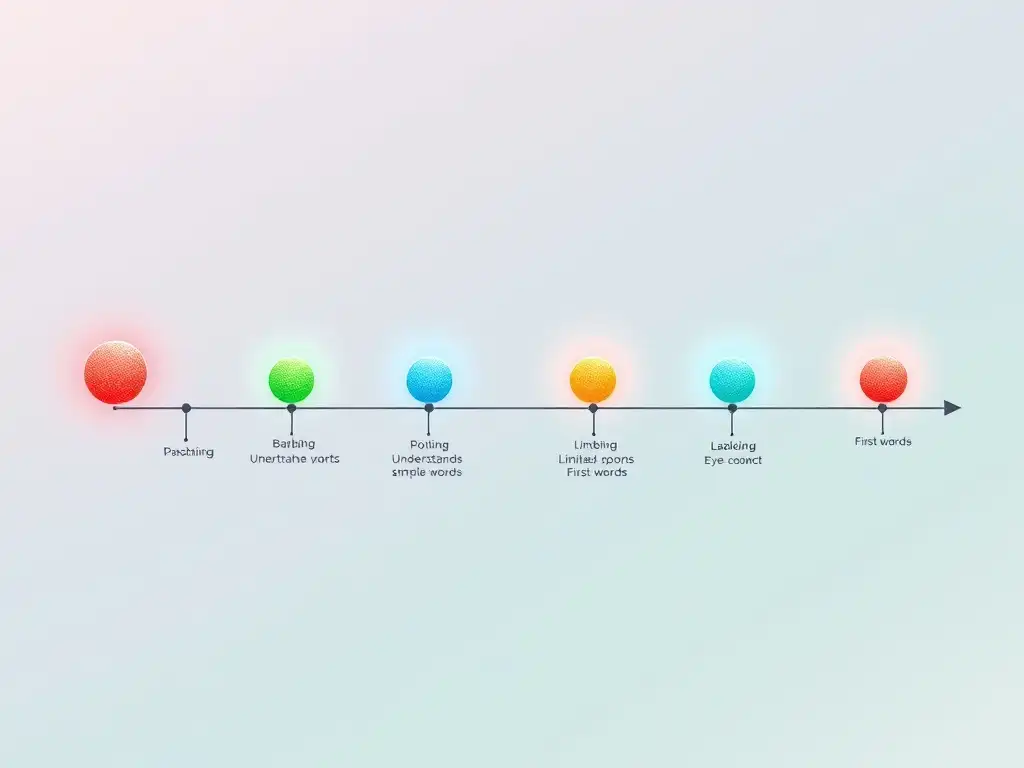
Understanding your baby's pre-speech development is crucial for ensuring they receive the support they need. While every child develops at their own pace, recognizing key milestones and potential delays is essential for early intervention. This section will outline typical pre-speech development stages and highlight when professional assistance might be beneficial. Knowing the typical milestones for "baby prespeech development stages" empowers parents to advocate for their child's needs.
Common Developmental Variations in Early Speech
Babies don't all start babbling at the same time, nor do they all babble in the same way. Some babies might be more vocal than others, producing a wide array of sounds and experimenting with different intonations. Others might be quieter, focusing more on non-verbal communication like gestures and facial expressions. This is perfectly normal! The key is to observe patterns of development, not just individual instances.
For example, one baby might start babbling consistently around 6 months, while another might not show similar vocalizations until closer to 9 months. Both could be perfectly within the typical range. However, a significant lack of vocalization, even simple sounds, coupled with limited responsiveness to sounds or voices, might warrant further investigation. Remember, observing your baby's engagement with their environment is just as important as the quantity of sounds they make. A baby who actively listens and responds non-verbally, even with minimal vocalizations, is showing engagement and potential for later language development.
Consider these variations:
- Timing: The onset of babbling can vary considerably.
- Quantity: Some babies babble extensively; others less so.
- Quality: The range and complexity of sounds produced can differ.
- Responsiveness: The degree to which a baby responds to sounds and voices varies greatly.
Recognizing Potential Delays in Speech Development
While individual variations are common, certain signs might indicate a potential delay in speech development requiring professional assessment. These signs aren't necessarily cause for immediate alarm, but they do warrant close observation and discussion with your pediatrician. Early identification of potential delays is crucial for maximizing a child's developmental potential. Monitoring your baby's progress against typical "baby prespeech development stages" is key.
Potential red flags include:
- Limited or absent babbling by 12 months: While some quiet babies may still develop normally, a complete lack of babbling or vocalizations by this age is a significant concern.
- Lack of response to sounds or voices: If your baby doesn't seem to react to your voice or other sounds in the environment, this could indicate a hearing problem or other underlying issue.
- Absence of pointing or gesturing by 12 months: Non-verbal communication skills often precede verbal skills. A lack of these skills might signal a developmental delay.
- Difficulty understanding simple words or commands by 18 months: This could indicate a receptive language delay.
- Lack of attempts at simple words or phrases by 18 months: This could indicate an expressive language delay.
Remember, this list is not exhaustive, and the absence of one or two signs doesn't automatically signify a problem. However, a combination of these factors warrants a consultation with a healthcare professional.
Seeking Support from Pediatricians and Speech Therapists
If you have any concerns about your baby's speech development, your pediatrician is the first point of contact. They can perform a basic hearing screening and assess your baby's overall development. If a delay is suspected, they may refer you to a speech-language pathologist (SLP) or speech therapist.
Speech therapists are experts in evaluating and treating speech and language disorders. They can conduct comprehensive assessments to identify the specific areas where your baby needs support and develop a personalized intervention plan. Early intervention is often crucial in maximizing a child's language development potential. The sooner you address potential concerns, the better the chances of positive outcomes. Don't hesitate to seek professional help; early intervention can make a significant difference in a child's long-term communication skills. Active monitoring and early intervention are vital components of supporting healthy "baby prespeech development stages."
Early intervention programs offer valuable resources and support for both parents and children. They often provide educational materials, therapy sessions, and guidance on strategies to encourage language development at home. Remember, your pediatrician and speech therapist are valuable allies in supporting your child's journey. They can offer reassurance, guidance, and the necessary interventions to help your child reach their full potential.
Building a Strong Foundation for Language Acquisition: Beyond 46 Months
This section focuses on crucial pre-speech development milestones in babies beyond the 4-6 month mark, building on the foundational skills established earlier. We'll explore how continued interaction, engagement with books, and preparation for more complex communication lay the groundwork for future language acquisition. Understanding these stages is key to supporting your baby's journey towards speaking and comprehending language effectively. This will also help you track your baby's progress against typical "baby prespeech development stages".
The Continued Importance of Interaction and Engagement
Even after your baby surpasses the 4-6 month mark, consistent interaction remains paramount for language development. This isn't just about talking at your baby; it's about engaging in reciprocal communication. Think of it as a two-way street where your baby is actively participating, even if their contribution is primarily non-verbal.
Several strategies can significantly boost your baby's language acquisition during this period:
- Turn-taking games: Simple games like peek-a-boo encourage turn-taking, a fundamental aspect of conversation. Your baby learns to anticipate your actions and respond accordingly. This establishes a rhythm of interaction crucial for future dialogues.
- Responding to babbling: When your baby babbles, respond enthusiastically! Not only does this show your baby that their communication is valued, but it also models the back-and-forth nature of conversation. Try imitating their sounds and expanding on them. For example, if they babble "ba-ba," you could respond with "Ba-ba-ba! That's a bottle!"
- Singing and nursery rhymes: These are wonderful tools for exposing your baby to rhythm, melody, and language patterns. The repetitive nature of songs helps them learn word sounds and sentence structures. Consider incorporating actions to further enhance engagement.
- Descriptive language: Even during mundane activities like bath time or diaper changes, use descriptive language. "We're going to wash your toes now. They're so wiggly!" This provides a constant stream of language input for your baby's developing brain.
Remember, consistency is key. These interactions should be woven into your daily routine, creating a rich linguistic environment that supports your baby's progress through the various baby prespeech development stages.
Fostering a Love of Books and Storytelling
Introducing books early on is a powerful way to stimulate language development. Even before your baby can understand the words, they are learning about the rhythm and flow of language. The act of sharing a book creates a special bonding experience.
Here's how to maximize the benefits of reading to your baby:
- Choose age-appropriate books: Look for books with bright colors, simple pictures, and repetitive phrases. Board books are ideal for this age as they are durable and easy for little hands to handle.
- Use expressive voices: Change your tone, pitch, and volume to make the reading experience more engaging. Point to the pictures and name the objects, describing their features.
- Encourage interaction: Let your baby turn the pages (even if they don't quite get it yet). Pause to let them react to the pictures and sounds.
- Make it a routine: Establish a regular time for reading, whether it's before bedtime or after a nap. This creates a positive association with books and language.
The benefits extend beyond simply learning words. Reading fosters a love of books, a habit that will serve your child well throughout their life. It's an investment in their future literacy and a significant contributor to their overall "baby prespeech development stages".
Preparing for the Transition to Words and Sentences
As your baby approaches the one-year mark, you'll likely see a significant shift in their communication skills. They'll start to understand more words, point to objects when named, and may even begin to say their first words. This is a thrilling stage, but it's important to continue supporting their development.
Here are some ways to prepare for this transition:
- Expand vocabulary: Continue to use rich and varied language in your daily interactions. Expose your baby to different sounds and word patterns.
- Model clear speech: Speak clearly and slowly, giving your baby time to process what you're saying.
- Encourage imitation: Repeat your baby's sounds and gestures, modeling correct pronunciation.
- Use gestures: Combine words with gestures to help your baby understand the meaning of words.
- Be patient: Language acquisition takes time. Each baby develops at their own pace. Celebrate every milestone, no matter how small.
By understanding the various baby prespeech development stages and actively participating in your baby's language journey, you're laying a strong foundation for their future communication success. Remember, this is a collaborative process, and your consistent engagement is invaluable.
Frequently Asked Questions
What are the key stages of pre-speech development in babies?
Babies typically progress through stages like cooing (1-3 months), babbling (4-6 months), and gesturing and combining sounds (7-12 months), progressing to first words around 12 months. This is a general guideline, and every baby develops at their own pace.
When should I be concerned about my baby's pre-speech development?
If your baby shows little to no interest in sounds or communication by 6 months, or isn't babbling by 9-12 months, consult your pediatrician. Early intervention is key.
How can I stimulate my baby's pre-speech development?
Talk, sing, and read to your baby frequently. Engage in interactive games, respond to their vocalizations, and use clear and simple language. Make eye contact and use facial expressions.
What are some common pre-speech milestones I should look for?
Expect your baby to respond to their name and understand simple instructions by around 9 months. Look for attempts at imitating sounds and using gestures to communicate their needs.
My baby isn't babbling as much as other babies. Should I worry?
While it's good to be aware of developmental milestones, remember that every baby develops at their own pace. Focus on positive interaction and stimulation. If you have concerns, consult your pediatrician for personalized guidance.
Final Reflection: The Unspoken Symphony of Early Communication
The journey of pre-speech development is not merely a series of babbles and coos; it's the foundation upon which a child's entire linguistic landscape is built. Understanding these crucial early stages, as outlined in this article, is paramount in fostering a child's cognitive and social-emotional growth, impacting their future academic success and overall well-being. This knowledge empowers parents and caregivers to actively participate in a child's linguistic development, shaping their future communication skills.
Witnessing my own child navigate these early stages of communication was a profoundly humbling experience. It highlighted the incredible complexity and beauty of this developmental process, a silent symphony of gestures, sounds, and emotional connections. The most important thing a father can do for his children is to love their mother.
– Theodore Hesburgh. While not directly about pre-speech, this quote speaks to the foundational importance of a nurturing environment, which is crucial for healthy language development. The subtle cues, the growing understanding of cause and effect, the sheer joy of connection – these are the building blocks of language, and recognizing their significance is vital for nurturing a child's potential.
Now, consider your own interactions with young children. How can you actively listen to their pre-speech attempts? How can you respond in ways that encourage further communication? Take the time to observe, engage, and respond – even the smallest gesture or sound deserves acknowledgement and encouragement. By understanding the stages outlined in this article, you are equipped to become a more active and supportive participant in a child's incredible journey of linguistic discovery. Embrace this opportunity to nurture the unspoken symphony of early communication, and watch as it blossoms into a rich and vibrant tapestry of language.
Unlock Your Baby's Communication Potential!
Thank you for learning about supporting your baby's pre-speech development! We hope you found our insights invaluable. Now, let's put that knowledge into practice.
Here are a few ways to enrich your baby's communication journey:
- Engage in interactive playtime: Dedicate at least 15 minutes each day to playful activities that encourage babbling, such as peek-a-boo, making silly faces and sounds, and reading books together. This focused interaction makes a huge difference!
- Join our BabyCareHub community forum: Share your experiences, ask questions, and connect with other parents. It's a wonderful place to find support and discover new ideas.
- Try a new communication technique: Explore less common methods, like using sign language or incorporating music into playtime. You might be surprised by the results!
Ready to witness your baby's communication blossom? What creative activity will you try first to encourage their pre-speech development?