
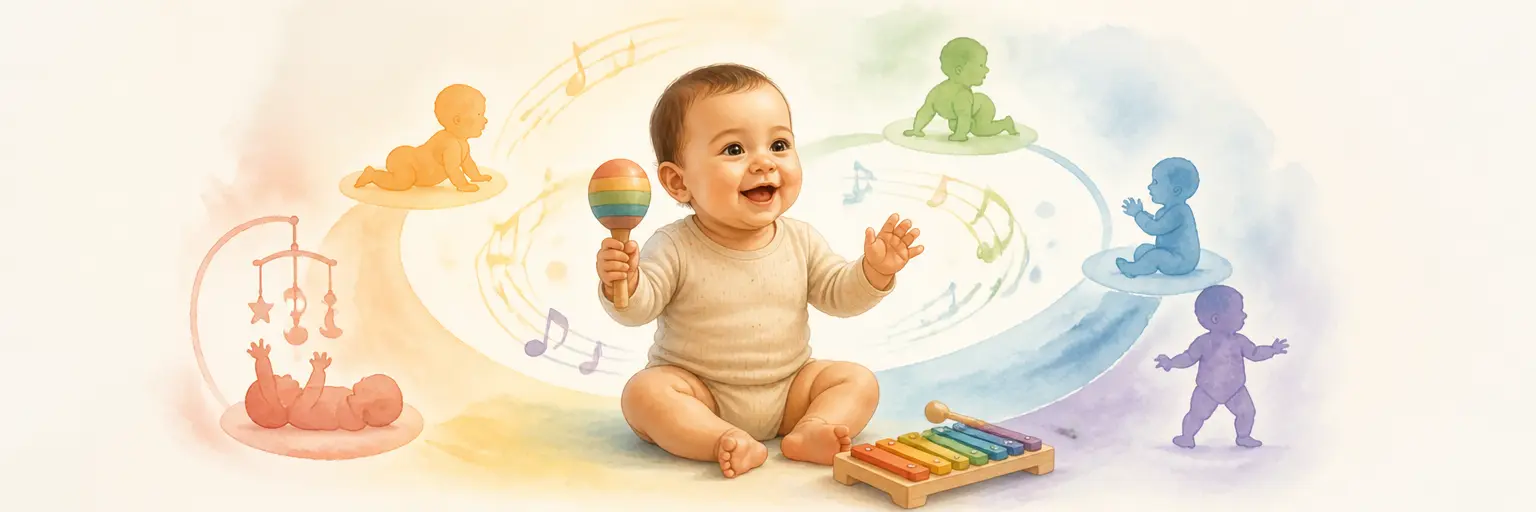
The Power of Repetition: How Rhythmic Patterns Aid Baby's Learning
Discover how music and movement support baby development 🎶👶 through playful songs, gentle dancing, clapping, and rhythm activities. These simple experiences can encourage early communication, sensory exploration, coordination, body awareness, and emotional connection between babies and caregivers. Explore age-appropriate ideas, developmental benefits, and safe ways to make music part of your baby’s everyday routine with BabyCareHub.
7 articles
The Science of Movement: Understanding Baby's Physical Development
Baby's First Music Class: Exploring the Benefits of Group Settings
The Beat of Bonding: Strengthening Your Connection Through Music and Movement
The Role of Music in Baby's Cognitive Development
The Importance of Floor Time: Encouraging Natural Movement
The Power of Singing to Your Baby: Bonding Through Lullabies
🎵 Music and Movement for Baby Development
Welcome to BabyCareHub’s Music and Movement for Baby Development guide, a practical resource for first-time parents exploring how songs, rhythm, dancing, and gentle activity support early childhood development. Learn how age-appropriate music and movement can encourage gross motor skills, fine motor coordination, language development, sensory learning, bonding, and emotional growth from the newborn stage through the first years of life.
👶 Newborn Music and Movement Activities
Newborns respond to familiar voices, gentle sounds, and calm rhythms even before they can sit, crawl, or walk. Parents can sing softly, hum, clap gently, or move a baby’s arms and legs slowly during supervised play to encourage auditory awareness, visual tracking, body awareness, and parent-baby bonding.
BabyCareHub explains how to introduce music safely with short, soothing activities that match your baby’s mood and developmental stage. Discover ideas for lullabies, gentle rocking, tummy-time songs, and simple face-to-face interactions that support early communication without overstimulation.
🧠 How Music Supports Baby Brain Development
Music provides repeated patterns, changes in pitch, and predictable rhythms that help babies listen, remember, and respond. Singing and talking to your baby can strengthen early language skills, attention, memory, sound recognition, and cognitive development.
Parents will find guidance on choosing simple songs with repetition, pauses, and clear sounds. These activities can encourage babies to coo, babble, imitate sounds, and participate in early turn-taking—important foundations for communication and social development.
💃 Movement Activities for Gross Motor Skills
Age-appropriate movement helps babies develop strength, balance, flexibility, and coordination. As babies grow, music can make tummy time, reaching, rolling, sitting, crawling, and standing practice more enjoyable while supporting gross motor development and physical confidence.
Explore safe movement games such as action songs, gentle bouncing, reaching for musical toys, and dancing while holding your baby securely. Each activity should be supervised closely and adapted to your baby’s abilities, comfort level, and developmental milestones.
👏 Rhythm, Clapping, and Fine Motor Development
Simple rhythm activities can help babies practice hand control and coordination. Clapping, tapping, shaking soft rattles, banging safe objects, and reaching toward a sound encourage fine motor skills, hand-eye coordination, bilateral coordination, and cause-and-effect learning.
Parents can gradually introduce instruments designed for babies, such as lightweight shakers or soft drums, while avoiding small parts and loud sounds. Repetition allows babies to understand that their movements can create sounds, encouraging curiosity and active learning.
❤️ Music for Bonding and Emotional Development
Singing and moving together create warm, responsive interactions that help babies feel secure. Your voice, facial expressions, touch, and rhythm can support attachment, emotional regulation, social development, and parent-child connection.
Use calm music during winding down, playful songs during active periods, and familiar routines before naps or bedtime. Watching your baby’s facial expressions and body language helps you recognize whether they are engaged, tired, excited, or overstimulated.
🌈 Sensory Play Through Songs and Movement
Music and movement engage multiple senses at once, including hearing, sight, touch, and balance. Combining singing with colorful scarves, gentle gestures, facial expressions, or safe textured toys can promote sensory development, attention, body awareness, and exploration.
Keep sensory activities simple and predictable for young babies. BabyCareHub offers ideas for adjusting volume, speed, lighting, and movement so parents can create a calm, stimulating environment without overwhelming their child.
🎶 Age-Appropriate Music Activities for Babies
Music activities should change as your baby grows. Newborns may enjoy quiet singing and gentle rocking, while older babies may prefer action songs, clapping games, instrument play, and movement that encourages crawling, standing, and early walking.
Learn how to select activities based on developmental milestones rather than age alone. Short, frequent, responsive play sessions are often more beneficial than long activities, especially when your baby is hungry, tired, or distracted.
🔊 Safe Sound and Movement Practices
Safety is essential when using music and movement for baby development. Keep music at a comfortable volume, avoid placing headphones or earbuds on babies, use age-appropriate toys, and provide constant supervision during movement and instrument play.
Never shake, bounce forcefully, or move a baby beyond their natural range of motion. Stop the activity if your baby turns away, cries, becomes unusually quiet, or shows signs of fatigue. Safe, responsive interaction should always come before entertainment or skill practice.
❓ Frequently Asked Questions About Music and Movement for Baby Development
🎼 When can babies start enjoying music and movement?
Babies can enjoy music from birth. Newborns often respond to a parent’s voice, gentle singing, and slow rocking. As babies mature, they may begin to move their arms, bounce, clap, sway, or respond to familiar rhythms.
🧠 Can music help my baby reach developmental milestones?
Music does not guarantee that a baby will reach milestones sooner, but it can encourage important skills through enjoyable interaction. Singing and movement may support language, listening, coordination, balance, motor development, attention, and social connection.
🔉 How loud should music be around a baby?
Music should be soft and comfortable enough for you to speak normally without raising your voice. Avoid very loud speakers, concerts, or prolonged exposure to high-volume sounds, as babies’ hearing is sensitive.
🥁 What instruments are safe for babies?
Choose sturdy, age-appropriate instruments made without detachable small parts, sharp edges, or loose components. Soft rattles, baby-safe shakers, and lightweight drums may be suitable when used under close supervision. Always check the manufacturer’s safety guidance.
💞 What should I do if my baby does not seem interested in music?
Try a different time, quieter song, slower rhythm, or shorter activity. Babies have individual preferences and may be more responsive when rested and comfortable. Follow your baby’s cues and focus on positive interaction rather than expecting a specific response.