
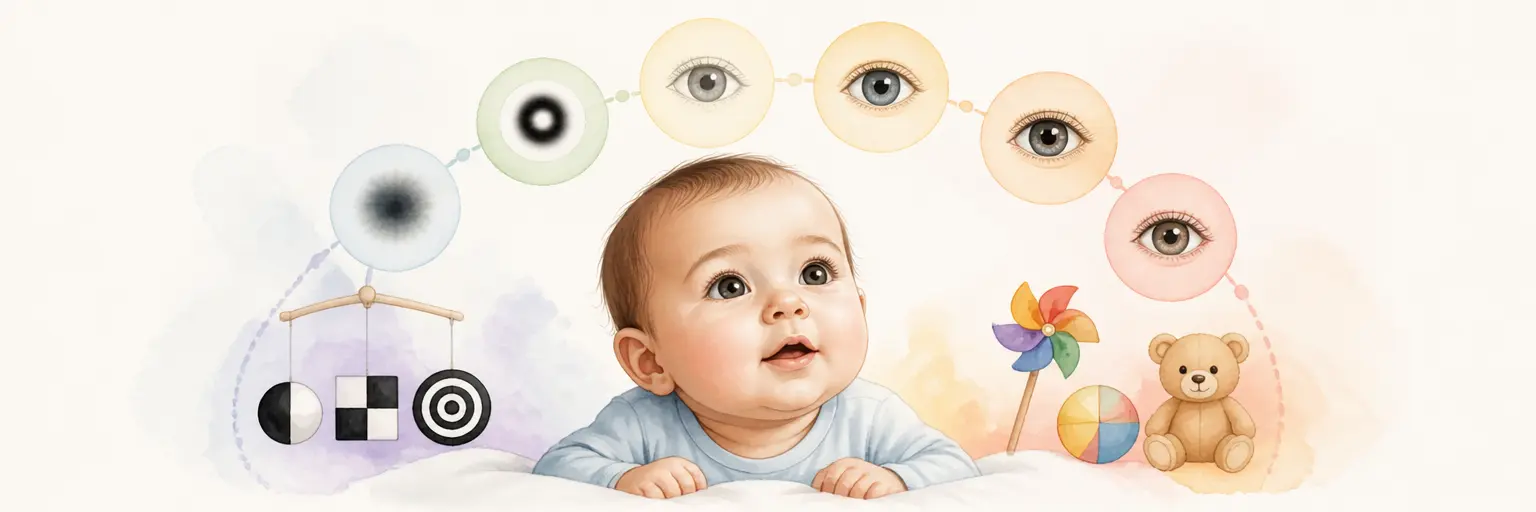
Color Vision in Babies: When Do They See the Rainbow?
Discover how your baby’s eyesight develops from blurry newborn vision to recognizing faces, colors, and objects! 👶✨ Explore key baby vision milestones, age-by-age expectations, and simple, safe activities that encourage visual stimulation and healthy development. Get trusted guidance from BabyCareHub to support your little one’s early learning, track progress, and know when to discuss concerns with a pediatrician.
6 articles
Baby's Visual World: A Parent's Guide to Understanding
Stimulating Sight: Fun Activities to Boost Your Baby's Vision
Newborn Vision: What Babies Can See Right After Birth
Visual Acuity: How Sharp is Your Baby's Vision?
4Month Vision: Tracking Objects and Recognizing Faces
👶 Baby’s Vision Development: Milestones and Stimulation
Welcome to BabyCareHub’s guide to baby vision development, where first-time parents can learn how a baby’s eyesight changes from birth through the first year and beyond. This subcategory covers infant vision milestones, visual tracking, depth perception, color recognition, eye coordination, and age-appropriate activities that encourage healthy visual development. Discover what babies typically see at different ages, how to support early learning through play, and when changes in vision may require advice from a pediatrician or eye-care professional.
🌟 Newborn Vision Milestones
Newborn babies do not see the world in the same way adults do. In the first weeks, vision is usually blurry, and babies often focus best on objects approximately 20–30 centimeters away, such as a parent’s face during feeding. Readers can learn about common newborn eyesight milestones, including sensitivity to bright light, brief eye contact, and an early preference for high-contrast patterns.
This section explains how a baby’s visual system gradually develops during the first month. Parents will find practical guidance on using gentle lighting, face-to-face interaction, and simple black-and-white images to provide safe visual stimulation for newborns without overwhelming them.
👀 Baby Vision Development by Age
Baby eyesight changes quickly during the first year. Around two months, many infants begin tracking moving objects, smiling socially, and maintaining eye contact for longer periods. By three to four months, babies may show improved eye coordination, reach toward interesting objects, and begin noticing more colors and details.
Parents can explore an easy-to-follow overview of vision milestones by month, including visual tracking, focusing, hand-eye coordination, depth perception, and recognizing familiar people. Every baby develops at an individual pace, but understanding typical patterns can help families observe progress and support healthy development.
🎨 Color, Contrast, and Visual Attention
High-contrast designs are often easier for young babies to notice than pale or complex images. As the visual system matures, infants typically become more interested in bright colors, faces, movement, and objects with clear shapes. This section explores how color recognition in babies and visual attention develop over time.
Readers will discover simple ways to encourage visual exploration using colorful toys, patterned books, mobiles, and everyday household objects. The focus is on age-appropriate baby activities that promote curiosity while allowing babies to rest when they look away, turn their head, or become fussy.
🧸 Activities to Stimulate Baby’s Eyesight
Thoughtful play can support early visual learning and hand-eye coordination. Parents can learn how to use tummy time, face-to-face games, slow-moving toys, peekaboo, picture books, and reaching activities to encourage babies to look, follow, focus, and interact with their surroundings.
These ideas are designed for everyday routines and do not require expensive equipment. BabyCareHub emphasizes safe visual stimulation, supervised play, and responsive interaction, helping parents understand when to introduce an activity, how long to continue, and how to adapt play to their baby’s age and interest.
👐 Vision and Hand-Eye Coordination
Vision and movement develop together. As babies learn to focus on an object, track it, and reach for it, they are building early hand-eye coordination. This section describes how grasping, transferring toys between hands, sitting, crawling, and exploring objects can support both visual and motor development.
Parents will find helpful suggestions for choosing safe toys with suitable sizes, textures, and shapes. They will also learn why supervised floor play and opportunities to explore are important for developing visual-motor skills in babies and encouraging confident movement.
🩺 Signs of Healthy Vision and When to Seek Advice
Most variations in early eye movement are temporary, especially during the newborn period. However, parents should know which behaviors are generally expected and which may deserve professional attention. This section discusses concerns such as persistent eye crossing, a noticeable difference between the eyes, unusual light sensitivity, frequent eye rubbing, or difficulty tracking objects.
Readers will learn when to speak with a pediatrician, family doctor, or pediatric eye specialist. BabyCareHub provides educational information—not a diagnosis—and encourages families to seek prompt medical guidance if they notice possible infant vision problems, a white reflection in the pupil, persistent redness, swelling, or a sudden change in visual behavior.
❓ Frequently Asked Questions About Baby’s Vision Development
👶 What can a newborn baby see?
Newborns usually see best at close range and may have blurry vision at greater distances. They often notice faces, light, movement, and high-contrast patterns. Their ability to focus and follow objects improves steadily during the first few months.
🔄 When do babies start tracking objects with their eyes?
Many babies begin briefly following slow-moving objects during the first two to three months. Tracking becomes smoother as eye coordination improves. Use a simple toy or your face, move it slowly from side to side, and stop if your baby loses interest or becomes tired.
🎨 When do babies start seeing color?
Babies can detect some visual differences from birth, but color vision becomes more developed during the first few months. By around four months, many infants show stronger interest in colorful toys, books, and objects with varied patterns.
🧸 How can I stimulate my baby’s vision safely?
Talk and smile face-to-face, offer high-contrast images, read simple picture books, provide supervised tummy time, and let your baby watch slow movements. Choose safe toys, avoid bright lights aimed directly at the eyes, and give your baby breaks when they look away or become overstimulated.
🩺 When should I worry about my baby’s eyesight?
Contact a healthcare professional if your baby has persistent eye crossing after the early months, does not appear to respond to faces or light, has trouble tracking objects, shows a cloudy or white-looking pupil, or has ongoing redness, swelling, or unusual sensitivity to light. Early evaluation can help identify and address vision concerns promptly.