
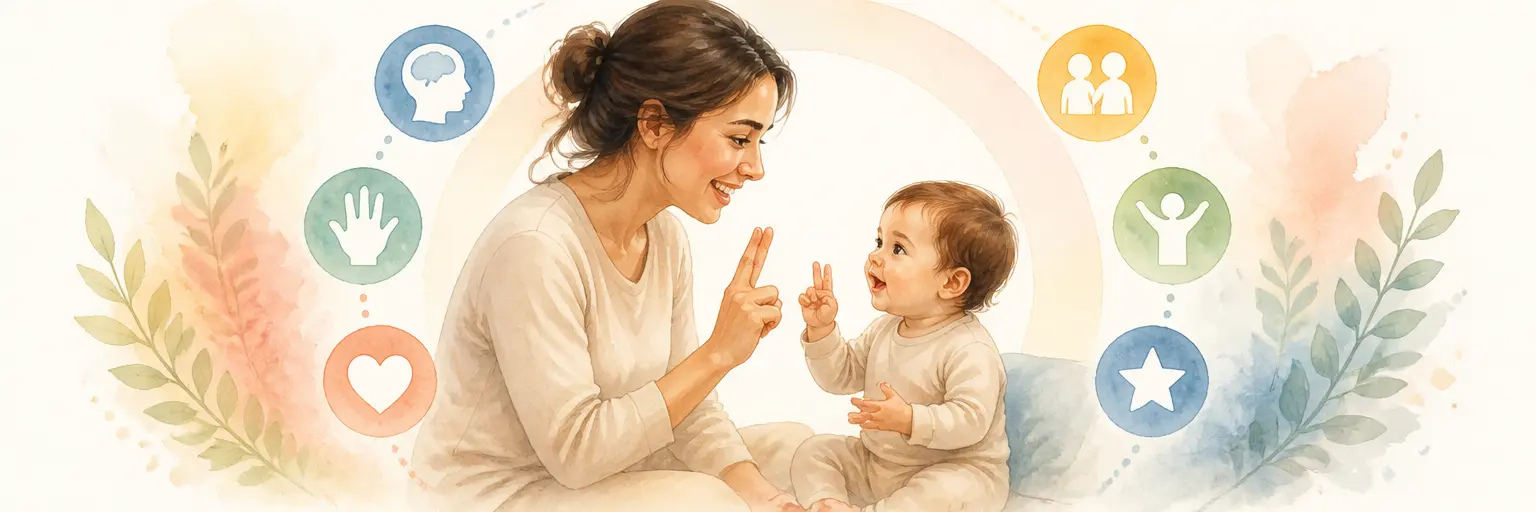
The Intriguing World of Baby Sign: Early Language Development
Discover how baby sign language can support early communication and developmental milestones! 🤟 Learn simple signs for everyday needs, reduce frustration, and strengthen bonding before your baby can speak. BabyCareHub offers friendly, practical guidance to help first-time parents introduce signing with confidence while encouraging language development, understanding, and connection. 👶✨
6 articles
Baby Sign Language: A LongTerm Investment in Your Child's Future
Baby Sign Language: Enhancing ParentChild Interaction
Beyond Babbling: How Baby Sign Language Can Transform Your Baby's Communication
Baby Sign Language 101: Essential Signs for FirstTime Parents
Baby Sign Language: Fostering a Stronger Bond Through Communication
🤟 Baby Sign Language: Introduction and Benefits
Welcome to BabyCareHub’s guide to baby sign language, a practical introduction for first-time parents who want to support early communication and developmental milestones. Baby signing uses simple gestures to help babies express everyday needs and ideas before they can clearly speak. In this subcategory, you will discover how baby sign language works, when to begin, which signs are most useful, and how signing can encourage language development, parent-child bonding, and responsive communication.
🌱 What Is Baby Sign Language?
Baby sign language is a collection of simple hand gestures used alongside spoken words. Parents and caregivers may sign words such as “milk,” “more,” “all done,” “sleep,” and “help” while saying them aloud. This approach does not replace speech; instead, it gives babies an additional way to communicate while their verbal language skills are developing.
Our beginner-friendly resources explain the difference between formal sign languages and adapted baby signs. You can learn how to use consistent gestures, spoken language, facial expressions, and eye contact during everyday routines, making signing a natural part of feeding, playtime, bath time, and bedtime.
🍼 When Should Babies Start Signing?
Many babies are ready to observe and imitate simple signs between approximately 6 and 12 months, although every child develops at a different pace. Babies do not need to perform a sign immediately to benefit from seeing one repeatedly. The best time to begin is when your baby shows interest in communication, watches your hands, reaches for objects, or uses gestures such as pointing and waving.
In this section, parents will find realistic guidance about baby sign language age recommendations and developmental readiness. You will learn how to start gradually, choose a few useful signs, and celebrate attempts without expecting perfect hand movements or immediate results.
💬 Benefits of Baby Sign Language
Baby signing may help reduce frustration by giving babies a way to communicate basic needs before they can speak clearly. Signs can support interactions around hunger, tiredness, discomfort, toys, and affection. When parents respond consistently, babies learn that communication is meaningful and that their messages are valued.
Using signs alongside speech may also encourage early language development, joint attention, imitation, turn-taking, and emotional connection. Baby sign language is not a guarantee of earlier speech, but it can create more opportunities for positive communication and help parents understand their baby’s cues.
👋 First Baby Signs to Teach
Simple, practical signs are often the easiest place to begin. Popular first signs include “milk,” “more,” “eat,” “drink,” “all done,” “sleep,” “help,” “please,” “thank you,” “mom,” and “dad.” Choose signs that match your baby’s daily experiences and repeat them during the same routines.
BabyCareHub provides guidance for introducing signs in a clear and consistent way. Parents can learn how to model one sign at a time, speak the word naturally, guide attention without forcing the baby’s hands, and use positive reinforcement when their baby watches, imitates, or creates an individual version of a sign.
🏡 How to Practice Baby Sign Language at Home
The most effective practice is short, relaxed, and connected to real life. Use signs during meals, diaper changes, story time, play, and family routines rather than treating signing like a formal lesson. Repetition is important because babies need many opportunities to see a gesture before they understand and use it.
Parents will find practical strategies for involving siblings, grandparents, childcare providers, and other caregivers. Consistent communication across settings can make signs easier to understand, while a warm and responsive approach helps ensure that baby signing remains enjoyable rather than stressful.
🧠 Baby Signs and Speech Development
Baby sign language is designed to complement spoken communication. Always say the word while making the sign so your baby connects the gesture with its spoken meaning. Continue talking, reading, singing, and responding to sounds and gestures to support a broad range of early communication skills.
This subcategory explains how signing can fit into healthy speech and language development without creating unrealistic expectations. You will also learn why children may use signs differently, why some babies prefer gestures while others move quickly to spoken words, and when to discuss communication concerns with a pediatrician or qualified speech-language professional.
❤️ Responsive Parenting and Parent-Baby Bonding
Signing creates opportunities for parents to slow down, observe their baby, and respond to intentional communication. When a baby signs or gestures and a caregiver answers appropriately, the interaction can strengthen trust and encourage further attempts to communicate.
Our articles connect baby sign language with responsive parenting, emotional development, secure attachment, and respectful caregiving. Parents can use signs not only to understand requests but also to acknowledge feelings, offer choices, and help babies participate in everyday family life.
❓ Frequently Asked Questions About Baby Sign Language
🤔 Is baby sign language suitable for every baby?
Most babies can be introduced to simple signs, regardless of whether they are verbal, highly active, shy, or developing at a different pace. Babies may respond at different ages and in different ways. Use spoken words, gestures, and facial expressions together, and avoid pressuring your baby to copy a sign.
🗣️ Will baby sign language delay speech?
There is no strong evidence that using signs alongside spoken language causes speech delay. Baby signing can support communication while verbal skills develop. Continue talking, reading, singing, and responding to vocal attempts. If you have concerns about speech, hearing, or overall development, consult your child’s healthcare professional.
⏰ How long does it take for a baby to learn a sign?
The time varies widely. Some babies imitate a gesture quickly, while others need weeks or months of repeated exposure. Use the same sign consistently during meaningful situations and celebrate approximations. A baby’s version of a sign may look different from the adult gesture and can still be intentional communication.
👐 How many baby signs should parents teach first?
Starting with three to five practical signs is often manageable. Consider words your baby experiences frequently, such as “milk,” “more,” “eat,” “all done,” and “sleep.” Once your baby understands or uses some signs, gradually add words related to play, feelings, family members, and daily routines.
👩⚕️ When should parents seek professional advice?
Speak with a pediatrician or qualified child development professional if your baby loses communication skills, does not respond to sounds, seems unable to hear, or you are concerned about overall development. Baby sign language can support communication, but it should not replace professional assessment, early intervention, or individualized medical guidance when needed.