
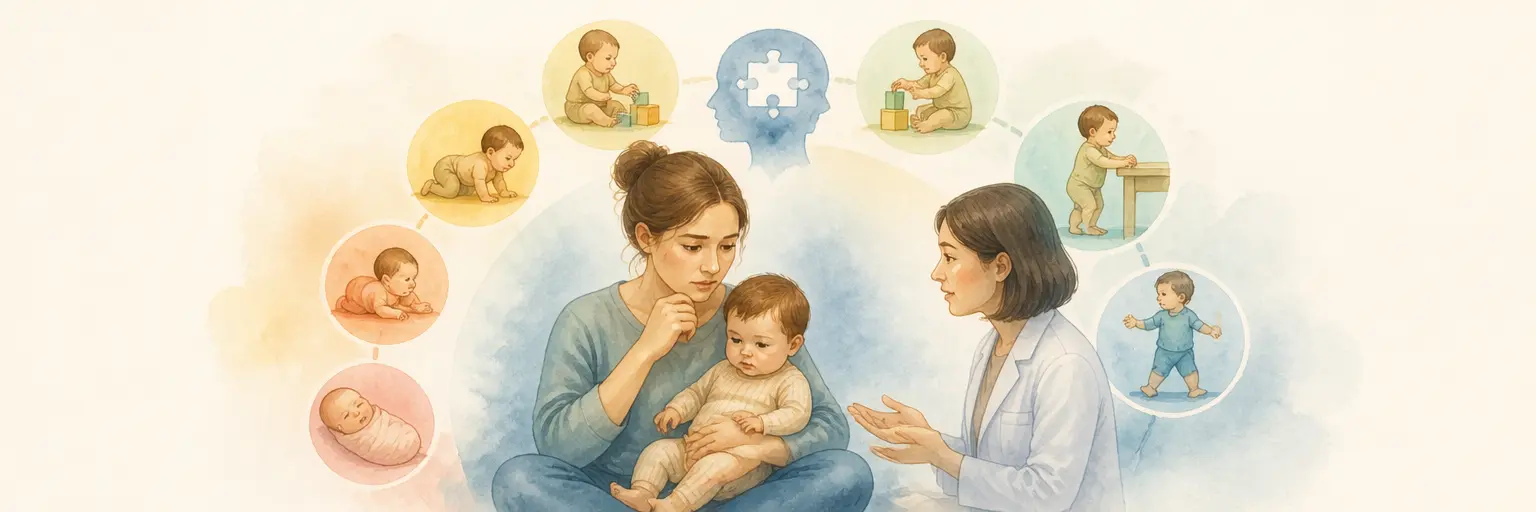
Is My Baby Developing Normally? Recognizing and Addressing Delays
Recognizing developmental delays early can help your baby receive timely support and reach important milestones with confidence. Learn which signs to watch for across communication, movement, social interaction, and learning, when development may vary naturally, and when to speak with a pediatrician or child development specialist. 💛 Trust your instincts—early guidance, screening, and intervention can make a meaningful difference in your child’s growth and well-being. 🧸
5 articles
Don't Panic: A Calm Guide to Identifying and Addressing Developmental Delays
The Mystery of Milestones: Spotting Developmental Delays in Babies
Decoding Infant Development: Recognizing the Signs of Potential Delays
Baby Development: Identifying Potential Delays and Knowing What to Do
Recognizing Developmental Delays and When to Seek Help 🧠👶
Welcome to BabyCareHub’s guide to recognizing developmental delays and knowing when to seek professional help. Every baby develops at their own pace, but understanding common developmental milestones can help parents notice patterns in movement, communication, learning, social interaction, and daily skills. This subcategory provides practical, reassuring information for first-time parents who want to monitor baby development without unnecessary worry. Early awareness and timely support can make a meaningful difference when a child needs additional evaluation or developmental services.
🔎 Understanding Developmental Milestones
Developmental milestones are skills that many babies and young children learn within a general age range. These skills may include smiling, making eye contact, reaching for objects, rolling over, sitting, crawling, walking, babbling, responding to sounds, using gestures, and interacting with caregivers. BabyCareHub explains how milestones relate to gross motor skills, fine motor skills, language development, cognitive development, and social-emotional growth.
Milestone checklists are useful tools, but they should not be treated as strict deadlines. Some children develop one skill earlier and another later, while premature babies may need to be assessed using their corrected age. Parents should look at overall progress, new skills emerging over time, and how their child responds to people and surroundings. Development is a process, not a competition.
⚠️ Common Signs of a Possible Developmental Delay
A developmental delay may occur when a child is not reaching expected skills in one or more areas, such as speech, movement, problem-solving, hearing, vision, or social interaction. Possible signs can include limited eye contact, little response to sounds or voices, difficulty sitting or moving, lack of gestures, very limited babbling, or challenges using both sides of the body. These signs do not automatically indicate a diagnosis, but they can be reasons to discuss development with a pediatrician.
Parents may also notice a child losing a skill they previously had. Regression should always be taken seriously and discussed promptly with a healthcare professional. Keeping notes about behaviors, new skills, concerns, and situations in which difficulties occur can help a pediatric provider understand the child’s development and recommend appropriate screening or evaluation.
🗣️ Speech, Language, and Communication Concerns
Communication development includes more than spoken words. Babies communicate through crying, facial expressions, gestures, eye contact, sounds, babbling, pointing, and responding to familiar voices. Possible communication concerns may include not reacting to loud sounds, not turning toward a caregiver’s voice, showing little interest in interaction, or not using age-appropriate sounds and gestures.
Speech and language delays can have several causes, including hearing difficulties, differences in development, oral-motor challenges, or limited opportunities for interaction. Parents can support communication by talking, reading, singing, copying sounds, naming objects, and responding warmly to attempts to communicate. If concerns continue, a pediatrician may recommend hearing testing, speech-language evaluation, or early intervention services.
🏃 Motor Skills and Physical Development
Gross motor skills involve large movements such as lifting the head, rolling, sitting, crawling, standing, and walking. Fine motor skills involve smaller movements, including grasping toys, bringing objects to the mouth, transferring items between hands, using a pincer grasp, and feeding with increasing independence. A delay in these areas may appear as persistent difficulty with movement, unusual stiffness or floppiness, or limited use of one side of the body.
Safe floor play, supervised tummy time, reaching for age-appropriate toys, and opportunities to move freely can encourage physical development. However, parents should not force a baby into positions they cannot achieve independently. Seek medical guidance if movement seems unusually difficult, asymmetrical, painful, or significantly behind expectations, especially if a child loses previously acquired motor skills.
💛 Social-Emotional and Behavioral Development
Social-emotional development includes how children connect with caregivers, express feelings, respond to comfort, share attention, imitate actions, and engage in play. Parents may have concerns when a child rarely smiles socially, does not show interest in people, has difficulty responding to facial expressions or voices, or seems consistently disconnected from familiar caregivers. Differences in temperament are normal, but persistent patterns deserve attention.
Behavioral differences should be considered alongside communication, sensory responses, and daily functioning. A child who avoids certain textures, reacts strongly to sounds, or has difficulty with transitions may benefit from a professional evaluation. Seeking advice is not labeling a child; it is a way to understand their needs and identify supportive strategies early.
🩺 When to Contact a Pediatrician
Parents should contact a pediatrician whenever they feel concerned about a baby’s development, even if the child has reached some milestones. A healthcare provider can review the child’s medical history, birth history, family history, hearing and vision, growth, and milestone progress. Regular well-child visits are important opportunities for developmental screening and early detection.
Do not wait for a scheduled appointment if your child loses skills, does not respond to sounds, has unusual muscle tone, experiences concerning movements, or appears to have difficulty seeing, hearing, breathing, feeding, or interacting. If symptoms are sudden or severe, seek urgent medical care. Professional advice is especially important for premature babies or children with known medical conditions.
🌱 Early Intervention and Developmental Support
Early intervention provides services that support infants and young children with developmental concerns. Depending on a child’s needs, support may include physical therapy, occupational therapy, speech-language therapy, behavioral guidance, hearing services, vision services, or family coaching. These services are designed to build skills through play and everyday routines.
Parents are active partners in developmental care. Ask providers to explain screening results, recommended therapies, expected goals, and ways to practice skills at home. Early support can strengthen communication, movement, learning, and confidence, while also helping families feel informed and prepared.
❓ Frequently Asked Questions About Developmental Delays
What is a developmental delay?
A developmental delay means a child is developing a skill later than expected in one or more areas, such as movement, speech, learning, social interaction, or daily living. A delay is not the same as a diagnosis and may be temporary or related to an underlying condition. A pediatric evaluation can clarify what support may be appropriate.
Should I worry if my baby misses one milestone?
Missing one milestone does not always indicate a problem because children develop at different rates. Consider the child’s overall progress, whether other skills are emerging, and whether there are additional concerns. If a milestone is significantly delayed or you feel uneasy, discuss it with your pediatrician rather than relying only on online checklists.
Can developmental delays be prevented?
Not all developmental delays can be prevented, and parents are not to blame when a delay occurs. You can support healthy development with responsive caregiving, safe movement opportunities, talking, reading, play, good nutrition, regular medical visits, and recommended vaccinations. Early screening helps identify concerns and connect families with appropriate services.
What should I do if my child loses a skill?
Contact your pediatrician promptly if your child loses a skill they previously used, such as babbling, eye contact, gestures, walking, or responding to familiar people. Write down when the change began and record examples if possible. Skill regression should be evaluated by a qualified healthcare professional.
Where can I get help for a possible developmental delay?
Start by contacting your child’s pediatrician or family doctor. They may recommend developmental screening, hearing or vision tests, specialists, or local early intervention programs. Depending on your location, public health agencies, child development centers, and speech, occupational, or physical therapists may also provide support. Seeking help early is a positive step toward understanding and supporting your child.