
Is My Baby Developing Normally? Recognizing and Addressing Delays


Welcome to BabyCareHub, your ultimate guide to navigating the incredible journey of parenthood! Are you curious about your little one's progress and eager to ensure they're hitting their developmental milestones? Then you're in the right place. We're here to provide you with the essential knowledge and practical tools you need to confidently care for your baby. Discover our comprehensive Baby development milestones checklist and learn how to recognize and address any potential delays. Let's embark on this exciting adventure together!
- Understanding Baby Development Milestones Checklist: A Parent's Guide
- Using a Baby Development Milestones Checklist: Month-by-Month Guide
- Recognizing Potential Delays in Baby Development
- When to Seek Professional Help for Baby Development Concerns
- Supporting Your Baby's Development: Activities and Tips
-
Frequently Asked Questions
- What is a baby development milestones checklist?
- When should I start using a baby development milestones checklist?
- What are some key developmental milestones to watch for in the first year?
- What should I do if my baby is not meeting the developmental milestones?
- Where can I find a reliable baby development milestones checklist?
- Final Reflection: Navigating the Journey of Early Childhood Development
- Unlock Your Baby's Developmental Potential
Understanding Baby Development Milestones Checklist: A Parent's Guide
Navigating the world of parenthood, especially for first-time parents, can feel overwhelming. One of the most common anxieties revolves around a baby's development: Is my baby growing and learning at the expected pace? This comprehensive guide provides a detailed Baby development milestones checklist, outlining key developmental stages during the crucial first year. Understanding these milestones will empower you to monitor your baby's progress, recognize potential delays early, and seek appropriate support when needed.
Remember, every baby develops at their own pace, but this checklist offers a valuable framework for identifying areas warranting further attention. We’ll explore physical, cognitive, social-emotional, and language milestones, providing you with the tools and knowledge to confidently navigate this exciting journey. Early identification is key, so let's dive into what you can expect from your little one in the first year of life. 🎉
Key Developmental Milestones: First Year
The first year of your baby's life is a period of incredible growth and development. Tracking your baby's progress against these milestones can help you identify potential areas for concern and seek timely professional guidance if needed. Remember that these are averages, and some variation is perfectly normal. However, significant deviations warrant a consultation with your pediatrician.
Physical Development Milestones
This section focuses on the physical achievements your baby should reach during their first year. These milestones involve gross motor skills (large muscle movements) and fine motor skills (small muscle movements).
- 0-3 Months: Lifts head when lying on stomach; follows moving objects with eyes; begins to grasp objects.
- 4-6 Months: Rolls over; sits with support; reaches for and grasps toys; brings hands to mouth.
- 7-9 Months: Sits without support; crawls; pulls to stand; transfers objects from one hand to the other.
- 10-12 Months: Stands alone; walks with assistance or independently; pincer grasp (using thumb and forefinger).
| Age Range | Gross Motor Skills | Fine Motor Skills |
|---|---|---|
| 0-3 Months | Lifts head, follows objects with eyes | Grasps objects reflexively |
| 4-6 Months | Rolls over, sits with support | Reaches for and grasps toys, brings hands to mouth |
| 7-9 Months | Sits without support, crawls, pulls to stand | Transfers objects between hands |
| 10-12 Months | Stands alone, walks with assistance or independently | Pincer grasp |
Cognitive Development Milestones
Cognitive development encompasses learning, problem-solving, and memory. Here's what you can expect in your baby's cognitive journey during the first year.
- 0-3 Months: Responds to sounds; focuses on faces; shows interest in brightly colored objects.
- 4-6 Months: Recognizes familiar faces; anticipates feeding; begins to babble.
- 7-9 Months: Understands object permanence (objects exist even when out of sight); plays peek-a-boo; begins to explore environment more actively.
- 10-12 Months: Points to objects; searches for hidden objects; responds to simple requests; understands simple words.
Remember, consistent engagement and interaction with your baby significantly influences their cognitive development. Reading, singing, and playing are crucial!
Social and Emotional Development Milestones
Social-emotional development focuses on your baby's ability to interact with others and regulate their emotions.
- 0-3 Months: Smiles spontaneously; shows contentment; calms when held.
- 4-6 Months: Laughs; shows affection; enjoys social interaction.
- 7-9 Months: Shows stranger anxiety; seeks comfort from caregivers; exhibits separation anxiety.
- 10-12 Months: Waves goodbye; shows preference for certain people; responds to their name.
Tips for Fostering Social-Emotional Development
Regular interaction, including face-to-face time, talking, singing, and playing, is essential. Responding to your baby's cues and providing a secure and loving environment helps them develop healthy social-emotional skills.
Language Development Milestones
Language development is a gradual process starting from the very first sounds your baby makes.
- 0-3 Months: Coos; makes gurgling sounds.
- 4-6 Months: Babbles; responds to sounds.
- 7-9 Months: Begins to understand simple words; may say "mama" or "dada" nonspecifically.
- 10-12 Months: Says simple words; understands simple instructions; points to objects when named.
This checklist provides a general guideline. If you have any concerns, always consult your pediatrician. Early intervention is crucial for addressing any developmental delays. Remember, your baby's journey is unique, and celebrating each milestone, big or small, is key! ❤️
Using a Baby Development Milestones Checklist: Month-by-Month Guide
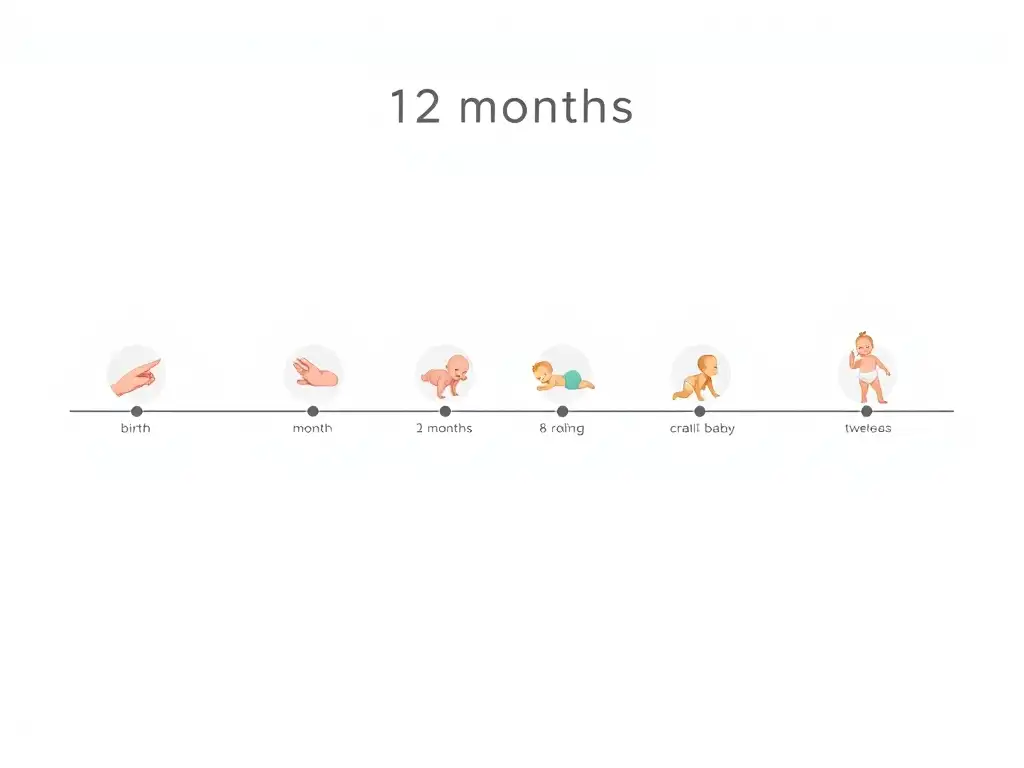
This section provides a detailed month-by-month guide to help you track your baby's development using a baby development milestones checklist. Remember, every baby develops at their own pace, but this checklist offers a general framework for observation. Significant deviations from the expected milestones warrant consultation with your pediatrician. This isn't a diagnostic tool, but rather a helpful resource for monitoring your little one's progress. Early intervention is key, so using this checklist proactively can provide peace of mind and early identification of potential concerns.
0-3 Months: Early Development and Key Observations
This initial phase focuses on fundamental reflexes and sensory development. Your baby development milestones checklist for this period should include:
- Reflexes: Observe the rooting reflex (turning towards a touch on the cheek), sucking reflex, grasping reflex, and Moro reflex (startle reflex). These reflexes are typically strong at birth and gradually diminish over the first few months. Persistent or absent reflexes may indicate a developmental concern.
- Sensory Development: Notice your baby's response to sounds, sights, and touch. They should begin to follow moving objects with their eyes and show interest in faces. A lack of response to stimuli could warrant further investigation.
- Motor Skills: While still largely immobile, your baby should be able to briefly lift their head when lying on their tummy. Observe the strength and symmetry of their movements. Asymmetry or weakness could indicate a problem.
- Social Interaction: Your baby should begin to show signs of social engagement, such as smiling, cooing, and responding to your voice. Limited social interaction might suggest a need for further assessment.
| Milestone | Expected Timing (Range) | Observation Notes |
|---|---|---|
| Head lift (lying on tummy) | 2-3 months | Note the duration and strength of head lift. |
| Following moving objects | 1-3 months | Observe eye tracking and focus. |
| Social smile | 2-3 months | Note frequency and response to social interaction. |
| Grasping reflex | Present at birth | Observe strength and duration of grasp. |
Example of a potential concern:
A baby who consistently fails to lift their head at 3 months, shows little interest in faces, and has weak reflexes should be evaluated by a pediatrician.
4-6 Months: Significant Developmental Leaps and Monitoring
This period witnesses significant leaps in motor skills, cognitive development, and social interaction. Your baby development milestones checklist should now include:
- Motor Skills: Your baby should be able to roll over, sit with support, and perhaps even begin to crawl. Observe the strength and coordination of their movements. A delay in achieving these milestones could signify a developmental issue.
- Cognitive Development: They should begin to recognize familiar faces and objects, and show increased interest in exploring their surroundings. Pay attention to their ability to reach for and grasp objects.
- Social Interaction: Cooing and babbling should become more frequent and varied. They may begin to respond to their name and show increased engagement with caregivers. Reduced interaction or lack of babbling could warrant attention.
- Feeding: Most babies transition to solid foods around 6 months. Monitor their acceptance of new textures and foods. Difficulties with feeding can sometimes be related to underlying developmental issues.
This is a crucial period for monitoring progress. Consistent tracking using your baby development milestones checklist will help identify any potential delays early. Remember, consistency and observation are key.
7-9 Months: Increased Mobility and Cognitive Growth
By this stage, your baby's mobility and cognitive skills are significantly more developed. Your baby development milestones checklist should reflect these advancements:
- Mobility: Many babies are crawling, pulling themselves up to stand, and even taking their first steps. Observe their gait, balance, and coordination. Any significant asymmetry or difficulty with movement should be noted.
- Cognitive Development: Object permanence (understanding that objects continue to exist even when out of sight) is developing. They may start playing simple games, such as peek-a-boo. A lack of understanding of object permanence could suggest a delay.
- Language Development: Babbling becomes more complex, and they may begin to understand simple words. They might point to objects or people to communicate their needs. Limited language development should be discussed with your pediatrician.
- Fine Motor Skills: They should be able to pick up small objects using a pincer grasp (thumb and forefinger). Observe their hand-eye coordination and dexterity.
This stage marks a significant shift towards increased independence and exploration. Continued monitoring using your baby development milestones checklist will help ensure that your baby is progressing as expected. Remember, early intervention is key for optimal development. If you have any concerns, consult your pediatrician.
10-12 Months: Major Milestones and Preparing for Toddlerhood
This period marks a significant transition, as your little one is on the cusp of toddlerhood. The changes you observe during these months are remarkable, showcasing rapid physical, cognitive, and social-emotional development. A key aspect of tracking your baby's progress during this time is using a baby development milestones checklist, focusing on both the expected achievements and subtle signs of potential delays.
One of the most exciting milestones is independent mobility. Many babies begin cruising around furniture at around 10 months, building strength and coordination for their upcoming solo walks. By 12 months, most babies are taking their first independent steps, though the timing varies significantly. Some may walk earlier, others later, and this is perfectly normal. Observe your baby's attempts at walking – do they show enthusiasm? Do they persevere after falling? These are indicators of their developing determination and motor skills. Remember, a baby development milestones checklist should be used as a guide, not a rigid rulebook.
Beyond locomotion, significant cognitive advancements occur. Babies at this age exhibit improved problem-solving skills. They might attempt to stack blocks, albeit imperfectly, showing an understanding of object permanence and spatial relationships. Their babbling becomes more sophisticated, incorporating melodic patterns and even mimicking certain sounds.
Many babies start saying their first words, typically "mama" or "dada," although understanding comes before production, with babies responding to simple commands like "come here" or "give me that". This is a crucial time to engage them in interactive games and conversations, enriching their language development. A baby development milestones checklist can help you track these language milestones alongside the physical ones.
Socially and emotionally, 10-12 months is a time of growing independence and attachment. Babies at this age show a clear preference for their primary caregivers, exhibiting separation anxiety when left alone. They also show an increasing understanding of social cues, responding to smiles and expressions with reciprocal actions.
They may begin to show signs of empathy, comforting a crying sibling or showing concern for a distressed parent. While using a baby development milestones checklist to track these social-emotional aspects can be helpful, it's also important to observe the overall context. A baby might not exhibit all the listed behaviors but still be developing normally, given their unique temperament.
Preparing for toddlerhood involves creating a safe and stimulating environment. Baby-proofing the home becomes paramount, as their newfound mobility increases their exploration. Introduce age-appropriate toys that encourage problem-solving, creativity, and fine motor skill development. Continue with regular interactions, reading books, singing songs, and engaging in playful activities.
Maintaining consistent routines is crucial for their sense of security and predictability. Remember that a baby development milestones checklist, while helpful, is just one tool in navigating this exciting phase of your baby's life. Trust your instincts and seek professional guidance if you have any concerns. Your baby's unique developmental journey is what truly matters.
Recognizing Potential Delays in Baby Development
This section provides a practical checklist to help you identify potential developmental delays in your baby. Early detection is crucial for timely intervention and maximizing your baby's developmental potential. Remember, every baby develops at their own pace, but significant deviations from the typical milestones warrant attention. This checklist is not a diagnostic tool, but rather a guide to help you recognize when professional assessment may be beneficial. Using this "baby development milestones checklist" can ease parental anxieties and provide a clear path forward.
Identifying Signs of Developmental Delays: A Practical Checklist
This checklist organizes potential developmental delays into four key areas: physical, cognitive, social-emotional, and language. It's designed to be used as a guide and should not replace professional medical advice. If you have concerns about your baby's development, consult your pediatrician or a child development specialist. Early intervention is key.
Physical Development Delays
Physical milestones involve gross motor skills (large muscle movements like crawling and walking) and fine motor skills (small muscle movements like grasping and using utensils). Delays might manifest as:
- Gross Motor:
- Not rolling over by 6 months.
- Not sitting unsupported by 8 months.
- Not crawling by 12 months.
- Not walking by 18 months.
- Persistent difficulty with balance or coordination.
- Fine Motor:
- Not reaching for objects by 4 months.
- Not grasping objects by 6 months.
- Difficulty with pincer grasp (using thumb and forefinger) by 12 months.
- Inability to stack blocks by 18 months.
- Poor hand-eye coordination.
Consider the following example: A 15-month-old who cannot sit without support might be exhibiting a delay in gross motor development. This warrants a discussion with your pediatrician to rule out any underlying issues.
Cognitive Development Delays
Cognitive development encompasses problem-solving, learning, and memory. Red flags may include:
- Limited interest in exploration or play. A baby who shows little curiosity about their surroundings or avoids engaging in age-appropriate activities might be experiencing a cognitive delay.
- Difficulty with cause and effect. Not understanding that actions have consequences (e.g., shaking a rattle makes a noise) can indicate a potential delay.
- Lack of object permanence. This refers to the understanding that objects continue to exist even when out of sight. A baby who doesn't search for a hidden toy may be exhibiting a developmental delay.
- Delayed problem-solving skills. For example, a child struggling to solve simple puzzles or adapt to new situations.
This area requires careful observation. For instance, a 10-month-old who doesn't attempt to reach for objects that are just out of reach could suggest a potential delay in understanding cause and effect and object permanence. This should be discussed with a healthcare professional.
Social and Emotional Development Delays
Social-emotional development focuses on interactions, emotional regulation, and attachment. Potential delays might appear as:
- Lack of responsiveness to social cues. A baby who doesn't respond to smiles, voices, or attempts at interaction.
- Difficulty with emotional regulation. Persistent crying, inconsolable tantrums, or extreme anxiety.
- Limited social engagement. Avoiding eye contact, preferring solitary play, or showing little interest in others.
- Attachment issues. Difficulty forming secure attachments with caregivers, showing inconsistent or inappropriate responses to separation and reunion.
Observe how your baby interacts with others. A child who consistently avoids eye contact and shows no interest in playing with other children, even at a playgroup setting, may be experiencing social-emotional developmental delays. This requires further evaluation by a specialist.
Language Development Delays
Language development involves receptive language (understanding spoken language) and expressive language (producing language). Signs of delay can include:
- Limited babbling by 8 months.
- Not using single words by 12 months.
- Not using two-word phrases by 18 months.
- Difficulty understanding simple instructions.
- Limited vocabulary for their age.
For example, a 18-month-old who does not use any two-word phrases, such as "mama go," could be showing a language delay. Early intervention through speech therapy can be extremely beneficial. This is a crucial area to monitor carefully using your "baby development milestones checklist".
Remember, this checklist is for informational purposes only. If you are concerned about your baby's development, consult with a healthcare professional for a proper assessment and guidance. Early intervention is key to supporting your child's growth and development.
When to Seek Professional Help for Baby Development Concerns

Concerns about your baby's development are perfectly normal, especially for first-time parents. While every child develops at their own pace, understanding key developmental milestones provides a valuable framework for recognizing potential delays. This section focuses on when professional intervention becomes crucial and outlines the steps you can take. Remember, early intervention is key to optimizing your child's development and ensuring they reach their full potential.
A proactive approach can make a significant difference in their long-term well-being. This section will equip you with the knowledge to navigate this crucial phase of parenting and understand the importance of seeking professional guidance when needed. Utilizing a comprehensive baby development milestones checklist is a great first step, but knowing when to seek further assistance is equally important.
Consulting Your Pediatrician: Importance of Regular Checkups
Regular checkups with your pediatrician are fundamental to monitoring your baby's development. These visits aren't just about vaccinations; they provide opportunities for a thorough assessment of your child's progress across various developmental domains. Your pediatrician will use standardized tools and observations to evaluate your baby's growth, motor skills, language development, and social-emotional skills. They can compare your baby's performance against age-appropriate benchmarks and identify any potential concerns early on.
During these visits, be sure to openly communicate any worries or observations you have. Even seemingly minor concerns, such as a delay in reaching a specific milestone or noticeable differences in your baby's behavior compared to other children their age, warrant discussion. Your pediatrician can offer reassurance, provide personalized guidance, and recommend further evaluations if necessary. Don't hesitate to bring a baby development milestones checklist to your appointments to aid in tracking progress and highlighting any areas of concern.
Early detection of developmental delays often leads to better outcomes. Remember, your pediatrician is your partner in ensuring your baby's healthy development. They are trained to recognize subtle signs that might indicate a need for further investigation.
Early Intervention Programs: Benefits and Access
If your pediatrician identifies a potential developmental delay, they may recommend early intervention programs. These programs offer specialized services designed to support infants and toddlers with developmental challenges. These services are typically provided by a team of professionals, including therapists, educators, and specialists, who work together to create a comprehensive intervention plan tailored to your child's unique needs.
The benefits of early intervention are substantial. Early intervention programs aim to address developmental delays as early as possible, maximizing the chances of improvement. Studies show that early intervention can significantly improve a child's cognitive, physical, and social-emotional development. These programs offer a supportive environment where children can learn and grow, often showing remarkable progress.
Access to these programs varies by location, but most regions have systems in place to provide support. Your pediatrician can guide you through the process of accessing early intervention services in your area. They can provide referrals, explain the eligibility criteria, and help you navigate the application process. Early intervention is an investment in your child's future; it provides them with the tools and support they need to thrive.
Addressing Developmental Delays: Strategies and Support
Addressing developmental delays requires a multi-faceted approach, often involving a combination of therapies and support services. The specific interventions will depend on the nature and severity of the delay. Common interventions include:
- Physical therapy: Helps improve motor skills, coordination, and gross motor abilities.
- Occupational therapy: Focuses on fine motor skills, sensory integration, and daily living skills.
- Speech therapy: Addresses language delays, articulation difficulties, and communication challenges.
- Developmental therapy: Provides a holistic approach to addressing various developmental areas.
Beyond professional therapies, parental involvement is crucial. Parents play a vital role in implementing strategies at home and reinforcing the skills learned during therapy sessions. Many programs offer parent training and education to equip parents with the tools and knowledge to support their child's development effectively. Remember, you are your child's primary caregiver and your active participation is key to their success.
Building a strong support network is also essential. Connecting with other parents facing similar challenges can provide invaluable emotional support and practical advice. Support groups and online communities offer a safe space to share experiences and learn from others.
Navigating developmental delays can be challenging, but with professional guidance, parental involvement, and a supportive network, you can help your child reach their full potential. Remember to celebrate every milestone, no matter how small, and remember that progress, not perfection, is the goal. A well-structured baby development milestones checklist, combined with professional advice, will empower you to support your child's journey.
Supporting Your Baby's Development: Activities and Tips
This section focuses on practical strategies and engaging activities to nurture your baby's development, aligning with the crucial developmental milestones. Remember, every baby develops at their own pace, but consistent engagement and stimulation can significantly contribute to healthy growth. This information complements a "baby development milestones checklist" by providing actionable steps to support your little one's progress.
Creating a Stimulating Environment for Optimal Development
A rich and responsive environment plays a vital role in your baby's development. Think of it as building a foundation for learning and growth. This goes beyond simply providing toys; it's about creating a space that engages all their senses.
Here's how to create a stimulating environment for your baby:
- Visual Stimulation: Hang colorful mobiles above the crib, or use high-contrast patterns like black and white. Rotate these regularly to keep your baby engaged. Babies are fascinated by movement, so consider a mobile that spins gently.
- Auditory Stimulation: Sing songs, read stories, and play soft music. Talk to your baby frequently, even if they don't understand the words. The sound of your voice is comforting and stimulating. Consider incorporating different types of music – classical, lullabies, and even some upbeat tunes.
- Tactile Stimulation: Offer a variety of textures for your baby to touch and explore. Soft blankets, textured toys, and even different fabrics can provide enriching sensory experiences. Supervise closely, and ensure all materials are safe for babies.
- Taste and Smell: Introduce different, safe smells and tastes gradually. The scent of lavender can be calming, while the taste of breast milk or formula is obviously essential. Always introduce new foods appropriately and according to your pediatrician's recommendations.
- Safe Exploration: Baby-proof your home thoroughly to allow safe exploration. A safe space allows your baby to confidently explore their surroundings, fostering independence and development. This is crucial for their physical and cognitive development. Remember to regularly check for any potential hazards.
Remember to observe your baby's reactions and adjust the stimulation accordingly. Over-stimulation can be just as detrimental as under-stimulation. Observe their cues for tiredness or frustration.
Engaging Activities to Promote Physical Development
Physical development is fundamental to a baby's overall growth. Activities that promote gross motor skills (large muscle movements) and fine motor skills (small muscle movements) are crucial.
Here are some engaging activities to encourage physical development:
- Tummy Time: Essential for strengthening neck, shoulder, and back muscles. Start with short sessions and gradually increase the duration as your baby gets stronger. Make it fun by placing toys within reach. Remember to always supervise your baby during tummy time.
- Reaching and Grasping: Offer toys of varying sizes and textures to encourage reaching, grasping, and manipulating objects. This improves hand-eye coordination and strengthens fine motor skills.
- Rolling Over: Encourage rolling by gently guiding your baby's movements. This helps develop coordination and body awareness. Celebrate their successes!
- Sitting Up: Support your baby while they sit up, gradually reducing support as they gain strength. Never leave a baby unsupervised while sitting up.
- Crawling: Create a safe space for crawling. Encourage crawling by placing toys just out of reach. This strengthens leg and arm muscles and improves coordination.
Interactive Games to Boost Cognitive Skills
Cognitive development encompasses learning, problem-solving, and memory. Interactive games can significantly boost these skills.
Here are some engaging games that promote cognitive development:
- Peek-a-boo: A classic game that teaches object permanence (understanding that things still exist even when they are out of sight). Babies love this game and it's a great way to bond.
- Singing Songs and Rhymes: Nursery rhymes and songs enhance language development and memory. The repetition helps with memorization and rhythm recognition.
- Reading Books: Reading to your baby, even from a very young age, stimulates language development and fosters a love of reading. Use colorful books with simple pictures.
- Sorting and Matching: As your baby gets older, introduce simple sorting and matching activities using toys or household items. This helps develop problem-solving skills.
- Cause and Effect: Show your baby how actions have consequences. For example, shaking a rattle makes a sound. This helps them understand the relationship between actions and reactions.
Remember to consult your pediatrician or child development specialist if you have any concerns about your baby's development. Early intervention is key to addressing any potential delays. Use this information in conjunction with a comprehensive "baby development milestones checklist" to monitor progress and celebrate each achievement. 🎉
Encouraging Language Development Through Play
Playing with your baby is crucial for their language development. From the earliest stages, babies begin to understand the rhythm and intonation of your voice, laying the groundwork for future language acquisition. Simple actions, like singing lullabies or nursery rhymes, expose them to different sounds and patterns. The repetitive nature of these songs helps them memorize words and phrases, fostering early vocabulary development. Even seemingly insignificant actions, such as pointing at objects and naming them ("Look, a ball! "), contribute significantly to language acquisition. Remember to use clear, simple language tailored to your baby's age and understanding.
As your baby grows, interactive games become increasingly beneficial. Reading aloud, even before your baby understands the words, helps develop their listening skills and introduces them to the structure of language. Using colorful picture books with simple images and repetitive phrases enhances comprehension. Make reading a fun, engaging experience by using different voices and expressive tones.
Pointing to the pictures and narrating the story helps connect the visual with the auditory, strengthening their understanding of words and concepts. Don't underestimate the power of simple conversations, even if your baby isn't responding verbally. Talking about your daily activities, describing what you're doing, and engaging in back-and-forth vocalizations, even if it's just gurgles and coos from your baby, helps build their communication skills. By consistently engaging in these playful interactions, you're actively shaping your baby's language development journey.
Remember that consistency is key; regular, dedicated playtime yields the best results. The more you interact, the faster their language skills will blossom. Consider incorporating songs with actions, like "Itsy Bitsy Spider," to enhance sensory engagement and language learning simultaneously.
Moreover, interactive toys that stimulate language development are readily available. These toys often involve sounds, lights, and simple actions that encourage your baby to interact and learn. Always supervise your baby during playtime to ensure their safety and maximize the learning opportunities. Remember that every interaction, no matter how small, contributes to your baby’s overall language development.
Your baby's social and emotional development is just as important as their physical development. From birth, babies are learning to understand and respond to the emotions of those around them. Responding consistently and sensitively to your baby's cues is paramount. This means paying close attention to their expressions, body language, and vocalizations to understand their needs and feelings. Whether it's a cry of hunger, discomfort, or simply a desire for closeness, responding promptly and appropriately helps your baby develop a sense of security and trust. This secure attachment forms the foundation for their future social and emotional growth.
Skin-to-skin contact is incredibly beneficial for emotional development. This close physical contact releases oxytocin, a hormone that promotes bonding and reduces stress in both parent and child. Regular cuddling, rocking, and singing provide comfort and reassurance, helping your baby feel loved and secure. These simple acts of affection build a strong emotional connection, which is vital for their overall well-being.
As your baby grows, encourage social interaction by introducing them to other people in a safe and controlled environment. This allows them to observe and learn from different social interactions. Remember to always prioritize your baby's comfort and safety when introducing new people or situations. Observe your baby's reactions carefully and respect their cues. If they seem overwhelmed or distressed, provide comfort and reduce stimulation. Gradually increasing exposure to different social situations helps your baby develop their social skills and confidence.
Positive reinforcement plays a crucial role in fostering emotional well-being. Celebrating your baby's achievements, no matter how small, helps build their self-esteem and confidence. Using positive language and encouraging words helps your baby develop a positive self-image. Avoid harsh criticism or punishment, as this can have a negative impact on their emotional development.
Instead, focus on providing a nurturing and supportive environment where your baby feels safe to explore and express themselves. Creating a consistent and predictable routine can also contribute to a sense of security and stability, reducing anxiety and promoting emotional well-being. This predictable environment helps your baby feel safe and secure, which is essential for healthy emotional development. Remember, consistent love, care, and attention are the cornerstones of fostering a happy and emotionally secure baby.
Frequently Asked Questions
What is a baby development milestones checklist?
A baby development milestones checklist is a tool that tracks your baby's progress in various areas like physical skills, language, and social-emotional development. It helps identify potential delays and ensures your baby is meeting age-appropriate expectations. Refer to your pediatrician for personalized guidance.
When should I start using a baby development milestones checklist?
You can start using a checklist from birth, although the most significant milestones appear in the first few months. Regular monitoring helps you track your baby's progress and allows for early intervention if needed. Consult your pediatrician for recommendations.
What are some key developmental milestones to watch for in the first year?
Key milestones include rolling over, sitting up, crawling, and eventually walking. Language development involves babbling, responding to sounds, and potentially saying first words. Social-emotional development includes smiling, engaging with caregivers, and showing affection.
What should I do if my baby is not meeting the developmental milestones?
If you're concerned your baby isn't meeting milestones, don't panic. First, consult your pediatrician. They can assess your baby's development and offer personalized advice or refer you to specialists if needed. Early intervention is key.
Where can I find a reliable baby development milestones checklist?
BabyCareHub offers a comprehensive guide and resources including a baby development milestones checklist. You can also consult your pediatrician or find reliable checklists from reputable organizations like the American Academy of Pediatrics. Remember to use these as guides, not strict rules.
The anxieties surrounding a child's development are universal, yet the readily available information can often feel overwhelming. Understanding the typical milestones is crucial, not to create a race against time, but to empower parents and caregivers to advocate for their children's needs and celebrate their unique journeys. This understanding is more critical than ever in our fast-paced world, where early intervention can make a profound difference.
The emotional landscape of parenthood is deeply intertwined with the developmental progress of a child. The constant questioning, the subtle worries, and the overwhelming joy of witnessing each new achievement – these are experiences shared across cultures and generations. The most important thing is to enjoy your life—to be happy—it's all that matters.
This quote, often attributed to Audrey Hepburn, resonates deeply when considering the journey of raising a child. While milestones are important markers, the focus should always remain on nurturing a happy, healthy, and thriving individual. The pressure to conform to rigid timelines can overshadow the unique beauty of each child's development.
Now, consider your own experiences and observations. Have you witnessed a moment of developmental wonder in a child? Reflect on the anxieties you may have felt, or perhaps the joy of witnessing a breakthrough. Take this knowledge and use it to advocate for early intervention programs, to support families facing developmental challenges, and to celebrate the incredible diversity of childhood development. Let's shift the focus from rigid checklists to a nurturing and supportive environment where every child can flourish.
Unlock Your Baby's Developmental Potential
Thank you for learning about your baby's development! We hope this article provided valuable insights and reassurance. Now, let's put that knowledge into action.
- Schedule a developmental checkup with your pediatrician. This is crucial to ensure your baby is thriving and to address any concerns early. Early intervention can make a significant difference.
- Join our online parenting community to connect with other parents and share experiences. You'll be surprised by the support and advice you receive!
- Keep a developmental journal: Track your baby's milestones and progress—it's a wonderful keepsake and a helpful tool for your pediatrician.
What will you do today to support your baby's development?