
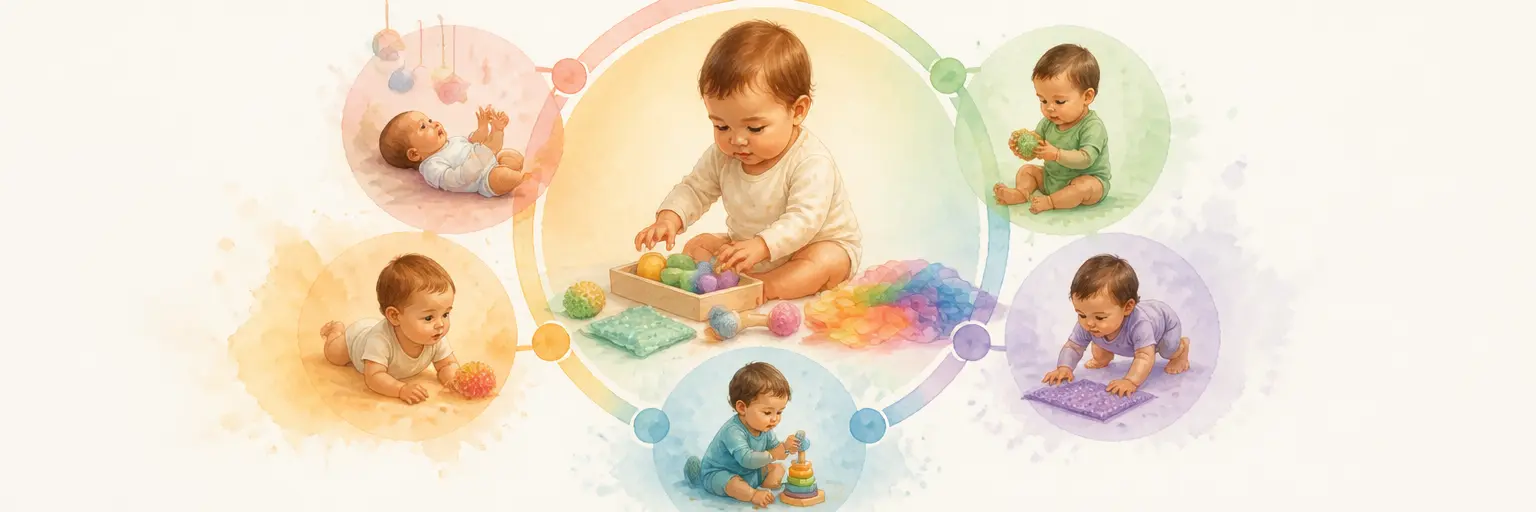
Sensory Play: The Best Sensory Play Ideas for Each Season
Discover engaging sensory play ideas for every developmental stage 🧸✨—from tummy-time textures for newborns to creative water, sound, and discovery activities for growing babies. Support early learning, fine motor skills, coordination, curiosity, and cognitive development with safe, age-appropriate play guidance from BabyCareHub. 👶💛
6 articles
Sensory Play: Activities to Improve Auditory Processing
Sensory Play with Music: Introducing Sounds and Rhythms to Baby
Sensory Play Benefits: How Activities Aid Baby's Growth
Sensory Play: Common Mistakes to Avoid When Introducing Activities
Sensory Play Outdoors: Nature Activities for Baby's Development
Sensory Play Ideas for Each Stage: Support Your Baby’s Development Through Play
Welcome to BabyCareHub’s guide to sensory play ideas for each stage of your baby’s development. Sensory activities help babies explore the world through touch, sight, sound, movement, smell, and—in age-appropriate situations—taste. These simple baby play ideas can support early learning, fine motor skills, gross motor development, hand-eye coordination, communication, curiosity, and emotional connection. Whether you are looking for newborn sensory activities, infant play ideas, or toddler sensory games, you will find practical, safe, and easy activities for home.
👶 Sensory Play Ideas for Newborns: Birth to 3 Months
Newborns learn primarily through close interaction, gentle movement, and visually engaging objects. Try high-contrast cards, soft rattles, slow-moving toys, gentle singing, and face-to-face conversation during calm, alert periods. Tummy time on a firm, supervised surface is another important early activity that helps build neck, shoulder, and upper-body strength.
At this stage, sensory play should be brief, simple, and responsive to your baby’s cues. Use soft fabrics with different textures, such as cotton, muslin, or fleece, and allow your baby to look at, listen to, or briefly touch them. Always keep small objects, loose parts, cords, and noisy toys away from the baby’s face and sleeping area, and stop the activity if your newborn becomes tired or overstimulated.
🌈 Sensory Activities for Babies Aged 3 to 6 Months
Between three and six months, babies become more interested in reaching, grasping, kicking, and exploring objects. Offer easy-to-hold baby toys, crinkly fabric books, textured balls, soft teethers, and baby-safe mirrors. Place a toy just within reach during floor play to encourage reaching, rolling, visual tracking, and early problem-solving.
Sound-based play can also become more interactive. Shake a rattle from different positions, imitate your baby’s coos, sing action songs, or gently tap household items to create safe sounds. These activities support listening skills, early communication, spatial awareness, and cause-and-effect learning while strengthening the parent-baby bond.
🧸 Sensory Play for Babies Aged 6 to 9 Months
As babies begin sitting, pivoting, crawling, and transferring objects between hands, sensory play can include more movement and discovery. Create a supervised treasure basket with large, safe household items such as a wooden spoon, silicone cup, soft scarf, or textured teether. Encourage your baby to bang, shake, squeeze, drop, and examine each object.
Water play can be introduced with close adult supervision using a shallow container and a few large floating bath toys. You can also try edible sensory play with smooth, age-appropriate foods if your baby is ready for complementary feeding. Never leave a baby alone with water, food, or small objects, and avoid items that may present choking, drowning, or allergy risks.
🚼 Sensory Play Ideas for Babies Aged 9 to 12 Months
Older babies often enjoy sensory activities that involve movement, object permanence, and simple problem-solving. Try placing large toys inside an open box for your baby to remove, hiding a toy under a cloth, or creating a soft obstacle path with cushions during supervised crawling. These baby development activities encourage coordination, persistence, and awareness of space.
Explore rhythm and language through clapping games, nursery rhymes, musical instruments designed for babies, and repeated sounds. Let your baby safely explore textures such as smooth silicone, bumpy fabric, and soft plush materials. Narrate what is happening with words like “in,” “out,” “shake,” “soft,” and “loud” to support vocabulary and receptive language.
🎨 Sensory Play for Toddlers Aged 12 to 24 Months
Toddlers benefit from hands-on activities that combine sensory exploration with movement, imitation, and pretend play. Try edible finger painting with yogurt, scooping large pasta under supervision, playing with play dough made from a child-safe recipe, or transferring water between large cups. These activities support fine motor development, hand strength, coordination, and early independence.
Outdoor sensory play is equally valuable. Encourage your toddler to feel grass, listen for birds, observe leaves, walk on different safe surfaces, or help wash plastic toys. Offer choices and allow your child to lead the activity while you describe colors, textures, sounds, and actions. Always supervise closely, especially around water, food, outdoor objects, and materials that could be swallowed.
🌱 Sensory Play for Toddlers Aged 2 to 3 Years
Children between two and three years can participate in more structured sensory games that build language, creativity, and early cognitive skills. Make a simple sensory bin using large, age-appropriate materials such as scarves, large blocks, measuring cups, or chunky animal figures. Add themed play by creating a farm, ocean, construction, or nature activity with safe materials.
Encourage your child to sort objects by color, size, or texture, describe how items feel, and predict what will happen when materials are mixed or moved. Sensory play can also support emotional regulation by providing calming experiences such as squeezing play dough, brushing a doll’s hair, listening to gentle music, or taking slow breaths together. Adapt every activity to your child’s developmental level and supervision needs.
✅ Safety Tips for Age-Appropriate Sensory Play
Safe sensory play begins with choosing materials that match your child’s age, abilities, and stage of development. Avoid small parts, water beads, uncooked rice or beans for young children, toxic substances, sharp objects, and materials that can break into dangerous pieces. Check toys regularly for damage, wash reusable items, and use non-toxic, child-safe products.
Adult supervision is essential, particularly when activities involve water, food, messy materials, or objects that could enter the mouth. Sensory play should never take place in a sleeping space, and babies should always be placed on their backs for sleep. Watch for signs of overstimulation, including turning away, fussing, yawning, stiffening, or crying, and offer a quiet break when needed.
❓ Frequently Asked Questions About Sensory Play Ideas for Each Stage
What is sensory play for babies?
Sensory play is any age-appropriate activity that helps a baby or toddler explore through the senses, including touch, sight, sound, movement, smell, and taste when safe. Examples include tummy time, textured toys, singing, water play, baby-safe mirrors, and supervised food exploration.
When should I start sensory play with my newborn?
You can begin gentle sensory play from birth during calm, awake periods. Face-to-face interaction, soft talking, high-contrast images, gentle singing, and brief supervised tummy time are suitable newborn activities. Keep sessions short and follow your baby’s cues.
How long should a sensory play activity last?
The ideal length depends on your child’s age, mood, and interest. A newborn may enjoy an activity for only a few minutes, while an older baby or toddler may play for 10 to 20 minutes or longer. End the activity when your child appears tired, frustrated, or overstimulated.
What are the best sensory play materials for babies?
Useful materials include soft fabrics, large textured balls, silicone teethers, baby-safe mirrors, crinkle books, wooden spoons, stacking cups, large blocks, and washable household objects. Choose non-toxic, durable, age-appropriate items without small detachable parts, loose strings, or choking hazards.
Can sensory play help with developmental milestones?
Yes. Sensory play can support reaching, grasping, sitting, crawling, walking, coordination, early communication, problem-solving, and emotional regulation. It does not need to be complicated or expensive; consistent, responsive interaction and safe exploration are the most important parts of developmental play.