
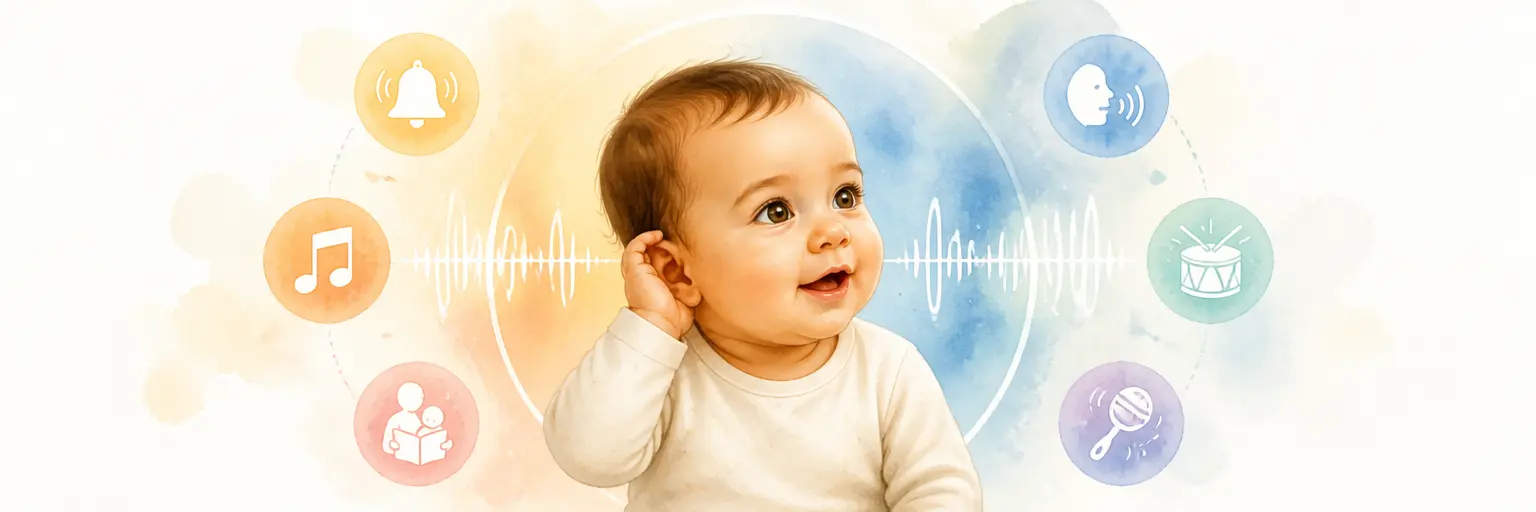
Sound and Sensation: How Babies Process Auditory Input
Discover gentle, expert-backed ways to support your baby’s hearing development and stimulation 👶🎵. Learn how everyday talking, singing, reading, and playful sound activities can encourage listening skills, bonding, and early communication. Explore practical tips, age-appropriate ideas, and signs to discuss with a pediatrician, helping you nurture healthy developmental milestones with confidence on BabyCareHub.
6 articles
The Power of Sound: How Hearing Shapes Baby's Development
Baby's Favorite Sounds: Discovering What Captivates Their Ears
The Critical First Months: Nurturing Your Baby's Hearing
Early Intervention: Addressing Potential Hearing Issues in Babies
A Symphony of Sounds: Stimulating Your Baby's Hearing
👂 Baby’s Hearing Development and Stimulation
Welcome to BabyCareHub’s guide to baby’s hearing development and stimulation, a trusted resource for first-time parents learning how newborns and infants respond to sound. This subcategory explains the key stages of auditory development, from hearing familiar voices in the newborn period to recognizing sounds, responding to their name, understanding language, and developing early communication skills. Explore practical, age-appropriate ways to support your baby’s hearing through talking, singing, reading, play, and safe sound exposure while learning when to discuss hearing concerns with a pediatrician.
👶 Newborn Hearing Development Milestones
Newborn babies can hear from birth and may respond to familiar voices, sudden noises, music, or changes in tone. Parents can expect guidance on common early behaviors, including startling, blinking, quieting, turning toward sound, and being comforted by a caregiver’s voice. Understanding normal newborn hearing responses can help families observe development without comparing one baby too closely with another.
This section also explains the importance of newborn hearing screening, follow-up appointments, and sharing observations with a healthcare professional. You will learn how premature birth, illness, ear infections, and other factors may influence auditory development, as well as why early support can make a meaningful difference in language and social communication.
🗣️ How Babies Respond to Voices and Sounds
As babies grow, they gradually become more attentive to voices, household sounds, toys, and music. Readers can learn how babies may calm when hearing a familiar caregiver, smile or vocalize during conversation, turn toward interesting sounds, and begin experimenting with cooing and babbling. Responsive interaction helps babies connect sounds with people, emotions, and everyday routines.
Parents will find simple ways to observe hearing at home without creating frightening or excessively loud noises. Try speaking from different positions, pausing during conversations, and noticing whether your baby looks, moves, vocalizes, or changes expression in response. These observations are not a substitute for professional testing, but they can help you understand your baby’s emerging communication skills.
🎵 Fun Hearing Stimulation Activities for Babies
Hearing stimulation can be simple, gentle, and part of daily care. BabyCareHub shares ideas such as singing lullabies, narrating diaper changes, making animal sounds, reading board books, playing with rattles, and using rhythm during tummy time. Face-to-face talking and playful imitation encourage babies to listen, watch facial expressions, and take turns making sounds.
Activities should match your baby’s age, mood, and attention span. Keep sounds pleasant and varied, allow quiet breaks, and watch your baby’s cues. A baby who turns away, becomes fussy, or startles repeatedly may need less stimulation. The goal is not to teach advanced skills quickly, but to create warm, repeated opportunities for listening and interaction.
📚 Supporting Early Language and Communication
Hearing development and language development are closely connected. Babies learn through repeated exposure to spoken language, facial expressions, gestures, and conversational pauses. Parents can support early speech by describing daily activities, responding to babbling, expanding on simple sounds, and reading aloud every day. Back-and-forth communication teaches babies that sounds and gestures have meaning.
This section provides age-appropriate communication tips for newborns, young infants, and older babies. You can expect practical suggestions for encouraging cooing, babbling, imitation, gestures, and early word understanding while building a strong parent-child bond. Consistent interaction is more important than using special equipment or complicated learning programs.
🔊 Safe Sound Levels and Hearing Protection
Protecting a baby’s hearing is an important part of healthy development. Learn how to reduce exposure to very loud music, fireworks, power tools, sporting events, and amplified devices. Babies’ ears are sensitive, so parents should keep noisy activities at a safe distance, use suitable infant hearing protection when appropriate, and provide calm periods away from continuous background noise.
You will also find guidance on responsible use of toys and electronic devices. Avoid placing sound-producing toys directly next to your baby’s ears, and check volume levels before using phones, tablets, televisions, or speakers nearby. Creating a comfortable sound environment supports listening, sleep, attention, and overall infant well-being.
🩺 Recognizing Possible Hearing Concerns
Parents should know which behaviors may warrant professional advice, such as not startling at loud sounds, not responding to voices, not turning toward sound when expected, or losing previously acquired responses. Recurrent ear infections, fluid behind the eardrum, speech delays, and limited babbling may also deserve discussion with a pediatrician or hearing specialist. Early evaluation is reassuring and can connect families with timely support.
Every baby develops at a different pace, but persistent concerns should not be ignored or explained away. This section helps caregivers prepare useful questions, understand the purpose of hearing tests, and learn why audiologists, pediatricians, and early-intervention professionals may work together. Professional guidance is especially important when a newborn does not pass a hearing screening or has known risk factors.
❓ Frequently Asked Questions About Baby’s Hearing Development
When can a newborn hear?
Newborns can generally hear from birth and may respond to familiar voices, sudden sounds, and changes in tone. Their responses may include startling, blinking, quieting, or moving. A newborn hearing screening helps identify babies who may need further evaluation.
How can I stimulate my baby’s hearing at home?
Talk, sing, read, and respond to your baby throughout the day. Use gentle rattles or age-appropriate sound-making toys from a safe distance, and pause to give your baby time to react. Face-to-face interaction and responsive conversation are among the most effective forms of hearing and language stimulation.
Should I play music for my baby?
Soft music at a comfortable volume can be enjoyable and may support listening and interaction. Avoid loud or continuous music, sudden sounds, and placing speakers or headphones close to your baby’s ears. Talking, singing, and reading together provide valuable social and auditory benefits.
What are signs that my baby may have a hearing problem?
Possible signs include not reacting to loud sounds, not calming to familiar voices, not turning toward sounds as expected, limited vocal development, or losing a response previously observed. If you have concerns, contact your pediatrician or an audiologist rather than waiting for the next routine visit.
Is a newborn hearing screening enough?
A newborn hearing screening is an important first check, but hearing can change after birth. Continue observing your baby’s responses to sound and attend recommended follow-up appointments. If your baby does not pass the screening or has hearing risk factors, follow-up testing should be completed as advised by a healthcare professional.