
The Role of Occupational Therapy in Addressing Fine Motor Challenges
Support your baby’s early growth with fine motor skills development activities for 0–12 months 🧸✨ Explore age-appropriate ideas that encourage grasping, reaching, hand-eye coordination, finger movement, and sensory discovery while making everyday play fun and meaningful. From tummy time and soft toys to safe object exploration, BabyCareHub offers practical, parent-friendly guidance to help you understand developmental milestones and nurture your baby’s progress with confidence. 👶💛
7 articles
The Importance of Observation: Tracking Your Baby's Progress
Nurturing Baby's Natural Curiosity: Fine Motor Skills and Exploration
The Art of the Grasp: How Babies Learn to Hold Objects
The SixMonth Milestone: Key Fine Motor Achievements
Is Your Baby on Track? Red Flags in Fine Motor Development
Cloth Books and Fine Motor Skills: A Gentle Approach to Learning
Fine Motor Skills Development (0-12 Months) 🖐️
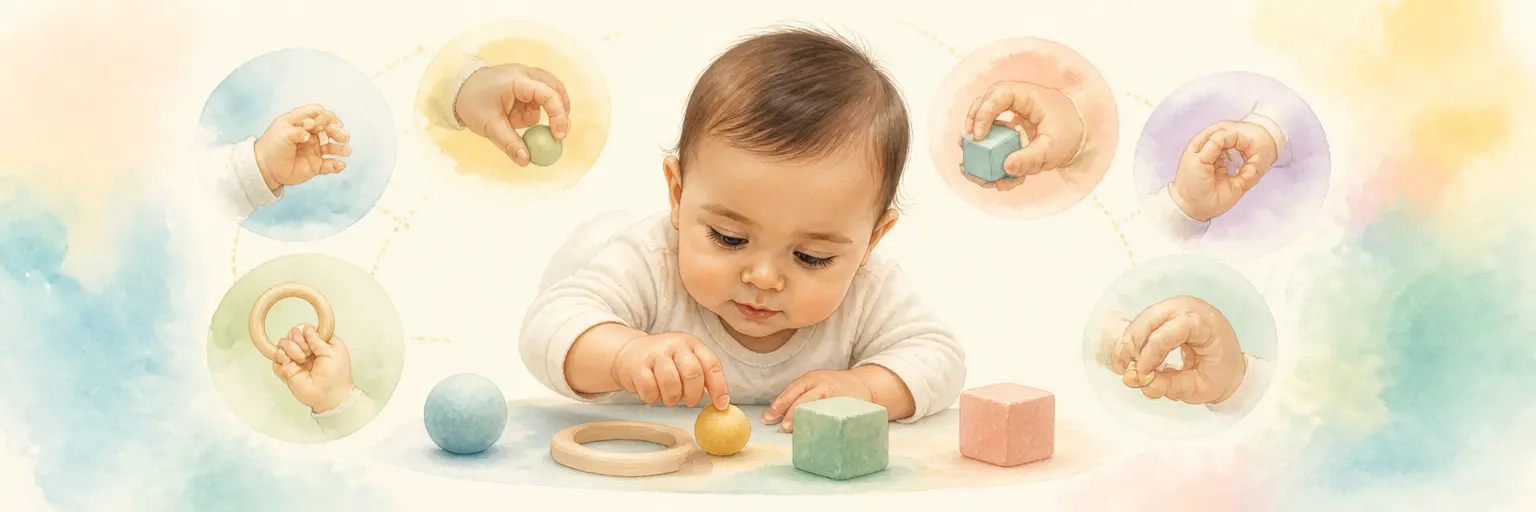
Welcome to BabyCareHub’s guide to fine motor skills development from birth to 12 months. Fine motor skills involve the small muscles in your baby’s hands, fingers, wrists, and arms, helping them grasp, release, reach, transfer, and explore objects. In this subcategory, first-time parents can discover practical, age-appropriate ways to support healthy infant development through safe play, tummy time, sensory activities, and everyday interaction. Learn what developmental milestones may appear during the first year, how babies build hand-eye coordination, and when to discuss concerns with a healthcare professional.
👶 Fine Motor Milestones by Age
BabyCareHub explains common fine motor milestones from 0 to 12 months in a clear, parent-friendly format. You can learn what to expect as your newborn progresses from reflexive hand movements and brief finger opening to purposeful reaching, grasping, transferring toys between hands, and using a pincer grasp. Age ranges are useful guides rather than strict deadlines, because every baby develops at their own pace.
Our developmental milestone information helps parents observe gradual progress without unnecessary comparison. Articles may cover hand and finger movements at 0–3 months, reaching and holding at 3–6 months, purposeful grabbing and object transfer at 6–9 months, and more refined finger control at 9–12 months. Regular observation and responsive play can help you understand your baby’s unique development.
🧸 Safe Activities for Hand and Finger Development
Discover simple fine motor activities for babies that fit naturally into daily routines. Supervised play with age-appropriate rattles, soft cloth books, teething toys, textured objects, stacking cups, and large graspable toys can encourage reaching, holding, squeezing, and releasing. These activities are designed to be enjoyable rather than demanding, allowing babies to learn through repetition and exploration.
BabyCareHub emphasizes safe infant play at every stage. Choose toys that are large enough to prevent choking, free from loose parts, and suitable for your baby’s age. Always supervise your baby closely, inspect toys regularly, and avoid small objects, long cords, button batteries, magnets, and anything that could break into dangerous pieces.
🎨 Sensory Play and Hand-Eye Coordination
Sensory play supports fine motor development by encouraging babies to look at, reach for, touch, and manipulate objects. Safe textures, gentle sounds, contrasting colors, and lightweight toys can help strengthen visual tracking and hand-eye coordination. For younger babies, placing a toy within view and gradually moving it side to side may encourage looking, reaching, and controlled arm movements.
As your baby grows, offer opportunities to explore different shapes and surfaces under close supervision. Let your baby hold a soft toy, pat a book, grasp a teething ring, or move a large object from one hand to the other. Responsive interaction, verbal encouragement, and allowing unhurried exploration make sensory activities more meaningful while supporting early learning and motor control.
🤱 Tummy Time and Upper-Body Strength
Tummy time is an important foundation for infant motor development. When babies spend supervised time on their stomachs while awake, they practice lifting and turning their heads, supporting themselves with their arms, and gradually developing shoulder, chest, and upper-body strength. These abilities contribute to later reaching, grasping, rolling, sitting, and crawling.
Begin with short, comfortable sessions and gradually increase them as your baby becomes stronger and more comfortable. You can place a favorite toy or your face nearby to encourage your baby to look, reach, and engage. Tummy time should always be supervised on a firm, clear surface, and babies should be placed on their backs for sleep according to safe sleep guidance.
🧠 Encouraging Independent Exploration
Babies learn fine motor control through repeated practice. Give your baby regular opportunities to reach for toys, hold safe objects, bang soft blocks together, pull fabric, and practice letting go. These experiences support grasp development, bilateral coordination, finger strength, and early problem-solving while helping your baby understand cause and effect.
Try not to rush your baby or place objects directly into their hands every time. Position safe toys nearby and allow your baby to initiate movement. Offer encouragement, but remember that independent exploration is more valuable than completing an activity perfectly. Follow your baby’s cues and stop when they appear tired, frustrated, or overstimulated.
🩺 Tracking Progress and Recognizing Concerns
Tracking your baby’s fine motor progress can help you notice emerging skills and share useful information during routine health visits. Look for gradual changes such as opening the hands, bringing hands to the mouth, reaching toward objects, holding toys, transferring items between hands, and using the thumb and finger together. Development often happens in stages, with periods of rapid progress followed by quieter periods.
If your baby loses a skill, consistently uses one side of the body much more than the other, keeps their hands tightly fisted beyond the expected early months, seems unusually stiff or floppy, or shows limited progress, speak with a pediatrician or qualified healthcare professional. Early guidance can be helpful, and milestone information should support—not replace—professional medical advice.
❓ Frequently Asked Questions About Fine Motor Skills
What are fine motor skills in babies?
Fine motor skills are the controlled movements of the small muscles in the hands, fingers, wrists, and arms. In babies, examples include opening and closing the hands, reaching, grasping toys, holding objects, transferring items between hands, and developing a pincer grasp. These skills support later activities such as feeding, dressing, drawing, and writing.
When do babies start reaching and grasping?
Many babies begin making more purposeful reaching movements during the first few months and may start grasping objects around the middle of the first year. Timing varies, and early movements may appear accidental before becoming more controlled. Provide safe, lightweight toys and allow your baby repeated opportunities to practice reaching and holding.
How can I improve my baby’s fine motor skills?
Offer supervised tummy time, age-appropriate toys, sensory play, soft books, rattles, teething toys, and objects with different safe textures. Place toys within easy reach and encourage your baby to look, reach, hold, transfer, and release them. Short, frequent play sessions are usually more effective and enjoyable than structured drills.
Is it normal for my baby to use one hand more than the other?
Temporary differences can occur as babies explore movement and develop coordination. However, consistent strong hand preference, limited movement on one side, or noticeable weakness may warrant professional advice, especially during the first year. Discuss any concerns with your pediatrician, who can assess your baby’s overall development.
When should I be concerned about fine motor development?
Contact a healthcare professional if your baby loses previously learned skills, rarely moves one arm, has persistent stiffness or floppiness, does not appear to progress in reaching or grasping, or if you have any concerns about development. Milestones are flexible, but early evaluation and support can help identify whether additional guidance is needed.