
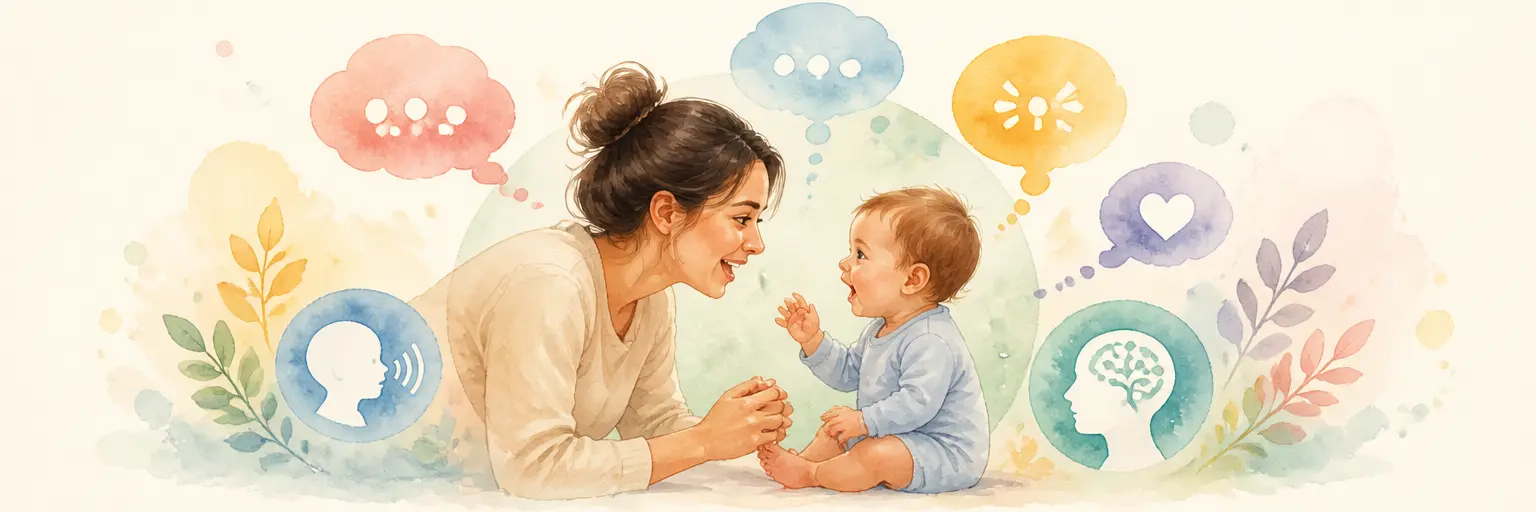
The Art of Active Listening: Understanding Your Baby's Language
Support your baby’s communication journey with trusted guidance on first words and language growth 🗣️💛 Discover age-appropriate milestones, simple ways to encourage early communication, and playful activities that build listening, understanding, gestures, babbling, and vocabulary. BabyCareHub helps first-time parents nurture healthy language development with practical, expert-informed tips—while recognizing every child’s unique pace.
7 articles
Baby Talk Decoded: Understanding the Sounds and Meanings
Recognizing Speech Delays: When to Seek Help for Your Baby
The Role of Music in Enhancing Baby's Language Skills
ParentBaby Communication: Building a Strong Language Foundation
The Link Between Hearing and Language Development in Babies
Baby's First Jokes: Understanding Humor in Early Communication
🗣️ Baby’s First Words and Language Growth
Welcome to BabyCareHub’s guide to baby’s first words and language growth, part of our Developmental Milestones resources for first-time parents. Here, you can learn how babies develop communication skills, understand early speech milestones, and discover practical ways to encourage language development from birth through the toddler years. Every child develops at a unique pace, but knowing what to expect can help you recognize progress, support early communication, and identify when professional guidance may be helpful.
👶 Early Communication Milestones
Before babies say their first words, they communicate through crying, eye contact, facial expressions, body movements, cooing, and babbling. Our resources explain how preverbal communication develops and how babies gradually learn that sounds, gestures, and expressions can influence the people around them.
Readers can expect age-appropriate information about newborn communication, social smiles, responding to voices, turn-taking, and early gestures such as pointing or waving. You will also find simple ideas for observing your baby’s progress without comparing them too closely with other children.
💬 Understanding Baby’s First Words
Baby’s first words are an exciting developmental milestone, but they may not sound perfectly clear at first. This section explores common early words, sound approximations, meaningful gestures, and the ways babies connect sounds with familiar people, objects, and routines.
Learn how to encourage early vocabulary by naming everyday items, repeating simple words, using expressive tones, and responding warmly to your baby’s attempts to communicate. Consistent interaction and responsive caregiving help babies build confidence as they begin using sounds and words intentionally.
📚 Building Vocabulary Through Everyday Activities
Language learning happens throughout the day—not only during structured activities. BabyCareHub shares practical communication strategies for mealtimes, bath time, dressing, play, walks, and bedtime. Talking about what your baby sees and does helps connect words with real-life experiences.
Parents can discover how reading board books, singing songs, repeating nursery rhymes, and using gestures support vocabulary growth, listening skills, and early understanding. Short, frequent interactions are often more effective than formal lessons because they fit naturally into your baby’s daily routine.
🧠 Speech, Listening, and Language Development
Speech development involves more than saying words. Babies and toddlers are also learning to listen, understand language, imitate sounds, follow simple directions, and participate in back-and-forth exchanges. This subcategory explains the difference between receptive language—what a child understands—and expressive language—what a child communicates.
Our guidance helps parents notice meaningful patterns, such as responding to their name, recognizing familiar words, following simple instructions, and combining words over time. These observations can provide a clearer picture of overall language development than counting spoken words alone.
🎵 Activities That Encourage Language Growth
Explore easy baby language activities that promote communication without pressure. Talking face-to-face, copying your baby’s sounds, pausing to allow a response, offering choices, and describing actions can all encourage interaction and early speech development.
You will also find ideas for using songs, picture books, pretend play, object naming, and gesture-based communication. The goal is to make language practice playful, positive, and responsive while giving your baby plenty of opportunities to listen, experiment, and communicate.
🩺 When to Ask About Speech and Language Delays
Children develop at different rates, yet certain signs may deserve further discussion with a pediatrician, health visitor, or speech-language professional. BabyCareHub explains how to recognize possible concerns, including limited babbling, little response to sounds or voices, loss of communication skills, or difficulty using gestures and words.
This information is designed to support—not replace—professional medical advice. Early evaluation can be valuable when concerns arise, and seeking guidance does not mean that a child will necessarily have a developmental disorder. Trusting your observations and asking questions early can help families access reassurance, screening, or support when needed.
❓ Frequently Asked Questions About Baby’s First Words
When do babies usually say their first words?
Many babies say a recognizable first word around 12 months, although the normal range is broad. Some children speak earlier, while others take more time. What matters is the overall pattern of communication, including babbling, gestures, eye contact, understanding, and attempts to interact.
What counts as a baby’s first word?
A first word is usually a consistent sound or word used intentionally to refer to a person, object, action, or need. It does not have to be pronounced perfectly. For example, a repeated sound used specifically for “ball” or “mama” may count as meaningful early language.
How can I encourage my baby to talk?
Talk to your baby often, respond to their sounds, name familiar objects, read together, sing songs, and pause to give them time to respond. Use short, clear phrases and expand on their attempts. For example, if your child says “car,” you might reply, “Yes, a red car!”
Should I worry if my baby is not talking yet?
Not necessarily, because language development varies. However, speak with your child’s pediatrician if your baby does not babble, rarely responds to sounds or voices, does not use gestures, loses previously acquired skills, or if your concerns continue. A professional can assess hearing, communication, and development.
Can screen time affect early language development?
Babies learn language best through responsive, face-to-face interaction. Excessive or passive screen exposure may reduce opportunities for talking, listening, and social engagement. Shared reading, play, singing, and conversation are generally more valuable for supporting early communication than using screens as a substitute for interaction.