
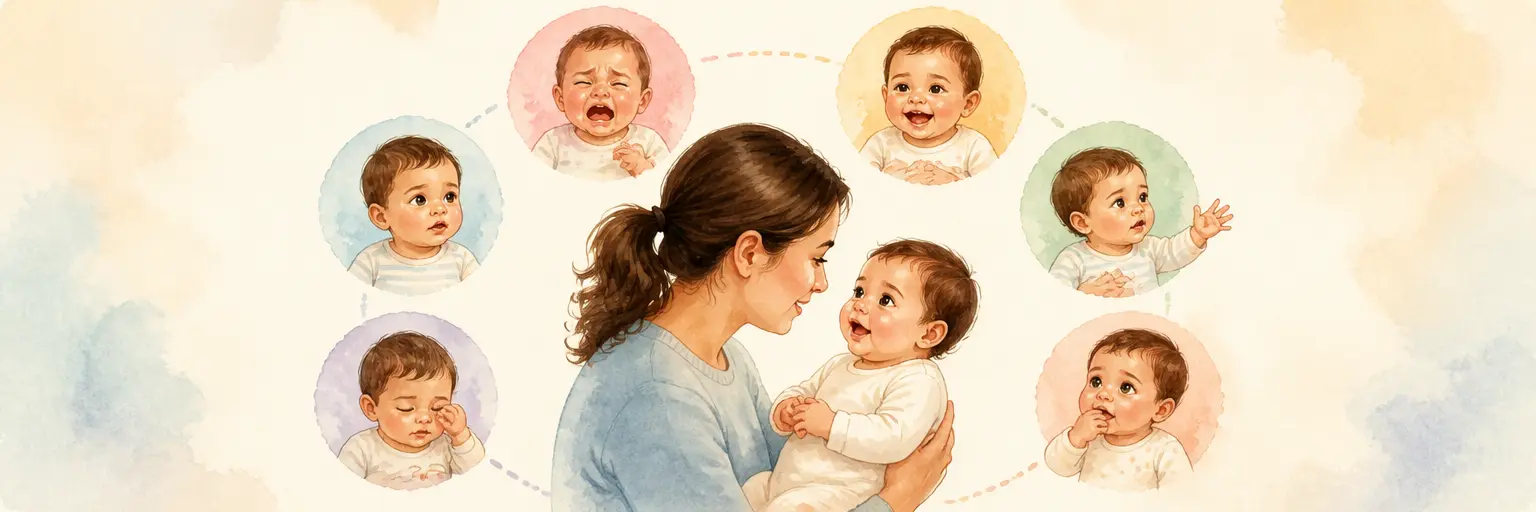
The Impact of Environment on Baby's Communication Skills
Decode your baby’s unique way of communicating 💛 Learn to recognize early communication cues—from cries and coos to facial expressions, gestures, and body movements—so you can respond with confidence, strengthen bonding, and support healthy language development. Discover practical newborn care tips from BabyCareHub to better understand your baby’s needs at every stage.
6 articles
Beyond the Cry: Recognizing Baby's Tiredness and Sleep Signals
Baby's Communication: A Lifelong Journey of Learning and Growth
How to Create a CommunicationRich Environment for Your Baby
Baby's Communication Challenges: When to Seek Professional Guidance
Baby's Communication and Social Development: The Early Foundations
👶 Understanding Baby's Communication Cues: Learn What Your Baby Is Telling You
Welcome to BabyCareHub’s Understanding Baby's Communication Cues subcategory, a practical guide for first-time parents learning how babies express their needs before they can speak. Babies communicate through crying, facial expressions, body movements, sounds, eye contact, gestures, and changes in behavior. By learning to recognize these early signals, you can respond more confidently to hunger, tiredness, discomfort, overstimulation, affection, and the need for connection. Explore expert-informed guidance on baby communication, newborn cues, infant body language, early language development, and developmental milestones in a clear and reassuring format.
🍼 Recognizing Newborn Communication Cues
Newborn babies rely on subtle signals to communicate because crying is not their only form of expression. Parents may notice rooting, sucking motions, hand-to-mouth movements, clenched fists, facial changes, grunting, or increased alertness. Understanding these early newborn cues can help you identify what your baby needs before distress becomes intense.
BabyCareHub explains how to observe patterns in your baby’s behavior while remembering that every infant is unique. Learning your newborn’s individual signals can support responsive caregiving, strengthen parent-baby bonding, and make daily routines such as feeding, diaper changes, soothing, and sleep preparation easier.
😢 Understanding Baby Crying and Different Cry Types
Crying is a normal and important part of infant communication, but it can have many possible causes. Hunger, tiredness, a wet diaper, temperature changes, gas, discomfort, overstimulation, or the need for closeness may all lead to crying. Parents can look for additional baby body language cues to understand what may be happening.
This subcategory offers practical tips for observing the timing, intensity, rhythm, and accompanying movements of your baby’s cries. You will also learn when crying may require extra attention and how to respond calmly with feeding, burping, soothing, holding, quiet surroundings, or a predictable routine.
👀 Reading Facial Expressions and Eye Contact
Facial expressions provide valuable information about a baby’s comfort, interest, and emotional state. Smiling, widening the eyes, frowning, lip movements, turning away, and staring at a caregiver can all be meaningful forms of nonverbal baby communication. Eye contact may show engagement, while looking away can indicate that your baby needs a short break.
Parents can use these signals to support early social development and communication skills. Gentle talking, smiling, imitation, and face-to-face interaction encourage emotional connection while helping babies learn how conversations work through turn-taking, expressions, and responsive interaction.
🤲 Interpreting Baby Body Language and Movements
Infant body language includes movements of the arms, legs, hands, head, and whole body. Kicking, stretching, arching the back, waving the arms, opening the hands, pulling the legs toward the tummy, or turning the head away may offer clues about comfort, excitement, tiredness, or discomfort. These signals are especially useful when combined with your baby’s facial expressions and vocal sounds.
Understanding movement cues can help parents respond before a baby becomes overwhelmed. You will find guidance on identifying signs of relaxation, engagement, hunger, overstimulation, and possible discomfort, while learning that body language should always be considered within the wider context of your baby’s age, routine, and overall behavior.
🗣️ Baby Sounds, Babbling, and Early Language Development
Babies communicate through cooing, gurgling, squealing, babbling, laughing, and vocal imitation long before they say recognizable words. These sounds are important language development milestones and show that your baby is practicing communication, listening, and social interaction.
Parents can encourage early speech development by responding to sounds, copying simple noises, speaking slowly, singing, reading aloud, and allowing time for the baby to respond. BabyCareHub explains how everyday conversations support vocabulary, attention, turn-taking, and a strong foundation for future language skills.
💛 Responding to Emotional and Social Cues
Babies communicate emotional needs through changes in alertness, posture, facial expression, vocal tone, and closeness-seeking behavior. A baby may smile and move toward interaction when feeling comfortable, or fuss, stiffen, and turn away when tired or overstimulated. Recognizing these cues supports responsive parenting and helps babies feel secure.
Consistent, warm responses can strengthen attachment and teach your baby that communication is meaningful. This section covers ways to comfort, connect, and respond to your baby’s emotional cues while supporting healthy social-emotional development through everyday care.
🧠 Communication Cues and Developmental Milestones
Baby communication changes rapidly during the first year. Newborn reflexes gradually develop into intentional gestures, vocal play, social smiles, babbling, pointing, waving, and other forms of interaction. Tracking these changes can help parents understand what is typical for different stages of infant development.
Developmental milestones are general guidelines rather than strict deadlines. Babies progress at different rates, so parents should focus on patterns of growth and engagement. If you have concerns about hearing, eye contact, movement, vocalization, or social interaction, discuss them with your pediatrician or another qualified healthcare professional.
❓ Frequently Asked Questions About Baby Communication Cues
👶 What are the earliest signs that a newborn is trying to communicate?
Early newborn communication cues include rooting, sucking, hand-to-mouth movements, facial expressions, changes in alertness, small vocal sounds, crying, and body movements. Watching several cues together can help you understand whether your baby may be hungry, tired, uncomfortable, or seeking closeness.
🍼 How can I tell if my baby is hungry?
Early hunger cues may include rooting, opening the mouth, licking the lips, sucking on hands, bringing hands toward the face, and becoming more alert. Crying is often a later hunger signal. Responding to earlier cues can make feeding calmer, but always follow your healthcare provider’s guidance and your baby’s individual feeding needs.
😴 What signs show that my baby is tired?
Common tiredness cues include yawning, staring into space, rubbing the eyes, becoming less active, turning away, fussing, or making jerky movements. Babies can become overtired quickly, so noticing early sleep cues and beginning a calming routine may help support healthy infant sleep.
🤲 Why does my baby turn away during interaction?
Turning away does not necessarily mean your baby is rejecting you. It may indicate tiredness, overstimulation, or a need for a short pause. Reduce noise and visual stimulation, offer a calm environment, and wait for your baby to show renewed interest before continuing interaction.
☎️ When should I discuss my baby's communication with a healthcare professional?
Speak with your pediatrician if you notice a loss of previously acquired communication skills, limited response to sounds, ongoing feeding difficulties, unusual lethargy, persistent distress, or concerns about eye contact, movement, hearing, or vocal development. Trust your instincts and seek professional advice whenever your baby’s behavior concerns you.