
The Importance of Observation: Tracking Your Baby's Progress


Welcome to BabyCareHub, your ultimate guide to navigating the incredible journey of parenthood! Are you ready to unlock the secrets to understanding your little one's growth? We'll empower you with the knowledge and tools you need to confidently care for your precious baby. Discover how tracking baby development milestones can provide invaluable insights into your child's progress, ensuring they thrive. Let's embark on this exciting adventure together – learn more about the importance of observation and unlock the key to your baby's healthy development!
- Understanding Your Baby's Developmental Milestones: 0-12 Months
-
Practical Tips for Tracking Your Baby's Development
- Creating a Baby Development Log
- Recognizing Signs of Developmental Delays: When to Seek Professional Help
- The Role of Play in Supporting Fine Motor Skill Development
- Interactive Activities to Encourage Fine Motor Skill Progress: 0-3 Months
- Interactive Activities to Encourage Fine Motor Skill Progress: 4-6 Months
- Interactive Activities to Encourage Fine Motor Skill Progress: 7-12 Months
- Tools and Resources for Tracking Baby Development Milestones
- Frequently Asked Questions
- Final Reflection: The Enduring Power of Observation in Child Development
- Unlock Your Baby's Potential: Start Observing Today!
Understanding Your Baby's Developmental Milestones: 0-12 Months
Tracking your baby's development is one of the most rewarding aspects of parenthood. This journey, filled with firsts, smiles, and exciting breakthroughs, is best navigated with a keen eye for observation and a solid understanding of typical developmental milestones. This article provides a comprehensive guide for first-time parents on how to effectively track baby development milestones, focusing on fine motor skills during the crucial first year of life.
We'll explore why monitoring your baby's progress is crucial, highlight key milestones month by month, and offer practical tips to help you appreciate and support your little one's amazing growth. Learning to effectively track baby development milestones will equip you with the confidence to nurture your child's potential and address any concerns promptly.
Remember, every baby develops at their own pace, but understanding the typical progression provides a valuable framework for observation and informed decision-making. This detailed guide will empower you to become a confident and informed caregiver, fostering your baby's healthy development from the very beginning.
Why Tracking Baby Development is Crucial
Tracking your baby's development isn't just about ticking off boxes on a checklist; it's about building a deep understanding of your child's unique strengths and potential challenges. Early detection of developmental delays can lead to early intervention, significantly improving outcomes. Regular observation allows you to celebrate every milestone, big or small, fostering a strong parent-child bond. Moreover, consistently monitoring your baby's progress provides valuable information for healthcare professionals, ensuring they can provide the best possible support and guidance.
By actively tracking your baby's development, you're investing in their future, empowering them to reach their full potential. This proactive approach strengthens the parent-child relationship and promotes a secure and nurturing environment for your child's growth. Think of it as a personalized growth chart, reflecting your baby's unique journey.
Key Developmental Milestones: A Month-by-Month Guide
This section details typical fine motor skill milestones, providing a framework for your observations. Remember, variations are normal, but significant deviations warrant consultation with your pediatrician. Use this guide as a tool to appreciate your baby's individual progress. It's crucial to remember that this is a guideline, and every baby develops at their own pace.
0-3 Months: Observing Early Reflexes and Sensory Responses
During these first three months, your baby's fine motor skills are primarily focused on reflexes. You can observe the following:
- Rooting reflex: Observe if your baby turns their head and opens their mouth when their cheek is stroked.
- Sucking reflex: Note the strength and coordination of their sucking while feeding.
- Grasp reflex: Notice how tightly your baby grasps your finger when placed in their hand.
- Hand-to-mouth coordination: Begin to observe if your baby brings their hands to their mouth. This is an early indication of developing coordination.
- Visual tracking: Observe if your baby can follow moving objects with their eyes.
These early reflexes are crucial building blocks for future fine motor skills. Documenting their presence and strength provides valuable baseline data. Any significant deviations from the expected reflexes should be discussed with your pediatrician.
4-6 Months: Tracking Reaching, Grasping, and Object Manipulation
This period marks a significant leap in fine motor development. You'll likely observe:
- Reaching for objects: Note when your baby starts reaching for toys and other objects within their reach.
- Grasping objects: Observe how they grasp objects, initially using a palmar grasp (with their whole hand), then progressing to a raking grasp (using their fingers to scoop).
- Bringing objects to mouth: Note the increased frequency and accuracy of this behavior.
- Banging objects: Observe if your baby enjoys banging objects together, indicating developing hand-eye coordination.
- Transferring objects: Watch for the ability to transfer objects from one hand to another.
This stage is characterized by increasing intentionality and coordination. Regular observation will highlight the progress in reaching, grasping, and manipulating objects.
7-9 Months: Monitoring Sitting, Crawling, and Fine Motor Skill Refinement
By this stage, significant progress in fine motor skills is evident:
- Sitting independently: This milestone frees up their hands for more focused exploration.
- Crawling or other forms of mobility: This enhances their ability to reach and explore a wider range of objects.
- Raking grasp improves: Observe the transition from a raking grasp to a more refined pincer grasp (using thumb and forefinger).
- Pinching small objects: Note if your baby can begin to pick up small objects like cheerios.
- Exploring objects with different actions: Observe how your baby interacts with objects: shaking, dropping, throwing, etc.
10-12 Months: Assessing Pincer Grasp, Walking, and Early Problem-Solving
The final three months of the first year show remarkable advancements:
- Refined pincer grasp: Your baby should be able to pick up tiny objects with a precise pincer grasp.
- Standing and walking: This significantly impacts their ability to explore their environment and manipulate objects.
- Using tools: Observe if your baby can use tools like spoons or simple toys.
- Simple problem-solving: Note if your baby can solve simple problems, such as removing a lid from a container.
- Imitating actions: Watch for your baby's ability to copy simple actions.
This stage showcases the culmination of the previous months' development, demonstrating increased coordination, dexterity, and problem-solving skills. Consistent observation will reveal these significant milestones.
Practical Tips for Tracking Your Baby's Development

Tracking your baby's development can feel overwhelming, but with a structured approach, it becomes a rewarding experience. Remember, every baby develops at their own pace, and there's a wide range of what's considered "normal." However, consistent observation helps you identify any significant deviations and allows for early intervention if needed. This section focuses on practical strategies to effectively track baby development milestones.
Creating a Baby Development Log
A simple, yet effective method for monitoring your baby's progress is maintaining a development log. This doesn't need to be a complex document; a notebook, a spreadsheet, or even a dedicated app can work wonders. The key is consistency. Try to make regular entries, perhaps weekly or even bi-weekly, depending on your baby's developmental stage.
What should you include? Consider these points:
- Date: Essential for tracking progress over time.
- Milestone Achieved: Note specific achievements, such as rolling over, grasping objects, or babbling. Be specific! Instead of "grasps objects," write "grasps rattle with both hands."
- Method of Observation: Did you observe this milestone during playtime, feeding, or a diaper change? Knowing the context can be insightful.
- Observations and Notes: Record any interesting behaviors, like showing a preference for certain toys or exhibiting particular reactions to stimuli. This qualitative data is just as important as quantifiable achievements.
- Photos and Videos: Visual documentation can be invaluable. Capture those precious moments of your baby reaching a new milestone!
Here's a sample table to illustrate:
| Date | Milestone Achieved | Method of Observation | Observations and Notes |
|---|---|---|---|
| 2024-10-27 | Reaches for dangling toys | Playtime | Shows strong hand-eye coordination; prefers brightly colored toys |
| 2024-11-03 | Rolls from back to side | Diaper Change | Rolls effortlessly; seems to enjoy the movement |
| 2024-11-10 | Transfers objects from hand to hand | Playtime | Clumsy but persistent; drops toys frequently |
Remember, the goal isn't to compare your baby to others, but to celebrate their unique journey and identify any potential areas needing attention. Regularly reviewing this log will provide a clear picture of your baby's development.
Recognizing Signs of Developmental Delays: When to Seek Professional Help
While it's crucial to track your baby's progress, it's equally important to know when to seek professional guidance. Developmental delays can manifest in various ways, and early intervention is key. While this section cannot offer medical advice, it highlights some red flags that warrant a consultation with your pediatrician or a developmental specialist.
- Significant Delays: If your baby consistently lags behind expected milestones for their age range (as defined by reputable sources like the CDC or WHO), it's crucial to seek professional assessment. For example, a 9-month-old who hasn't begun to crawl or reach for objects might warrant a check-up.
- Loss of Skills: Has your baby lost a previously acquired skill? For instance, if they were babbling consistently and then suddenly stopped, this requires attention.
- Lack of Response: Does your baby seem unresponsive to sounds, sights, or touch? Limited interaction or engagement with their environment should be addressed.
- Persistent Difficulties: If your baby consistently struggles with simple tasks, such as bringing objects to their mouth or grasping a rattle, it's worth exploring further.
- Unusual Posture or Movement: Noticeable abnormalities in posture, muscle tone, or movement patterns (e.g., excessive floppiness or rigidity) require immediate evaluation.
Remember, early intervention can make a significant difference. Don't hesitate to express your concerns to your healthcare provider. They can conduct a thorough assessment and provide appropriate support and guidance. Early detection and intervention can significantly improve outcomes for your child. This is crucial for tracking baby development milestones effectively and addressing potential concerns promptly.
The Role of Play in Supporting Fine Motor Skill Development
Play is not just fun; it's a fundamental aspect of your baby's development, particularly in strengthening fine motor skills. Engaging in age-appropriate play activities provides opportunities for your baby to practice crucial skills like grasping, reaching, manipulating objects, and developing hand-eye coordination.
Here are some play ideas to encourage fine motor skill development:
- 0-3 Months: Focus on high-contrast visuals, textured toys, and gentle touch. Offer rattles and soft toys that stimulate tactile exploration.
- 3-6 Months: Introduce toys with different textures and shapes. Encourage reaching and grasping. Consider soft blocks and stacking cups.
- 6-9 Months: Provide toys that encourage grasping and transferring objects. Rattles, teethers, and stacking toys are excellent choices.
- 9-12 Months: Offer toys that promote pinching and using a pincer grasp (using thumb and forefinger). Finger foods, small blocks, and shape sorters are ideal.
Remember to supervise your baby at all times during playtime and choose toys that are safe and age-appropriate. Regular play sessions are crucial for tracking baby development milestones related to fine motor skills and fostering a positive learning environment. The playful interaction also strengthens the parent-child bond, creating a nurturing atmosphere for development. 🧸
Interactive Activities to Encourage Fine Motor Skill Progress: 0-3 Months
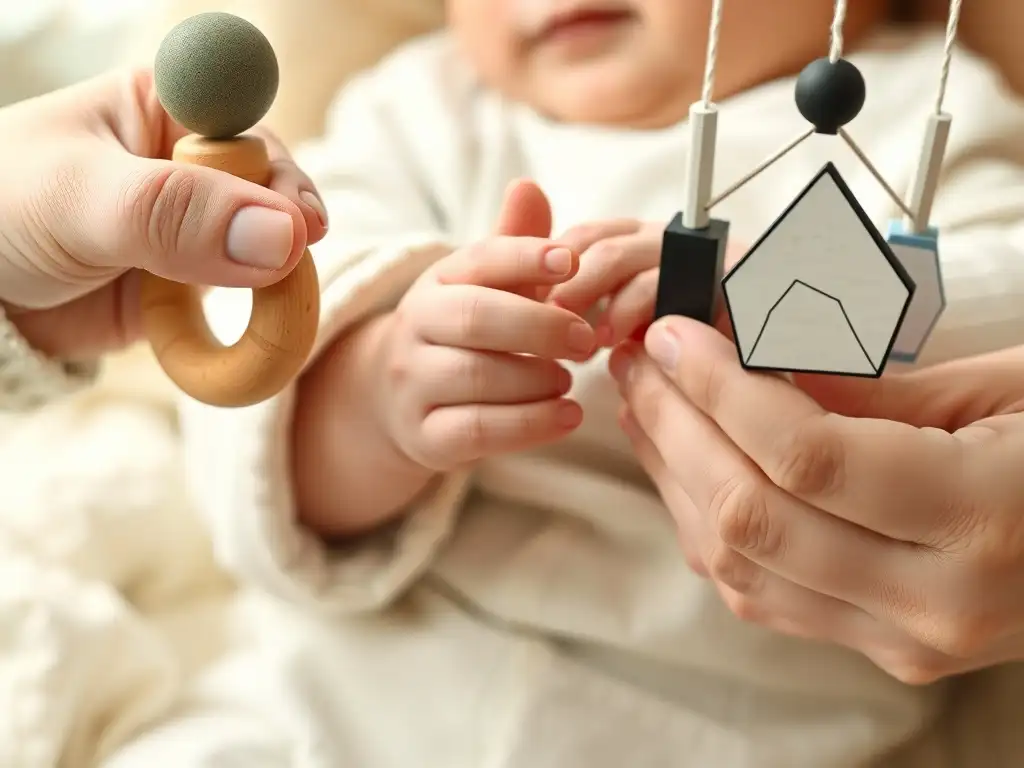
During the first three months, your baby's fine motor skills are primarily focused on reflexes and involuntary movements. However, you can still stimulate development through gentle interaction. Remember, at this stage, it's about introducing concepts, not expecting mastery. Focus on creating a stimulating environment and engaging your baby's senses.
One effective technique is high-contrast visual stimulation. Babies at this age are drawn to stark black and white patterns. Hang mobiles with these patterns above the crib or use high-contrast flashcards. This helps develop their visual tracking skills, a precursor to hand-eye coordination. Another crucial element is touch. Gently massage your baby's hands and fingers, paying attention to each tiny digit.
This helps them become more aware of their body parts and their ability to move them. Finally, consider providing various textures for your baby to explore. Soft fabrics, smooth surfaces, and textured toys (always age-appropriate and safe) can stimulate their tactile senses and encourage exploration. Remember to supervise your baby closely during all activities. Even seemingly simple activities require constant vigilance to ensure safety. Early intervention is key to identifying any potential developmental delays.
Interactive Activities to Encourage Fine Motor Skill Progress: 4-6 Months
By 4-6 months, your baby will start showing more deliberate movements. They might begin reaching for objects, grasping rattles, and bringing their hands to their mouth. This is an excellent time to engage them in activities that encourage these developing skills.
Introduce rattles and textured toys that are easy for your baby to grasp. Choose toys of varying sizes, shapes, and textures to stimulate their exploration. Consider toys with different sounds or visual elements to keep them engaged. Tummy time remains crucial. During tummy time, encourage your baby to reach for toys placed just out of reach. This strengthens their muscles and improves their hand-eye coordination.
You can also start introducing simple stacking toys, but remember that the focus is on the process of reaching and grasping, not necessarily the successful stacking. Remember to always choose toys that are age-appropriate and safe, avoiding anything with small parts that could pose a choking hazard. Regularly rotate the toys to maintain your baby's interest and prevent boredom. It’s also important to observe their preferences; notice which toys they gravitate towards. This provides valuable insights into their developing interests and abilities.
Interactive Activities to Encourage Fine Motor Skill Progress: 7-12 Months
Between 7 and 12 months, your baby's fine motor skills advance rapidly. They'll likely be able to reach, grasp, and manipulate objects with increasing precision. This stage marks a significant leap in their development, paving the way for more complex activities.
Now is the time to introduce more sophisticated toys. Stacking cups and nesting toys are excellent choices, helping to develop hand-eye coordination, problem-solving skills, and an understanding of spatial relationships. Finger paints (non-toxic, of course!) are another fun and engaging activity. This allows your baby to explore colors and textures, further strengthening their finger muscles and hand control. Soft blocks are also ideal, encouraging building and stacking.
Introduce board books with simple illustrations and textures to stimulate their visual and tactile senses. Encourage your baby to turn the pages, promoting hand strength and coordination. Remember to supervise all activities and ensure the toys are safe and age-appropriate. This phase is about refinement and building upon the skills developed in earlier months. By providing a stimulating environment and engaging activities, you can actively support your baby's fine motor skill development, laying a solid foundation for future learning and dexterity. 🎉
Tools and Resources for Tracking Baby Development Milestones

This section provides a detailed overview of tools and resources available to parents dedicated to tracking their baby's developmental milestones, specifically focusing on fine motor skills from 0-12 months. Successfully tracking your baby's progress empowers you to celebrate achievements and proactively address any potential concerns. Remember, every baby develops at their own pace, but consistent monitoring is crucial. This information will help you effectively "Track baby development milestones."
Recommended Apps for Monitoring Baby's Progress
Several mobile applications offer convenient ways to monitor your baby's development, providing a digital record of milestones reached. These apps often include features that allow for photo and video uploads, detailed progress tracking, and sometimes even personalized developmental reports. They can be particularly helpful in organizing observations and sharing updates with family members or healthcare providers.
Here's a comparison of some key features offered by different types of apps:
| App Feature | App A | App B | App C |
|---|---|---|---|
| Milestone Tracking | 👶 Yes, customizable | 👶 Yes, pre-set milestones | 👶 Yes, age-based & custom |
| Photo/Video Upload | ✅ Yes | ✅ Yes | ✅ Yes |
| Growth Chart Tracking | 📈 Yes | 📈 No | 📈 Yes, weight & height |
| Developmental Reports | 📄 Yes, summarized | 📄 No | 📄 Yes, detailed |
| Social Sharing | 👪 Yes, limited to family | 👪 Yes, customizable sharing | 👪 Yes, private & public options |
| Cost | Free (with in-app purchases) | Subscription based | Free (with limited features) |
Remember to choose an app that aligns with your needs and preferences. Read reviews carefully before downloading and always prioritize apps with strong privacy policies to protect your child's data. While apps are helpful tools, they should not replace regular checkups with your pediatrician.
Helpful Books and Websites for Parents
Beyond apps, numerous books and websites provide valuable information on child development. These resources offer detailed explanations of expected milestones, practical tips for supporting your baby's development, and guidance on identifying potential developmental delays. They serve as excellent complements to app-based tracking.
Several reputable organizations offer comprehensive online resources. These websites often include interactive tools, developmental checklists, and articles written by pediatricians and child development specialists. They are invaluable for understanding the nuances of fine motor skill development and addressing any concerns you may have.
When selecting books, look for those written by reputable authors with expertise in pediatrics or child development. Check the publication date to ensure the information is current and based on the latest research. Prioritize books that use clear, concise language and are easy for parents to understand. Furthermore, consider the book's focus – does it cater specifically to fine motor skills or cover broader developmental aspects? Choosing a resource targeted toward fine motor skill development during the 0-12 month period will offer the most relevant information for your needs. Remember to always consult with your pediatrician for personalized advice.
Frequently Asked Questions
What are developmental milestones?
Developmental milestones are key physical, cognitive, and social skills that most babies achieve within specific age ranges. Tracking these helps identify potential delays or concerns early on. Regular check-ups with your pediatrician are crucial.
Why is tracking my baby's development important?
Tracking your baby's development allows you to celebrate their achievements and identify any potential developmental delays or concerns early. Early intervention is key to addressing any issues. It provides peace of mind and ensures your baby receives necessary support.
How can I track my baby's development milestones?
You can use developmental milestone charts available online or from your pediatrician. Keep a baby journal to record observations, and don't hesitate to discuss your concerns with your doctor during regular check-ups. Trust your instincts.
What if my baby isn't meeting all the milestones on time?
Many babies develop at their own pace. However, if you have significant concerns about your baby's progress, consult your pediatrician. They can assess your baby's development and provide guidance or refer you to specialists if needed.
What resources are available to help me track my baby's development?
BabyCareHub offers comprehensive guides and tools. Your pediatrician is another excellent resource, providing personalized advice and support. Many online resources and apps offer milestone trackers and developmental information.
Final Reflection: The Enduring Power of Observation in Child Development
The meticulous tracking of a baby's developmental milestones isn't just about ticking boxes; it's about fostering a deep and meaningful connection with your child's unique journey. Early detection of potential delays or challenges allows for timely intervention, significantly impacting a child's future prospects and overall well-being. This proactive approach empowers parents to become active participants in their child's growth, transforming the experience from passive observation to engaged partnership.
The impact of attentive observation extends far beyond simply identifying developmental delays. It cultivates a profound understanding of your child's individual personality, temperament, and learning style. This intimate knowledge allows for a more tailored and responsive parenting approach, strengthening the parent-child bond in ways that are immeasurable. The most important thing a father can do for his children is to love their mother.
This quote, while focusing on the family unit, highlights the importance of the foundational relationship built through observation and understanding. The attentive parent, observing their child's cues, builds a stronger foundation for the entire family.
Now, consider your own journey. How can you apply the principles of mindful observation to your interactions with your child, or even to other relationships in your life? Take a moment to truly see the people around you, to listen attentively to their unspoken needs, and to respond with empathy and understanding. By embracing the power of observation, you unlock the potential for deeper connections, richer experiences, and a more fulfilling life, not just for your child, but for yourself as well.
Unlock Your Baby's Potential: Start Observing Today!
Thank you for learning about the crucial role of observation in your baby's development. You've gained valuable insights into understanding your little one's cues and milestones. Now, let's put that knowledge into practice!
- Create a personalized observation journal: Record your baby's daily progress, noting milestones, behaviors, and unique developments. This journal will become a cherished record of your baby's journey.
- Share your observations with your pediatrician: Discuss your notes at your next appointment to ensure your baby is developing well and to address any concerns proactively.
- Connect with other parents: Join online parenting forums or support groups to share experiences and learn from others. This is a fantastic way to build a supportive network during this exciting phase of parenthood.
What's the most surprising thing you've noticed about your baby's development so far? Share your thoughts below!