
Stimulating Sight: Fun Activities to Boost Your Baby's Vision


Welcome to BabyCareHub, your ultimate guide to navigating the incredible journey of parenthood! Are you ready to unlock the secrets to nurturing your little one's growth? We're here to provide expert advice and support every step of the way. Discover how to foster your baby's development with engaging and effective activities, starting with our insightful article on baby vision development activities. Learn how to stimulate your baby's sight and unlock their visual potential – the adventure begins now!
- Understanding Your Baby's Vision Development
- Engaging Activities to Stimulate Baby's Vision Development
- Creating a Stimulating Visual Environment for Your Baby
- Recognizing Potential Vision Problems in Infants
- Baby Vision Development Activities: Practical Tips for Parents
- Beyond Toys: Other Ways to Stimulate Baby's Vision
-
Frequently Asked Questions
- How can I tell if my baby's vision is developing normally?
- What are some age-appropriate activities to stimulate my baby's vision?
- At what age should I start doing vision development activities with my baby?
- Are there any toys specifically designed to help with baby vision development?
- My baby seems to be struggling with their vision. What should I do?
- Final Reflection: Nurturing the Window to the World
- Unleash Your Baby's Visual Potential!
Understanding Your Baby's Vision Development
Navigating the world of newborn care can feel overwhelming, but understanding your baby's development, especially their visual development, is a crucial step in providing optimal care and stimulation. This article focuses on stimulating your baby's sight through fun and engaging activities, helping them reach their full visual potential.
We'll explore the fascinating journey of your baby's vision, from their initial blurry perceptions to the increasingly sharp and detailed world they begin to perceive. Learning about the typical milestones in baby vision development, alongside practical activities to support this process, empowers you to actively participate in your little one's growth and development, fostering a strong parent-child bond strengthened by shared experiences and milestones.
This guide aims to provide a comprehensive understanding of "baby vision development activities," equipping you with the knowledge and tools to nurture your baby's visual acuity and appreciation for the world around them. Remember, every baby develops at their own pace, but understanding the typical stages can help you recognize potential concerns and celebrate their progress.
Newborn Vision: What Can They See?
Newborn babies have surprisingly limited vision at birth. Their world is blurry and lacks sharp focus. Think of it like looking through a slightly foggy window – shapes and contrasts are perceptible, but details are fuzzy. They can see best at a distance of 8-12 inches, which is perfectly positioned for them to focus on their caregiver's face during feeding.
Their color vision is still developing, with a preference for high-contrast patterns and bright colors like black and white or red. They're also more sensitive to movement, readily noticing anything that moves within their limited visual range. This is why mobiles with contrasting patterns and slow-moving elements are so effective in capturing their attention.
While their visual acuity is still developing, newborns already exhibit a preference for faces. This innate ability helps them bond with their caregivers and learn to recognize familiar faces. This early preference for faces is a crucial aspect of their social and emotional development. It's a testament to the powerful role of vision in the development of a baby's overall well-being. During this initial phase, focus on providing visual stimuli that are close, high contrast, and engaging.
Milestones in Infant Vision Development: 0-6 Months
The first six months mark a period of rapid visual development. Here's a glimpse into the remarkable changes your baby will experience:
- 0-2 Months: Primarily focused on high-contrast images and faces at close range. They start to follow moving objects with their eyes, though their tracking may be jerky and inconsistent.
- 2-4 Months: Color vision improves significantly. They begin to track moving objects more smoothly and can briefly fixate on objects further away. Depth perception starts to develop, helping them understand the distance of objects.
- 4-6 Months: Visual acuity improves dramatically. They can now see more details and distinguish between different shapes and colors. They enjoy looking at complex patterns and three-dimensional objects. They might even start reaching for objects they see.
During this period, engaging your baby with visually stimulating activities is crucial. Consider using black and white picture books, mobiles with contrasting patterns, and toys with different textures and colors. Remember to always supervise your baby during playtime. This phase provides a window of opportunity to support their rapidly developing visual system. The more varied and enriching their visual experiences, the stronger their visual development will be.
Milestones in Infant Vision Development: 6-12 Months
Between 6 and 12 months, your baby's vision continues to refine, approaching adult-like levels of acuity. This stage is characterized by:
- 6-9 Months: Depth perception is well-established. They can accurately judge distances and reach for objects with greater precision. They're fascinated by exploring their environment visually, observing details and showing growing interest in textures and patterns.
- 9-12 Months: Their visual acuity is almost fully developed. They can see clearly at a distance, recognize familiar faces from across a room, and follow fast-moving objects with ease. They begin to understand the relationship between objects and their actions, for example, reaching for a toy they see.
This period is ideal for introducing more complex toys and activities. Picture books with vibrant colors and intricate illustrations become more engaging. Simple puzzles and shape sorters can also provide excellent visual stimulation. Remember to continue providing plenty of opportunities for exploration and discovery, allowing your baby to interact with the world through their ever-improving vision. This is when their visual exploration aids in their cognitive development, leading to a better understanding of their surroundings. This stage is vital for their developing independence and problem-solving skills.
Engaging Activities to Stimulate Baby's Vision Development
This section delves into practical, engaging activities to boost your baby's visual development, offering a range of options suitable for different developmental stages. Remember, consistent visual stimulation plays a crucial role in healthy baby vision development. These activities are designed to be fun for both you and your little one, fostering a strong bond while supporting their crucial early development. We’ll explore how to leverage high-contrast items, captivating patterns, and vibrant colors to maximize their visual learning experience.
High-Contrast Toys and Visual Stimulation for Newborns
Newborns have limited visual acuity. Their world is initially blurry, with a preference for high-contrast images. This is because their visual cortex is still developing. Therefore, focusing on high-contrast toys and patterns is paramount in the early weeks.
These high-contrast visuals help stimulate their developing optic nerves and brain pathways. Think bold black and white patterns, or toys with stark color differences.
- Examples: A black and white striped rattle, a simple checkerboard pattern mobile, or even contrasting textured fabrics.
- Frequency: Present these stimuli for short periods throughout the day, several times a day, observing your baby's reactions. Avoid overwhelming them.
- Observation: Note how long your baby focuses on the object. This will give you an indication of their visual engagement and help you gauge the appropriate duration for each session. Increased focus time indicates successful stimulation.
Remember to always supervise your baby during playtime and ensure all toys are safe and age-appropriate. Early visual stimulation is a cornerstone of healthy baby vision development activities.
Black and White Patterns: A Visual Feast for Infants
While newborns benefit from high-contrast, as babies grow, they begin to appreciate more complex patterns. Black and white patterns remain incredibly stimulating, even as your baby's color perception improves. The stark contrast continues to provide strong visual input.
Introducing a variety of black and white patterns – stripes, polka dots, spirals – helps refine their visual processing skills.
- Complexity Progression: Start with simple large patterns and gradually introduce more complex, smaller patterns as your baby develops.
- Pattern Exploration: Consider using different textures alongside the patterns. This adds another layer of sensory input, further enhancing their learning.
- Real-World Examples: Point out black and white patterns in your everyday environment, like the stripes on a shirt or the tiles on the floor. This helps them connect their play experiences to the wider world and strengthens their visual understanding. This is a key aspect of effective baby vision development activities.
Colorful Toys and Mobiles: Enhancing Color Perception
As your baby grows older (typically around 2-3 months), their color perception improves significantly. Now is the time to introduce colorful toys and mobiles! Bright, saturated colors are highly stimulating and help them distinguish different hues.
- Color Variety: Offer a wide range of colors, not just primary colors. This helps them develop a richer understanding of the color spectrum.
- Mobile Movement: Mobiles that gently move can be particularly engaging, as the movement adds another dimension to the visual stimulation. This is incredibly effective for baby vision development activities.
- Interactive Play: Engage your baby by gently moving the toys or mobile in front of them, narrating what you're doing. This helps them associate the visual stimuli with sounds and your presence. This encourages bonding and learning simultaneously.
Remember to always choose toys that are safe, durable, and age-appropriate. The goal is to provide enjoyable and stimulating experiences that support your baby's healthy visual development, contributing to their overall cognitive growth. This holistic approach to baby vision development activities is key to their success.
Sensory Play: Textures and Visual Exploration
Sensory play is crucial for baby vision development activities. By engaging multiple senses simultaneously, you enhance the learning experience and create stronger neural pathways. For example, presenting a soft, plush toy with contrasting colors stimulates both touch and sight. The baby learns to associate the tactile sensation of softness with the visual perception of, say, bright red and deep blue. This helps them understand object permanence – the understanding that objects continue to exist even when they are out of sight – a crucial developmental milestone.
Beyond plush toys, consider incorporating a variety of textures into your baby's play environment. Think about offering rattles made of different materials: smooth wood, bumpy plastic, or soft fabric. Observe how your baby reacts to each texture and the accompanying visual stimulus. Does your baby focus longer on a brightly colored, rough-textured toy compared to a muted-colored, smooth one? This kind of observation provides valuable insights into their visual preferences and developmental progress.
Another excellent sensory play idea is a “treasure basket.” This involves filling a basket with various safe objects of different shapes, sizes, textures, and colors. These could include wooden spoons, smooth stones (ensure they are thoroughly cleaned and baby-safe), soft cloths, and small, lightweight toys. Supervise your baby closely during this activity, ensuring they don’t put anything in their mouth that isn't intended for that purpose. The treasure basket encourages exploration, prompting your baby to reach, grasp, and visually examine each item, thus strengthening their hand-eye coordination and visual acuity.
Remember to rotate the items in the basket regularly to keep your baby engaged and prevent boredom. The novelty of new objects will continuously stimulate their visual system. This simple activity is a highly effective method for stimulating baby vision development activities.
Creating a Stimulating Visual Environment for Your Baby
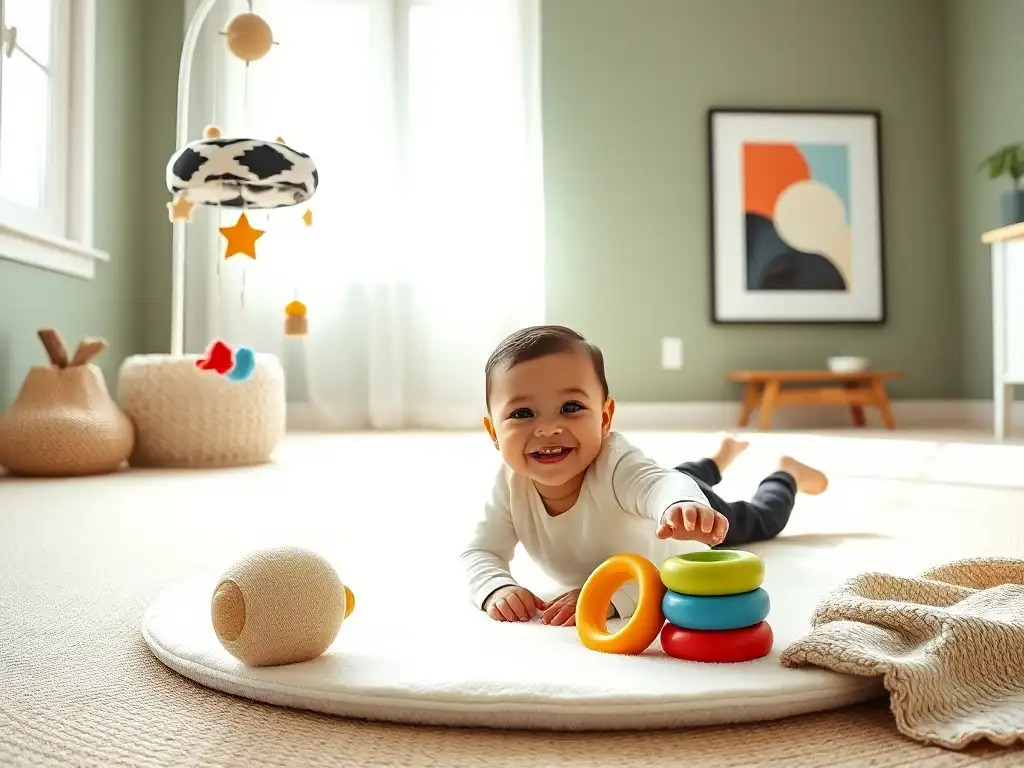
Creating a visually rich environment is crucial for your baby's vision development. From birth, babies are actively absorbing visual information, and providing them with diverse and engaging stimuli helps their brains develop the necessary neural pathways for sharp sight. Remember, consistent stimulation is key for healthy baby vision development activities. This section focuses on practical steps you can take to create a stimulating visual world for your little one. We'll explore optimal lighting, safe and engaging nursery décor, and the importance of rotating toys to keep things fresh and exciting.
Optimizing Lighting for Optimal Vision Development
Proper lighting plays a significant role in your baby's visual development. Too much bright light can be overwhelming, while insufficient light hinders their ability to clearly perceive details. Aim for a balance that mimics natural light as much as possible.
During the day, utilize soft, natural light. Open curtains and blinds to allow sunlight to filter into the nursery, but avoid direct harsh sunlight which can be damaging to their sensitive eyes. Consider using sheer curtains to diffuse the light gently. In the evening, use soft, warm-toned lighting. Nightlights with low-intensity illumination can be helpful for nighttime feedings and comforting your baby without disrupting their sleep cycle. Avoid overly bright overhead lights, opting instead for lamps with adjustable brightness levels. This controlled approach ensures a comfortable visual experience, promoting healthy baby vision development activities.
Remember, newborns are particularly sensitive to light. Their vision is still developing, and exposure to intense or flickering lights can be detrimental. Observe your baby's reactions; if they seem distressed by the lighting, adjust accordingly. The goal is to create a calm and stimulating, not overwhelming, environment.
Safe and Engaging Visual Decorations for the Nursery
The nursery should be more than just a safe space; it should be a visually stimulating environment designed to encourage your baby's visual exploration. Avoid overcrowding the space. Too many visually complex elements can overwhelm a baby's developing visual system. Instead, opt for a few carefully selected items that offer a variety of colors, shapes, and textures.
Consider these options:
- High-contrast patterns: Black and white, or black and red, are excellent choices for newborns as their vision initially focuses on high contrast. Mobiles featuring these patterns can be incredibly engaging.
- Soft, textured mobiles: Choose mobiles made from soft materials like felt or fabric. These offer tactile stimulation alongside visual input, enriching the sensory experience.
- Mirrors: A strategically placed mirror (secured safely, of course!) can fascinate a baby by reflecting their own movements and expressions, stimulating their self-awareness and visual perception. Always supervise your baby around mirrors.
- Colorful, age-appropriate wall art: Use artwork featuring simple shapes and bright colors, but avoid overly busy or complex designs. Remember, simplicity is key for enhancing baby vision development activities.
Remember to keep all decorations out of reach to prevent choking hazards. Regularly inspect the decorations for any signs of wear and tear, replacing them as needed. Prioritize safety while creating a visually rich environment.
Rotating Toys and Objects to Prevent Boredom
Babies, like adults, can get bored with the same visual stimuli. To keep their visual system engaged and prevent boredom, regularly rotate the toys and objects in their environment. This introduces new shapes, colors, and patterns, constantly challenging their developing visual skills.
A simple rotation strategy could involve changing one or two toys every few days. This ensures that your baby is consistently exposed to novel visual input, which is critical for optimal development. Storing some toys away and bringing them out later acts as a form of "new toy" introduction, increasing engagement. This strategic approach enhances the effectiveness of your baby vision development activities.
This consistent exposure to varied visual stimuli helps strengthen their visual acuity, depth perception, and overall visual processing skills. Remember, the goal isn't to overwhelm your baby with toys, but to provide a carefully curated selection that evolves over time. This dynamic approach creates a stimulating and enriching environment that supports healthy visual development.
Interactive Play: Engaging Your Baby's Attention
Interactive play is crucial for stimulating your baby's vision development. Newborns might initially focus on high-contrast patterns, but as they grow, their visual acuity improves, and they become fascinated by movement and interaction. Simple games can significantly enhance their visual skills and cognitive development. For instance, hanging a brightly colored mobile above the crib, ensuring it's within their clear line of sight, provides a captivating focal point.
The movement of the mobile, particularly when gently nudged, stimulates their tracking abilities – the capacity to follow moving objects with their eyes. This is a fundamental aspect of baby vision development activities. Remember to choose mobiles with safe, non-toxic materials and secure attachments to prevent accidents.
Another engaging activity is to hold a brightly colored rattle or toy a few inches from your baby's face, slowly moving it side to side. This encourages them to follow the object with their eyes, strengthening their eye muscles and improving their visual tracking. The rhythmic movement also has a calming effect on many babies. You can also vary the colors and textures of the toys to keep them interested.
For example, a soft, textured toy offers a different sensory experience compared to a smooth, shiny one. This variety helps stimulate different aspects of their visual perception. Always supervise your baby during playtime to ensure their safety.
As your baby grows older (around 3-4 months), you can introduce more complex interactive games, such as playing peek-a-boo. This game not only strengthens their visual skills but also develops object permanence – the understanding that objects continue to exist even when they are out of sight. The element of surprise and anticipation in peek-a-boo keeps them engaged and improves their attention span. Similarly, simple songs accompanied by hand gestures also improve their ability to focus and follow movements.
These activities are not just about stimulating their sight; they are also building crucial social and emotional connections. Remember to always keep playtime fun and engaging, adjusting the complexity of the activities to your baby's developmental stage. The key is to make it a positive and interactive experience.
Recognizing Potential Vision Problems in Infants
Early detection of vision problems in infants is crucial for optimal development. While many vision issues are subtle, recognizing potential problems early can significantly impact a child's visual acuity and overall development. This section focuses on identifying potential warning signs and understanding when professional intervention is necessary for your baby's healthy baby vision development activities.
Signs of Potential Vision Issues in Babies
Several subtle cues can indicate potential vision problems in your baby. These aren't always definitive, but warrant attention and a consultation with a healthcare professional. Remember, every baby develops at their own pace, but persistent or unusual signs should not be ignored.
- Eye misalignment (strabismus): This is often noticeable as a wandering eye, where one eye appears to turn inward (esotropia), outward (exotropia), upward, or downward. It's crucial to address strabismus early, as it can lead to amblyopia (lazy eye) if left untreated.
- Excessive tearing or eye discharge: While some tearing is normal, particularly in newborns, excessive tearing or thick, yellow-green discharge could signal an infection or other underlying issue affecting the eyes.
- Light sensitivity (photophobia): Babies typically don't mind bright lights, but extreme sensitivity, where they squint excessively or cry when exposed to even dim light, may indicate a problem.
- Abnormal eye movements: Jerky, uncontrolled eye movements (nystagmus) can be a sign of neurological or visual problems. This is different from the normal, somewhat uncoordinated eye movements common in very young infants.
- Lack of eye contact: While babies don't consistently make eye contact from birth, a persistent lack of interest in faces or objects, or a failure to follow moving objects with their eyes, could suggest a visual impairment.
- Blinking less frequently than normal: Infants typically blink frequently; infrequent blinking could suggest a problem. [Specific frequency data pending]
- Rubbing eyes excessively: Constant eye rubbing can indicate discomfort or irritation, potentially related to a vision problem.
It's important to note that some of these signs might be present temporarily due to minor irritations. However, persistent or recurrent symptoms necessitate a medical evaluation.
When to Consult a Pediatrician or Ophthalmologist
If you observe any of the above signs, especially if they persist or worsen, it's crucial to seek professional advice. Don't hesitate to contact your pediatrician or a pediatric ophthalmologist. Early intervention is key to mitigating potential long-term effects on your baby's vision and overall development. Remember, early detection is crucial for successful treatment and the best possible outcome for your baby's visual health. This proactive approach ensures your baby receives the necessary care for optimal baby vision development activities.
A pediatrician can perform a basic eye examination, and if necessary, refer you to a pediatric ophthalmologist for a more comprehensive evaluation. Don't delay seeking help if you have any concerns; your baby's vision is an invaluable aspect of their development. Early intervention dramatically improves the chances of successful treatment and a positive outcome for your little one's future visual capabilities. Taking a proactive role in monitoring your baby's vision development is a vital part of responsible parenting.
Baby Vision Development Activities: Practical Tips for Parents

This section focuses on practical, engaging activities to stimulate your baby's visual development. Remember, every baby develops at their own pace, so celebrate milestones and don't compare your little one to others. These activities are designed to enhance, not force, the natural progression of their vision. Consistent, playful interaction is key for optimal baby vision development.
Making Playtime Visually Engaging
Playtime isn't just about fun; it's a crucial opportunity for baby vision development activities. Here’s how to maximize its visual benefits:
- High-contrast toys: Newborns see high-contrast patterns best. Think black and white, or bold primary colors. Simple designs with clear edges are more stimulating than complex images. Consider toys with patterns like stripes, checks, or spirals. These visual stimuli help their brains process information and strengthen neural pathways.
- Mobile stimulation: Baby mobiles are fantastic for visual development. Opt for mobiles with slow-moving, contrasting elements. Avoid overly complex or chaotic designs that could be overwhelming. The movement helps track objects and improves eye coordination. Experiment with different types of mobiles to see what your baby responds to best. For example, a mobile with brightly colored fabric shapes might be more engaging than one with small, intricate details.
- Interactive games: Engage your baby with simple games that involve visual tracking. Slowly move a brightly colored toy or rattle across their field of vision, encouraging them to follow it with their eyes. This helps develop their eye-hand coordination and tracking skills. You can even try making funny faces or sticking out your tongue – the exaggerated movements are visually stimulating.
- Varying distances: Hold toys at different distances to help your baby focus at varying ranges. Starting close and gradually increasing the distance challenges their visual acuity and depth perception. This is particularly important for developing their ability to judge distances and reach for objects.
- Sensory exploration: Introduce different textures and materials. A soft, plush toy offers a different visual and tactile experience than a crinkly plastic toy. This multi-sensory approach further enhances the stimulation and engagement.
Incorporating Vision Development into Daily Routines
You don't need dedicated playtime to boost your baby's vision. Everyday routines offer ample opportunities for baby vision development activities:
- Feeding time: During feeding, hold eye contact with your baby frequently. Talking and singing helps engage them visually and auditorily, strengthening the connections between their senses. The close proximity also allows for focused visual interaction, furthering eye development.
- Diaper changes: Use this time to point out different parts of their body, naming them clearly. This helps develop their understanding of their environment and their own bodies, connecting visual input with language. The close-up view is also great for practicing close-focus visual exercises.
- Bath time: The water's movement, reflections, and the colorful bath toys all provide visual stimulation. Singing and talking during bath time also helps create a positive sensory experience. The reflections in the water are especially engaging for babies.
- Story time: Even before your baby understands the words, reading to them is beneficial. The colorful illustrations provide visual stimulation, while the rhythm and tone of your voice engage their auditory senses. Choose books with large, clear images and bold colors.
- Tummy time: While primarily for strengthening neck and back muscles, tummy time also improves visual exploration. Place colorful toys within their reach to encourage them to lift their heads and track the objects. This helps develop their spatial awareness and coordination.
Creating a Safe and Stimulating Home Environment for Visual Development
Your home environment plays a significant role in your baby's visual development. Consider these points:
- Visual clutter: Avoid excessive clutter, which can be visually overwhelming for a baby. A clean, organized space allows them to focus on specific objects and stimuli. A less cluttered environment minimizes visual distractions and allows them to concentrate on specific objects.
- Natural light: Maximize natural light in your baby's room. Natural light is gentler on their eyes and provides a more varied and stimulating visual experience than artificial light. This also helps regulate their sleep-wake cycle.
- Safe play areas: Designate safe areas for play with age-appropriate toys. Ensure the area is free of hazards to prevent accidents and allow for safe exploration. This allows your baby to safely explore their environment and develop their visual-motor skills.
- Variety of textures and colors: Include a variety of textures and colors in your baby's environment. Different textures and colors provide a richer sensory experience, stimulating their visual development. This helps develop their ability to discriminate between different visual stimuli.
- Regular check-ups: Regular check-ups with your pediatrician are vital to monitor your baby's visual development and address any potential concerns early on. Early intervention is key to addressing any potential issues and ensuring optimal visual development. Remember, early detection is crucial for effective intervention.
Remember, consistent engagement and a stimulating environment are key for supporting your baby's baby vision development. Enjoy this special time of bonding and watching your little one blossom!
Beyond Toys: Other Ways to Stimulate Baby's Vision
While colorful toys are undeniably fun and engaging for baby vision development activities, there's a whole world of stimulation beyond the toy box. Many everyday activities can significantly contribute to your little one's visual acuity and cognitive development. Remember, the goal is to provide varied and enriching experiences that capture their attention and encourage exploration. We'll explore some effective, readily available options.
Reading to Your Baby: A Visual and Auditory Experience
Reading aloud isn't just about language development; it's a powerful tool for baby vision development activities. The vibrant colors, contrasting patterns, and diverse illustrations in board books provide excellent visual stimulation. Babies are captivated by the movement of your hands as you turn the pages, tracking your finger as it follows the text. The close proximity also allows for crucial face-to-face interaction, further enhancing the experience.
Consider books with high-contrast images, especially in the early months, as these are easier for newborns to perceive. For example, a book featuring black and white patterns or bold primary colors will be more engaging than a book with many pastel shades. Gradually introduce books with more complex images and textures as your baby's visual abilities develop.
This multi-sensory approach—combining sight and sound—creates a rich and stimulating learning experience. Remember to use expressive tones and varied pacing to maintain your baby's interest. The combination of visual and auditory stimulation strengthens neural pathways and promotes healthy brain development.
Outdoor Activities: Exploring the World Through Sight
The natural world offers a treasure trove of visual stimulation for baby vision development activities. Taking your baby outdoors provides opportunities to engage their vision in countless ways. The changing light, swaying trees, fluttering leaves, and the diverse colors and textures of nature all contribute to a rich visual experience. A walk in the park, a visit to the garden, or even simply observing the clouds from a window can be incredibly enriching.
The varying distances of objects, from nearby flowers to distant trees, helps develop depth perception. Try pointing out different objects and naming them, introducing your baby to the vocabulary of the world around them. Remember to protect your baby's eyes from the sun with appropriate headwear and sunglasses when necessary.
The dynamic nature of outdoor environments provides a more engaging and stimulating visual experience compared to static indoor settings. Even simple things, like watching birds fly or observing a busy street (from a safe distance, of course! ), can be fascinating for a baby.
Face-to-Face Interaction: The Power of Connection
Perhaps the most impactful baby vision development activity is simple face-to-face interaction. This seemingly basic activity is crucial for visual development and social-emotional bonding. Babies are naturally drawn to faces, particularly those of their caregivers. The close proximity allows them to observe facial expressions, movements, and subtle changes in your features. This interaction helps them develop crucial visual skills, like tracking movement and recognizing familiar faces. Make eye contact, smile, and talk to your baby frequently.
Use exaggerated facial expressions and engage them in simple games like peek-a-boo. This playful interaction not only stimulates their vision but also fosters a strong emotional connection. The repetitive nature of these interactions helps reinforce neural pathways associated with facial recognition and social interaction. This is a fundamental building block for their overall development. Regular, consistent face-to-face time is invaluable for your baby's visual and emotional well-being.
Frequently Asked Questions
How can I tell if my baby's vision is developing normally?
While every baby develops at their own pace, key milestones include following objects with their eyes by 2 months, reaching for toys by 3-4 months, and recognizing faces by 6 months. Consult your pediatrician if you have any concerns.
What are some age-appropriate activities to stimulate my baby's vision?
For newborns, high-contrast patterns (black and white) are ideal. As they grow, introduce brightly colored toys, mobiles with moving parts, and face-to-face interaction. Always supervise your baby during playtime.
At what age should I start doing vision development activities with my baby?
You can begin almost immediately! Even newborns benefit from high-contrast visuals and face-to-face time. The earlier you start, the better, but remember to keep activities short and engaging.
Are there any toys specifically designed to help with baby vision development?
Yes! Look for toys with high-contrast colors, patterns, and textures. Mobiles, rattles, and soft books with simple images are all great options. Choose toys that are age-appropriate and safe.
My baby seems to be struggling with their vision. What should I do?
If you notice any signs of strabismus (crossed eyes), blurry vision, or difficulty tracking objects, consult your pediatrician or an ophthalmologist immediately. Early intervention is crucial for optimal vision development.
Final Reflection: Nurturing the Window to the World
Stimulating a baby's vision isn't just about playing games; it's about building the foundation for a lifetime of seeing and experiencing the world. The activities discussed in this article – from high-contrast mobiles to interactive playtime – are crucial for fostering healthy visual development in those precious first months and years. These aren't just fleeting moments of fun; they are investments in a child's future ability to learn, connect, and engage with the world around them.
The impact of early visual stimulation extends far beyond the immediate. It shapes a child's cognitive development, influencing their ability to process information, understand spatial relationships, and even develop strong social bonds. The eyes are the windows to the soul,
a well-known proverb reminds us, and nurturing those windows from the very beginning allows a child's spirit to shine more brightly. This journey of visual development is a testament to the power of simple interactions and the profound impact they have on a child's future.
Consider the simple act of holding your baby and showing them a brightly colored toy. It's more than just a game; it's a moment of connection, a building block in their visual understanding, and a foundation for a lifetime of learning and exploration. Take the time to engage with your little one through these activities, and watch as their world blossoms with vibrant color and exciting discovery. Remember, every interaction, every playful moment, is a step towards unlocking their full potential.
Unleash Your Baby's Visual Potential!
Thank you for exploring ways to nurture your baby's developing eyesight! We hope you found the article helpful and inspiring. Now let's put this knowledge into action.
Here are some ways to continue stimulating your baby's vision:
- Create a vibrant visual environment: Surround your baby with colorful mobiles, patterned blankets, and high-contrast toys. These small changes to their surroundings can make a big difference!
- Share your vision-boosting successes: Let other parents know what's worked best for you by sharing your tips and experiences in the comments below.
- Explore diverse textures: Introduce your baby to a variety of textures – soft fabrics, crinkly paper, or smooth wooden toys – to further engage their visual senses.
What exciting visual experience will you share with your baby today?