
4Month Vision: Tracking Objects and Recognizing Faces


Welcome to BabyCareHub, your ultimate guide to navigating the incredible journey of parenthood! Are you curious about your little one's rapidly developing world? We delve into the fascinating topic of 4-month-old baby vision development, exploring how their tiny eyes are learning to track objects and recognize faces. Discover crucial milestones and gain valuable insights to support your baby's visual growth – let's unlock the secrets of their expanding visual universe together!
- Understanding Your 4-Month-Old's Vision Development
- Tracking Objects: A Key Developmental Milestone at 4 Months
- Facial Recognition: Recognizing Loved Ones at 4 Months
- Potential Concerns: When to Consult a Pediatrician About Your 4-Month-Old's Vision
- Stimulating Your 4-Month-Old's Vision Development at Home
- 4-Month-Old Baby Vision Development: Next Steps and Expectations
-
Frequently Asked Questions
- What is typical vision development for a 4-month-old baby?
- How can I tell if my 4-month-old's vision is developing normally?
- My 4-month-old seems to struggle focusing. Should I be worried?
- What activities can I do to help my 4-month-old's vision development?
- When should I be concerned about my baby's vision and seek professional help?
- Final Reflection: Unlocking the World: A 4-Month-Old's Visual Journey
- Unlock Your Baby's World: Start Tracking Development Today!
Understanding Your 4-Month-Old's Vision Development
Navigating the world as a new parent is an incredible journey filled with wonder and, let's be honest, a healthy dose of uncertainty. One area that often sparks questions is your baby's development, particularly their vision. Understanding your 4-month-old's visual capabilities is crucial for fostering their growth and providing appropriate stimulation.
This article will delve into the fascinating world of 4-month-old vision development, exploring key milestones such as visual acuity, depth perception, and color vision. We'll equip you with the knowledge to track your little one's progress and provide enriching experiences that nurture their visual abilities. By the end, you'll have a clearer understanding of what to expect and how to support your baby's incredible visual journey.
This guide focuses on the crucial developmental leap in vision that occurs around the 4-month mark, helping you understand the exciting progress your baby is making and how to interact with them to further enhance their visual skills. Remember, every baby develops at their own pace, but understanding these milestones can provide reassurance and guidance.
Visual Acuity at 4 Months: What Can Your Baby See?
At four months old, your baby's visual acuity is significantly improved compared to the newborn stage. While still not as sharp as an adult's, they can now see objects much more clearly. Think of it like this: at birth, your baby could likely only focus clearly on objects approximately 8-12 inches away.
By four months, that focus distance has extended considerably, allowing them to better perceive details in their surroundings. They are increasingly able to track moving objects smoothly, following your face as you move around the room or focusing intently on a dangling toy. This improved visual acuity is directly related to the continued development of their visual cortex, the part of the brain responsible for processing visual information.
You might notice your baby showing a preference for high-contrast patterns and bright colors, a testament to this developing visual prowess. This increased clarity allows for more detailed exploration of their environment, leading to enhanced engagement and learning. This stage marks a significant step toward independent visual exploration.
Depth Perception and 3D Vision Development in 4-Month-Olds
Depth perception, the ability to judge the distance of objects, is a complex skill that develops gradually. At four months, your baby is beginning to develop stereopsis – the ability to perceive depth using both eyes simultaneously. This means they are starting to see the world in three dimensions rather than just two. You can observe this developing depth perception by noticing their reactions to objects moving closer or further away.
They might reach out to grab a toy, demonstrating an understanding of its proximity. Activities like playing peek-a-boo, where you cover and uncover your face, or showing them objects at varying distances, can help stimulate this crucial developmental milestone. The development of binocular vision (using both eyes together) is key to this process and is actively refined during this period. Remember that depth perception is a gradual process, and perfecting it will take time.
Color Vision Milestones at 4 Months Old
By four months, your baby's color vision is largely developed, although the perception of subtle color differences may still be refining. They can now distinguish a wider range of colors, showing a clear preference for bright, vibrant hues. While they may not yet be able to name colors, their reactions to different colors demonstrate their growing ability to perceive and differentiate them. Introducing colorful toys, books, and clothing can further stimulate their color vision development.
Offering a variety of colorful objects encourages exploration and helps them learn to associate different colors with different objects. This enhanced color vision contributes significantly to their overall visual experience, enriching their engagement with the world around them. The vibrant world is now opening up to them in a whole new way! 🎉
Tracking Objects: A Key Developmental Milestone at 4 Months
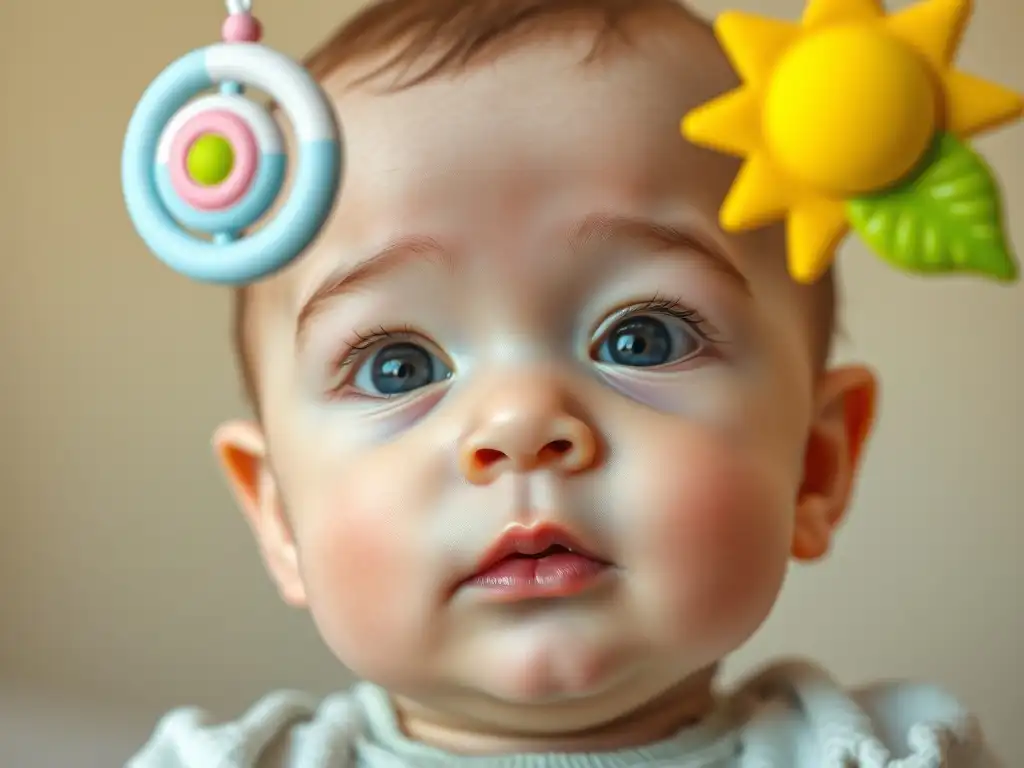
At four months old, your baby's visual development is rapidly progressing. A significant leap forward is their ability to effectively track moving objects. This isn't just about following something with their eyes; it's about coordinating eye movements with head and even body movements to maintain focus.
This improved tracking signifies developing coordination between their eyes and other motor skills, a crucial step in their overall development. This enhanced visual tracking ability is directly linked to their brain's maturation and the strengthening of neural pathways responsible for visual processing. Successfully tracking objects is a cornerstone of future visual-motor skills, vital for activities like reaching, grasping, and eventually, complex tasks like reading and writing.
The precision and speed of object tracking at this age are indicators of healthy visual development and are often used by pediatricians as a benchmark during check-ups. Remember, each baby develops at their own pace, but understanding the typical milestones helps parents appreciate their little one's progress.
How to Stimulate Object Tracking in Your 4-Month-Old
Stimulating your 4-month-old's object tracking skills is fun and engaging for both of you! Here's how:
- Slow and Steady Wins the Race: Move toys or objects slowly across their field of vision. Rapid movements can be overwhelming. Try moving a brightly colored rattle or a soft toy slowly from left to right, then up and down.
- High Contrast is Key: Babies at this age respond well to high-contrast colors and patterns. Use black and white toys, or toys with bold red and yellow patterns. Consider using black and white patterned mobiles.
- Engage Multiple Senses: Combine visual stimulation with other senses. For example, while moving a toy, make sounds or gently shake it to capture their attention. This multi-sensory approach enhances engagement and learning.
- Follow Their Gaze: Observe where your baby is looking and gently move the object in that direction. This shows them you're paying attention and encourages them to follow the movement.
- Make it Interactive: Use interactive toys that require some level of tracking. For instance, toys that light up as they move or make sounds when shaken can be highly engaging.
- Short and Sweet Sessions: Keep stimulation sessions short (around 5-10 minutes) to avoid overwhelming your baby. Multiple short sessions throughout the day are more effective than one long session.
Remember, consistency is key. Regular, short sessions of visual stimulation will significantly contribute to your baby's development.
Activities to Improve Object Tracking Skills at 4 Months
Here are some specific activities to help your 4-month-old hone their object tracking skills:
| Activity | Description | Benefit |
|---|---|---|
| Following a dangling toy | Hang a brightly colored toy or rattle above your baby's crib or playmat. Slowly move it from side to side. | Improves horizontal tracking. |
| Rolling a ball | Gently roll a large, brightly colored ball across the floor within your baby's reach. | Encourages tracking and reaching. |
| Playing peek-a-boo | Play peek-a-boo with your baby, slowly moving your hands or a toy in front of your face and then revealing it. | Enhances visual attention and anticipation. |
| Using a mobile | Choose a mobile with high-contrast patterns and slow-moving elements. | Provides continuous, gentle visual stimulation. |
| Reading board books | Read board books with simple, bold images. Slowly move the book back and forth as you read. | Improves tracking and encourages language development. |
Remember to always supervise your baby during these activities.
Signs Your Baby is Excelling in Object Tracking at 4 Months
While every baby develops at their own pace, here are some signs that your 4-month-old might be excelling in object tracking:
- They can easily follow moving objects across their entire field of vision, both horizontally and vertically.
- They readily anticipate the movement of objects and turn their heads to follow them.
- They show sustained interest in tracking objects for longer periods.
- They quickly locate objects that are partially hidden.
- They readily reach for and grasp moving objects.
If you have concerns about your baby's visual development, consult your pediatrician. Early intervention is key in addressing any potential developmental delays. Remember, celebrating your baby's achievements and providing a stimulating environment are crucial for their healthy development. 🎉
Facial Recognition: Recognizing Loved Ones at 4 Months
This section delves into the fascinating development of facial recognition in 4-month-old babies. At this age, a significant leap occurs in their visual capabilities, moving beyond simply seeing shapes and colors to recognizing and differentiating between familiar faces. This ability is crucial for bonding, social development, and overall well-being. Understanding this milestone can help parents appreciate their baby's progress and provide appropriate stimulation.
The Development of Facial Recognition in 4-Month-Old Babies
By four months, a baby's visual cortex – the part of the brain responsible for processing visual information – has matured considerably. This allows them to perceive depth and distance more accurately and to focus on finer details. This improved visual acuity is key to their developing ability to recognize faces. They are no longer just processing a blurry collection of features; they begin to distinguish subtle differences between faces, paying particular attention to the eyes, nose, and mouth.
This process isn't instantaneous; it's a gradual refinement of visual processing skills. Studies show that 4-month-olds demonstrate a clear preference for looking at faces, especially those of their caregivers. This preference reflects the innate human drive for social connection and the importance of recognizing familiar faces for security and comfort.
The development of facial recognition is not solely a visual process; it involves a complex interplay between visual input and the brain's ability to process and interpret that information. This interplay strengthens with repeated exposure to faces and interactions with caregivers. Think of it as the visual equivalent of learning a new language; with repeated exposure, the baby's brain becomes increasingly proficient at "reading" faces.
How to Help Your Baby Recognize Faces
Encouraging facial recognition in your 4-month-old is both simple and rewarding. Regular, close interaction is key. Engage in face-to-face play, making exaggerated expressions like smiling, sticking out your tongue, or raising your eyebrows. Talking to your baby during these interactions further enhances the experience. Use clear and simple language, describing your actions and naming the people in your baby's environment. For example, "See Mommy's smile?"
or "That's Daddy!". Reading books with clear pictures of faces is another effective method. Choose books with large, expressive illustrations, pointing out the different facial features as you read. Consider using flashcards with pictures of family members and friends. Show your baby the pictures, naming each person clearly.
Consistency is crucial; repeat these activities regularly to reinforce the learning process. Remember to maintain eye contact and offer plenty of positive interaction. This nurturing approach strengthens the bond between you and your baby while stimulating their visual development. A happy and engaged baby is more likely to focus and participate in these activities. This positive reinforcement helps create a positive association with faces and learning.
Distinguishing Faces: A 4-Month-Old's Growing Ability
While recognizing familiar faces is a significant milestone, distinguishing between different faces is a more advanced skill that develops gradually throughout the first year. At 4 months, your baby might show a preference for familiar faces, but they may still struggle to differentiate between unfamiliar faces that look similar. For instance, they might readily recognize your face but may not be able to easily distinguish between your face and that of a similarly featured stranger. This is perfectly normal.
The ability to distinguish between multiple faces improves with age and continued exposure to different individuals. This increasing ability to discern subtle differences in facial features reflects the ongoing maturation of their visual processing system. To support this development, continue to expose your baby to a variety of faces, while maintaining regular interaction with familiar individuals. This combination of familiar and unfamiliar faces will help your baby learn to differentiate between them more effectively.
Remember to be patient, as this is a developmental process that unfolds over time. Celebrate each milestone and enjoy the journey of watching your baby's world become increasingly clear and richly detailed. The ability to recognize and distinguish between faces is a crucial step in their social and emotional development, paving the way for future social interactions and relationships.
Potential Concerns: When to Consult a Pediatrician About Your 4-Month-Old's Vision
A 4-month-old baby's vision is rapidly developing, but it's crucial to be aware of potential issues. While most babies develop typical vision at this age, some may experience delays or problems requiring professional attention. Early detection is key to ensuring optimal visual development for your little one. This section will outline signs that warrant a consultation with your pediatrician regarding your 4-month-old's vision. Remember, this information is for educational purposes and should not replace professional medical advice. Always consult your pediatrician with any concerns about your baby's health.
Signs of Potential Vision Problems in a 4-Month-Old
Several subtle cues might indicate a potential vision problem in your 4-month-old. These aren't always easily noticeable, so attentive observation is vital. Keep an eye out for the following:
- Persistent eye turning or wandering: While occasional eye drift is normal, consistent strabismus (crossed eyes) or consistent turning of one or both eyes warrants a check-up. This can be a sign of underlying muscle imbalances or other vision problems.
- Excessive tearing or eye discharge: Constant watery eyes or a noticeable discharge could suggest a blocked tear duct or infection, potentially affecting vision.
- Light sensitivity (photophobia): Unusual sensitivity to bright lights, resulting in excessive squinting or crying, could indicate a problem.
- Lack of visual tracking: While 4-month-olds aren't perfectly precise trackers, a complete inability to follow moving objects or people could be cause for concern. This could suggest a delay in visual development.
- Eye rubbing: Frequent rubbing of the eyes, especially if accompanied by other symptoms, may point to irritation or discomfort affecting vision.
- Poor hand-eye coordination: Difficulties coordinating hand movements with visual input, such as reaching for objects, may be linked to visual processing issues.
- Abnormal eye appearance: Noticeably different-sized pupils, unusual coloring of the eyes, or clouding of the cornea (the clear front part of the eye) require immediate attention.
Remember, even if you only notice one of these signs, it's important to consult a professional. Early intervention is often the most effective approach to addressing vision problems.
When to Schedule an Eye Exam for Your Baby
While regular pediatrician checkups include basic vision screenings, a dedicated eye exam by a pediatric ophthalmologist or optometrist might be necessary if you observe any of the above symptoms. This specialized exam allows for a thorough assessment of your baby's visual system. Here's a guideline:
- Schedule an appointment immediately if you notice any of the significant signs mentioned above, such as abnormal eye appearance, persistent eye turning, or excessive tearing. Don't delay seeking professional help in these cases.
- If your pediatrician expresses concern during a routine checkup, they will likely recommend a comprehensive eye examination.
- Consider an eye exam if your family history includes vision problems. Genetic factors can play a role in visual development.
- If you have any doubts or concerns, it’s always better to err on the side of caution and schedule an appointment. Your peace of mind is invaluable.
Early Intervention and Vision Therapy for Infants
Early detection and intervention are crucial for successful management of vision problems in infants. If a problem is identified, your doctor may recommend various treatments, including:
- Eye patching: This technique is sometimes used to strengthen weaker eye muscles.
- Prescription eyeglasses: Corrective lenses can help address refractive errors, such as nearsightedness or farsightedness.
- Vision therapy: This involves a series of exercises and activities designed to improve eye coordination and visual skills.
- Surgery: In some cases, surgery may be necessary to correct underlying muscle imbalances or other structural problems.
The specific treatment plan will depend on the diagnosis and the severity of your baby's condition. The good news is that many vision problems identified and addressed early can be effectively managed, and often corrected, leading to healthy visual development for your child. Remember, your active participation and collaboration with your healthcare providers are vital for your baby's successful visual journey. Early intervention for "4monthold baby vision development" issues can significantly improve outcomes.
Stimulating Your 4-Month-Old's Vision Development at Home

At four months old, your baby's visual acuity is rapidly improving. They're no longer just seeing blurry shapes; they're starting to perceive details, track objects, and recognize faces—key milestones in their 4 month old baby vision development. This section will guide you on how to nurture this crucial stage with simple yet effective stimulation techniques. Remember, consistent engagement is key to fostering healthy visual development. We'll explore activities you can easily incorporate into your daily routine to maximize your baby's visual learning. This active participation in their visual journey will significantly contribute to their overall cognitive development.
Simple and Engaging Activities for Visual Stimulation
Many simple activities can significantly impact your 4-month-old's vision development. Here are a few ideas:
- High-contrast objects: Babies at this age respond well to high-contrast visuals. Use toys or mobiles with black and white patterns, or bold primary colors. Consider hanging a mobile above the crib with various textured materials for added stimulation. This helps them focus and develop their visual tracking skills.
- Tracking objects: Gently move a brightly colored toy or your face slowly across your baby's field of vision. This encourages them to follow the movement, strengthening their eye muscles and improving their ability to track objects. Try doing this in different directions – up, down, left, and right. This is a fundamental aspect of 4 month old baby vision development.
- Face-to-face interaction: Spend quality time engaging in face-to-face interaction. Make funny faces, talk, sing, and smile. Babies find faces incredibly stimulating, particularly those of their caregivers. This strengthens their ability to recognize and process facial expressions, crucial for social-emotional development and bonding. This close interaction is essential for healthy 4 month old baby vision development.
- Tummy time: Supervised tummy time isn't just good for strengthening neck and back muscles; it also provides a different perspective for your baby's visual exploration. Place them on their tummy on a soft surface and position interesting toys within their reach, encouraging them to lift their head and look around. This also helps develop their spatial awareness.
- Reading books: Start introducing high-contrast board books with simple images. Point to the pictures and name the objects, narrating the story. This engages both their visual and auditory senses, promoting language development alongside visual stimulation.
Creating a Stimulating Visual Environment for Your Baby
Your baby's environment significantly influences their visual development. Consider these tips to create a stimulating and enriching visual space:
- Varying textures: Incorporate toys and objects with diverse textures, like soft fabrics, crinkly paper, and smooth wooden blocks. This adds a tactile dimension to visual stimulation, enhancing their sensory experience and understanding of the world around them. This multi-sensory approach is crucial for optimal 4 month old baby vision development.
- Brightly lit areas: Ensure your baby has access to well-lit areas during the day, but avoid harsh, direct sunlight. Sufficient light helps them see clearly and perceive details more effectively. However, avoid excessive brightness which can be overwhelming.
- Rotating toys and mobiles: Regularly rotate your baby's toys and mobiles to keep them visually engaged and prevent boredom. Novelty helps maintain their interest and ensures continued stimulation. This prevents visual fatigue and keeps their visual development progressing.
- Mirrors: A safe mirror placed where your baby can see their reflection can be a fascinating visual experience. They'll enjoy observing their own movements and facial expressions, promoting self-awareness. However, always supervise them closely around mirrors.
- Nature scenes: If possible, expose your baby to outdoor scenes, providing varied visual stimuli like trees, flowers, and clouds. This offers a richer and more complex visual experience than indoor environments. This contributes to their overall visual development.
Interactive Play: Enhancing Vision Development Through Play
Interactive play is an excellent way to foster your baby's vision development. Here's how:
- Following objects: Use toys with predictable movements, like a rattle or a small ball, to encourage tracking. Gradually increase the speed and complexity of the movements as your baby's skills improve. This will challenge them and further refine their visual tracking abilities.
- Cause and effect: Choose toys that respond to your baby's actions, like toys that make sounds when shaken or lights that flash when pressed. This helps them understand the connection between their actions and the resulting visual stimulation, strengthening their cognitive development as well as visual skills.
- Peek-a-boo: This classic game is not only fun but also excellent for visual development. The appearance and disappearance of your face helps your baby understand object permanence and improves their ability to track and focus on moving objects.
- Singing songs with actions: Combine singing simple songs with actions, like "Itsy Bitsy Spider" or "Pat-a-Cake." The combination of visual and auditory stimulation strengthens both their vision and language development.
- Sensory bins: As your baby gets closer to 5 months, introduce sensory bins with safe, age-appropriate objects. This will provide a wider range of visual stimuli and textures to explore, further developing their visual perception and hand-eye coordination. Always supervise your baby during sensory play.
Remember, every baby develops at their own pace. While these activities are beneficial, don't worry if your baby doesn't master all the skills immediately. Consistent interaction and a stimulating environment are vital for optimal 4 month old baby vision development. Consult your pediatrician if you have any concerns about your baby's visual development.
4-Month-Old Baby Vision Development: Next Steps and Expectations
This section focuses on what you can expect regarding your 4-month-old's vision development in the coming weeks and months. At this age, significant strides are being made, and understanding these milestones is crucial for supporting your little one's growth. We'll explore the typical advancements and provide insights into what constitutes healthy visual development at this stage. Remember, every baby develops at their own pace, so while these are common expectations, variations are perfectly normal.
What to Expect in the Coming Months Regarding Vision
By four months, your baby's vision is improving rapidly. They are likely able to track moving objects with greater precision and coordination than before. Think of it as upgrading their visual tracking software! Instead of blurry movements, they're now beginning to smoothly follow objects as they move across their field of vision. This improved tracking is directly related to the development of their eye muscles and the increasing complexity of their brain's visual processing centers.
Furthermore, depth perception is also developing. This means they are starting to understand distance and how far away objects are. This is crucial for reaching for toys and navigating their surroundings. You might observe them reaching for objects with more accuracy and less fumbling. This improved depth perception is a significant leap forward in their visual development. They are no longer just seeing shapes and colors, but are beginning to grasp the three-dimensional world around them.
Another key aspect of 4-month-old vision is color perception. While their color vision isn't fully mature yet, they can now distinguish a wider range of colors. Bright, contrasting colors still hold their attention the most, but their ability to perceive subtleties in color is steadily improving. This enhanced color perception contributes to their growing interest in exploring the colorful world around them. They are actively engaging with their visual environment, learning to differentiate and appreciate the nuances of color.
Finally, facial recognition continues to improve. They are now likely to recognize familiar faces more easily and consistently, showing preference for caregivers and responding positively to their presence. This is a heartwarming milestone, showcasing the strengthening bond between parent and child, underpinned by developing visual skills. This recognition is not just about seeing a face, but about associating that face with positive experiences and emotional connection.
Continuing to Support Your Baby's Visual Development Beyond 4 Months
Beyond the 4-month mark, continued visual stimulation remains crucial for optimal development. While your baby is making remarkable progress, providing enriching experiences will further enhance their visual capabilities. This doesn't require elaborate activities; simple, consistent engagement is key.
Here are some ways to continue supporting your baby's visual development:
- High-contrast toys: Continue to offer toys with high-contrast patterns and colors. Think black and white, red and white, or other strong color combinations.
- Mobile play: Mobiles with interesting shapes and colors are still excellent for visual stimulation. Ensure the mobile is safely positioned and within their reach.
- Face-to-face interaction: Maintaining regular face-to-face interactions remains essential. Talk, sing, and make silly faces to engage them visually and socially.
- Interactive playtime: Engage your baby in interactive playtime involving objects with varying textures and colors. This encourages them to track objects and develop hand-eye coordination.
- Exploration of textures: Expose your baby to a variety of textures through touch and sight. This helps them connect visual information with tactile sensations.
Remember to always supervise your baby during playtime and ensure their safety. The goal is to provide stimulating experiences without overwhelming them. The more opportunities they have to engage their visual senses, the stronger their visual skills will become. This consistent stimulation contributes to their overall cognitive development and prepares them for future developmental leaps.
Preparing for Future Developmental Milestones
As your baby approaches 6 months, you can anticipate further advancements in their vision. They might begin to reach for smaller objects with greater precision, follow objects moving in more complex patterns, and show increased interest in three-dimensional objects. Their visual acuity will also continue to improve, allowing them to see finer details.
To prepare for these milestones, continue providing opportunities for visual exploration and interaction. Introduce new toys and textures regularly, and ensure that your baby has a safe and stimulating environment to explore. Remember that each baby develops at their own pace, so variations are expected. However, consistent engagement and a stimulating environment will significantly support their progress. Regular check-ups with your pediatrician are also crucial for monitoring their development and addressing any potential concerns.
The development of your baby's vision is a journey, and the 4-month mark is merely a step along the way. By understanding the typical milestones and continuing to provide stimulating experiences, you'll be well-equipped to support your little one's visual development and prepare them for future learning. Enjoy this exciting phase of their growth! 🎉
Frequently Asked Questions
What is typical vision development for a 4-month-old baby?
At 4 months, babies can usually track moving objects smoothly and begin to recognize familiar faces. Their vision is still developing, but they are seeing the world with much more clarity than in the first few weeks.
How can I tell if my 4-month-old's vision is developing normally?
Look for signs like following your face and other objects with their eyes, reaching for toys, and showing interest in brightly colored objects. Consult your pediatrician if you have any concerns.
My 4-month-old seems to struggle focusing. Should I be worried?
While most 4-month-olds are developing good focus, some may develop more slowly. Consult your pediatrician if you are concerned about their ability to focus or track objects. Early intervention is key.
What activities can I do to help my 4-month-old's vision development?
High-contrast toys, black and white patterns, and face-to-face interaction are great for stimulating visual development. Reading books with simple pictures is also beneficial.
When should I be concerned about my baby's vision and seek professional help?
Seek professional help if your baby shows signs of strabismus (crossed eyes), lazy eye, or consistently fails to track objects or respond to faces. Early detection is crucial for effective treatment.
Final Reflection: Unlocking the World: A 4-Month-Old's Visual Journey
The incredible advancements in a baby's vision during the fourth month are not merely developmental milestones; they are the foundation upon which a lifetime of understanding and connection is built. This rapid progress, from blurry shapes to recognizing faces and tracking objects, highlights the breathtaking speed at which the human brain develops and adapts to its environment. It's a testament to the power of nature's design and the remarkable journey of human perception.
Witnessing this transformation firsthand, whether as a parent, caregiver, or researcher, is profoundly moving. The shift from a world of indistinct forms to one of recognizable faces and engaging objects is a window into the development of consciousness itself. The eyes are the windows to the soul,
a well-known proverb reminds us, and in the case of a four-month-old, these windows are just beginning to reveal the vibrant world within. This rapid visual development underscores the importance of providing enriching and stimulating environments for infants, nurturing their burgeoning ability to perceive and interact with the world around them.
Now, consider your own experiences with perception and understanding. How did your early visual experiences shape your world view? What can we learn from this rapid developmental phase to better support the visual and cognitive development of young children? Take a moment to reflect on the profound impact of vision, not just as a biological function, but as the gateway to connection, learning, and a deeper understanding of the world. Let this knowledge inspire you to cherish and nurture the visual development of the young children in your life, providing them with the opportunities they need to flourish.
Unlock Your Baby's World: Start Tracking Development Today!
Thank you for learning about your baby's incredible developmental journey! You've gained valuable insights into early milestones like object tracking and face recognition. Now, let's put that knowledge into practice.
- Create a personalized developmental journal: Record your baby's progress with photos and notes, celebrating each achievement. This will become a treasured keepsake!
- Connect with other parents: Share your experiences and ask questions on our BabyCareHub forum—a fantastic support network for parents.
- Play simple games at home: Engage your baby with brightly colored toys and play peek-a-boo to reinforce these developing skills.
Ready to embark on this exciting journey of discovery with your baby? What activity will you try first to encourage their development?