
Decoding Car Seat Types: Which One is Right for Your Baby?
Protect every journey with confidence 🚗👶 Explore expert-backed car seat installation and safety guidelines for newborns and babies, including proper positioning, harness adjustment, rear-facing recommendations, and essential checks to help reduce travel risks. With clear, practical advice for first-time parents, BabyCareHub makes infant car safety simpler—so every ride is more secure and stress-free.
6 articles
Summer Car Seat Safety: Keeping Your Baby Cool and Protected
Car Seat Headrests: Understanding Their Role in Safety
Car Seat Safety After an Accident: When to Replace Your Seat
Car Seat Safety for Multiples: Tips for Twins and More
Car Seat Padding and Inserts: When Are They Safe to Use?
🚗 Car Seat Installation and Safety Guidelines for Babies
Welcome to BabyCareHub’s Car Seat Installation and Safety Guidelines subcategory, your trusted resource for protecting babies and young children during every journey. Learn how to choose the right child passenger restraint, install a rear-facing or forward-facing car seat correctly, use harness straps safely, and avoid common mistakes that can reduce protection in a crash. Our practical, parent-friendly guidance helps first-time parents create a safer travel routine from the newborn stage through the toddler years.
👶 Choosing the Right Car Seat for Your Child
Discover how to compare infant car seats, convertible car seats, all-in-one seats, and booster seats according to your child’s age, height, weight, and developmental stage. You will learn why rear-facing travel is recommended for infants and how to check the manufacturer’s limits before purchasing or transitioning to a new seat.
BabyCareHub explains important safety features, including a five-point harness, side-impact protection, adjustable head support, expiration dates, and compatibility with your vehicle. Expect clear advice on selecting a certified seat that fits both your child and your car without relying only on brand popularity or marketing claims.
🛠️ Step-by-Step Car Seat Installation
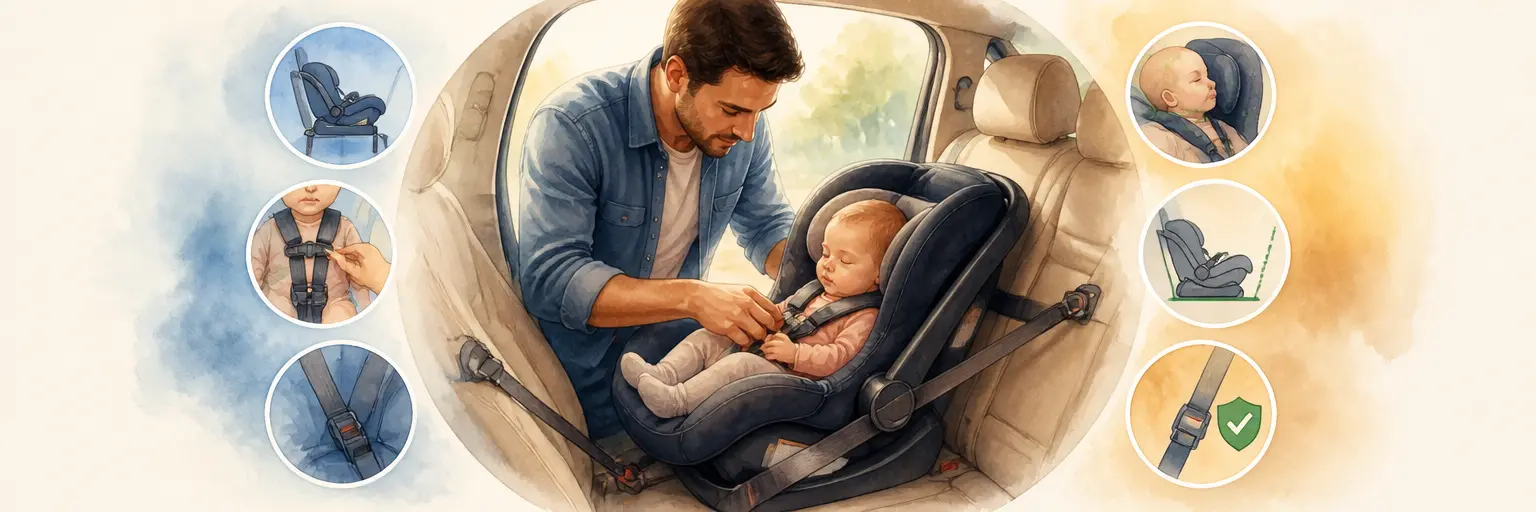
Learn the essential steps for installing a car seat securely using the vehicle seat belt or the LATCH system, also known as ISOFIX in some regions. Our guidance covers reading both the car seat manual and vehicle handbook, choosing an appropriate seating position, checking the recline angle, and ensuring the base sits firmly against the vehicle seat.
Parents can expect practical installation checks, including the one-inch movement test, correct belt routing, locked seat belts, and proper tightening of the harness. These instructions are designed to make car seat installation easier while encouraging caregivers to use an inspection station or certified child passenger safety technician when available.
🧷 Correct Harness Use and Safe Buckling
Proper harness adjustment is essential for newborn and baby car seat safety. Learn how to position shoulder straps at or below the shoulders for a rear-facing child, place the chest clip at armpit level where applicable, and tighten the harness until you cannot pinch excess webbing at the shoulder.
This section also explains how to remove bulky coats, blankets, toys, and aftermarket accessories that may interfere with the harness. You will find reminders about snug straps, correct buckle placement, and regular fit checks as your baby grows, helping reduce preventable travel risks.
↔️ Rear-Facing and Forward-Facing Safety
Understand why keeping babies and toddlers rear-facing for as long as possible within the seat’s limits provides important support for the head, neck, and spine. Learn how to identify when your child has outgrown an infant carrier and how a rear-facing convertible car seat can extend safe travel.
When a child is ready to face forward, our guidance explains harness height, top tether use, seat recline settings, and the importance of following local laws and manufacturer instructions. We also discuss why children should remain in a forward-facing harnessed seat until they reach the required height or weight limits.
🏠 Safe Car Seat Use Outside the Vehicle
Car seats are designed primarily for vehicle travel, not routine sleeping or unsupervised rest outside the car. Learn about safe practices when using an infant carrier, stroller attachment, or travel system, including placing the seat on a firm, level surface and supervising your baby at all times.
BabyCareHub also covers safe handling after a journey, including transferring a sleeping baby to a firm, flat sleep surface as soon as practical. You will find guidance on avoiding car seat misuse, overheating, loose blankets, and unsafe placement on sofas, beds, counters, or other elevated surfaces.
🔍 Common Car Seat Safety Mistakes to Avoid
Identify frequent errors such as an unsecured seat, twisted harness straps, an incorrect recline angle, loose installation, an unbuckled child, or a chest clip positioned too low. Recognizing these issues can help parents perform a quick safety check before every trip.
You will also learn why used car seats require careful evaluation. Avoid seats with unknown crash history, missing labels, damaged parts, recalls, or expired materials. Never reuse a seat after a moderate or severe crash unless the manufacturer specifically confirms that it remains safe.
🧭 Planning Safer Journeys with Your Baby
Prepare for short errands and long road trips with advice on feeding, diaper changes, breaks, temperature control, and keeping essential supplies accessible without distracting the driver. A simple pre-travel routine can ensure that your baby is correctly buckled before the vehicle moves.
Parents will also find reminders about back-seat supervision and preventing heatstroke. Always check the rear seat when leaving the car, keep keys away from children, and never leave a baby alone in a parked vehicle, even for a brief period.
❓ Frequently Asked Questions About Car Seat Installation and Safety
What is the safest car seat position for a newborn?
The back seat is generally the safest location for a newborn, with the car seat installed rear-facing according to the manufacturer’s instructions. Avoid placing a rear-facing car seat in front of an active passenger airbag, and check your vehicle handbook for approved seating positions.
How tight should a baby’s car seat harness be?
The harness should be snug enough that you cannot pinch extra webbing at the child’s shoulder. The chest clip, where required by the seat design, should sit at armpit level. Straps should lie flat and never be twisted.
Can my baby wear a winter coat in the car seat?
Bulky coats can compress during a crash and create dangerous slack in the harness. Dress your baby in thin, warm layers, secure the harness snugly, and place a blanket over the buckled straps without covering the baby’s face.
How do I know whether my car seat is installed correctly?
Follow both the car seat manual and vehicle handbook, confirm the correct belt path or LATCH connection, and check that the seat moves no more than about one inch side to side or front to back at the attachment point. When possible, have the installation checked by a certified child passenger safety technician.
When should a child switch from a rear-facing to a forward-facing seat?
Keep your child rear-facing until reaching the car seat’s maximum rear-facing height or weight limit. After that, use a forward-facing seat with a five-point harness and top tether according to the manufacturer’s instructions and applicable local regulations.