
Babyproofing Pools & Water Features: Safety Tips for Active Babies
Keep your little explorer safe with practical babyproofing tips for crawling and walking babies 🏡👶. Discover how to secure furniture, block stairs, cover outlets, protect sharp edges, and remove everyday hazards as your baby becomes more mobile. With simple home safety guidance from BabyCareHub, create a safer environment that supports confident crawling, standing, and first steps while giving parents greater peace of mind.
7 articles
Babyproofing: How to Choose the Right Babyproofing Products
Babyproofing: How to Babyproof Your Home Like a Pro
Babyproofing: How to Prepare Your Home for a Crawling Baby
Babyproofing: How to Babyproof Your Home for Different Baby Personalities
Babyproofing: How to Stay One Step Ahead of Your Mobile Baby
Babyproofing: How to Keep Your Baby Entertained in a Safe Environment
Babyproofing for Crawling and Walking Babies: Safer Spaces for Growing Little Ones
As babies begin crawling, pulling up, cruising, and taking their first steps, they can reach more places and explore with increasing curiosity. Babyproofing for crawling and walking babies helps reduce common household hazards while supporting safe, confident development. At BabyCareHub, this practical guide expands on home babyproofing with age-appropriate safety tips for preventing falls, burns, choking, poisoning, drowning, and other everyday accidents.
🏠 Room-by-Room Babyproofing for Mobile Babies
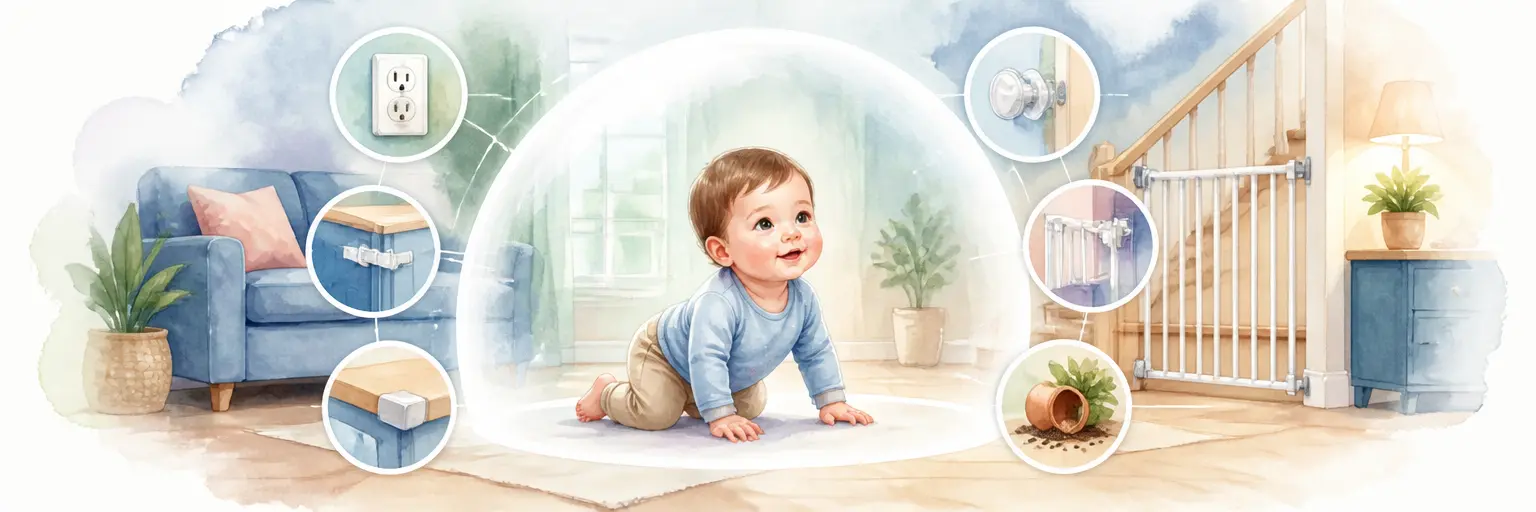
Mobile babies can move quickly, so safety checks should cover every area they can access. Learn how to inspect living rooms, bedrooms, hallways, kitchens, bathrooms, laundry spaces, stairs, and outdoor areas for hazards such as sharp corners, unstable furniture, electrical cords, small objects, and open doors. Room-by-room babyproofing makes it easier to create a consistent safety plan throughout your home.
This section also explains how to use safety gates, cabinet locks, window guards, outlet covers, furniture anchors, and door latches correctly. Because crawling and walking babies often copy adult behavior, you will also find guidance on storing dangerous items out of reach and creating a safe play zone where your child can explore under supervision.
🪜 Preventing Falls as Babies Crawl, Climb, and Walk
Falls are among the most common accidents during the crawling and walking stages. Discover practical ways to secure stairways, block access to balconies, install window guards, and keep furniture away from windows. Stair safety for babies includes choosing properly installed gates, checking for gaps, and using hardware-mounted gates where extra strength is needed.
Babies may also fall from beds, sofas, changing areas, high chairs, and other elevated surfaces. Our safety guidance emphasizes keeping one hand on your baby during changes, using high chairs with secure harnesses, and never relying on pillows or cushions as protective barriers. Supervision remains essential even after safety equipment is installed.
🔥 Kitchen and Bathroom Safety for Crawling and Walking Babies
Kitchens and bathrooms contain heat, water, chemicals, sharp objects, and slippery surfaces. Learn how to keep knives, cleaning products, medicines, appliances, hot drinks, and cookware away from curious hands. Kitchen babyproofing may include stove knob covers, back-burner cooking, appliance cord management, drawer locks, and a clear “no-go” area around the oven.
Bathroom safety includes setting the water heater to a safer temperature, using non-slip mats, locking toilet lids, and keeping buckets, tubs, and standing water empty when not in use. Never leave a baby alone near water, even for a moment. Constant adult supervision around water is more important than any product or safety device.
🔌 Electrical, Choking, and Poisoning Prevention
Crawling and walking babies explore by touching, pulling, and mouthing objects. Protect your child by covering unused outlets, securing power strips, shortening loose cords, and keeping chargers away from the floor. Inspect toys and household items regularly for broken pieces, loose batteries, magnets, coins, button batteries, and other small objects that may cause choking.
Poison prevention requires secure storage for medications, vitamins, cosmetics, detergents, pesticides, alcohol, and personal care products. Use locked cabinets rather than relying only on high shelves, since toddlers can climb. Keep poison control and emergency contact information accessible, and seek immediate professional help if you suspect your baby has swallowed or touched a hazardous substance.
🛋️ Securing Furniture, TVs, and Everyday Household Items
Unstable dressers, bookshelves, televisions, and storage units can tip when a baby pulls up or climbs. Learn why anchoring furniture to wall studs is one of the most important steps in toddler and baby home safety. Keep heavier objects on lower shelves, remove tempting items from the top of furniture, and check anchors periodically for looseness or damage.
Pay attention to less obvious hazards, including recliners, folding tables, tablecloths, cords, blinds, pet bowls, and bags. Window-blind cords should be secured well out of reach, while furniture should be positioned away from windows and climbing opportunities. Regular safety checks are necessary as your baby becomes stronger and more mobile.
🚪 Doors, Windows, Stairs, and Outdoor Areas
Doors and windows can create risks from falls, trapped fingers, unsafe rooms, and access to roads or pools. Use door latches, finger-pinch guards, window stops, and safety locks where appropriate. Keep keys, garage remotes, and small objects out of reach, and make sure exterior doors close and lock reliably.
Outdoor babyproofing should include fences, locked gates, shaded play areas, and safe surfaces around play equipment. Keep babies away from driveways, grills, fire pits, garden chemicals, tools, and standing water. Pool and water safety require close, undistracted supervision and multiple layers of protection, including barriers and secure access controls.
🧸 Choosing Safe Babyproofing Products
Babyproofing products can support a safer home when they are appropriate for the space and installed correctly. Compare safety gates, outlet covers, cabinet locks, corner guards, anti-tip straps, window guards, and bed rails based on durability, fit, installation method, and ease of use. Avoid products that create new hazards, such as loose cords, detachable small parts, or gates that are not designed for stairs.
No product replaces supervision or regular maintenance. Follow manufacturer instructions, inspect devices for wear, and replace damaged equipment promptly. The best babyproofing setup combines reliable safety products, thoughtful home organization, and active adult supervision.
✅ A Practical Babyproofing Checklist for Every Developmental Stage
Babyproofing should evolve as your child progresses from crawling to pulling up, cruising, walking, and climbing. Use a checklist to review floor-level hazards, furniture stability, stair access, electrical items, choking risks, water exposure, and storage areas. Get down to your baby’s height to identify dangers that may be easy for adults to overlook.
Repeat the inspection whenever you move furniture, add new equipment, visit a different home, or notice a new skill. A crawling baby may need floor-level protection, while a walking toddler may require additional locks, gates, and anti-climbing strategies. Regularly updating your home safety plan helps keep pace with your baby’s changing abilities.
❓ Frequently Asked Questions About Babyproofing for Crawling and Walking Babies
When should I start babyproofing my home?
Start before your baby begins crawling, ideally during pregnancy or in the early months. Early preparation gives you time to install gates, anchors, locks, and window guards before your baby becomes mobile. Recheck your home as new skills develop because walking and climbing create additional risks.
What are the most important babyproofing steps?
Begin with anchoring furniture and televisions, securing stairs and windows, locking medicines and cleaning products, covering electrical outlets, removing choking hazards, and protecting kitchens and bathrooms. Water safety and close supervision are also essential, particularly around tubs, buckets, toilets, pools, and other water sources.
Are baby gates necessary for crawling and walking babies?
Baby gates can help limit access to stairs, kitchens, bathrooms, and other hazardous areas. Use hardware-mounted gates at the top of stairs and choose products that fit securely without dangerous gaps. Gates are a safety aid, not a replacement for supervision.
How can I prevent furniture tip-overs?
Secure dressers, bookshelves, televisions, and other tall or heavy furniture to wall studs using appropriate anti-tip hardware. Place heavy objects on lower shelves, remove climbing temptations, and keep cords or toys that encourage pulling away from furniture.
What should I do if my baby swallows a small object or household product?
Do not wait for symptoms or try to make your baby vomit. Contact your local poison control center or emergency medical service immediately and follow professional instructions. Keep the product container or object nearby so health professionals can identify the possible hazard quickly.