
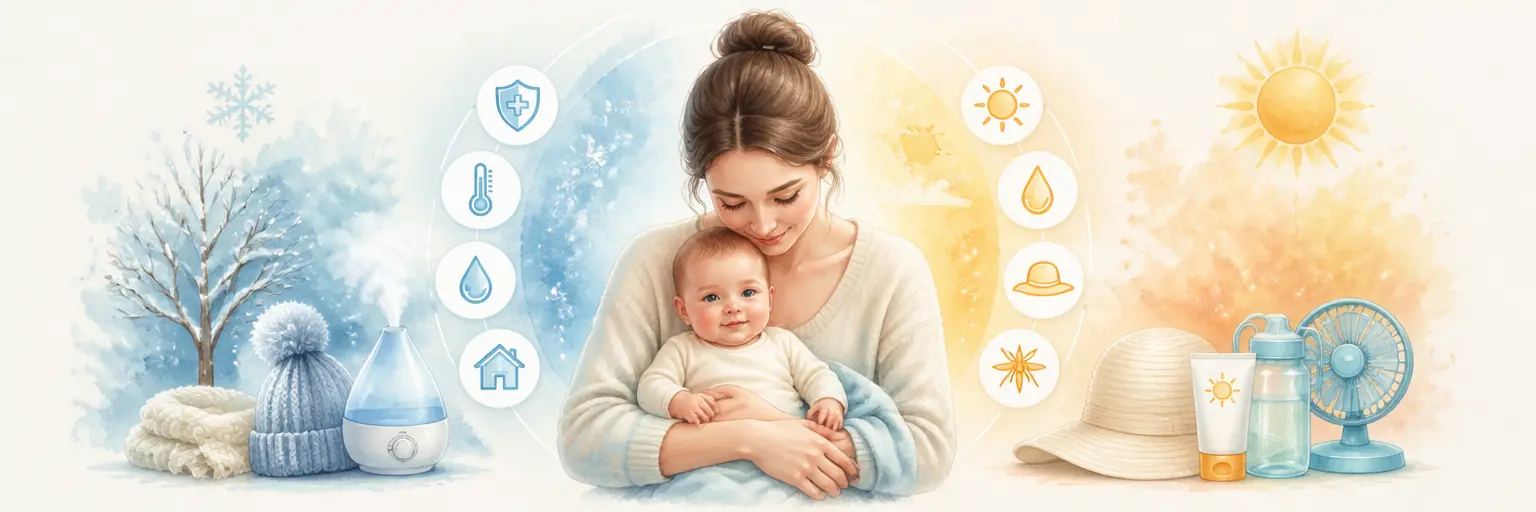
Winter Baby Care: 7 Essential Tips to Keep Your Newborn Healthy and Warm
Protect your little one all year with seasonal baby health tips for winter and summer 🌦️ Discover practical guidance on preventing colds, overheating, dehydration, sun exposure, dry skin, and other common seasonal concerns. Learn how to dress your baby safely, maintain comfortable indoor temperatures, recognize warning signs, and prepare for changing weather with confidence. 👶🩺 Keep your baby healthy, comfortable, and safe in every season with BabyCareHub.
6 articles
Summer Baby Cough: Identifying the Cause and Treating Summer Coughs
Is Your Baby Ready for Winter? A Guide to Cold Weather Precautions
Winter Baby Teething: Soothing Sore Gums in Cold Weather
Summer Baby Exercise: Safe Ways to Keep Your Baby Active in the Heat
Summer Baby Immune System: Keeping Your Baby Healthy During Summer
🌦️ Seasonal Baby Health Concerns: Winter and Summer Care
Welcome to BabyCareHub’s guide to seasonal baby health concerns, designed to help first-time parents protect babies and young children throughout changing weather conditions. From winter colds, dry skin, and cold-weather safety to summer heat, sun exposure, dehydration, and insect bites, this subcategory provides practical, evidence-informed guidance for keeping your baby comfortable and safe. Explore clear advice on baby temperature regulation, appropriate clothing, hydration, seasonal illness prevention, and when to contact a healthcare professional.
❄️ Winter Baby Health and Safety
Winter can bring colder temperatures, dry indoor air, respiratory viruses, and increased risks associated with overheating indoors. Learn how to dress your newborn or baby in safe winter layers, prepare a comfortable sleeping environment, and reduce exposure to common winter illnesses such as colds, influenza, and respiratory infections.
BabyCareHub explains how to recognize signs that your baby may be too cold or too warm, while emphasizing safe sleep practices. Parents can also find guidance on protecting delicate skin from dryness, choosing suitable moisturizers, managing indoor heating, and seeking medical advice when winter symptoms become concerning.
☀️ Summer Baby Health and Safety
Hot weather can affect babies quickly because infants have a limited ability to regulate body temperature. This section covers summer baby care, including how to reduce the risk of overheating, choose breathable clothing, use shade correctly, and maintain a comfortable nursery during warm weather.
Discover practical tips for preventing dehydration, recognizing heat exhaustion, and planning safe outdoor activities. You will also learn why babies under six months require special sun protection guidance and how to use shade, protective clothing, and professional advice instead of relying solely on sunscreen.
🌡️ Baby Temperature Regulation
Understanding infant temperature regulation is essential in both winter and summer. Babies may become overheated or chilled more easily than adults, so parents should learn how to assess comfort by checking the baby’s chest or back rather than relying only on hands and feet, which can naturally feel cool.
This subcategory provides helpful information about appropriate baby clothing layers, room comfort, sleepwear, and warning signs of temperature-related illness. If your baby seems unusually sleepy, difficult to wake, has breathing problems, feels very hot or cold, or has a fever, contact a qualified healthcare professional promptly.
🦠 Seasonal Illness Prevention for Babies
Seasonal changes can increase exposure to respiratory infections, stomach bugs, allergies, and other common illnesses. Learn how handwashing, vaccination advice from your healthcare provider, limiting contact with sick people, cleaning frequently touched surfaces, and avoiding smoke exposure can support baby health during winter and summer.
Parents can also find guidance on recognizing changes in feeding, sleep, breathing, and behavior. Because newborns and young infants can become seriously ill quickly, BabyCareHub encourages parents to seek professional medical advice whenever symptoms are severe, persistent, or unusual for their baby.
🧴 Seasonal Baby Skin Care
Winter wind, low humidity, frequent bathing, heat, sweat, and sun exposure can all affect sensitive baby skin. Explore gentle strategies for managing dry baby skin, irritation, heat rash, chafing, and weather-related discomfort without using harsh products or unnecessary fragrances.
Learn when breathable clothing, lukewarm baths, gentle cleansers, and fragrance-free moisturizers may help. Parents should contact a healthcare professional if a rash spreads quickly, blisters, becomes painful, shows signs of infection, or appears alongside fever or changes in behavior.
🛡️ Outdoor Safety in Every Season
Outdoor time can support healthy development, but babies need special protection from cold, heat, sun, wind, insects, and unsafe environments. This section covers safe outdoor activities for babies, including stroller comfort, shade, weather checks, appropriate clothing, and planning outings around the most comfortable times of day.
Find reminders about never leaving a baby alone in a parked vehicle, even briefly, because temperatures can rise or fall rapidly. You will also learn how to inspect outdoor areas, reduce insect exposure, and recognize when weather conditions are unsuitable for a newborn or young baby.
❓ Frequently Asked Questions About Seasonal Baby Health
🌡️ How can I tell if my baby is too hot or too cold?
Check your baby’s chest or upper back for warmth rather than relying on hands and feet. Sweating, flushed skin, damp hair, rapid breathing, or unusual sleepiness may indicate overheating. Cool skin, pale or mottled skin, and unusual fussiness may indicate that your baby needs warming. If your baby appears unwell or you are concerned, seek medical advice.
🧥 How should I dress my baby in winter?
Use comfortable layers that can be removed easily indoors. A common approach is dressing a baby in approximately one more light layer than an adult would wear in the same environment, while avoiding bulky clothing under car seat straps. Remove hats and extra layers indoors or during sleep to help prevent overheating.
☀️ How can I protect my baby from summer heat and sun?
Keep babies in shade, use lightweight breathable clothing, avoid the hottest part of the day, and never leave a baby in a parked vehicle. Infants under six months need particular care because shade and protective clothing are generally preferred. Ask your healthcare professional about suitable sunscreen use for your baby’s age.
💧 How do I know if my baby may be dehydrated?
Possible signs include fewer wet diapers, a dry mouth, no tears when crying, unusual tiredness, sunken eyes, or poor feeding. Babies can become dehydrated quickly, especially in hot weather or when sick. Continue normal breast milk or formula feeding unless a healthcare professional advises otherwise, and seek medical care if dehydration is suspected.
🚑 When should I call a doctor about a seasonal illness?
Contact a healthcare professional urgently if your baby has trouble breathing, is difficult to wake, is not feeding, has signs of dehydration, has a seizure, or appears seriously unwell. For young infants, any fever should be discussed promptly with a medical professional. Trust your instincts and seek help when your baby’s condition concerns you.