
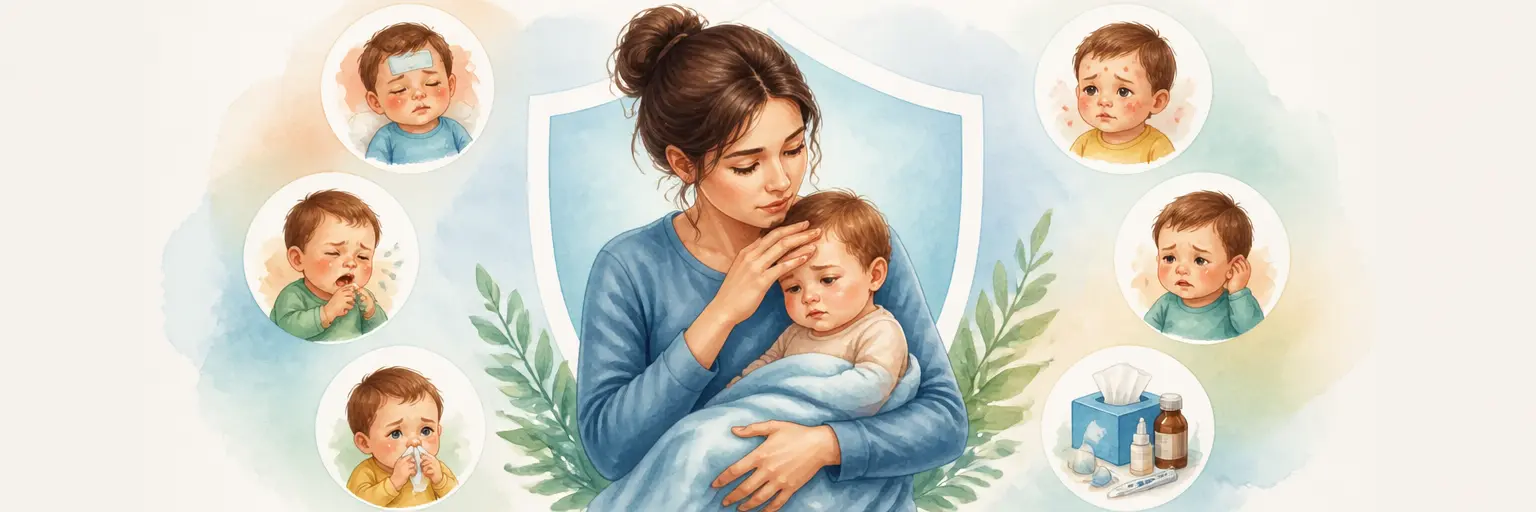
Preventing the Spread: Practical Tips to Protect Your Baby from Germs
Learn how to recognize and manage common baby illnesses with practical, parent-friendly guidance on symptoms, comfort measures, and when to seek medical care. 👶🩺 From colds and fever to rashes and digestive concerns, BabyCareHub helps first-time parents make informed decisions and support their baby’s health and safety with confidence.
6 articles
The Importance of Hydration: Keeping Your Sick Baby Hydrated
Baby's First Septic Shock: Identifying the Symptoms and Seeking Immediate Care
Baby's First Flu: What Parents Need to Know and Do
When to Call the Doctor: Essential Guide for Baby Health Concerns
Baby's First Sunburn: Recognizing the Signs and Seeking Treatment
👶 Common Baby Illnesses: Symptoms and Care
Welcome to BabyCareHub’s guide to common baby illnesses, symptoms, and care. Caring for a sick baby can feel overwhelming, especially for first-time parents, so this subcategory provides clear, practical information about infant health, newborn symptoms, common childhood illnesses, and safe home care. Learn how to recognize changes in your baby’s behavior, feeding, sleep, temperature, breathing, skin, and digestion while understanding when professional medical advice is needed. This information supports—not replaces—guidance from your pediatrician or healthcare provider.
🌡️ Recognizing Common Baby Illness Symptoms
Babies cannot explain how they feel, which makes it important for parents to notice early signs of illness. Articles in this section cover symptoms such as fever, unusual fussiness, tiredness, poor feeding, vomiting, diarrhea, coughing, congestion, rashes, and changes in wet diapers. You will learn how symptoms may appear differently in newborns, young infants, and older babies.
BabyCareHub focuses on practical observation and safe decision-making. Look for patterns and changes from your baby’s normal behavior, including reduced alertness, difficulty feeding, unusual crying, or fewer wet diapers. Parents will also find guidance on recording symptoms and preparing useful information for a healthcare appointment.
🩺 Fever, Colds, and Respiratory Illnesses
This section explains common baby health concerns such as colds, nasal congestion, coughs, bronchiolitis, and other respiratory symptoms. You can find age-appropriate information about checking temperature, supporting comfortable breathing, keeping nasal passages clear, and encouraging appropriate feeding and hydration.
Because breathing problems can become serious quickly in infants, these guides highlight warning signs that require prompt medical attention. Parents will learn to watch for fast or difficult breathing, chest pulling in, bluish lips or skin, poor feeding, unusual sleepiness, or pauses in breathing. Never rely on home care alone when your baby seems seriously unwell.
🍼 Feeding, Vomiting, Diarrhea, and Dehydration
Babies may experience spit-up, reflux, vomiting, diarrhea, constipation, or temporary feeding difficulties. Our resources help parents understand the difference between common minor symptoms and signs that may indicate infection, food intolerance, or another medical concern. Topics include breastfed and formula-fed babies, feeding frequency, and changes in stool.
Special attention is given to dehydration symptoms in babies, including fewer wet diapers, dry mouth, no tears when crying, sunken eyes, or unusual weakness. Parents will learn why young babies can become dehydrated quickly and why persistent vomiting, bloody stool, or refusal to feed should be discussed with a healthcare professional promptly.
🦠 Common Infections in Babies
BabyCareHub covers frequently encountered infections such as ear infections, viral illnesses, hand-foot-and-mouth disease, conjunctivitis, thrush, and urinary tract infections. Each topic is designed to help parents understand common symptoms, how infections may spread, and what questions to ask a pediatrician.
These guides emphasize safe infant care and responsible infection prevention. Parents can learn about handwashing, limiting exposure to sick contacts, cleaning feeding equipment, following vaccination recommendations, and avoiding unsafe remedies. Antibiotics should only be used when prescribed, and leftover medication should never be given to a baby.
🧴 Baby Skin Conditions, Rashes, and Irritation
Newborn and baby skin can be sensitive and may develop diaper rash, heat rash, eczema, cradle cap, dry skin, or irritation from products and fabrics. This subcategory explains common appearances, possible triggers, gentle skincare practices, and ways to protect the skin barrier.
Readers will also learn which skin changes need medical evaluation. Rapidly spreading rashes, blistering, facial swelling, purple spots, signs of infection, or a rash with fever should receive prompt professional attention. Avoid applying adult medicines, essential oils, or unfamiliar creams unless a healthcare provider recommends them.
🧼 Safe Home Care and Comfort Measures
When a baby has a mild illness, parents often want safe ways to provide comfort. Our articles discuss rest, appropriate fluids or feeds, comfortable clothing, humidified air when suitable, gentle nasal care, and maintaining a calm environment. Advice is tailored to babies because many adult cold medicines and home treatments are unsafe for infants.
BabyCareHub encourages parents to follow evidence-based care recommendations and read medication labels carefully. Never give aspirin to a child, and consult a healthcare professional before giving fever or pain medicine, especially to a newborn or young infant. Proper dosing must always be based on professional advice and the baby’s current weight.
🚨 When to Call a Doctor or Seek Emergency Care
Knowing when to seek help is one of the most important parts of caring for a sick baby. This section explains situations that deserve a pediatrician’s advice, including persistent fever, worsening cough, repeated vomiting, ongoing diarrhea, poor feeding, fewer wet diapers, ear pain, or symptoms that do not improve.
Emergency care may be necessary if a baby has severe breathing difficulty, blue or gray coloring, a seizure, extreme difficulty waking, sudden facial swelling, uncontrolled bleeding, severe dehydration, or a fever in a very young infant. Trust your instincts; if your baby looks seriously ill or you are worried, contact emergency services or a medical professional immediately.
❓ Frequently Asked Questions About Common Baby Illnesses
What are the most common illnesses in babies?
Common baby illnesses include colds, viral infections, ear infections, bronchiolitis, conjunctivitis, diaper rash, eczema, reflux, vomiting, diarrhea, and fever. Symptoms can overlap, so a healthcare professional should assess persistent, severe, or unusual symptoms.
When is a baby’s fever a medical emergency?
Any fever in a very young infant can require urgent medical assessment, depending on the baby’s age and your local medical guidance. Seek prompt advice for a high or persistent fever, or for fever accompanied by breathing difficulty, poor feeding, unusual sleepiness, dehydration, a seizure, or a concerning rash.
How can I tell if my baby is dehydrated?
Possible signs include fewer wet diapers, dark urine, a dry mouth, no tears, sunken eyes, a sunken soft spot, vomiting, diarrhea, or unusual sleepiness. Babies can become dehydrated quickly, so contact a healthcare provider promptly if you notice these symptoms.
Can I give my baby over-the-counter cold medicine?
Do not give over-the-counter cough or cold medicine to a baby unless specifically instructed by a qualified healthcare professional. Many products are unsafe for infants. Ask your pediatrician about safer comfort measures and correct medication dosing.
How do I know whether my baby needs urgent medical care?
Seek urgent help for difficulty breathing, blue or gray lips, severe lethargy, unresponsiveness, seizure, serious allergic reaction, persistent vomiting, severe dehydration, or a rapidly worsening condition. If you are unsure, contact your pediatrician, an urgent care service, or emergency services for advice.