
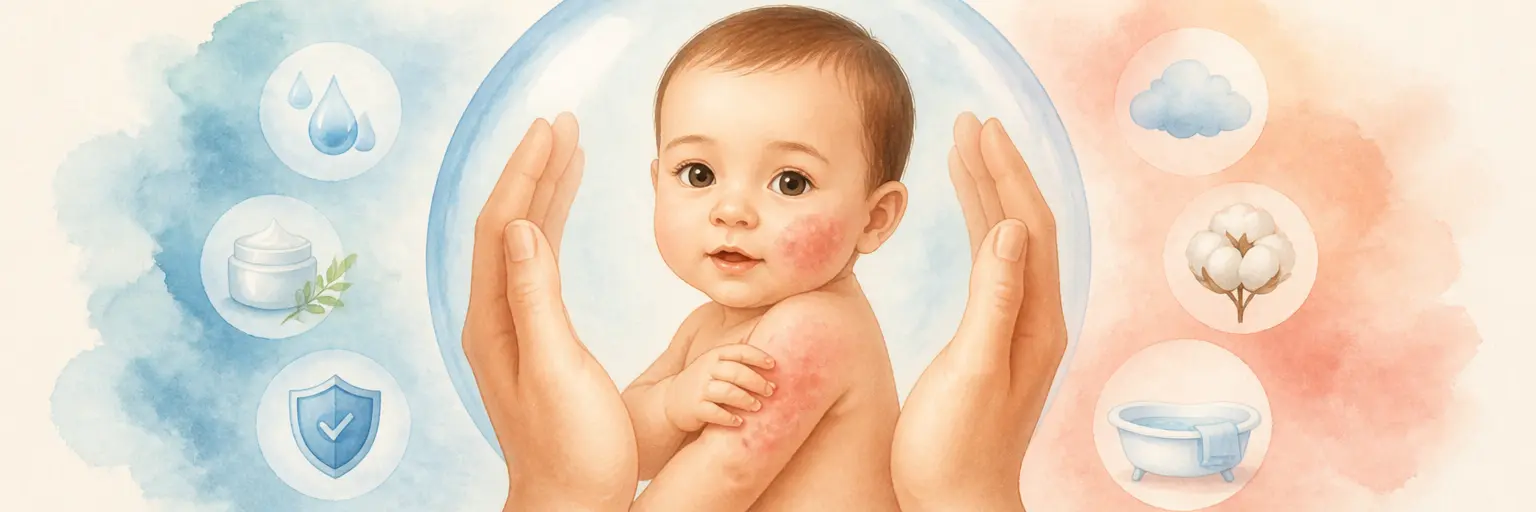
Baby Skin Care: The Latest Research on Eczema Treatments
Discover gentle, expert-backed guidance for common baby skin conditions 🧴👶, including eczema, dry skin, cradle cap, rashes, and irritation. Learn about soothing skincare routines, safe products, potential triggers, and when to contact a pediatrician, helping you protect your baby’s delicate skin with confidence.
7 articles
Decoding Baby Eczema: Identifying Triggers and Finding Relief
Baby Dry Skin and Humidity: Maintaining the Right Levels
Baby Skin Care: The Role of Diet in Preventing Issues
Demystifying Baby Skin Rashes: A Comprehensive Guide
Understanding Baby's Skin Microbiome: Its Role in Eczema
Baby Eczema and Heat Rash: Telling the Difference and Treating Both
👶 Baby Skin Conditions: Eczema, Dry Skin, and More
Welcome to BabyCareHub’s guide to baby skin conditions, created to help first-time parents understand common newborn and infant skin concerns with confidence. Baby skin is delicate, sensitive, and still developing, which can make eczema, dry skin, baby rash, cradle cap, heat rash, diaper rash, and allergic reactions appear quickly. Here, you can learn how to recognize symptoms, support healthy skin, choose gentle skincare products, and know when professional medical advice may be needed.
🌿 Understanding Common Baby Skin Conditions
Parents may notice redness, flaky patches, bumps, peeling, dryness, or irritation on a baby’s face, scalp, arms, legs, or body. This subcategory explains the differences between infant eczema, newborn dry skin, heat rash, cradle cap, baby acne, and contact dermatitis, helping you better understand what may be affecting your child’s skin.
Our practical content focuses on clear explanations rather than complicated medical language. You can expect guidance about possible triggers, typical symptoms, skin changes by age, and simple ways to monitor your baby’s condition while keeping their comfort and safety a priority.
🧴 Baby Eczema and Sensitive Skin Care
Baby eczema, also called atopic dermatitis, can cause itchy, dry, rough, or inflamed skin. Learn about common eczema triggers such as fragrance, harsh detergents, overheating, saliva, and dry air, along with gentle strategies for protecting the baby skin barrier.
Discover how short lukewarm baths, fragrance-free moisturizers, soft clothing, and regular hydration may support sensitive skin. Our articles also explain why parents should avoid scratching, strong products, and unapproved home remedies, and when a healthcare professional may recommend treatment.
💧 Dry Skin, Peeling Skin, and Newborn Skin Changes
Newborns commonly experience peeling or dry skin during the first weeks of life as their skin adjusts after birth. This section covers normal newborn skin changes, environmental causes of dryness, and ways to create a gentle skincare routine without over-washing or using irritating products.
Parents can find advice on choosing mild cleansers, applying baby-safe emollients, managing indoor air dryness, and protecting skin from cold or windy conditions. You will also learn which signs may suggest that dryness is more than a temporary adjustment.
🌡️ Baby Rash, Heat Rash, and Skin Irritation
Heat rash and general baby rashes can develop when sweat, warmth, moisture, friction, or tight clothing irritates the skin. Learn how to recognize small red bumps, irritated folds, and areas affected by overheating, especially around the neck, chest, back, and diaper area.
This subcategory offers practical information about keeping your baby cool, choosing breathable fabrics, drying skin folds carefully, and avoiding heavy or fragranced products. Because different rashes can look similar, our guidance also highlights when an evaluation by a pediatrician is important.
🧼 Gentle Baby Skincare and Product Choices
Choosing the right baby skincare products can help reduce irritation and support a healthy skin barrier. Explore advice about fragrance-free baby lotion, gentle baby wash, hypoallergenic products, mineral-based protection, laundry detergent, and sensitive-skin skincare.
Our content explains how to read labels and introduce new products carefully. Parents can also learn why “natural” does not always mean irritation-free, how to perform cautious product testing, and which ingredients may be unsuitable for newborn or eczema-prone skin.
🩺 When to Contact a Pediatrician
Most mild baby skin changes are manageable with gentle care, but some symptoms require medical attention. Learn to watch for rapidly spreading redness, swelling, pus, blisters, open sores, fever, severe itching, breathing difficulty, or signs of infection.
BabyCareHub encourages parents to trust their instincts and seek professional advice when a rash is persistent, painful, worsening, or affecting feeding and sleep. The information in this subcategory is educational and should not replace diagnosis or treatment from a qualified healthcare provider.
❓ Frequently Asked Questions About Baby Skin Conditions
What is the difference between baby eczema and dry skin?
Dry skin usually appears rough, flaky, or tight and may improve with gentle moisturizing. Baby eczema can include intense itching, redness, inflamed patches, cracking, or recurring flare-ups. A pediatrician can help distinguish eczema from other skin conditions and recommend appropriate care.
How often should I bathe a baby with sensitive skin?
Many babies do not need daily baths. Short baths with lukewarm water and a mild, fragrance-free cleanser used only when needed may help prevent excess dryness. Pat the skin dry gently and apply a suitable moisturizer soon afterward if recommended for your baby.
Can I use lotion on my newborn’s dry skin?
A fragrance-free, baby-safe moisturizer may help with mild dryness, but product choice matters. Avoid products containing strong fragrances, essential oils, or harsh ingredients, and ask a healthcare professional for advice if your newborn has widespread irritation, cracking, or a persistent rash.
When is a baby rash an emergency?
Seek urgent medical care if a rash occurs with breathing difficulty, facial swelling, unusual sleepiness, high fever, purple or bruise-like spots, rapidly spreading redness, severe blistering, or signs of a serious allergic reaction. Contact a healthcare provider promptly for any rash that concerns you.
How can I prevent common baby skin problems?
Use gentle fragrance-free products, wash clothing with mild detergent, dress your baby in breathable layers, keep skin folds clean and dry, change wet or soiled diapers promptly, and avoid overheating. Regular observation and early professional guidance can also help prevent minor irritation from becoming more severe.