
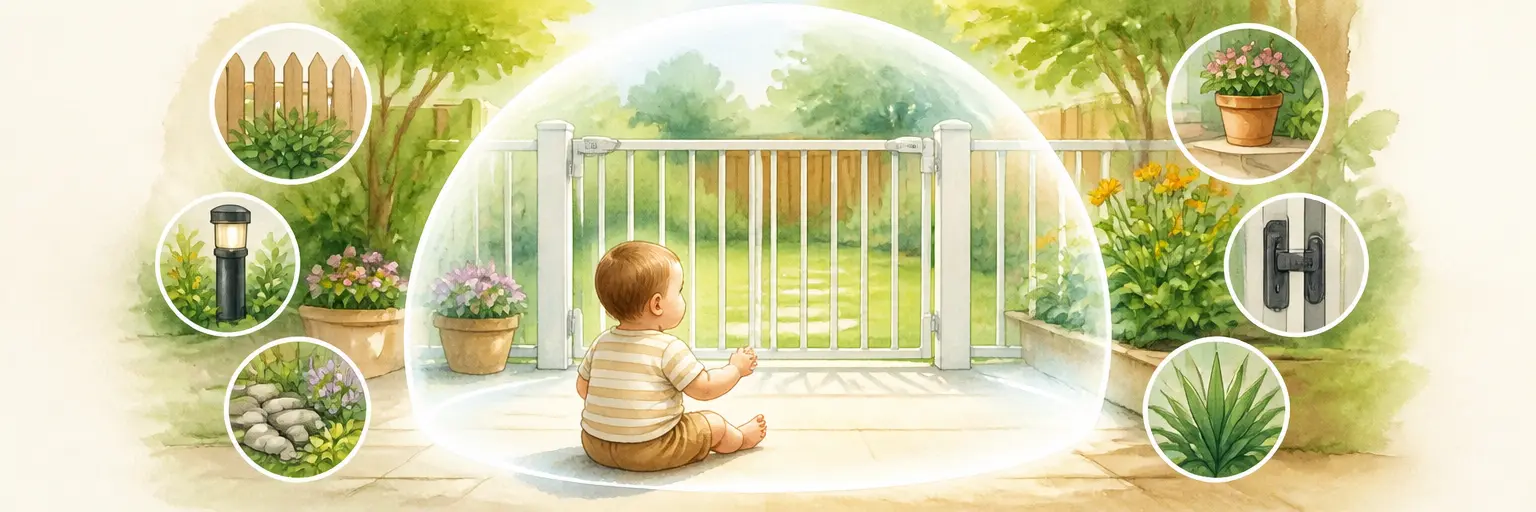
Babyproofing Your Outdoor Steps: Essential Safety Tips
Create a safer outdoor world for your little explorer with practical babyproofing tips for gardens, patios, balconies, and play areas. Discover how to secure gates and fences, protect children from pools, ponds, tools, plants, insects, sun exposure, and other outdoor hazards. 🌿☀️ From choosing child-safe equipment to setting up supervised play zones, BabyCareHub provides trusted outdoor baby safety guidance to help first-time parents prevent accidents and enjoy worry-free family time outside.
6 articles
The Complete Guide to Babyproofing Your Garden
Keeping Your Baby Safe From Outdoor Chemicals: A Guide
Babyproofing Your Pool Area: Essential Safety Measures for Parents
Babyproofing Your Outdoor Rock Garden: Ensuring Safety
Garden Safety for Babies: Essential Tips to Protect Your Little One
🌿 Babyproofing Outdoor Spaces and Gardens for Safer Family Time
Welcome to BabyCareHub’s Babyproofing Outdoor Spaces and Gardens subcategory, your practical resource for creating a safer backyard, garden, balcony, patio, and play area for babies and toddlers. Outdoor spaces offer valuable opportunities for fresh air, movement, sensory exploration, and family bonding, but they can also include hazards such as ponds, pools, poisonous plants, sharp tools, unstable furniture, insects, sun exposure, and unsafe play equipment. Discover step-by-step baby safety advice, childproofing checklists, and parent-friendly solutions designed to help you reduce risks without taking the enjoyment out of outdoor play.
🏡 Outdoor Babyproofing Essentials for Every Home
Learn how to assess your garden, yard, patio, deck, and outdoor living areas from a baby’s perspective. This section covers outdoor safety inspections, secure boundaries, childproof gates, safe pathways, non-slip surfaces, and ways to remove or block common hazards before your baby becomes mobile.
Parents can expect practical guidance for adapting outdoor spaces during crawling, cruising, and toddler stages. Find helpful ideas for securing furniture, covering sharp corners, protecting electrical outlets, organizing outdoor equipment, and creating a supervised environment that supports safe exploration.
☀️ Sun Safety, Heat Protection, and Hydration Outdoors
Protecting babies from excessive sunlight and high temperatures is an essential part of garden and patio safety. Discover advice about baby sun protection, shade structures, suitable clothing, hats, stroller covers, hydration, and recognizing signs of overheating during outdoor play.
This section also explains how to plan safer outdoor routines around the weather. Learn when to choose shaded areas, how to keep play surfaces cool, why babies require close monitoring in warm conditions, and how to create a comfortable outdoor setup for infants and toddlers.
💧 Pool, Pond, and Water Feature Safety
Swimming pools, paddling pools, ponds, fountains, and water tables require constant attention when young children are nearby. Explore essential water safety and drowning prevention strategies, including four-sided pool barriers, self-closing gates, secure covers, emptying portable pools, and maintaining active adult supervision.
BabyCareHub provides clear guidance on reducing water-related risks in gardens and outdoor play areas. Learn why shallow water can still be dangerous, how to position furniture away from barriers, and what safety habits parents should establish before allowing babies or toddlers to play near water.
🌱 Safe Plants, Soil, and Garden Materials
Gardens can stimulate a baby’s senses, but some plants, berries, bulbs, fertilizers, pesticides, mulch, and garden materials may be harmful if touched or swallowed. Learn how to identify and remove toxic plants for children, secure gardening products, and select safer materials for family-friendly landscaping.
This section offers practical strategies for supervising sensory garden activities while preventing contact with unsafe substances. Discover ways to use raised beds, child-safe planting zones, locked sheds, and clearly separated play areas to support outdoor learning and safer gardening with young children.
🛝 Safe Outdoor Play Equipment and Garden Toys
Choosing and maintaining age-appropriate outdoor toys is central to toddler safety. Find advice on baby swings, slides, climbing frames, sandboxes, ride-on toys, playhouses, and water tables, with attention to stability, installation, fall protection, pinch points, and manufacturer age recommendations.
Parents will also learn how to inspect equipment for loose parts, rust, splinters, sharp edges, damaged surfaces, and unsafe gaps. Use these recommendations to create a safe outdoor play area that encourages physical development while reducing preventable injuries.
🐜 Insect, Animal, and Allergy Awareness
Outdoor environments may expose babies to bees, wasps, mosquitoes, ticks, ants, spiders, pets, and wild animals. Learn how to reduce insect encounters, check for ticks, supervise interactions with animals, and keep food and waste secured to discourage pests.
This section also addresses outdoor allergy awareness and appropriate first-aid preparation. Discover how to recognize common bites and stings, when to seek medical advice, and why babies should never be left alone with pets or near unfamiliar animals, even in a familiar garden.
🧰 Garden Tools, Chemicals, and Storage Safety
Lawnmowers, pruning tools, hoses, ladders, fuel, fertilizers, pesticides, and cleaning products should always be inaccessible to babies and toddlers. Explore garden tool safety, locked storage solutions, secure sheds, child-resistant containers, and safe cleanup practices.
Parents can use these recommendations to establish clear separation between work zones and play zones. Learn how to prevent accidental access to sharp equipment, toxic substances, hot machinery, and cords while keeping outdoor maintenance organized and efficient.
🚪 Fences, Gates, Balconies, and Outdoor Boundaries
Secure boundaries help prevent children from wandering toward roads, driveways, pools, ponds, stairs, or neighboring properties. Get guidance on childproof gates, fence inspections, balcony barriers, railing gaps, locks, latches, and safe access points throughout the home.
Because babies grow quickly and learn to operate simple mechanisms, regular checks are essential. This section explains how to test gates and barriers, keep climbable objects away from fences, and update outdoor safety measures as your child develops new skills.
❓ Frequently Asked Questions About Outdoor Babyproofing
What is the first step in babyproofing a garden?
Begin with a complete outdoor safety assessment at your baby’s height. Look for accessible water, toxic plants, sharp tools, unstable furniture, open gates, cords, chemicals, poisonous berries, and areas where a child could fall, wander, or become trapped. Remove hazards where possible and use secure barriers for anything that cannot be removed.
How can I make a backyard safe for a crawling baby?
Create a clean, shaded, supervised play zone on a stable and non-toxic surface. Remove small objects, stones, animal waste, sharp debris, and unsafe plants. Secure gates and furniture, block access to steps and water features, and inspect the area before every play session because outdoor hazards can change quickly.
Are garden ponds and paddling pools safe for babies?
Any open water presents a drowning risk, including shallow ponds, buckets, paddling pools, and water tables. Use compliant barriers around permanent water features, empty portable containers immediately after use, and provide constant, close adult supervision. Never rely on flotation devices or pool covers as substitutes for supervision and barriers.
Which outdoor plants are unsafe for children?
Many ornamental plants, berries, bulbs, and leaves can cause poisoning, skin irritation, or allergic reactions. Plant safety varies by region, so identify every plant in your garden and consult a reliable local poison information service, pediatrician, or qualified horticultural expert if you are unsure. Keep unknown plants inaccessible until they have been verified.
How often should I check outdoor babyproofing measures?
Inspect outdoor safety features regularly and whenever your child reaches a new developmental stage. Check gates, fences, locks, play equipment, furniture, shade structures, surfaces, and storage areas for damage or new climbing opportunities. A quick inspection before each outdoor play session is especially important after storms, gardening, repairs, or gatherings.