
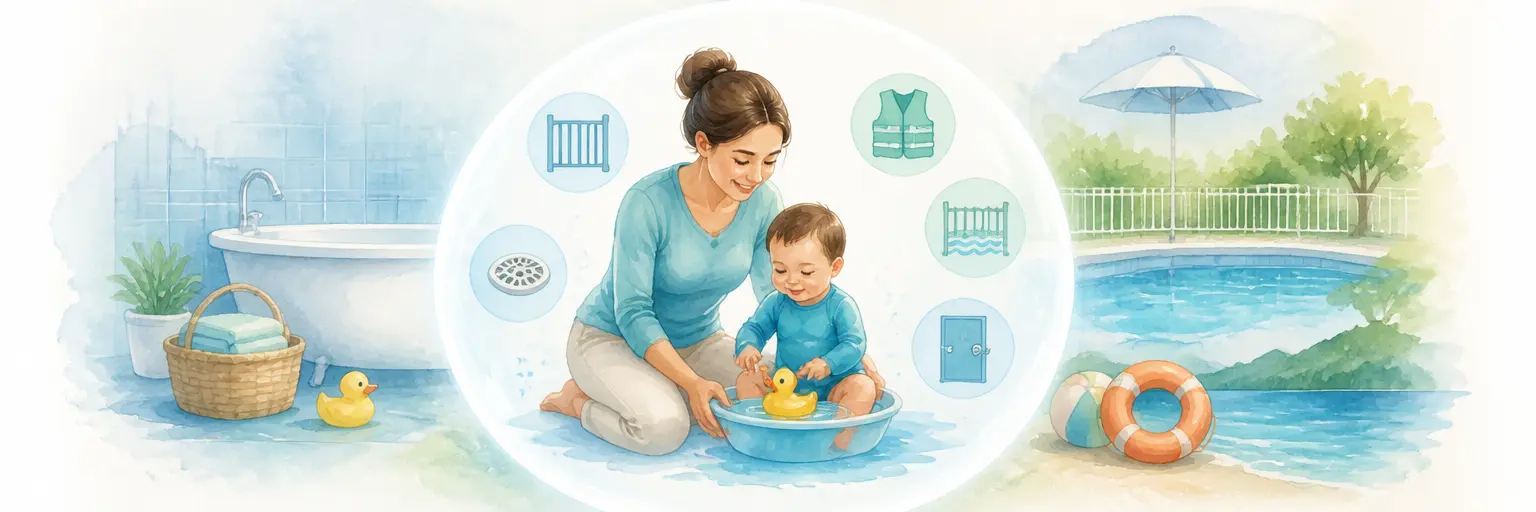
Pool Safety for Babies: How to Introduce Water Safely
💧 Discover essential water safety tips for babies and children at home and outdoors, from preventing bathtub accidents to staying safe around pools, beaches, and natural water. BabyCareHub offers practical guidance for first-time parents on active supervision, childproofing, life jackets, emergency readiness, and drowning prevention—helping families enjoy water confidently while keeping little ones protected.
6 articles
Supervising Babies Near Water: The Key to Preventing Accidents
Portable Pool Safety: Protecting Your Baby On the Go
Baby Water Safety and Allergies: What to Watch Out For
Preventing Waterborne Illnesses: Protecting Your Baby's Health
First Aid for Water Accidents: Knowing What To Do in an Emergency
🌊 Water Safety at Home and Outdoors
Welcome to BabyCareHub’s Water Safety at Home and Outdoors guide, created to help first-time parents protect babies and young children around bathtubs, pools, beaches, lakes, rivers, and other water environments. Discover practical, age-appropriate advice on infant water safety, active supervision, drowning prevention, safe bathing, pool barriers, life jackets, emergency preparation, and family water safety routines. Whether you are planning your baby’s first bath or a day at the beach, these trusted resources can help you create safer habits at home and outdoors.
🛁 Safe Bathing for Babies and Toddlers
Learn how to prepare a safe bath, check water temperature, organize supplies, and support your baby securely during bathing. Our guidance emphasizes that constant, close supervision is essential because babies can drown in very shallow water and may slip unexpectedly.
Expect practical tips for preventing common bath-time hazards, including hot water burns, slippery surfaces, overflowing tubs, and distractions such as phones or household tasks. You will also find advice on safe bath seats, bathroom organization, and what to do before placing your baby in the water.
🏊 Pool Safety and Drowning Prevention
Explore essential pool safety tips for children, including the importance of four-sided fencing, self-closing gates, secure covers, alarms, and clear family rules. These resources explain how layers of protection can reduce risk around backyard pools, community pools, and inflatable pools.
Parents can also learn how to supervise effectively, identify hazards, and avoid relying on flotation toys or swimming aids as substitutes for an attentive adult. Find helpful information about swim lessons, water-confidence activities, and age-appropriate safety practices for babies, toddlers, and preschoolers.
🏖️ Beach, Lake, and River Safety
Prepare for safer outdoor water adventures with guidance on beaches, lakes, rivers, splash parks, and holiday destinations. Learn how changing conditions, waves, currents, cold water, uneven surfaces, boats, and remote locations can affect a child’s safety.
Discover what to pack for a family water outing, including a properly fitted U.S. Coast Guard-approved life jacket where appropriate, sun protection, drinking water, dry clothing, and first-aid supplies. These tips help parents plan ahead while maintaining close supervision near natural water.
🦺 Life Jackets, Floatation Devices, and Water Gear
Find out how to choose and use the right life jacket for a baby or child. A properly fitted life jacket should match the child’s weight and size, be suitable for the intended activity, and remain securely fastened whenever it is needed.
BabyCareHub explains the difference between safety equipment and recreational floaties. Arm bands, inflatable rings, and pool toys are not drowning-prevention devices and should never replace direct supervision or an approved life jacket in appropriate settings.
👀 Active Supervision and Family Water Rules
Effective water supervision means staying within arm’s reach of infants and toddlers and watching without distractions. Learn how to designate a responsible “water watcher,” rotate supervision duties, and keep phones, books, alcohol, and other interruptions away during water activities.
You can also create simple family rules such as asking permission before approaching water, walking near pools, keeping gates closed, and never entering the water alone. Consistent routines help children understand boundaries and make home water safety easier to follow every day.
🚨 Water Emergencies and CPR Readiness
Prepare for a water emergency by learning what to do if a child falls into water, is missing near water, or appears unable to breathe normally. Parents should know how to call emergency services, begin appropriate rescue steps, and avoid placing themselves in danger during a rescue.
These resources also highlight the value of infant and child CPR training, first-aid knowledge, and an emergency plan for caregivers. CPR training is not a replacement for professional medical advice, but preparation can help families respond more quickly while emergency help is on the way.
❓ Frequently Asked Questions About Water Safety
How much water is dangerous for a baby?
Babies can drown in very shallow water, including a bathtub, bucket, toilet, or small paddling pool. There is no completely safe amount of water when a child is unattended. Always provide constant, close supervision and keep your baby within arm’s reach.
Can I leave my baby alone for a moment during bath time?
No. Never leave a baby or toddler alone in the bath, even for a few seconds. Gather towels, soap, clothing, and other supplies before starting, and take your child with you if you must leave the bathroom.
Are inflatable pool toys safe for toddlers?
Inflatable toys can provide entertainment but are not reliable safety devices. They may tip, deflate, or move away from a child. Use appropriate supervision and a correctly fitted life jacket when required, and follow all pool and waterway safety rules.
When should a child start swimming lessons?
Swimming readiness varies by age, development, and local guidance. Many families consider parent-and-child water classes during infancy and formal swimming or survival skills as children grow. Lessons can improve water confidence, but they do not eliminate the need for active supervision.
What should I do if my child is pulled from the water?
Call emergency services immediately if your child has trouble breathing, is unresponsive, or may have inhaled water. Begin CPR if trained and follow the dispatcher’s instructions. Even if a child seems well after a water incident, contact a healthcare professional for guidance because breathing problems can develop later.