
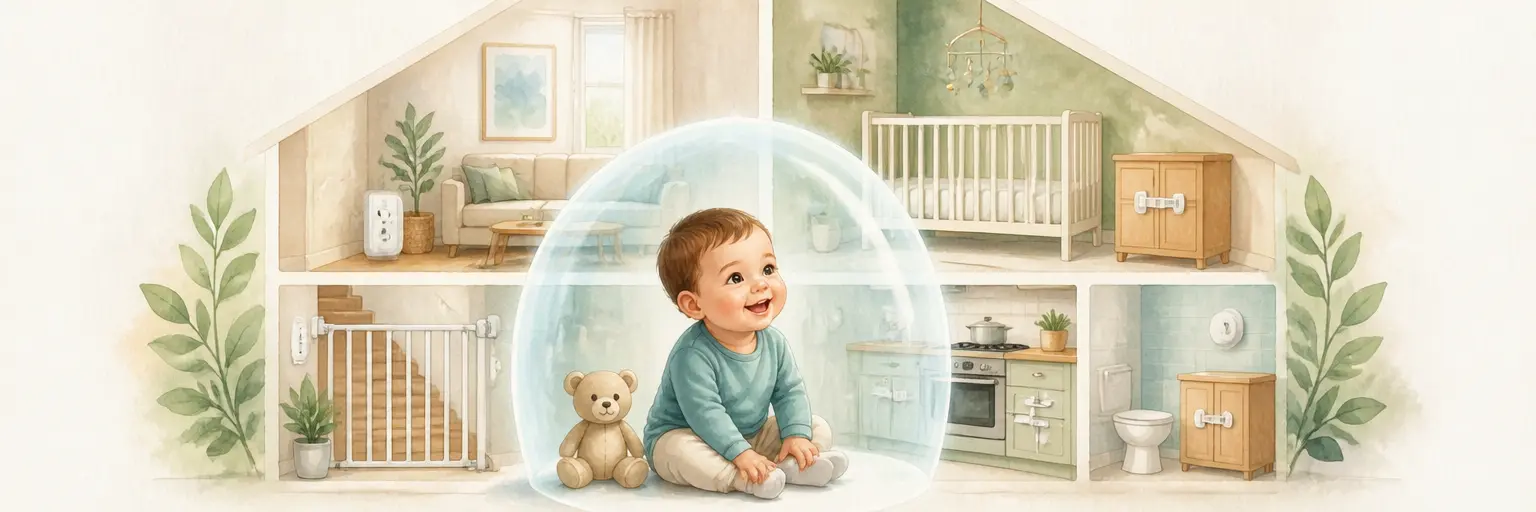
Toxic Substances in Your Home: BabyProofing Against Harmful Chemicals
Make every corner safer with room-by-room baby-proofing guidance 🏡👶. Discover practical tips for securing nurseries, kitchens, bathrooms, living areas, and more—helping prevent falls, burns, choking hazards, and other common household accidents. Create a safer, more comfortable home with confidence using BabyCareHub’s trusted baby safety advice.
7 articles
BabyProofing for Older Homes: Addressing Unique Safety Challenges
BabyProofing Your Home: Creating a Safe Haven for Your Little One
Floor Safety: Preventing Slips, Falls, and Injuries
BabyProofing for MultiLevel Homes: Extra Precautions for Stairs and Balconies
BabyProofing for Mobile Babies: Anticipating Their Every Move
Sharp Objects Safety: Keeping Knives, Scissors, and More Away from Babies
🏠 Home Baby-Proofing Room by Room: Create a Safer Space for Your Baby
Welcome to BabyCareHub’s Home Baby-Proofing Room by Room guide, a practical resource for first-time parents who want to make every area of the home safer for babies and toddlers. From the nursery and bedroom to the kitchen, bathroom, living room, stairs, and outdoor spaces, discover step-by-step baby safety advice designed to reduce common household hazards. Use these room-by-room checklists to identify risks, choose effective childproofing products, and build safer daily routines as your baby grows and becomes more mobile.
🛏️ Baby-Proofing the Nursery and Bedroom
The nursery should be a calm, organized, and secure place for sleep and care. Learn how to create a safer sleep environment by positioning the crib away from windows, cords, heaters, shelves, and furniture that could fall. Our guidance covers crib safety, firm mattresses, fitted sheets, sleepwear, changing tables, baby monitors, and safe storage for clothing, diapers, and personal-care items.
You will also find practical advice for preventing falls, entanglement, choking hazards, and furniture tip-overs. Discover why cords should be secured, heavy items anchored, small objects removed, and medications or creams kept out of reach. These nursery safety tips help parents prepare for crawling, pulling up, standing, and climbing milestones.
🍽️ Kitchen Safety for Babies and Toddlers
Kitchens contain heat, sharp objects, cleaning chemicals, glassware, appliances, and foods that may cause choking or allergic reactions. Learn how to use cabinet locks, drawer latches, stove guards, oven locks, and appliance cord management to limit access to dangerous areas. Room-by-room baby-proofing advice also explains how to keep knives, scissors, cookware, plastic bags, and small kitchen tools securely stored.
Explore strategies for preventing burns, poisoning, cuts, slips, and food-related injuries. Keep hot drinks away from counter edges, turn pot handles toward the back of the stove, lock away detergents and dishwasher products, and use child-safe food storage. These kitchen childproofing steps support safer meal preparation and family routines.
🛁 Bathroom Childproofing and Water Safety
Bathrooms require careful baby-proofing because water, slippery surfaces, medications, cosmetics, electrical devices, and cleaning products can create serious risks. Learn how to install toilet locks, non-slip bath mats, faucet covers, cabinet latches, and outlet protectors. Keep the bathroom door closed when it is not in use and store toiletries, razors, hair tools, and medicines in locked or elevated cabinets.
Water safety is especially important because young children can drown quickly and silently, even in shallow water. Find guidance on constant adult supervision during baths, safe water temperature, emptying tubs immediately, and keeping buckets and containers inaccessible. These bathroom safety practices should be used alongside, not instead of, active supervision.
🛋️ Living Room and Family Area Safety
The living room is often where babies spend time practicing rolling, crawling, cruising, and walking. Learn how to secure televisions, bookcases, lamps, and other unstable furniture to the wall. BabyCareHub also covers corner guards, outlet covers, cord organizers, fireplace barriers, window locks, and safe toy storage to help reduce injuries in shared family spaces.
Look for hazards at your baby’s eye level and from the floor, including coins, batteries, remote controls, loose decorations, plant leaves, and small toy parts. Create a designated play area with age-appropriate toys and clear walking paths. Regular safety checks are essential because babies develop new reaching, climbing, and opening abilities quickly.
🚪 Stairs, Hallways, Doors, and Windows
Falls are a common household danger once babies begin crawling and walking. Learn where to place hardware-mounted safety gates, how to block both the top and bottom of stairs, and why pressure-mounted gates may not be suitable for stairways. Guidance also includes door finger guards, door locks, window guards, balcony precautions, and keeping furniture away from windows.
These high-traffic areas should remain clear of bags, shoes, cords, toys, and other trip hazards. Check that gates are securely installed and inspect them regularly for loose hardware or damage. A reliable child safety plan combines physical barriers, supervision, and teaching age-appropriate boundaries as your child develops.
🧺 Laundry Room and Utility Area Protection
Laundry rooms and utility spaces may contain detergents, fabric softeners, bleach, tools, cords, hot surfaces, and heavy appliances. Discover how to use locked storage for laundry products and why detergent pods are particularly dangerous if handled or swallowed by children. Keep appliance doors closed, prevent climbing access, and avoid leaving baskets or stools where they can be used to reach hazardous items.
Baby-proofing should include checking water heaters, exposed pipes, electrical connections, and storage shelves. Never allow children to play near washers, dryers, utility sinks, or cleaning equipment without close supervision. A secure utility area helps prevent poisoning, burns, drowning, entrapment, and falls.
🌳 Outdoor Areas, Balconies, and Garages
Outdoor spaces can introduce additional risks, including pools, ponds, grills, tools, pesticides, plants, traffic, and unstable outdoor furniture. Learn how to use pool barriers, self-closing gates, balcony locks, safety netting, and secure storage to reduce access to dangerous areas. Keep grills, fire pits, hoses, garden chemicals, and sharp tools away from children.
Garages and sheds should remain locked, with fuel, antifreeze, paint, batteries, and power tools stored safely. Inspect play equipment for damage, use appropriate protective surfaces, and check that outdoor toys do not contain small detachable parts. These outdoor baby-proofing tips help families create safer spaces for exploration and active play.
🔌 Electrical, Choking, Poisoning, and Fire Prevention
Whole-home safety involves more than individual rooms. Use tamper-resistant outlet covers, cord management, smoke alarms, carbon monoxide detectors, fire extinguishers, and secure battery storage throughout the home. Keep button batteries, magnets, medications, alcohol, cosmetics, and household chemicals locked away, and never transfer chemicals into food or drink containers.
Get into the habit of viewing your home from a baby’s perspective: crawl through each room, inspect reachable surfaces, and search for small objects that could fit through a toilet paper roll. Test alarms regularly, create a family emergency plan, and keep emergency contact information accessible. Baby-proofing products support prevention, but active supervision remains essential.
✅ Room-by-Room Baby-Proofing Checklist
Use this simple checklist when preparing your home for a newborn, crawler, or toddler:
- Secure furniture, televisions, shelves, and appliances to walls.
- Install safety gates at stairs and restricted areas.
- Cover unused electrical outlets and manage dangling cords.
- Lock cabinets and drawers containing chemicals, medicines, tools, or sharp objects.
- Remove choking hazards, loose batteries, magnets, and small toy parts.
- Keep windows, balconies, pools, and doors properly secured.
- Install and test smoke alarms and carbon monoxide detectors.
- Recheck every room as your child begins rolling, crawling, standing, and climbing.
❓ Frequently Asked Questions About Home Baby-Proofing
When should I start baby-proofing my home?
It is wise to begin baby-proofing before your baby starts crawling, usually around four to six months, although development varies. Starting early gives you time to install safety equipment correctly and identify hazards before your child becomes mobile. Reassess the home regularly as new skills emerge.
What room should I baby-proof first?
Start with the rooms your baby uses most, such as the nursery, bedroom, living room, and kitchen. Prioritize immediate dangers including falls, choking, burns, poisoning, drowning, furniture tip-overs, and electrical hazards. A complete room-by-room inspection is recommended as your baby becomes more active.
Are baby gates necessary for stairs?
Yes. Safety gates can help prevent falls on stairs, but they must be installed correctly. Use a securely mounted, hardware-attached gate at the top of the stairs and an appropriate gate at the bottom. Never rely on a gate as a substitute for supervision.
What are the most overlooked baby-proofing hazards?
Commonly overlooked hazards include unsecured televisions and furniture, dangling blind cords, button batteries, coins, pet bowls, hot drinks, unlocked windows, accessible medications, and small objects under furniture. Inspect rooms from your baby’s height and update safety measures as reaching and climbing abilities improve.
Can baby-proofing products guarantee my child’s safety?
No product can eliminate every risk or replace attentive supervision. Baby-proofing devices reduce access to hazards, but parents and caregivers should remain nearby, follow safe sleep and water-safety guidance, and regularly check that locks, gates, alarms, and anchors are working properly.