
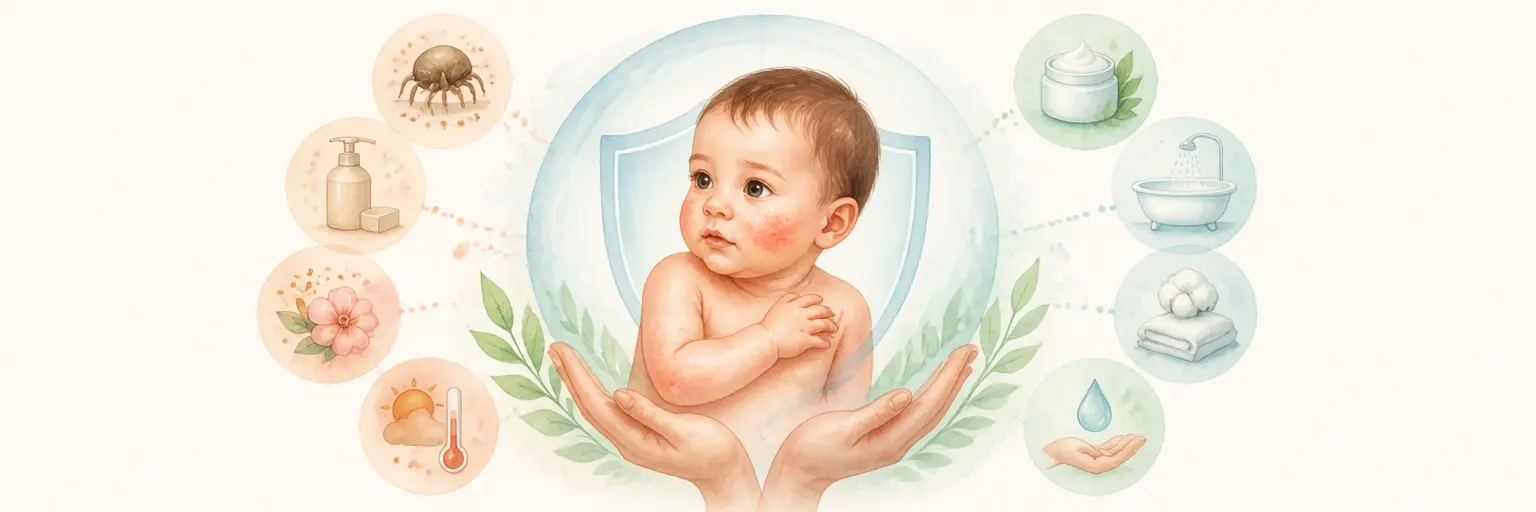
Beyond Creams: Holistic Approaches to Treating Baby Eczema
Learn how to soothe and protect your baby’s delicate skin with practical guidance on baby eczema management 👶✨. Discover common triggers, gentle skincare routines, bathing tips, and treatment options to help reduce dryness, itching, and flare-ups. Explore parent-friendly advice on when to seek medical care, supporting healthy skin, and creating a more comfortable routine for your little one.
6 articles
Baby Eczema: Recognizing and Managing Infections
Baby Eczema and Playtime: Keeping Your Baby Comfortable
Baby Eczema: The Connection Between Teething and FlareUps
Baby Eczema: When to Seek Professional Medical Help
Baby Eczema and Infections: Recognizing Signs of Complications
👶 Baby Eczema Management: Triggers and Treatments
Welcome to BabyCareHub’s guide to baby eczema management, common triggers, and gentle treatments. Infant eczema, also called atopic dermatitis, can cause dry, itchy, red, or irritated skin on a baby’s face, scalp, arms, legs, and body. This subcategory provides practical, parent-friendly information to help you understand eczema symptoms, identify possible irritants, build a soothing skincare routine, and recognize when professional medical advice is needed. Always consult your baby’s pediatrician before starting a new treatment, especially for newborns or severe skin symptoms.
🌿 Understanding Baby Eczema Symptoms
Learn how infant eczema may appear on different parts of the body, including the cheeks, forehead, neck folds, elbows, knees, and hands. Articles in this section explain common signs such as dry skin, red patches, rough texture, itching, flaking, swelling, and small bumps. Understanding these symptoms can help parents respond early and reduce discomfort.
You will also find guidance on the difference between eczema and other common baby rashes, including heat rash, cradle cap, contact dermatitis, and diaper rash. Because eczema can look different depending on a baby’s age and skin tone, this information encourages careful observation and timely communication with a healthcare professional.
🧴 Gentle Skincare and Daily Moisturizing
Discover how a consistent skincare routine can help protect your baby’s skin barrier. Helpful topics include choosing fragrance-free baby moisturizers, thick creams, ointments, and gentle cleansers, as well as learning when and how to apply emollients. Regular moisturizing, especially after a short lukewarm bath, may help reduce dryness and support healthier skin.
Parents can also learn practical bathing tips, including avoiding hot water, harsh soaps, bubble baths, and vigorous rubbing. Clear step-by-step guidance explains how to pat the skin dry, moisturize promptly, keep fingernails short, and select soft clothing that minimizes friction and irritation.
🔍 Identifying Baby Eczema Triggers
Baby eczema flare-ups may be linked to environmental or skincare triggers. This section explores possible irritants such as fragranced products, laundry detergents, wool or rough fabrics, saliva, drooling, sweat, heat, dry air, dust, and smoke. Readers can learn how to make gradual changes rather than removing multiple products at once.
Keeping a simple symptom and exposure diary may help parents notice patterns between flare-ups and new foods, products, weather changes, illness, or household environments. Since triggers differ from baby to baby, the goal is to identify useful patterns without assuming that every eczema flare is caused by an allergy.
🩺 Eczema Treatments and Medical Support
Explore commonly recommended approaches for managing infant eczema, including moisturizers, protective skincare, and treatments prescribed by a pediatrician or dermatologist. When appropriate, a healthcare professional may recommend a topical corticosteroid or another prescription medication to calm inflammation. Medication should be used only as directed, with careful attention to the amount, location, and duration of use.
This section also explains why parents should avoid using adult creams, unverified natural remedies, essential oils, or prescription medicines intended for someone else. Reliable treatment guidance focuses on safe, age-appropriate care and encourages follow-up when eczema does not improve or repeatedly returns.
🛡️ Preventing Scratching, Infection, and Flare-Ups
Itchy eczema can make babies scratch, rub, or become unsettled during sleep. Learn supportive strategies such as using soft cotton clothing, keeping nails trimmed, offering distraction, and protecting irritated areas without overheating the baby. These steps may help limit skin damage and improve comfort.
Parents will also learn to watch for possible signs of infection, including increasing warmth, swelling, pain, pus, crusting, rapidly spreading redness, fever, or a sudden change in behavior. Prompt medical advice is important when these symptoms appear, particularly in young infants or when the skin seems significantly worse.
❓ Frequently Asked Questions About Baby Eczema
What does baby eczema look like?
Baby eczema often appears as dry, rough, red, darker, or inflamed patches with itching or flaking. It may affect the cheeks, scalp, neck, arms, legs, or skin folds. Because rashes can have many causes, a pediatrician should evaluate persistent, severe, or uncertain symptoms.
What commonly triggers eczema flare-ups in babies?
Common triggers include fragrances, harsh soaps, laundry products, heat, sweating, dry air, rough fabrics, saliva, drooling, and smoke. Some babies may react to specific exposures, but parents should not assume a food allergy without professional guidance.
How often should I moisturize my baby’s eczema-prone skin?
Many healthcare professionals recommend applying a gentle, fragrance-free moisturizer regularly, often at least once or twice daily and after bathing. Thick creams or ointments may provide more protection than lightweight lotions. Follow your pediatrician’s advice for your baby’s specific needs.
Can I use hydrocortisone cream on my baby’s eczema?
Do not use any medicated cream on a baby without checking with a healthcare professional first. A pediatrician may recommend a suitable product, strength, amount, and treatment duration based on your baby’s age, skin location, and symptom severity.
When should I call a doctor about baby eczema?
Contact a healthcare professional if the rash is severe, spreading, painful, infected-looking, affecting sleep or feeding, or not improving with gentle skincare. Seek prompt care for fever, pus, rapidly worsening redness, facial swelling, or concerning symptoms in a newborn.