
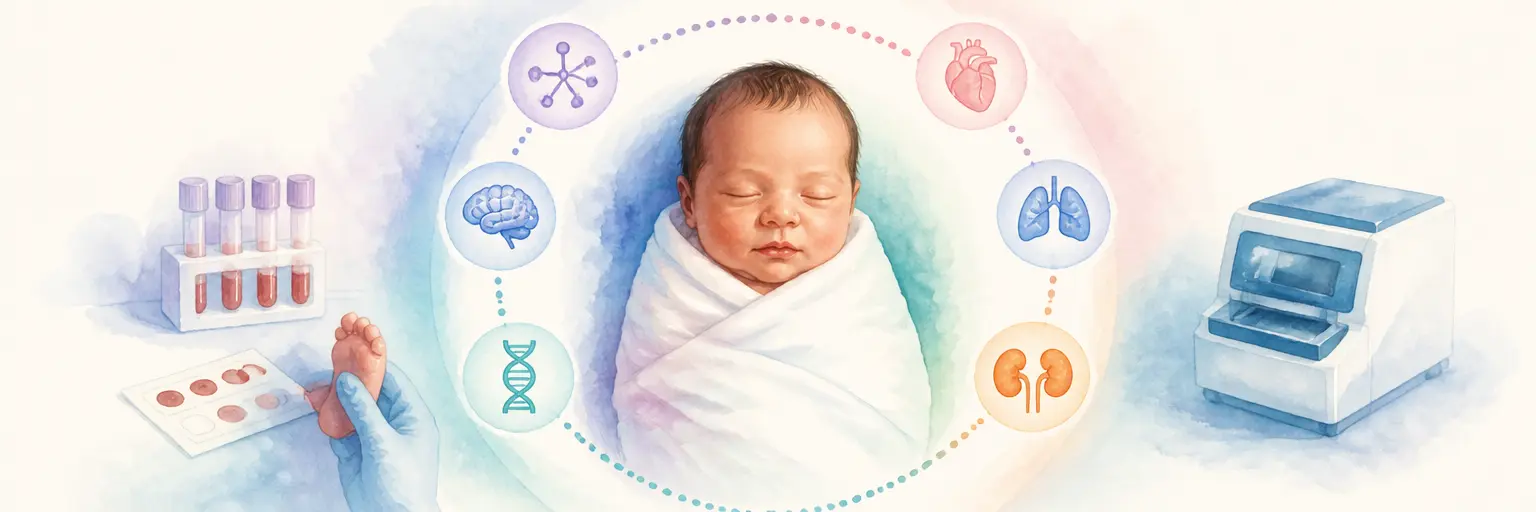
Newborn Screening Tests: What to Expect During and After
Understand newborn screening tests with confidence 👶🩺 Learn how routine screenings check your baby’s hearing, vision, blood health, and other important conditions soon after birth. BabyCareHub offers clear, parent-friendly guidance on what each test involves, when results arrive, and what follow-up may mean—helping first-time parents feel informed and prepared for their baby’s healthiest start. ✨
6 articles
Newborn Screening: How to Interpret the Results
Newborn Screening: Ensuring Your Baby's Wellbeing
Newborn Screening: Early Detection of Rare Conditions
Common Newborn Screening Tests Explained, StepbyStep
Newborn Screening: The Crucial First Days of Your Baby's Life
🩺 Newborn Screening Tests Explained: A Parent-Friendly Guide
Welcome to BabyCareHub’s Newborn Screening Tests Explained subcategory, a trusted resource for first-time parents learning about essential newborn health checks. Newborn screening tests help identify certain medical conditions early, often before symptoms appear, so healthcare professionals can recommend timely monitoring, treatment, and follow-up care. Here, you can learn what newborn screening involves, when tests are performed, how results are communicated, and what parents can expect during the first days of life. Clear information can make these routine checks feel less overwhelming and help you feel prepared to advocate for your baby’s health.
👶 What Are Newborn Screening Tests?
Newborn screening is a group of routine health checks offered shortly after birth. These may include a small blood spot test, a hearing screening, and a pulse oximetry test that checks oxygen levels in the blood. The exact screening program varies by country, state, or healthcare system, but the goal is similar: to detect selected conditions early, when prompt care may improve outcomes.
Our guides explain what each newborn screening test checks, how it is carried out, and why it is recommended even when a baby appears healthy. You will also find simple explanations of medical terms, helping you understand the difference between screening and diagnosis without unnecessary confusion or alarm.
🩸 Newborn Blood Spot Screening
The newborn blood spot test, sometimes called the heel-prick test, usually involves collecting a few drops of blood from your baby’s heel. The sample is sent to a laboratory to screen for selected inherited, metabolic, endocrine, and other health conditions. A screening result does not confirm that a baby has a condition; it shows whether additional testing may be needed.
BabyCareHub explains how to prepare for the heel-prick test, ways to comfort your newborn, and what can happen if the sample needs to be repeated. A repeat sample does not automatically mean there is a health problem; it may be requested because the first sample was too small, collected too early, or unsuitable for laboratory analysis.
👂 Newborn Hearing Screening
Newborn hearing screening helps identify possible hearing differences soon after birth. It is usually quick, painless, and performed while a baby is calm or sleeping. Common methods include automated auditory brainstem response testing and otoacoustic emissions testing, depending on the hospital or healthcare provider.
Our content covers what parents may see during the appointment, what “pass” or “refer” results mean, and why follow-up matters. A result requiring further assessment is not the same as a diagnosis of hearing loss. Babies may need another screening or a complete hearing evaluation to clarify the result.
❤️ Pulse Oximetry Screening for Critical Heart Conditions
Pulse oximetry screening uses a small sensor placed on a baby’s hand or foot to measure blood oxygen saturation. This noninvasive check may help identify signs associated with certain critical congenital heart conditions. It is generally quick and does not involve needles.
BabyCareHub provides practical information about when pulse oximetry is typically performed, how readings are interpreted, and why a baby may need additional evaluation. An abnormal or borderline result requires professional follow-up, but it does not by itself confirm a heart condition. Healthcare teams may recommend repeat measurements, examination, or diagnostic testing.
📋 Understanding Newborn Screening Results
Newborn screening results may be described using terms such as “normal,” “in range,” “negative,” “pass,” or “needs repeat testing.” The wording depends on the type of screening and the local health service. Understanding these terms can help parents respond calmly and know when to contact their baby’s healthcare provider.
Our guides explain how results are usually shared, why some reports take longer than others, and what questions to ask at follow-up appointments. Keep your baby’s screening records with other health documents, and contact your pediatrician, midwife, or family doctor if you are unsure whether testing has been completed or whether further care is required.
🗓️ When Are Newborn Screening Tests Done?
Many newborn screenings are completed before hospital discharge or during the first days after birth. Timing can differ for babies born prematurely, babies who require special care, babies discharged early, and babies born outside a hospital. Some tests may need to be repeated at a specific age or after a certain amount of feeding.
BabyCareHub helps parents create a simple newborn screening checklist, including questions about test timing, follow-up appointments, and who will contact you with results. If your baby missed a screening, ask a healthcare professional as soon as possible about arranging it.
🌿 Comforting Your Baby During Screening
Most newborn screening procedures are brief, but babies may fuss during a heel-prick blood sample or become unsettled in an unfamiliar environment. Holding your baby, using skin-to-skin contact when appropriate, offering feeding or a pacifier if approved by your healthcare professional, and speaking softly may provide comfort.
Our newborn care advice focuses on practical, gentle strategies that support both baby and parent. Ask the healthcare team to explain each step, and tell them if your baby has specific feeding, medical, or comfort needs. Feeling informed can make the experience more manageable.
❓ Frequently Asked Questions About Newborn Screening
What tests are included in newborn screening?
Newborn screening commonly includes a blood spot test, hearing screening, and pulse oximetry screening. The exact tests and conditions screened vary by location. Ask your baby’s healthcare provider or local screening program for the official list in your area.
Are newborn screening tests painful?
Hearing and pulse oximetry screenings are generally painless. The blood spot test involves a brief heel prick, which may cause short-term discomfort. Healthcare professionals can use soothing techniques to help your baby remain calm.
Does an abnormal newborn screening result mean my baby is sick?
No. A screening result that is abnormal, borderline, or requires follow-up does not confirm a diagnosis. It means additional testing may be needed. Many repeat screenings return to normal, but it is important to complete all recommended follow-up.
What should I do if my baby needs a repeat screening?
Arrange the repeat test as soon as instructed and ask when and how results will be provided. A repeat may be needed because the sample was collected too early, was insufficient, or could not be analyzed properly. Contact your healthcare provider if you have not received clear instructions.
Can newborn screening detect every health condition?
No. Newborn screening checks for a specific group of conditions and cannot identify every illness, developmental difference, or future health concern. Continue routine pediatric appointments and seek medical advice if your baby shows concerning symptoms, regardless of screening results.