
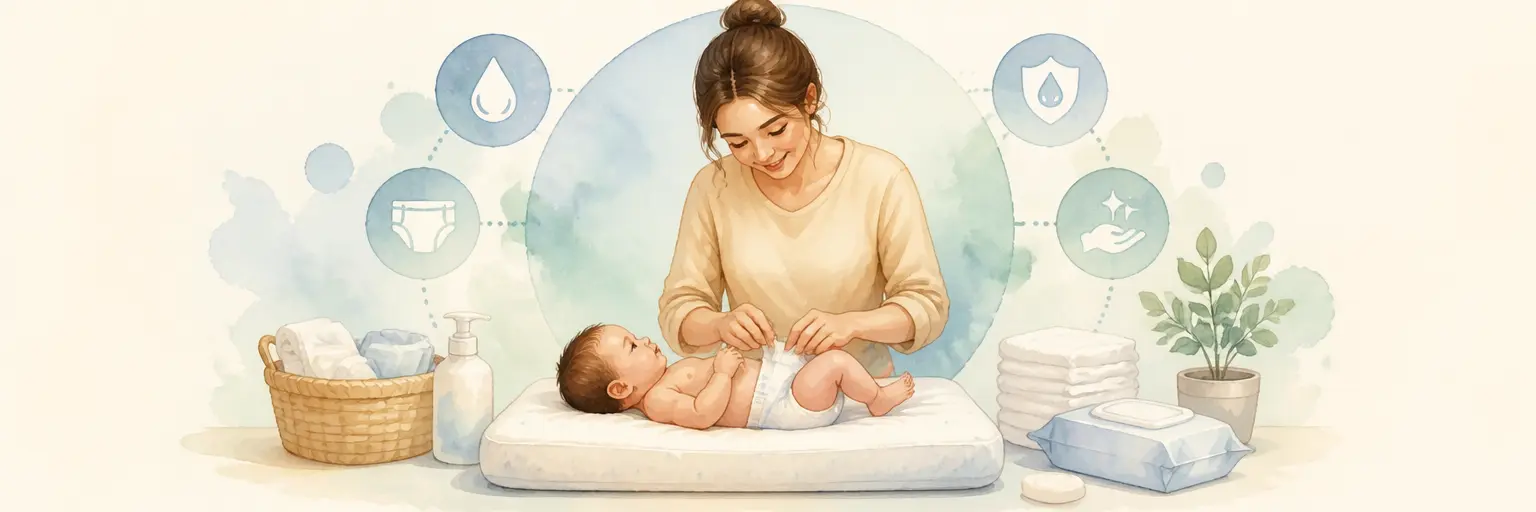
The Role of Diapers in Baby's Comfort and Development
Keep your newborn fresh, comfortable, and protected with trusted diapering and hygiene essentials 🍼 From gentle wipes and soothing creams to changing mats and baby-safe bath products, discover practical solutions for stress-free changes and everyday care. Explore expert tips and carefully selected newborn hygiene products at BabyCareHub to support your baby’s delicate skin and build confident parenting routines.
7 articles
Diapering and Baby's Safety: Avoiding Potential Hazards
Diapering and Baby's Activity: Keeping Them Comfortable
Diapering and Baby's Hygiene: The Importance of Cleanliness
The Science of Diaper Absorption: Understanding How Diapers Work
Diapering and Baby's Communication: Understanding Their Cues
Diapering and Skin Infections: Recognizing the Signs and Symptoms
🧼 Diapering & Hygiene for Newborns: Clean, Comfortable Baby Care
Welcome to BabyCareHub’s Diapering & Hygiene subcategory, a practical resource for first-time parents learning how to keep a newborn clean, dry, comfortable, and protected. From choosing newborn diapers and mastering diaper changes to caring for sensitive skin, bathing safely, trimming tiny nails, and establishing healthy hygiene routines, our guidance makes everyday baby care easier and more confident. Explore clear, step-by-step advice on newborn hygiene, diaper rash prevention, baby bathing, umbilical cord care, and gentle skincare.
👶 Newborn Diaper Changing Essentials
Learn how to prepare a safe and efficient diaper changing station with diapers, wipes, changing pads, barrier cream, clean clothing, and disposal supplies within easy reach. Our guides explain how to check a newborn diaper, clean your baby properly, position your newborn safely, and complete each change with minimal discomfort.
Expect practical information about disposable diapers, cloth diapers, newborn diaper sizes, overnight changes, wet diaper frequency, and safe diaper-changing habits. Never leave a baby unattended on a changing table; keeping one hand on your baby and using a secure, flat surface are essential parts of newborn safety.
🛡️ Diaper Rash Prevention and Treatment
Diaper rash is common during the newborn stage, but simple daily habits can help protect delicate skin. Discover how frequent diaper changes, gentle cleaning, thorough drying, breathable clothing, and a suitable barrier ointment can reduce irritation caused by moisture, friction, and contact with urine or stool.
BabyCareHub also explains how to recognize mild redness, chafing, yeast-related rash, and signs that require medical advice. Persistent, spreading, blistered, bleeding, or painful rashes should be discussed with a pediatrician, especially if your baby has a fever or seems unwell.
🧴 Gentle Newborn Skincare and Hygiene Products
Find guidance on selecting fragrance-free, hypoallergenic products designed for newborn skin. Learn which ingredients may irritate sensitive skin, how to introduce a new baby product gradually, and why a simple routine is often better than using many lotions, washes, and powders.
This section covers baby wipes, cleansing cloths, moisturizers, diaper creams, petroleum jelly, baby wash, and laundry care. Choose mild, pediatrician-recommended products and avoid talc-based powders, strong fragrances, and harsh cleansers that may dry or irritate your baby’s skin.
🛁 Safe Bathing for Babies
Learn when and how to give a newborn a sponge bath and when it is appropriate to begin tub bathing. Step-by-step instructions cover water temperature, bathing supplies, head and neck support, gentle washing, rinsing, drying, and moisturizing after the bath.
Newborns do not need daily full baths; frequent bathing may dry their skin. Test the water before placing your baby in the tub, keep supplies close, and stay within arm’s reach throughout the bath. A baby should never be left alone in water, even for a moment.
🩺 Umbilical Cord, Nail, Ear, and Hair Care
Discover simple hygiene practices for caring for your baby’s umbilical cord stump, nails, scalp, ears, and hair. Our newborn care guides explain how to keep the cord clean and dry, recognize normal healing, safely file or trim nails, and wash delicate hair without irritating the scalp.
Parents can also learn which practices to avoid, including inserting cotton swabs into the ears, pulling at the cord stump, or cutting nails too deeply. Contact a healthcare professional if you notice redness spreading around the cord, swelling, pus, foul odor, unusual bleeding, or a fever.
🧺 Building a Simple Daily Hygiene Routine
A predictable hygiene routine can make newborn care more manageable while supporting comfort and bonding. Learn how to organize diaper changes, skin checks, bathing, handwashing, clothing changes, and laundry into a practical schedule that fits your baby’s feeding and sleep patterns.
Our content helps parents balance cleanliness with healthy skin protection. Newborn hygiene is about gentle, consistent care rather than excessive washing; clean hands, fresh diapers, dry skin folds, and safe products are usually the most important foundations.
❓ Frequently Asked Questions About Diapering & Hygiene
How often should I change a newborn’s diaper?
Newborns commonly need frequent diaper changes, often every two to three hours and after bowel movements. Check regularly for wetness, and change promptly to help prevent moisture-related irritation and diaper rash. Babies who feed frequently may need several changes throughout the day and night.
How can I prevent diaper rash?
Change diapers often, clean the skin gently with water or fragrance-free wipes, pat the area dry, and apply a protective barrier cream when needed. Allowing short periods of diaper-free time can also help keep the skin dry. If the rash does not improve or becomes severe, seek medical guidance.
When can I give my newborn a regular bath?
Until the umbilical cord stump falls off and the area heals, many healthcare professionals recommend sponge baths rather than submerging your baby in a tub. After healing, you can introduce short, supervised baths using lukewarm water and a gentle baby cleanser.
What products are safest for newborn skin?
Look for simple, fragrance-free, hypoallergenic products made for babies, including gentle cleansers, moisturizers, and diaper barrier creams. Avoid harsh soaps, heavily scented products, and talcum powder. If your baby has eczema or very sensitive skin, ask a pediatrician for personalized recommendations.
What are the warning signs of a hygiene-related problem?
Contact your baby’s healthcare provider if you notice a worsening rash, open sores, blisters, pus, spreading redness, unusual swelling, a foul-smelling umbilical cord, persistent bleeding, fever, or signs of pain. Early advice can help identify infection, yeast rash, eczema, or another condition requiring treatment.