
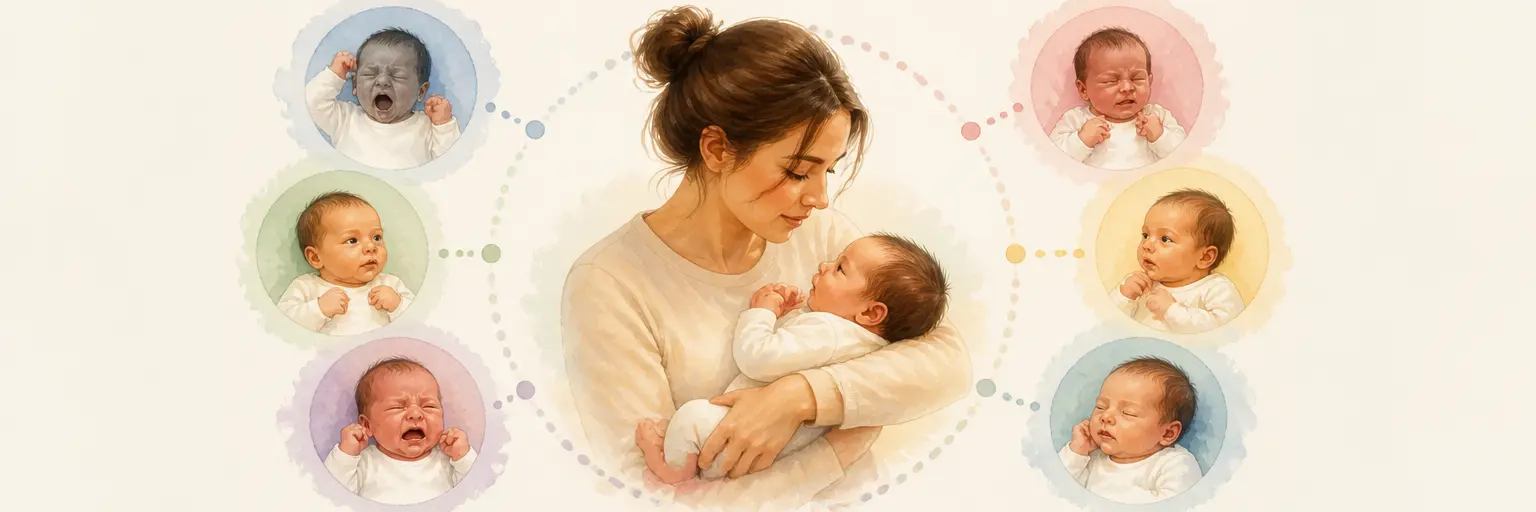
Unlocking the Secrets of Newborn Communication: A StepbyStep Approach
Learn to recognize your newborn’s unique signals with confidence 👶✨ Discover what different cries, facial expressions, movements, and body cues may mean—from hunger and tiredness to comfort and overstimulation. These practical newborn care insights help first-time parents respond calmly, strengthen bonding, and support healthy development. Explore expert guidance from BabyCareHub to better understand your baby and make everyday care feel easier.
5 articles
Mastering Newborn Cues: A Comprehensive Guide for New Parents
The Essential Guide to Interpreting Newborn Cries and Body Language
Recognizing the Early Signs of Overstimulation in Your Newborn
How to Master the Art of Reading Your Newborn's Cues
👶 Understanding Newborn Cues: A Guide for First-Time Parents
Welcome to BabyCareHub’s Understanding Newborn Cues subcategory, a practical resource for learning how babies communicate their needs before they can speak. Newborns use facial expressions, body movements, sounds, and changes in behavior to signal hunger, tiredness, discomfort, overstimulation, and the need for connection. By recognizing these early signs, parents can respond with greater confidence and support calmer feeding, sleep, bonding, and daily care routines.
🍼 Recognizing Hunger Cues in Newborns
Learning to identify early hunger cues can make feeding more relaxed and responsive. Babies may stir, open their mouths, turn their heads toward touch, suck on their hands, lick their lips, or make small sounds before they begin crying. Understanding these newborn feeding signals helps parents offer breast milk or formula when their baby is ready to eat.
This section explains the difference between early, active, and late hunger cues. You will learn how rooting, hand-to-mouth movements, and increased alertness may indicate hunger, while crying is often a later sign. These insights can support responsive feeding, whether you are breastfeeding, chestfeeding, pumping, or formula-feeding.
😴 Understanding Newborn Sleepy Cues
Newborns often become overtired quickly, so noticing sleep cues early is an important part of healthy newborn care. Common signs include yawning, staring into space, reduced eye contact, slower movements, fussiness, and pulling away from interaction. Recognizing these signals can help you begin a calming nap or bedtime routine before your baby becomes overwhelmed.
Parents can expect practical guidance on how to respond to tired signs with dim lighting, gentle rocking, swaddling when appropriate, quiet voices, and a safe sleep environment. This information is designed to help families understand newborn sleep patterns without expecting rigid schedules during the early weeks.
💛 Reading Newborn Comfort and Connection Signals
Babies communicate a need for comfort through body language and behavior. Turning toward a caregiver, relaxing their hands, making eye contact, smiling, or settling when held may show that a newborn feels safe and connected. These behaviors are valuable newborn bonding cues that help parents understand when their baby wants closeness, soothing, or gentle interaction.
You will also learn how skin-to-skin contact, quiet talking, cuddling, and responsive caregiving can strengthen attachment. Paying attention to your baby’s comfort signals supports emotional development and helps create a nurturing relationship during the newborn stage.
🌙 Identifying Overstimulation and Stress Cues
Newborns can become overstimulated by bright lights, loud sounds, too much handling, or extended social interaction. Signs may include looking away, stiffening the body, spreading fingers, jerky movements, hiccups, fussing, or sudden crying. Recognizing these newborn stress signals allows parents to reduce stimulation and help their baby feel calm again.
This section offers simple ways to support an overstimulated newborn, such as moving to a quiet room, lowering the lights, speaking softly, and offering a secure hold. Learning your baby’s limits can improve daily routines and make feeding, sleep, and family visits more comfortable.
🩺 Distinguishing Normal Cues from Signs of Concern
Many newborn behaviors are normal, but some changes may require professional guidance. BabyCareHub helps parents understand common patterns such as brief fussiness, sneezing, hiccups, startles, and irregular sleep while also highlighting symptoms that should not be ignored. Trust your instincts and contact a healthcare professional if your baby’s behavior changes suddenly or seems unusual.
Readers will find general guidance on when to seek medical advice for poor feeding, unusual sleepiness, breathing difficulties, fever, persistent crying, color changes, or fewer wet diapers. This information does not replace medical care, but it can help parents prepare questions and make informed decisions about newborn health and safety.
❓ Frequently Asked Questions About Understanding Newborn Cues
How can I tell if my newborn is hungry?
Early hunger cues may include stirring, opening the mouth, rooting, sucking on hands, licking the lips, and turning toward your breast or bottle. Crying is usually a later hunger cue. Offering a feed when your baby shows early signs can support more comfortable responsive feeding.
What are common signs that a newborn is tired?
Newborn sleepy cues can include yawning, staring, reduced activity, looking away, becoming fussy, or making less eye contact. Some babies become quiet while others become irritable. Watching for your baby’s individual pattern can help you begin a soothing routine before overtiredness develops.
Why does my newborn look away during interaction?
Looking away may mean your baby needs a short break from stimulation. Newborns often turn their head, close their eyes, or avoid eye contact when they are tired or overwhelmed. Reduce noise and activity, then allow your baby time to relax before trying interaction again.
How do I know when my newborn needs comfort?
Fussing, crying, body tension, startles, and difficulty settling can indicate a need for comfort. Try holding your baby securely, using skin-to-skin contact, speaking softly, or gently rocking. Responding consistently helps your newborn feel safe and supported.
When should I call a healthcare professional about my baby’s cues?
Contact your healthcare professional if your newborn has trouble breathing, shows a blue or gray color, has a fever, is unusually difficult to wake, refuses several feeds, has significantly fewer wet diapers, or cries persistently and cannot be consoled. If you are worried, seek professional advice promptly.