
Jaundice and Follow Up Appointments: Importance of Regular Check Ups
Learn about newborn jaundice with clear, parent-friendly guidance on common causes, warning signs, bilirubin testing, treatment options, and safe home monitoring. 💛 Discover when mild yellowing is typical, when to contact your pediatrician, and how timely care supports your baby’s health and well-being.
7 articles
Bilirubin Testing: How Doctors Check for Jaundice in Babies
Jaundice and Blood Type Incompatibility: Understanding the Connection
Jaundice in Newborns: Early Signs and Essential Management Tips
Bilirubin Levels Chart: A Guide for Parents of Jaundiced Babies
Jaundice and Second Babies: What to Expect
Jaundice in Newborns: What Every Parent Needs to Know
🌟 Jaundice in Newborns: Understanding and Management
Welcome to BabyCareHub, your trusted resource for first-time parents navigating newborn health and care. This subcategory explains jaundice in newborns, a common condition that causes yellowing of the baby’s skin or eyes because of elevated bilirubin levels. Explore clear, parent-friendly guidance on newborn jaundice symptoms, causes, bilirubin testing, treatment options, breastfeeding support, and when to seek urgent medical attention. Always follow your pediatrician’s advice, especially when caring for a premature baby or a newborn with additional health concerns.
💛 What Is Newborn Jaundice?
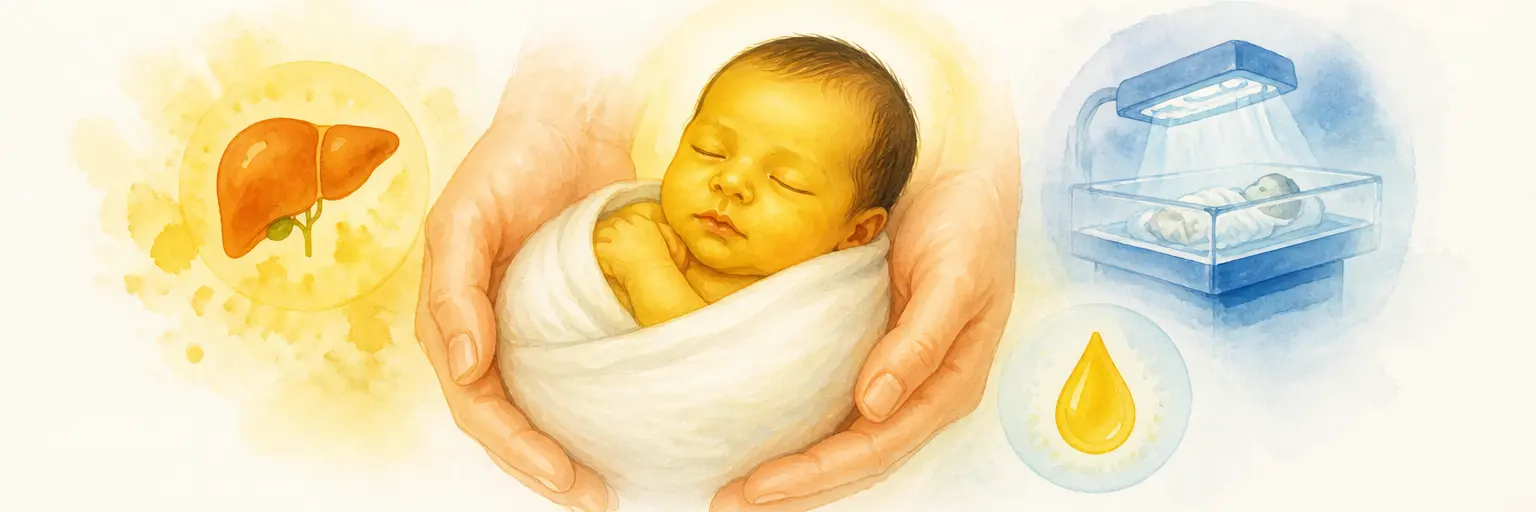
Readers will learn how jaundice develops when a newborn’s body produces bilirubin faster than the liver can process and remove it. Our explanations cover physiological jaundice, which commonly appears during the first days of life, as well as jaundice related to prematurity, feeding difficulties, blood-type incompatibility, infection, or other medical conditions.
This section helps parents understand the difference between mild, expected yellowing and signs that require prompt evaluation. You will discover how jaundice may begin on the face and progress toward the chest, abdomen, arms, and legs, while learning why a healthcare professional should assess suspected jaundice rather than relying on appearance alone.
🔍 Newborn Jaundice Symptoms and Warning Signs
Find practical information about the most common newborn jaundice symptoms, including yellow skin, yellowing in the whites of the eyes, sleepiness, and difficulty feeding. Parents can learn how lighting, skin tone, and normal newborn behavior may make jaundice harder to recognize at home.
You will also learn which symptoms need urgent medical attention, such as rapidly increasing yellow color, poor feeding, extreme difficulty waking, a weak cry, unusual stiffness or limpness, fever, breathing problems, dark urine, or unusually pale stools. Severe or rapidly worsening jaundice can be an emergency, so prompt medical guidance is essential.
🧪 Bilirubin Testing and Diagnosis
This subcategory explains how healthcare professionals evaluate jaundice using a skin bilirubin measurement or a blood test. Parents will learn why the baby’s age in hours, gestational age, bilirubin level, rate of increase, feeding pattern, and overall health all influence the recommended plan.
Expect helpful guidance on what to ask during a newborn checkup, including when bilirubin should be rechecked and how follow-up appointments are arranged after hospital discharge. Accurate bilirubin testing is more reliable than home visual checks and helps clinicians determine whether monitoring or treatment is needed.
🍼 Feeding, Breastfeeding, and Hydration Support
Readers will find practical advice about how effective feeding supports healthy bowel movements and bilirubin elimination. Topics include recognizing feeding cues, offering frequent breastfeeds, checking for swallowing, monitoring wet and soiled diapers, and seeking help from a lactation consultant when breastfeeding is difficult.
For babies who are not feeding well, a pediatrician may recommend expressed breast milk, donor milk, or formula supplementation based on the individual situation. Do not give water, herbal remedies, or supplements for jaundice unless a qualified healthcare professional specifically recommends them. Good hydration and timely feeding support are important parts of newborn jaundice management.
💡 Treatment Options for Newborn Jaundice
This section describes common treatment approaches, including careful observation, feeding support, repeat bilirubin testing, and phototherapy. Parents will learn how phototherapy for newborn jaundice uses special blue light to help the body break down bilirubin so it can be eliminated safely.
You can also learn what to expect during light therapy, including eye protection, regular feeding breaks, temperature monitoring, and follow-up testing. Severe cases may require hospital-based treatments, such as intravenous therapy or an exchange transfusion. Treatment decisions are based on medical guidelines and the baby’s individual risk factors.
🏠 Safe Home Monitoring and Follow-Up
BabyCareHub provides a practical framework for monitoring a newborn after leaving the hospital. Parents can learn how to observe feeding, alertness, diaper output, skin color, and scheduled medical visits while understanding that sunlight is not a safe substitute for prescribed phototherapy.
Because bilirubin levels can rise after discharge, follow-up timing matters. This section encourages parents to keep every newborn appointment, bring questions to the pediatrician, and contact a healthcare provider if jaundice becomes more noticeable or the baby’s behavior and feeding change.
❓ Frequently Asked Questions About Jaundice in Newborns
1. Is jaundice common in newborn babies?
Yes. Mild jaundice is common, particularly during the first several days of life, because a newborn’s liver is still developing. Even when jaundice is common, the baby should be assessed and monitored according to medical advice to make sure bilirubin levels remain safe.
2. When does newborn jaundice usually appear?
Typical physiological jaundice often becomes noticeable between the second and fourth day after birth and gradually improves. Jaundice appearing during the first 24 hours, worsening quickly, or continuing longer than expected should be evaluated promptly by a healthcare professional.
3. Can breastfeeding cause jaundice?
Breastfeeding itself is not harmful, but jaundice can be associated with inadequate milk intake when a baby has difficulty latching, feeds infrequently, or is not transferring enough milk. Later, some healthy breastfed babies may have prolonged breast milk jaundice. Discuss feeding and bilirubin concerns with your pediatrician before changing the feeding plan.
4. Can I treat newborn jaundice with sunlight at home?
No. Direct sunlight can cause overheating, dehydration, and skin damage, and it does not provide controlled treatment. If phototherapy is needed, use only the equipment and instructions provided by a qualified healthcare team.
5. When should I call a doctor about newborn jaundice?
Contact your healthcare provider if your newborn appears increasingly yellow, feeds poorly, has fewer wet diapers, is unusually sleepy or difficult to wake, develops a fever, has dark urine or pale stools, or behaves abnormally. Seek emergency help for severe lethargy, breathing difficulty, seizures, marked limpness or stiffness, or any rapidly worsening symptoms.