
Starting Solids: How to Introduce Spices and Herbs to Baby
Starting solid foods is an exciting milestone for your baby—and BabyCareHub is here to make it simple and stress-free! 🥄 Discover trusted guidance on when to introduce complementary foods, signs of readiness, safe first foods, portion sizes, textures, and allergy-aware feeding. Build healthy eating habits with practical tips tailored to your baby’s development, while making every mealtime a positive experience. 👶🥕
7 articles
The Ultimate Checklist for Starting Solids: Everything You Need
Starting Solids: How to Introduce Dairy and Dairy Alternatives
Starting Solids: How to Create a Family Mealtime Environment
Introducing Solids: How to Read Food Labels for Baby
Introducing Solids: A Guide for Babies with Sensitive Stomachs
FormulaFed Baby and Solid Foods: A Guide to Starting Right
🥣 Introducing Solid Foods: When and How
Introducing solid foods is an exciting milestone for your baby and an important stage in early childhood nutrition. On BabyCareHub, first-time parents can find practical, evidence-informed guidance on when to start solids, which foods to offer first, how to prepare baby food, and how to recognize readiness signs. Learn how to move from breast milk or formula to complementary foods while supporting healthy growth, safe feeding habits, and positive mealtime experiences.
👶 When Is Your Baby Ready for Solid Foods?
Most babies are ready to begin complementary feeding at around 6 months of age, although readiness can vary. Important signs include sitting upright with support, holding the head steady, reaching for food, bringing objects to the mouth, and showing interest in family meals. A baby may also lose the tongue-thrust reflex that naturally pushes food out of the mouth.
Age alone does not determine readiness, and starting solids too early may not be appropriate. Breast milk or infant formula should remain your baby’s primary source of nutrition during the first year. Discuss your baby’s individual development, medical needs, allergies, or feeding concerns with a pediatrician before introducing solid foods.
🥄 How to Start Solid Foods Safely
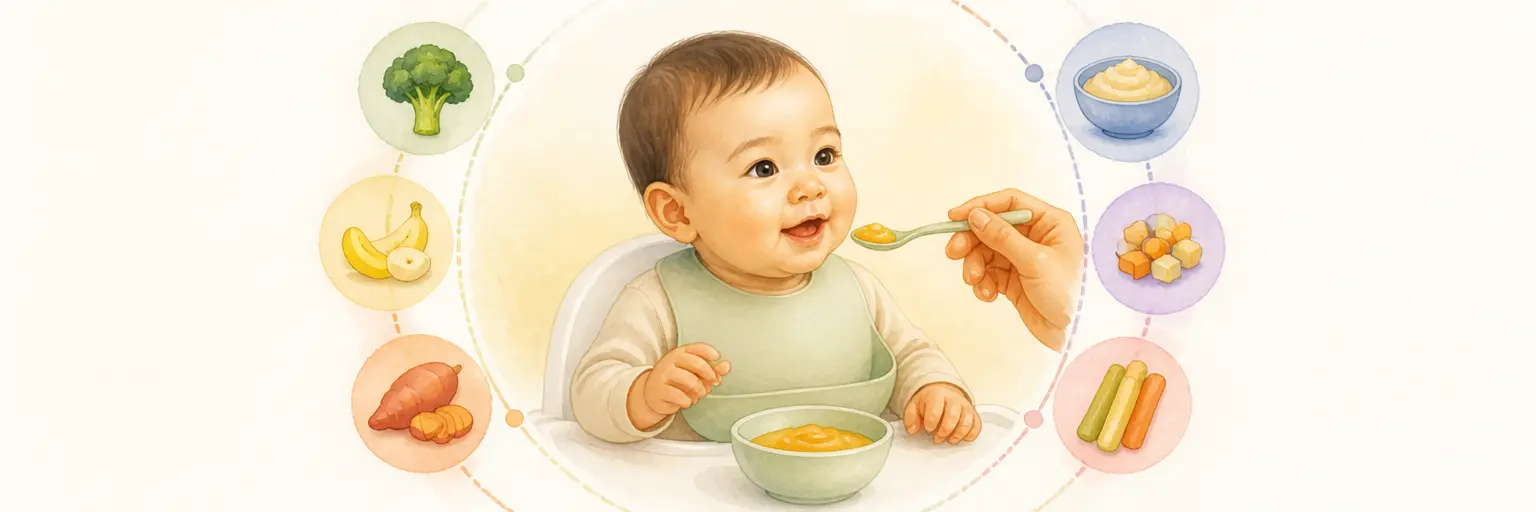
Begin with small amounts, such as one or two teaspoons, offered once a day when your baby is calm and alert. Use a soft spoon and seat your baby upright in a safe high chair. Allow your baby to explore new textures without pressure, and expect some food to be pushed out or played with during the first attempts.
As your baby becomes more comfortable, gradually increase the variety, quantity, and frequency of meals. Responsive feeding means watching your baby’s hunger and fullness cues rather than insisting on a certain amount. Let your baby decide how much to eat while you provide nutritious, age-appropriate choices.
🥕 Best First Foods for Babies
There is no single required first food. Parents can offer smooth or soft foods such as mashed vegetables, soft fruits, iron-fortified baby cereal, beans, lentils, eggs, yogurt, fish, poultry, or tender meat. Focus on foods rich in iron, zinc, protein, healthy fats, vitamins, and minerals to complement breast milk or formula.
Offer one food at a time if you prefer to observe how your baby responds, then gradually combine different ingredients. Examples include mashed avocado, puréed sweet potato, soft banana, oatmeal, cooked pear, scrambled egg, or smooth hummus without added salt. Introduce a wide range of flavors and textures to encourage varied eating habits.
🥑 Moving From Purées to Textured Foods
Babies benefit from progressing beyond smooth purées as their oral motor skills develop. Start with mashed, lumpy, and finely chopped foods, then move toward soft finger foods that your baby can grasp. This gradual texture progression helps babies learn to chew, manage food in the mouth, and develop hand-eye coordination.
Always supervise your baby during meals and check that food is soft enough to mash between your fingers. Suitable options may include steamed vegetable sticks, soft ripe fruit, shredded meat, strips of omelet, or toast fingers. Gagging can be a normal learning response, while choking is silent and requires immediate action, so parents should learn infant choking first aid.
⚠️ Food Allergies and Introducing Common Allergens
Common allergens include peanut, egg, cow’s milk in foods, wheat, soy, sesame, fish, and shellfish. Current guidance generally supports introducing developmentally appropriate forms of common allergens around the time solids begin, rather than unnecessarily delaying them. Peanut butter should be thinned or mixed into another food and never offered as a thick spoonful.
Introduce new allergenic foods when your baby is well and during a time when you can observe them afterward. Watch for hives, swelling, repeated vomiting, coughing, wheezing, or breathing difficulties. Seek urgent medical help for severe symptoms, and ask a healthcare professional for personalized advice if your baby has eczema, an existing allergy, or a strong family history of allergies.
🚫 Foods and Drinks to Avoid in the First Year
Some foods present choking, infection, or nutritional risks for babies. Avoid whole nuts, popcorn, hard raw vegetables, whole grapes, chunks of meat or cheese, hard candy, and spoonfuls of nut butter. Prepare food in safe shapes and textures, cut round foods lengthwise, and remove seeds, bones, and tough skins.
Babies under 12 months should not have honey because of the risk of infant botulism. Avoid unpasteurized dairy products, high-mercury fish, excessive salt, added sugar, and juice. Cow’s milk can be used in cooking or mixed into foods, but it should not replace breast milk or infant formula as the main drink before age one.
💧 Drinks, Mealtime Routines, and Responsive Feeding
Breast milk or infant formula continues to provide essential nutrition while your baby learns to eat solid foods. Once solids begin, small sips of water may be offered in an open cup or suitable cup with meals, depending on your healthcare provider’s guidance. Avoid filling your baby with drinks before meals, as this may reduce interest in nutrient-rich foods.
Create a relaxed routine with your baby seated safely at the table and eating alongside family members when possible. Turn off screens, allow enough time, and keep mealtimes positive. Never force, distract, or bargain with a baby to make them eat; gentle repetition helps children become familiar with new foods.
❓ Frequently Asked Questions About Introducing Solid Foods
When should I start introducing solid foods to my baby?
Most babies can begin complementary foods at about 6 months when they show developmental readiness signs, such as sitting with support, steady head control, and an interest in food. Breast milk or infant formula should remain the primary nutrition source during the first year. Ask your pediatrician for advice if your baby was premature or has medical or developmental concerns.
What is the best first food for a baby?
There is no universally best first food. Choose soft, nutrient-dense foods such as iron-fortified cereal, mashed vegetables, soft fruit, beans, lentils, egg, yogurt, fish, or tender meat. Offering iron-rich foods regularly is especially important as your baby’s iron needs increase during this stage.
How many times a day should my baby eat solids?
Start with a small serving once daily, then gradually increase to two or three meals as your baby becomes more skilled and interested. Follow hunger and fullness cues rather than focusing on exact portions. Breast milk or formula will continue to provide most of your baby’s calories and nutrients at first.
How can I prevent choking when my baby eats solid foods?
Keep your baby seated upright and supervised during every meal. Offer soft foods that can be easily mashed, avoid dangerous foods such as whole nuts, whole grapes, popcorn, and hard raw vegetables, and learn infant CPR and choking first aid. Remember that gagging may be noisy, while choking can be quiet and requires immediate intervention.
When should I introduce peanut and other allergenic foods?
Many experts recommend introducing common allergens in safe, age-appropriate forms when your baby begins solids, unless a healthcare professional advises otherwise. Offer one allergenic food at a time in a small amount and observe your baby. Stop feeding and seek medical advice if symptoms such as hives, swelling, vomiting, coughing, wheezing, or breathing problems occur.