
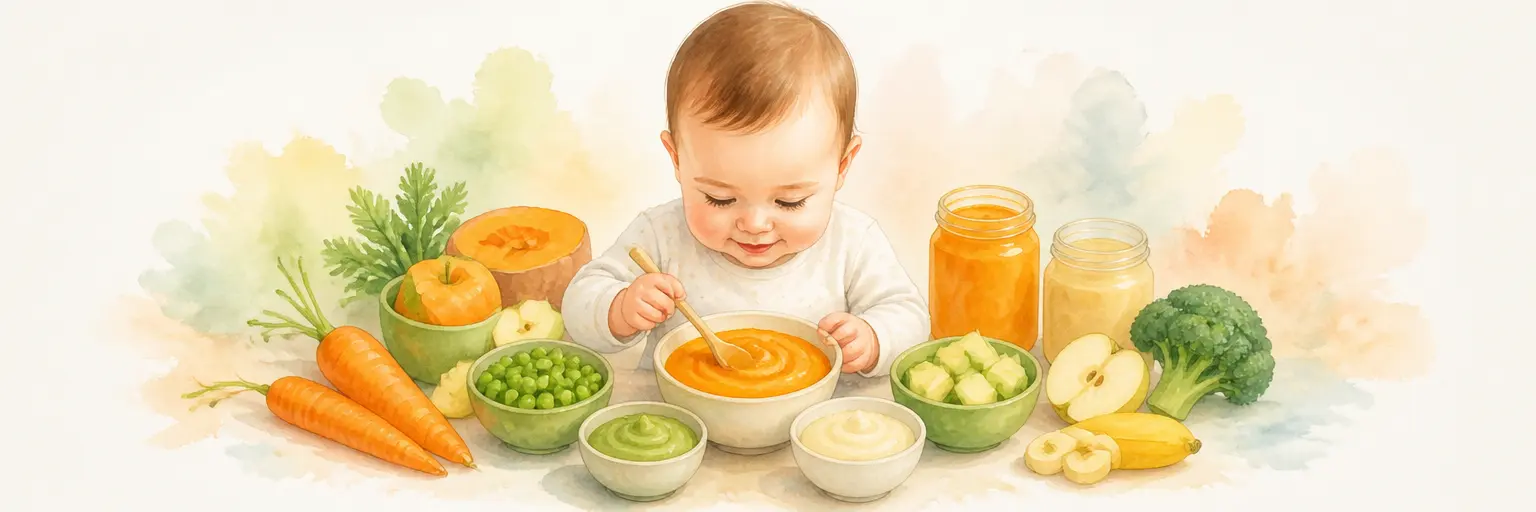
Homemade Baby Food Recipes: The Best Finger Foods for Babies
Discover nourishing homemade baby food recipes 🥕🍎 designed to make your little one’s feeding journey simple, safe, and delicious. Explore age-appropriate purées, soft finger foods, nutritious meal ideas, ingredient tips, and easy preparation guidance to support healthy growth and confident first-time parents. ✨
6 articles
Easy Homemade Purees for 46 Month Olds: A StepbyStep Guide
Homemade Baby Food Recipes: 10 Puree Ideas for Expanding Your Baby’s Palate
Homemade Baby Food Recipes: The Best Organic Ingredients for Baby
Homemade Baby Food Recipes: How to Make Baby Food Without a Blender
Homemade Baby Food Recipes: Using a Food Processor to Make Baby Food
🥕 Homemade Baby Food Recipes for Healthy, Happy Feeding
Discover nutritious, simple, and family-friendly homemade baby food recipes from BabyCareHub. This subcategory helps first-time parents prepare fresh purées, soft finger foods, baby-led weaning meals, and balanced recipes for babies starting solids. Explore practical guidance on ingredients, textures, portion sizes, food preparation, and age-appropriate feeding so you can introduce new flavors with confidence. Every recipe is designed to support safe, enjoyable, and nourishing infant feeding at home.
🍎 Easy Homemade Baby Food Recipes for Beginners
Starting solid foods can feel overwhelming, especially for first-time parents. Our beginner-friendly recipes use simple ingredients such as bananas, avocados, sweet potatoes, carrots, oats, pears, and peas to create smooth, nutritious meals for babies. You can expect clear instructions for steaming, roasting, blending, mashing, and serving each food safely.
These easy baby food recipes are ideal for busy families who want wholesome alternatives to store-bought baby food. Learn how to prepare small portions, adjust consistency, introduce one ingredient at a time, and create meals that support your baby’s developing taste preferences.
🥣 Baby Purée Recipes for Every Stage
Find age-appropriate baby purées made with fruits, vegetables, grains, beans, meat, poultry, and fish. Recipes include smooth first purées for babies beginning solids, thicker mashed combinations for developing eaters, and textured blends for babies progressing toward more advanced foods.
Each recipe focuses on nutrient-dense homemade baby food, including sources of iron, healthy fats, fiber, protein, and essential vitamins. Guidance on adding breast milk, formula, water, or cooking liquid can help you achieve the right texture while keeping meals gentle and easy to swallow.
🥦 Baby-Led Weaning Recipes and Soft Finger Foods
Explore soft finger foods and baby-led weaning recipes that encourage babies to grasp, explore, chew, and enjoy food independently. Options may include steamed vegetables, ripe fruit, soft toast strips, shredded meat, omelet pieces, pasta, and tender family foods prepared without added salt or excess sugar.
You will also find helpful tips for choosing safe shapes, textures, and serving sizes. These recipes support self-feeding for babies while reminding parents to supervise every meal, ensure foods are soft enough, and follow current guidance on choking prevention.
🍗 Iron-Rich Homemade Baby Food Recipes
Iron is an important nutrient during infancy, particularly as a baby begins eating solid foods. Discover recipes featuring iron-rich ingredients such as meat, poultry, fish, lentils, beans, tofu, eggs, iron-fortified grains, and leafy green vegetables.
Our meal ideas explain how to combine plant-based iron sources with vitamin C-rich foods to support absorption. Expect practical combinations such as lentils with tomatoes, beans with sweet potato, or meat with vegetables, making it easier to include iron-rich baby meals in a varied feeding routine.
🍐 Healthy Baby Food Combinations and Meal Ideas
Make mealtimes more interesting with balanced combinations of fruits, vegetables, grains, proteins, and healthy fats. Recipe ideas may include pear and oatmeal, avocado and banana, chicken and vegetable mash, salmon with sweet potato, or yogurt with soft fruit, depending on your baby’s age and dietary needs.
These nutritious baby food combinations help parents move beyond single-ingredient purées and introduce a wider variety of flavors. You can expect flexible recipes that are easy to adapt for different textures, dietary preferences, and stages of infant development.
❄️ Freezing, Storing, and Reheating Homemade Baby Food
Preparing baby food in batches can save time and make healthy feeding more convenient. Learn how to portion homemade baby food into small containers or freezer trays, label meals clearly, and store recipes safely in the refrigerator or freezer.
Our practical tips cover safe thawing, reheating, stirring, checking temperature, and avoiding repeated reheating. Because food safety is essential, always follow reliable storage guidance and discard leftovers that have been in contact with your baby’s spoon or mouth.
⚠️ Food Safety, Allergens, and Choking Prevention
Introducing new foods should be a gradual and attentive process. BabyCareHub offers guidance on common allergens, including peanut, egg, dairy, wheat, soy, fish, and sesame, as well as ways to introduce them in safe, age-appropriate forms when your baby is ready.
You will also learn why certain foods require special preparation and why whole nuts, popcorn, hard raw vegetables, whole grapes, tough meat, and other choking hazards should be avoided or modified. Always supervise your baby while eating and consult a qualified healthcare professional about individual concerns.
❓ Frequently Asked Questions About Homemade Baby Food
👶 When can babies start eating homemade baby food?
Many babies are ready for complementary foods at around six months, when they can sit with support, control their head and neck, show interest in food, and move food safely toward the back of the mouth. Readiness varies, so discuss starting solids with your pediatrician or healthcare professional.
🥕 What are the best first foods for a baby?
Good first foods include soft vegetables, ripe fruits, iron-fortified cereals, beans, lentils, eggs, meat, poultry, fish, and other nutrient-rich options prepared in an appropriate texture. Offering a variety of foods can help babies experience different flavors and nutrients.
❄️ How long does homemade baby food last?
Storage times depend on the ingredients and method used. Refrigerate freshly prepared baby food promptly in clean, sealed containers and use it according to trusted food-safety recommendations. Frozen portions should be labeled with the preparation date and thawed safely before serving.
🧂 Should homemade baby food contain salt or sugar?
Babies do not need added salt or sugar in their meals. Fresh fruits, vegetables, grains, and other ingredients provide natural flavor. Avoiding added salt and sugar helps support healthy eating habits and allows your baby to learn the natural taste of nutritious foods.
🥜 How can I introduce allergens through homemade baby food?
Introduce common allergens in safe, smooth, age-appropriate forms when your baby is ready for solids, and offer them one at a time so you can monitor for a reaction. Peanut butter should be thinned or mixed into a suitable food rather than served as a thick spoonful. Seek urgent medical help for signs of a severe allergic reaction, and ask your healthcare professional for personalized advice.