
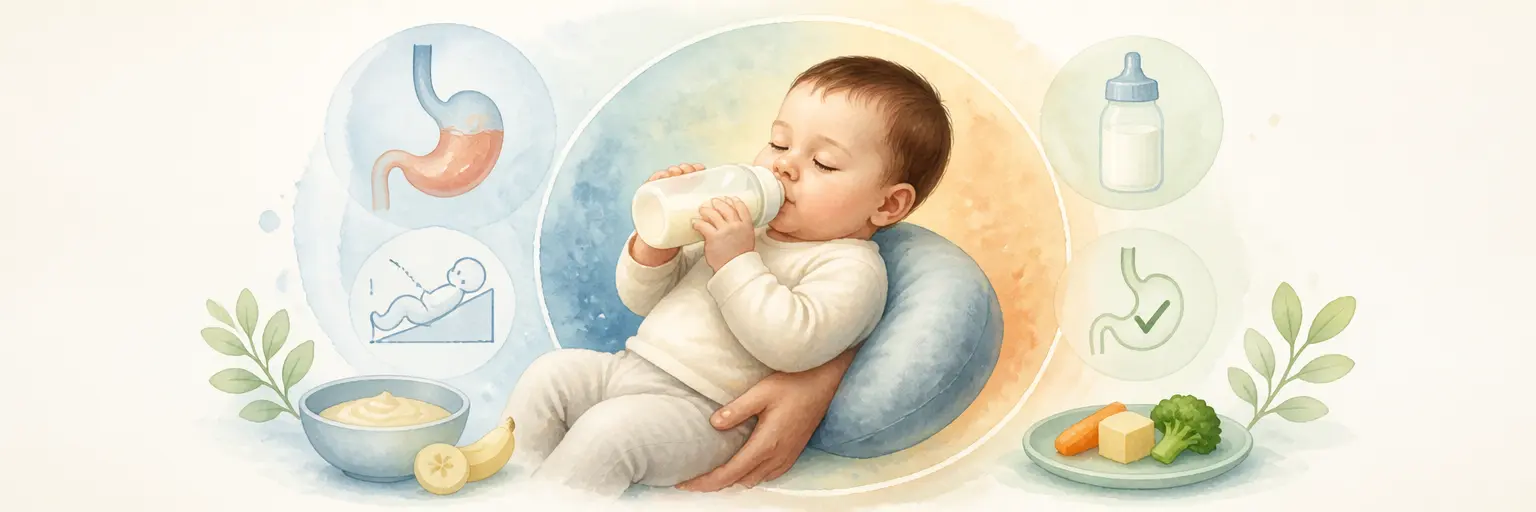
Reflux and Allergies: Identifying Potential Triggers
Discover practical, parent-friendly guidance for managing baby reflux and GERD through feeding 🍼 Learn how feeding positions, smaller meals, burping techniques, pacing, and suitable routines may help ease spit-up and improve your baby’s comfort. Explore safe, evidence-informed tips for feeding and nutrition, plus signs that require pediatric advice, so you can support calmer feeds with confidence. 💛
7 articles
Baby Reflux and the Impact on Family Dynamics
When to Seek Professional Help for Baby Reflux: Red Flags
Reflux and the Importance of Parental SelfCare
Thickening Feeds for Reflux: Is It Safe and Effective?
How to Soothe a Reflux Baby: Comforting Techniques
Reflux and the Importance of a Balanced Diet for Mom
Managing Reflux and GERD in Babies Through Feeding 👶🍼
Welcome to BabyCareHub’s guide to managing reflux and GERD in babies through feeding. This subcategory provides practical, parent-friendly information about infant reflux, spit-up, feeding routines, bottle-feeding techniques, breastfeeding positions, burping, and safe ways to reduce feeding-related discomfort. Explore evidence-informed guidance to help you recognize common reflux symptoms, support comfortable feeds, and understand when your baby may need medical evaluation. Always consult your pediatrician before changing your baby’s feeding plan, especially if your baby has poor weight gain, persistent vomiting, breathing problems, or signs of dehydration.
🍼 Understanding Baby Reflux and GERD
Learn the difference between normal infant reflux and gastroesophageal reflux disease, commonly called GERD. Many healthy babies spit up because their digestive system is still developing, while GERD may involve more severe, frequent, or painful symptoms. This section explains common signs of reflux in newborns and infants, including frequent spit-up, feeding refusal, back arching, coughing during feeds, irritability, and disrupted sleep.
Parents can expect clear explanations of how milk flow, immature stomach muscles, overfeeding, swallowed air, and feeding patterns may contribute to reflux. Understanding the difference between harmless spit-up and concerning symptoms can help you respond calmly while knowing when to contact a healthcare professional.
🤱 Breastfeeding Positions for Babies with Reflux
Discover breastfeeding positions and feeding adjustments that may help babies with reflux feed more comfortably. Helpful topics include keeping your baby more upright during feeds, supporting a deep latch, offering smaller and more frequent feeds when recommended, and watching for hunger and fullness cues. These strategies may reduce swallowed air and limit feeding discomfort.
This section also addresses common breastfeeding questions, such as whether maternal diet causes reflux, how fast let-down may affect feeding, and how to manage coughing or pulling away at the breast. Comfortable positioning and responsive breastfeeding can support effective milk transfer while helping parents avoid unnecessary feeding restrictions.
🍼 Bottle-Feeding Techniques to Reduce Spit-Up
Find practical bottle-feeding tips for reducing infant spit-up and feeding-related air intake. BabyCareHub covers paced bottle feeding, choosing an appropriate nipple flow, keeping the bottle angled correctly, taking regular pauses, and avoiding pressure to finish every bottle. These techniques can be useful for formula-fed babies, expressed breast milk, and combination-fed infants.
Parents will also learn how bottle size, feeding speed, and overfeeding can affect reflux symptoms. Paced feeding allows babies to control the rhythm of the feed, recognize fullness, and swallow more comfortably. If your baby frequently chokes, coughs, refuses feeds, or has worsening symptoms, seek advice from your pediatrician or feeding specialist.
🫧 Burping, Upright Time, and Post-Feed Care
Explore gentle burping methods and post-feeding routines for babies who spit up. Guidance includes burping during and after feeds, holding your baby upright while awake, avoiding active play immediately after feeding, and observing whether certain routines increase discomfort. These approaches may help release swallowed air and support a calmer transition after feeding.
Because every baby is different, this section emphasizes safe observation rather than rigid schedules. Keep your baby upright only while awake and supervised, and always place your baby flat on their back for sleep, even when reflux is present. Never use inclined sleepers, positioning devices, or unsafe sleep products to treat reflux.
🥣 Feeding Amounts, Schedules, and Fullness Cues
Learn how feeding volume and timing may influence reflux symptoms. Babies can spit up more when they take larger feeds than their stomach can comfortably manage, feed too quickly, or are encouraged to eat beyond their hunger cues. This section explains responsive feeding, age-appropriate feeding patterns, and signs that your baby may be hungry or full.
Readers can expect guidance on discussing smaller, more frequent feeds with a healthcare professional when appropriate. Do not restrict milk intake or dilute formula without medical direction, since babies need adequate calories and hydration for healthy growth. Monitoring wet diapers, feeding behavior, and weight gain can provide useful information for your baby’s care team.
🚩 Recognizing Warning Signs and Getting Medical Help
Understand when reflux may require prompt medical attention. Warning signs can include projectile or green vomit, blood in vomit or stool, breathing difficulty, bluish skin, repeated choking, fever in a young infant, severe lethargy, dehydration, persistent feeding refusal, or poor weight gain. These symptoms should never be dismissed as ordinary spit-up.
This section explains how to prepare for a pediatric appointment by recording feeding times, amounts, vomiting episodes, wet diapers, behaviors, and growth concerns. A symptom diary can help your healthcare provider identify patterns and determine whether your baby needs feeding support, allergy assessment, medication, or referral to a specialist.
❓ Frequently Asked Questions About Baby Reflux and Feeding
What is the difference between normal reflux and GERD in babies?
Normal reflux is common in infants and usually involves small amounts of milk coming back up without significant distress or growth problems. GERD is more concerning when reflux causes persistent pain, feeding difficulties, breathing symptoms, poor weight gain, or other complications. A pediatrician should evaluate ongoing or severe symptoms.
Should I feed my baby smaller, more frequent meals for reflux?
Smaller, more frequent feeds may help some babies, but the right plan depends on age, growth, feeding method, and medical history. Ask your pediatrician before changing the feeding schedule. Avoid reducing total daily milk intake unless a healthcare professional provides specific instructions.
Can I put my baby to sleep on an incline to reduce reflux?
No. Babies should sleep flat on their backs on a firm, empty sleep surface, even if they have reflux. Inclined sleepers, wedges, pillows, and positioners can increase the risk of suffocation and sleep-related death. Hold your baby upright while awake and supervised, then use safe sleep practices.
Does thickening formula or breast milk treat infant reflux?
Thickening feeds may be recommended in specific cases, but it should only be done under medical guidance. The appropriate thickener, amount, and method depend on your baby’s age, health, feeding ability, and nutritional needs. Never add cereal or another thickener without discussing it with a pediatrician.
When should I call a doctor about my baby’s spit-up?
Contact a healthcare professional if spit-up is frequent and painful, your baby refuses feeds, has fewer wet diapers, is not gaining weight, coughs or struggles to breathe during feeds, or appears unusually sleepy or unwell. Seek urgent care for projectile or green vomit, blood, breathing difficulty, blue coloring, or signs of severe dehydration.