
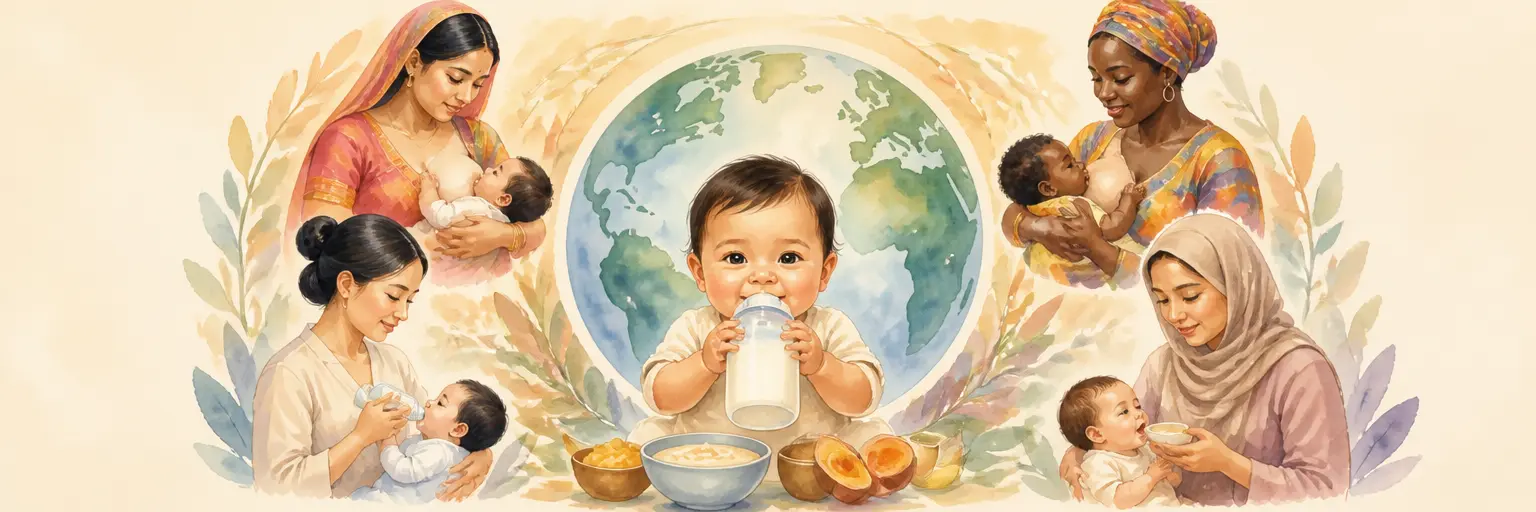
Cultural Beliefs About Food and Wellbeing in Babies
Discover how culture, tradition, and family practices shape infant feeding choices. 🌍 Explore culturally informed breastfeeding and complementary feeding guidance, respectful nutrition advice, and practical tips to support healthy baby development while honoring your family’s values. 💛 Find trusted, inclusive insights for confident feeding decisions at every stage.
5 articles
Cultural Taboos and Traditions in Infant Feeding: What to Avoid
Baby Feeding in Diverse Communities: A Look at Cultural Norms
Feeding Your Baby the World Over: A Guide to Cultural Practices
Cultural Approaches to Weaning and Transitioning to Family Foods
Cultural Approaches to Infant Feeding 🌍
Welcome to BabyCareHub’s Cultural Approaches to Infant Feeding subcategory, a thoughtful resource for first-time parents exploring how traditions, family customs, religion, community values, and local food practices influence feeding choices. Here, you can learn about breastfeeding, formula feeding, complementary foods, weaning, responsive feeding, and infant nutrition from a respectful, evidence-informed perspective. Our goal is to help families understand different cultural approaches while prioritizing baby safety, healthy growth, parental confidence, and individual needs.
🌎 Understanding Infant Feeding Traditions Around the World
Infant feeding practices can vary widely between countries, communities, and families. Readers can explore how cultures approach breastfeeding, expressed breast milk, infant formula, mixed feeding, feeding schedules, and the introduction of solid foods. These articles explain the meaning behind common traditions while recognizing that feeding decisions are personal and influenced by health, access, family support, and professional advice.
BabyCareHub presents cultural differences with sensitivity and avoids treating one method as suitable for every baby. You can expect practical information about global infant feeding customs, family expectations, traditional postpartum care, and ways parents can preserve meaningful traditions while following current infant nutrition and safety recommendations.
🍼 Breastfeeding and Cultural Perspectives
Breastfeeding may be viewed differently across cultures, from community-supported nursing to private family experiences. This section explores cultural attitudes toward breastfeeding in public, extended breastfeeding, pumping, donor milk, breastfeeding support networks, and the role of relatives in a parent’s feeding journey. It also considers how workplace policies and social expectations may affect breastfeeding decisions.
Readers will find supportive guidance that respects breastfeeding goals without creating guilt or pressure. Content may include culturally respectful breastfeeding support, communication strategies for discussing feeding preferences with family members, and reminders to seek help from a qualified healthcare professional or lactation consultant when feeding difficulties arise.
🥣 Traditional First Foods and Complementary Feeding
The introduction of complementary foods is an important stage in infant development, and traditional first foods differ around the world. Families may offer soft grains, mashed vegetables, fruit, legumes, soups, or other culturally familiar foods. This section explains how parents can consider texture, preparation methods, portion sizes, allergens, and developmental readiness when introducing solid foods.
Expect practical ideas for combining family food traditions with safe complementary feeding practices. Articles can help parents identify choking hazards, understand age-appropriate textures, introduce common allergens safely, and provide nutrient-rich foods such as iron-containing ingredients while respecting cultural diets and family preferences.
👨👩👧 Family, Community, and Feeding Support
In many families, grandparents, extended relatives, friends, and community elders play an important role in infant care. Their experience can offer valuable emotional and practical support, although advice may sometimes differ from current pediatric recommendations. This section explores respectful ways to include loved ones in feeding routines while keeping the baby’s health and the parents’ choices at the center.
Readers can learn how to set kind boundaries, discuss conflicting advice, and build a supportive feeding environment. Helpful topics include family-centered infant nutrition, shared caregiving, culturally sensitive parenting communication, and ways partners can support breastfeeding, formula preparation, pumping, and the transition to solid foods.
🧕 Religion, Beliefs, and Infant Nutrition
Religious beliefs and spiritual practices may influence food choices, fasting traditions, ingredient selection, and family expectations around infant feeding. BabyCareHub provides a respectful space for learning how parents can navigate these considerations while meeting a baby’s nutritional and developmental needs. Information is presented for education and should be adapted to each family’s circumstances.
This section may cover halal, kosher, vegetarian, vegan, and other dietary considerations, as well as questions about fasting during breastfeeding or pregnancy. Parents will find guidance on discussing religious and dietary practices with pediatricians, registered dietitians, and trusted faith leaders to support safe, nourishing, and culturally appropriate infant feeding.
🌱 Adapting Cultural Practices to Modern Infant Safety
Cultural traditions can be preserved while making thoughtful adjustments for modern health and safety guidance. Readers can explore how to adapt recipes, feeding utensils, food preparation methods, and family routines to reduce choking, foodborne illness, and nutritional risks. Topics may include safe storage, hand hygiene, pasteurization, food texture, and appropriate supervision during meals.
Our content emphasizes that cultural respect and evidence-based care can work together. You can expect practical strategies for keeping meaningful foods and rituals while following current infant feeding safety recommendations, including guidance to consult a healthcare professional about growth concerns, allergies, restricted diets, or feeding difficulties.
❓ Frequently Asked Questions About Cultural Approaches to Infant Feeding
What are cultural approaches to infant feeding?
Cultural approaches to infant feeding are the traditions, beliefs, routines, foods, and family practices that influence how babies are breastfed, formula-fed, and introduced to complementary foods. They may be shaped by religion, geography, family history, community expectations, and access to healthcare.
Can I follow traditional feeding practices safely?
Many traditional practices can be included safely when they are adapted to a baby’s developmental stage and current health guidance. Avoid choking hazards, unsafe liquids, unpasteurized products, honey before 12 months, and foods prepared or stored in ways that may cause illness. Ask a pediatrician when you are unsure.
How can I handle family members who give different feeding advice?
Thank relatives for sharing their experience, then explain that recommendations may have changed since they raised children. You can say that your healthcare professional has provided guidance based on your baby’s current age, development, and health. Setting respectful boundaries can protect your feeding goals while maintaining family relationships.
Are traditional foods suitable for babies?
Many traditional foods can be suitable when prepared in an age-appropriate texture and without excessive salt, sugar, or choking risks. Introduce foods gradually, watch for allergic reactions, and prioritize nutrient-dense ingredients such as iron-rich foods, vegetables, fruits, legumes, grains, and suitable dairy products according to professional advice.
Where can I get personalized infant feeding advice?
For personalized recommendations, speak with your baby’s pediatrician, a registered dietitian, or a qualified lactation consultant. Professional advice is especially important for premature babies, babies with allergies or medical conditions, feeding difficulties, poor weight gain, or families following highly restricted diets.