
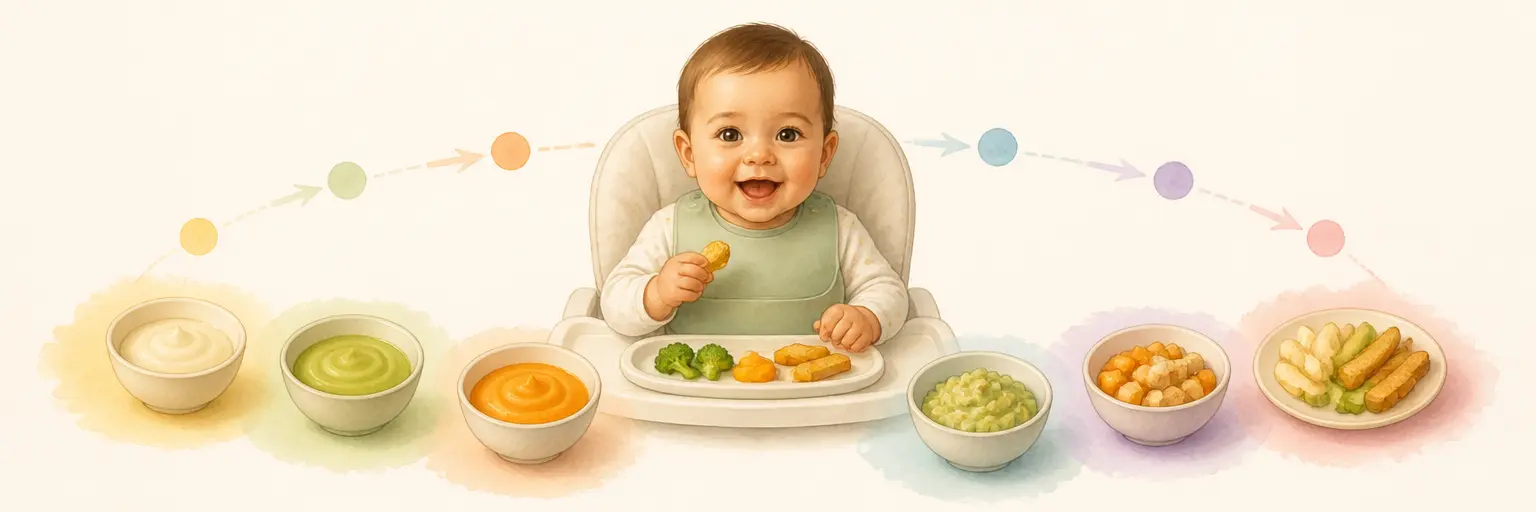
Homemade Stage 3 Baby Food: Recipes & Meal Ideas
Discover a confident path through baby food stages with BabyCareHub! 🍼 From smooth first purees to soft, nutritious finger foods, learn age-appropriate feeding tips, texture progression, portion guidance, and safe introduction of new flavors. Support your baby’s healthy growth, feeding skills, and development with practical, parent-friendly advice every step of the way.
6 articles
Decoding Baby Food Stages: Purees, Mashes, and Beyond
Introducing Lumpy Purees: Helping Baby Adapt
Baby Food Stages Timeline: A Guide for Parents
Feeding Your Baby: How Much Food is Enough?
Understanding Baby Food Stages: A Comprehensive Overview
Baby Food Stages: From Purees to Finger Foods 👶🥣
Welcome to BabyCareHub’s guide to baby food stages, created to help first-time parents confidently navigate the transition from milk feeding to solid foods. Discover practical advice on starting solids, introducing smooth purees, progressing to mashed textures, and offering safe finger foods as your baby develops. Our nutrition-focused resources explain age-appropriate feeding, responsive feeding, allergen introduction, portion guidance, and essential choking prevention tips.
🍼 Starting Solids and First Baby Foods
Learn how to recognize the signs that your baby may be ready for complementary foods, usually around six months, while continuing breast milk or infant formula as the primary source of nutrition. BabyCareHub explains how to introduce first foods gradually, including iron-rich options such as smooth meat puree, beans, lentils, fortified cereals, and well-cooked vegetables.
Expect clear guidance on mealtime routines, feeding positions, spoon feeding, and responsive feeding. Follow your baby’s hunger and fullness cues rather than focusing on a fixed amount, and introduce new foods calmly so your baby can become comfortable with different tastes and textures.
🥣 Stage One Purees and Smooth Textures
Stage one baby food typically includes smooth, thin purees made from vegetables, fruits, grains, and protein-rich foods. Explore preparation ideas for foods such as sweet potato, avocado, banana, pear, peas, oatmeal, and soft-cooked carrots, along with tips for thinning purees using breast milk, formula, or safe cooking water.
These resources also cover safe storage, batch cooking, refrigeration, and freezing homemade baby food. Single-ingredient foods can make it easier to identify possible reactions, while offering a wide range of nutritious ingredients supports early flavor learning and balanced infant nutrition.
🍌 Stage Two Mashed Foods and Thicker Textures
As babies become more comfortable with solids, they can progress from smooth purees to thicker mashed foods and soft, finely minced ingredients. Learn how to combine flavors and textures with age-appropriate meals such as mashed beans, soft pasta, scrambled egg, yogurt, mashed vegetables, and finely shredded tender meat or fish.
Stage two feeding encourages oral-motor development and helps babies practice moving food around the mouth. Gradual texture progression is important; avoid keeping a baby on completely smooth purees for too long when they are ready for more variety, while always adapting food size and consistency to individual development.
🥕 Stage Three Finger Foods and Self-Feeding
When your baby can sit upright with good head control, bring food to their mouth, and grasp objects, they may be ready for soft finger foods. Find ideas for appropriately prepared strips or pieces of steamed vegetables, ripe fruit, toast, soft omelet, shredded chicken, cooked pasta, and other nutrient-dense foods that are easy to hold.
Finger foods support independence, hand-eye coordination, chewing practice, and sensory exploration. Offer food in a safe upright position and supervise every meal. Soft foods should be easy to squish between your fingers, and portions should be shaped to reduce choking risk while allowing your baby to grasp them effectively.
🥑 Introducing Common Allergens Safely
Learn how to introduce common allergens, including smooth peanut, well-cooked egg, dairy, wheat, soy, sesame, and fish, in suitable forms and small amounts. Current feeding guidance often supports introducing allergenic foods when babies are ready for solids rather than delaying them, unless a healthcare professional recommends a different approach.
BabyCareHub provides practical advice for introducing one potentially allergenic food at a time and monitoring for symptoms. Seek urgent medical help for serious reactions, such as breathing difficulty, facial swelling, or widespread hives, and speak with your pediatrician if your baby has severe eczema, an existing food allergy, or other risk factors.
🛡️ Choking Prevention and Safe Baby Feeding
Safety is essential at every baby food stage. Learn which foods require special preparation and which foods to avoid, including whole grapes, raw hard vegetables, whole nuts, popcorn, hard candy, chunks of meat, and spoonfuls of thick nut butter. Safe feeding also includes ensuring your baby is seated upright and supervised.
Understand the difference between gagging and choking, and learn why babies should not eat while lying down, walking, playing, or riding in a vehicle. Never leave a baby alone with food, and follow professional infant first-aid guidance so caregivers know how to respond in an emergency.
🌱 Balanced Baby Meals and Nutritional Variety
Discover how to create balanced meals that include iron-rich foods, vegetables, fruits, whole grains, healthy fats, and suitable protein sources. As your baby progresses through purees, mashed foods, and finger foods, repeated exposure to different flavors can support healthy eating habits and reduce pressure around mealtimes.
Find ideas for simple baby meal plans, snack combinations, and family foods adapted without excess salt, sugar, or unsuitable ingredients. Variety matters more than perfection, and offering nutritious options alongside continued breast milk or formula helps support growth, development, and energy needs.
❓ Frequently Asked Questions About Baby Food Stages
When should a baby start eating solid foods?
Most babies are ready for complementary foods at around six months, when they can sit upright with support, control their head and neck, reach for food, bring objects to their mouth, and swallow food rather than automatically pushing it out. Readiness varies, so discuss feeding plans with your healthcare professional if you are unsure.
Should I start with purees or finger foods?
Both approaches can be appropriate when foods are prepared safely. Some parents begin with smooth purees, while others offer soft finger foods through baby-led weaning. A combination of spoon feeding and self-feeding can provide texture variety, independence, and practical nutrition as long as your baby is supervised and seated upright.
How quickly should I move from purees to textured foods?
Progress at your baby’s pace, but introduce thicker mashed foods and soft lumps as your baby becomes comfortable with smooth purees. Gradual exposure to different textures supports feeding skills. If your baby consistently struggles with swallowing, coughing, or accepting textures, seek advice from a pediatrician or feeding specialist.
What foods are choking hazards for babies?
Common choking hazards include whole nuts, popcorn, hard raw vegetables, whole grapes, chunks of apple, hard candy, tough meat, sausages cut into round pieces, and thick spoonfuls of nut butter. Modify food by cooking, mashing, shredding, or cutting it into safe shapes, and always supervise your baby while eating.
How much solid food should my baby eat?
Early solid meals may consist of only a few small spoonfuls, gradually increasing as your baby gains experience. Appetite varies from day to day, so respond to hunger and fullness cues instead of forcing food. Breast milk or infant formula remains an important source of nutrition during the first year, unless your healthcare professional advises otherwise.