
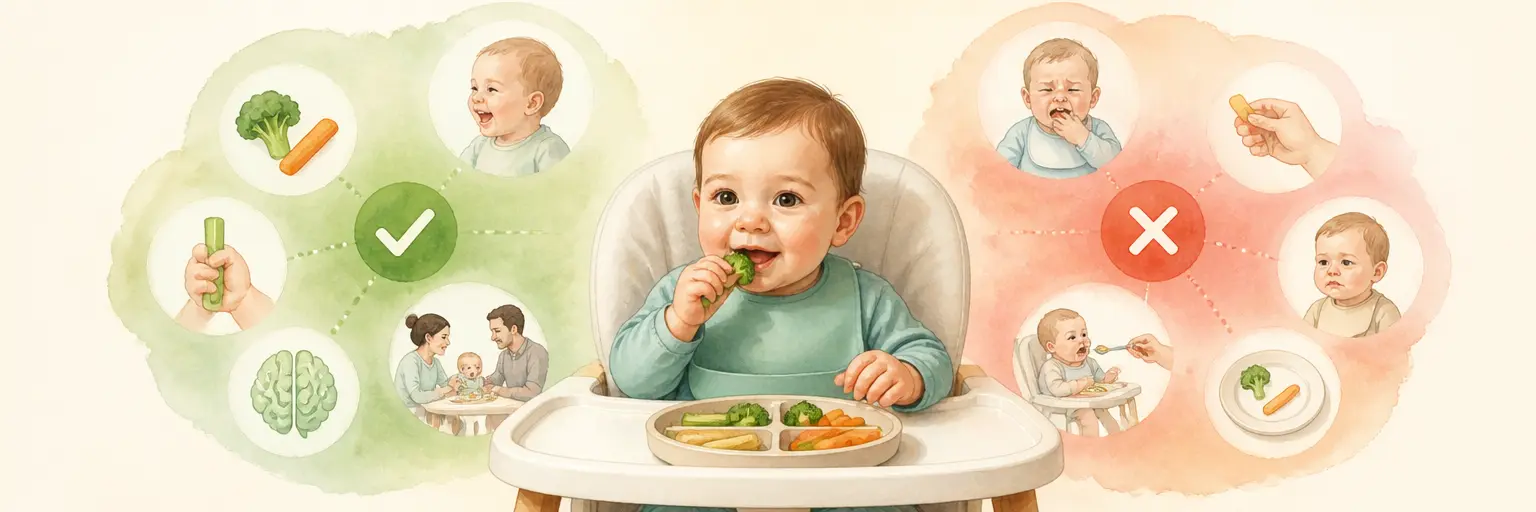
BabyLed Weaning: The Truth About Gagging and Choking
Explore baby-led weaning with practical, evidence-informed guidance for first-time parents. Learn how this approach can support self-feeding, food exploration, and family mealtimes while understanding potential challenges such as choking risks, mess, and nutritional balance. Discover the key pros and cons, safety tips, suitable first foods, and ways to introduce solids confidently as part of your baby’s feeding and nutrition journey. 👶🥦
6 articles
BabyLed Weaning: How to Monitor Your Baby's Growth
The Ultimate Showdown: BabyLed Weaning Pros vs. Cons
BabyLed Weaning: How to Make the Transition Easier
BabyLed Weaning: Is It Suitable for All Babies?
BabyLed Weaning: A Look at the EvidenceBased Research
🥣 Baby-Led Weaning: Pros and Cons
Welcome to BabyCareHub’s guide to baby-led weaning pros and cons, a practical resource for first-time parents exploring baby-led feeding and complementary foods. This approach encourages babies to self-feed appropriately sized pieces of soft food instead of relying only on purées. Learn about the potential benefits, common challenges, safety considerations, nutritional needs, and expert-informed tips for starting baby-led weaning with confidence.
👶 What Is Baby-Led Weaning?
Baby-led weaning, often called BLW, is an approach to introducing solid foods in which babies are offered safe, soft finger foods and encouraged to feed themselves. Rather than spoon-feeding every bite, parents provide suitable foods while the baby decides what to pick up, taste, and eat.
Baby-led weaning usually begins around six months, when a baby shows signs of readiness for complementary feeding. These signs may include sitting upright with good head control, reaching for food, bringing objects to the mouth, and swallowing food rather than automatically pushing it out. Always consider your baby’s individual development and speak with a healthcare professional if you have concerns.
✅ Benefits of Baby-Led Weaning
One possible advantage of baby-led weaning is that it may support independence, hand-eye coordination, and fine motor development. Picking up food, bringing it to the mouth, and exploring different textures can help babies practise self-feeding skills at their own pace.
BLW can also expose babies to a wider range of tastes, colors, shapes, and textures. Shared family meals may make feeding more social and enjoyable, while offering nutritious finger foods can help babies become familiar with vegetables, fruits, grains, beans, eggs, fish, and other age-appropriate foods.
⚠️ Potential Disadvantages and Challenges
Baby-led weaning can be messy, time-consuming, and stressful for some families. Food may be dropped frequently, meals can take longer, and babies may appear to eat very little at first. Parents often need patience, washable bibs, and a safe, well-prepared eating area.
Another concern is ensuring adequate nutrition, especially iron, zinc, protein, energy, and healthy fats. Some babies may struggle to pick up food or may not consume enough during the early stages. A flexible combination of self-feeding and responsive spoon-feeding may be appropriate when guided by a pediatrician or registered dietitian.
🛡️ Baby-Led Weaning and Choking Prevention
Choking prevention is one of the most important parts of safe baby-led weaning. Babies should always eat while sitting upright in a stable high chair and should be closely supervised by an attentive adult. Do not allow a baby to eat while crawling, walking, reclining, or travelling in a car seat.
Parents should learn the difference between gagging and choking and prepare foods in safe shapes and textures. Avoid hard, round, sticky, or tough foods that can block the airway, including whole grapes, whole nuts, raw carrot pieces, popcorn, hard chunks of apple, and spoonfuls of nut butter. Cut foods appropriately, cook them until soft, and follow current medical guidance.
🥕 Best First Foods for Baby-Led Weaning
Suitable first foods should be soft enough to squish between your fingers and large enough for a young baby to hold. Examples may include steamed broccoli florets, roasted sweet potato wedges, ripe banana, soft avocado, tender strips of omelet, shredded meat, flaky fish, and toast with a thin spread.
Offer a variety of foods across the week, including iron-rich foods, vegetables, fruit, whole grains, dairy foods, legumes, eggs, and healthy fats. Introduce common allergens in safe forms and in line with advice from your healthcare professional, particularly if your baby has eczema, an existing allergy, or a family history of allergies.
🍼 Combining Baby-Led Weaning with Spoon-Feeding
Baby-led weaning does not have to be an all-or-nothing method. Many families use a responsive combination approach, offering finger foods while also providing preloaded spoons or occasional spoon-feeding. This can help babies explore food independently while supporting adequate intake.
Responsive feeding means paying attention to hunger and fullness cues rather than pressuring a baby to eat. Let your baby decide whether and how much to eat, while you decide which nutritious foods to offer and when meals take place. Breast milk or infant formula remains an important source of nutrition during the early stages of complementary feeding.
📅 Getting Started with Baby-Led Weaning
Begin with short, relaxed meals when your baby is alert but not overly hungry. Place one or two soft foods on the high-chair tray and allow your baby time to touch, smell, taste, and explore. Expect more learning and sensory play than actual eating during the first weeks.
Create a predictable routine with family meals whenever possible. Keep portions small, offer water in an appropriate cup with meals, and continue breast milk or infant formula as recommended. Never force, distract, or rush your baby; positive mealtimes can build healthy long-term eating habits.
❓ Frequently Asked Questions About Baby-Led Weaning
1. When can a baby start baby-led weaning?
Most babies are ready for complementary foods at around six months when they can sit upright with good head control, coordinate their hands and mouth, and show interest in food. Age alone is not the only readiness sign. Ask your pediatrician or healthcare professional if you are unsure.
2. Is baby-led weaning safe?
Baby-led weaning can be safe when foods are prepared correctly, choking hazards are avoided, and the baby is supervised in an upright position. Parents should understand the difference between gagging and choking and should seek infant first-aid training for additional confidence.
3. Does baby-led weaning provide enough nutrition?
It can provide valuable nutrition when meals include a varied selection of iron-rich and energy-dense foods. However, babies may eat small amounts at first, so breast milk or infant formula remains important. Discuss nutrition with a healthcare professional if your baby has poor growth, feeding difficulties, or a restricted diet.
4. What foods should be avoided during baby-led weaning?
Avoid choking hazards such as whole nuts, popcorn, hard raw vegetables, whole grapes, tough meat, and sticky spoonfuls of nut butter. Babies should also avoid honey before 12 months because of the risk of infant botulism, and foods high in salt or added sugar should be limited. Follow local infant-feeding guidance for additional restrictions.
5. Can baby-led weaning and purées be used together?
Yes. Combining soft finger foods with preloaded spoons or responsive spoon-feeding is a practical option for many families. The goal is to support safe exploration, balanced nutrition, and positive feeding experiences rather than follow a strict method. Never pressure your baby to finish a portion.