
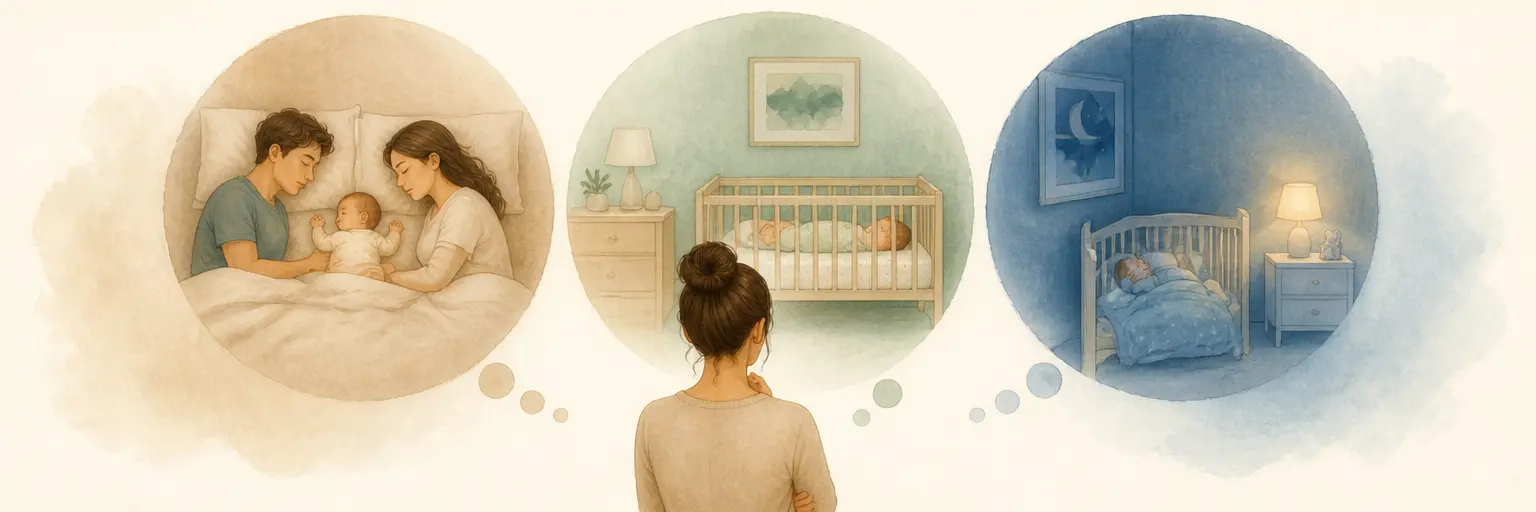
Room Sharing Challenges: How to Overcome Common Issues and Sleep Better
Choose the right sleep setup for your baby with practical guidance on co-sleeping, room sharing, and transitioning to a separate room. 💤 Explore evidence-based baby sleep safety tips, age-appropriate routines, benefits, risks, and gentle sleep-training strategies to help your family build a safer, calmer bedtime routine. 👶💕
6 articles
Cosleeping, Room Sharing, Separate Room: The Science Behind Baby Sleep Arrangements
Is Cosleeping Always Bad? Examining the Nuances of BedSharing
Separate Room and SelfSoothing: Helping Baby Develop Independent Sleep Skills
Baby's First Bed: A Guide to Choosing Between Cosleeping, Room Sharing, and a Nursery
Understanding the Risks of Cosleeping: How to Minimize Potential Dangers
Co-sleeping vs. Room Sharing vs. Separate Room: Choosing the Right Baby Sleep Arrangement
Welcome to BabyCareHub’s guide to co-sleeping, room sharing, and separate-room sleep—three common approaches families consider when creating a safe and sustainable baby sleep routine. Understanding the differences can help first-time parents make informed decisions about newborn sleep, infant sleep safety, night waking, bedtime routines, and independent sleep. This subcategory offers practical, evidence-informed guidance to help you compare each option according to your baby’s age, temperament, feeding needs, and your family’s circumstances.
🛏️ Co-Sleeping: Understanding Bed-Sharing and Close Sleep
Co-sleeping is often used to describe sleeping close to your baby, but it may refer to either room sharing or bed-sharing. Bed-sharing means an infant sleeps on the same sleep surface as a parent, while room sharing means the baby has a separate crib or bassinet in the parents’ room. Knowing this distinction is essential when searching for information about co-sleeping safety, infant sleep environments, breastfeeding at night, and nighttime parenting.
Families considering bed-sharing should carefully review safety recommendations and avoid hazardous situations, including sleeping with a baby on a sofa, armchair, or soft adult mattress. BabyCareHub explains how sleep surfaces, pillows, blankets, smoking, alcohol, medications, overheating, and premature birth can affect risk. Parents can also learn about safer alternatives, such as keeping a firm, flat, separate baby sleep space nearby.
🏠 Room Sharing: A Practical Balance for Newborn Sleep
Room sharing allows your baby to sleep in the same room as you while using a dedicated crib, bassinet, or bedside sleeper. This arrangement is widely considered a practical option for newborn sleep safety because parents can respond quickly to feeding, diaper changes, and nighttime crying without placing the baby on an adult bed.
Parents can expect guidance on setting up a safe room-sharing environment, choosing an appropriate sleep surface, and organizing nighttime essentials. A consistent bedtime routine, dim lighting, quiet interaction, and safe swaddling practices may help support better sleep while preserving close supervision and easy access for overnight care.
🚪 Separate Room Sleeping: Supporting Independent Sleep
Separate-room sleeping means your baby sleeps in a different room from the parents, usually in a crib or other approved sleep space. Some families choose this approach to support independent sleep, reduce household disturbances, or accommodate work schedules and limited bedroom space. The right timing depends on safety guidance, the child’s age, family preferences, and individual circumstances.
This section helps parents understand how to transition gradually while maintaining a predictable sleep routine. Helpful strategies may include practicing naps in the baby’s room, using a consistent bedtime sequence, monitoring room temperature, and responding calmly to night waking. Parents should always follow current pediatric guidance and ensure the sleep space is free from loose bedding, pillows, toys, and other hazards.
⚖️ Co-Sleeping vs. Room Sharing vs. Separate Room: Key Differences
Comparing these approaches involves more than choosing where a baby sleeps. Parents may need to consider safe sleep recommendations, breastfeeding, sleep training methods, parental rest, cultural preferences, housing arrangements, and the baby’s developmental stage. Room sharing with a separate sleep surface can offer proximity, while a separate room may provide greater distance and fewer disturbances. Bed-sharing involves different safety considerations and should not be treated as identical to room sharing.
BabyCareHub encourages families to focus on a realistic plan that supports both infant safety and parental wellbeing. Use the following comparison points when discussing sleep arrangements with a healthcare professional:
- Sleep surface: A baby should sleep on a firm, flat, approved surface.
- Location: Consider whether your baby sleeps in your room, your bed, or a separate room.
- Nighttime care: Think about feeding, soothing, diaper changes, and monitoring.
- Family needs: Account for parental sleep, work, other children, and home layout.
- Flexibility: A sleep plan can change as your baby grows and routines develop.
🌙 Creating a Safe and Consistent Baby Bedtime Routine
Regardless of the chosen sleep arrangement, a predictable bedtime routine can help babies recognize when it is time to sleep. A simple sequence might include feeding, a clean diaper, pajamas, a short story or lullaby, and placing the baby in the sleep space while calm. Consistency matters more than perfection, particularly during the early newborn months.
Parents can also support healthy sleep habits by using age-appropriate wake windows, daytime light exposure, calming pre-sleep cues, and a quiet nighttime response. Avoid using loose blankets, pillows, bumper pads, weighted sleep products, or unsafe sleep positioners. Always place babies on their backs for sleep and follow advice from a qualified healthcare professional.
👶 Choosing a Sleep Plan That Fits Your Family
There is no single sleep arrangement that works for every household. A newborn may need frequent feeding and reassurance, while an older infant may gradually develop longer nighttime sleep periods. Your preferred approach may also change because of travel, illness, developmental milestones, returning to work, or changes in your living situation.
The most useful plan is one that prioritizes safe infant sleep, responsive caregiving, realistic expectations, and family wellbeing. Keep reviewing your baby’s sleep needs, update the sleep environment as your child grows, and seek professional advice if you have concerns about breathing, reflux, frequent waking, unusual sleepiness, or difficulty feeding.
❓ Frequently Asked Questions About Baby Sleep Arrangements
Is room sharing safer than bed-sharing?
Room sharing with a baby in a separate crib, bassinet, or approved bedside sleeper is generally considered safer than bed-sharing because the baby has an independent sleep surface. Bed-sharing can increase risks associated with soft bedding, accidental suffocation, overheating, and entrapment. Follow current safe sleep guidance and ask a healthcare professional about your individual circumstances.
How long should a baby share a room with parents?
Many pediatric sleep recommendations support room sharing during early infancy, often for at least the first six months and preferably longer when practical. The exact timing of a move to a separate room depends on your baby’s development, your home setup, and professional guidance. The baby should continue sleeping on a firm, flat surface without loose items.
Can co-sleeping help with breastfeeding?
Keeping a baby nearby can make nighttime breastfeeding and responsive care more convenient. However, convenience does not remove the need for safe sleep practices. If you bring your baby into bed for feeding or comforting, return the baby to a separate approved sleep space before you fall asleep whenever possible. Never feed or sleep with a baby on a sofa or armchair.
When can a baby sleep in a separate room?
The timing varies by family and should follow current pediatric recommendations. Parents may prepare for the transition by introducing naps in the baby’s room, maintaining the same bedtime routine, and using a safe crib environment. If your baby was premature, has a medical condition, or has breathing concerns, consult a healthcare professional before changing sleep arrangements.
What should be in a baby’s sleep space?
A safe sleep space should include a firm, flat mattress with a fitted sheet designed for that crib, bassinet, or approved sleep product. Keep the area free from pillows, quilts, loose blankets, stuffed toys, bumper pads, and weighted sleep products. Place your baby on their back for every sleep and avoid overheating by dressing them appropriately for the room temperature.