
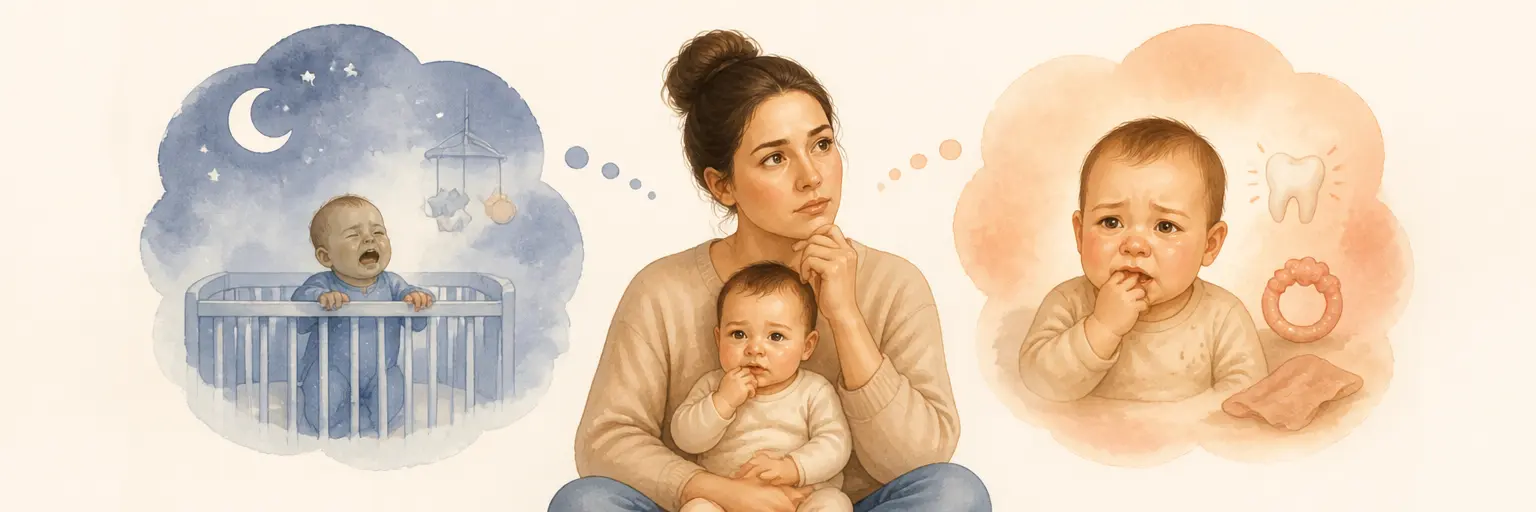
Teething vs. Sleep Regression: Practical Tips for Better Baby Sleep
Learn how to tell whether your baby’s disrupted sleep is caused by sleep regression or teething discomfort 💤🦷 with practical, parent-friendly guidance from BabyCareHub. Recognize common signs, understand age-related sleep changes, and discover gentle ways to support soothing, rest, and healthy sleep routines while knowing when to seek medical advice.
5 articles
Baby Sleep Regression vs. Teething: A Comprehensive Overview
Sleep Regression or Teething? What's Keeping Your Baby Up at Night?
Baby Sleep: Teething or Regression? Identifying the Cause of Night Wakings
Sleep Regression or Teething? A Detailed Explanation for FirstTime Parents
🌙 Differentiating Between Sleep Regression and Teething Discomfort
Welcome to BabyCareHub’s guide to differentiating between sleep regression and teething discomfort—two common reasons babies suddenly wake more often, resist naps, or struggle to settle at bedtime. Understanding whether your baby is experiencing a developmental sleep regression, teething pain, or both can help you choose a calm, safe, and effective response. This subcategory offers practical advice for first-time parents on baby sleep patterns, night waking, soothing techniques, bedtime routines, and age-appropriate comfort measures.
🍼 Understanding Baby Sleep Regression
Sleep regression is a temporary period when a baby who previously slept well begins waking frequently, taking shorter naps, or resisting sleep. It often occurs during developmental milestones, such as around four, six, eight, or twelve months, although every baby is different. Readers can learn how changes in mobility, separation awareness, feeding patterns, and brain development may affect infant sleep.
Our guidance explains how to identify sleep regression signs without assuming that every difficult night is a regression. You can expect practical strategies for maintaining a consistent bedtime routine, encouraging healthy sleep habits, managing night wakings, and supporting your baby through temporary sleep disruption without creating unnecessary sleep associations.
🦷 Recognizing Teething Discomfort
Teething discomfort may cause gum sensitivity, increased drooling, chewing, irritability, and difficulty settling. Some babies experience mild symptoms, while others become more unsettled during naps and nighttime sleep. This section helps parents understand common teething signs and distinguish them from symptoms that may require advice from a pediatrician.
Readers can expect safe, age-appropriate comfort suggestions, including chilled teething rings, gentle gum pressure, extra cuddling, and advice about discussing medication with a healthcare professional. BabyCareHub emphasizes that fever, persistent diarrhea, breathing problems, or significant illness should not automatically be blamed on teething and may need medical evaluation.
🔍 Sleep Regression or Teething: Key Differences
Learning the difference between sleep regression and teething discomfort can make nighttime care less stressful. Sleep regression commonly involves changes in sleep timing, bedtime resistance, and repeated waking without obvious physical discomfort. Teething is more likely to include sore or swollen gums, chewing behavior, drooling, and difficulty feeding or sucking.
Because symptoms can overlap, parents should look at the complete pattern rather than one behavior. This subcategory provides comparison tips, symptom checklists, and observation methods to help you track your baby’s sleep, mood, feeding, and physical signs. Keeping a simple sleep and symptom diary can reveal whether the problem is developmental, physical, or a combination of both.
🛏️ Adjusting Sleep Training and Bedtime Routines
When a baby is experiencing sleep regression or teething discomfort, a familiar routine can provide reassurance. Readers can learn how to use calming steps such as a warm bath, feeding, a quiet story, dim lighting, and consistent sleep cues. Predictable routines help babies understand when it is time to rest, even when their sleep is temporarily unsettled.
This section also explores how to respond to night waking while protecting healthy sleep habits. Parents can discover gentle approaches for offering reassurance, checking for discomfort, and returning their baby to sleep safely. Consistency, flexibility, and realistic expectations are essential when adapting sleep training during developmental changes or temporary teething pain.
🤍 Soothing Your Baby Safely at Night
Comforting a baby at night should address genuine needs while following safe sleep guidance. BabyCareHub covers ways to check for hunger, discomfort, temperature, a wet diaper, or signs of illness before helping your baby settle. Parents will also find reminders to place babies on their backs for every sleep and keep the sleep space firm, flat, and free from loose bedding.
Readers can expect practical advice for balancing comfort and independence. Gentle touch, quiet reassurance, and brief check-ins may help, while overstimulation, bright screens, and frequent changes to the bedtime routine can make settling more difficult. Never use amber teething necklaces, unsafe sleep products, or unapproved remedies because they may create serious risks.
📅 Tracking Patterns and Knowing When to Seek Help
Identifying patterns is one of the most useful tools when managing baby sleep problems. Parents can learn what to record, including bedtime, nap length, night waking, feeding, teething symptoms, temperature, and mood. This information may help reveal whether sleep disruption follows a developmental phase or occurs alongside physical discomfort.
This section also explains when professional guidance is appropriate. Contact a pediatrician if your baby has a high or persistent fever, seems unusually lethargic, refuses fluids, has difficulty breathing, shows signs of dehydration, or remains in significant pain. Trust your instincts—a healthcare professional can help rule out illness and provide personalized advice.
❓ Frequently Asked Questions About Sleep Regression and Teething
What is the main difference between sleep regression and teething discomfort?
Sleep regression is usually linked to developmental changes that affect a baby’s sleep pattern, while teething discomfort is caused by tender or inflamed gums as teeth emerge. Sleep regression may cause bedtime resistance and frequent waking without physical symptoms. Teething may involve drooling, chewing, gum sensitivity, and irritability.
Can teething cause a baby to wake up at night?
Yes, teething discomfort can make it harder for a baby to settle or return to sleep after waking. However, repeated night waking can also result from sleep regression, hunger, illness, changes in routine, or new developmental skills. Look for additional teething signs before assuming sore gums are the cause.
How long does sleep regression usually last?
Sleep regression commonly lasts from a few days to several weeks, depending on the baby and the developmental change involved. Maintaining a consistent bedtime routine, age-appropriate naps, and a calm response to waking may help the disruption pass more smoothly.
What are safe ways to comfort a teething baby?
Parents may offer a clean, chilled—not frozen—teething ring, gently massage the gums with a clean finger, and provide extra soothing. Ask a pediatrician before using pain-relief medicine, especially for young infants. Avoid unsafe teething necklaces, gels containing unsuitable ingredients, and frozen objects that may injure the gums.
When should I call a doctor about my baby’s sleep or teething symptoms?
Seek medical advice if your baby has a persistent or high fever, trouble breathing, repeated vomiting, signs of dehydration, unusual sleepiness, poor feeding, severe pain, or symptoms that concern you. Teething should not be used to explain serious illness, and a pediatrician can help identify the correct cause of sleep disruption.