
Understanding the Different Bouncer Vibration Options
Discover expert baby swing and bouncer guidance from BabyCareHub to help parents choose comfortable, practical gear for soothing, playtime, and supervised rest. Learn about key benefits, age-appropriate use, safe positioning, weight limits, harnesses, and essential safety tips so your baby stays secure and supported. 👶🛡️ Make confident decisions with clear advice designed for first-time parents and everyday baby care.
6 articles
Bouncer Toys and Features: Keeping Your Baby Engaged
The Pros and Cons of Different Baby Swing Motions
Baby Swing vs. Rocker: Understanding the Key Differences
MustHave Baby Swing Accessories: Enhancing Your Baby's Comfort
Bouncer vs. Activity Center: Choosing the Right Product
👶 Baby Swing and Bouncer Guide: Benefits and Safety
Choosing the right baby swing or bouncer can make everyday life easier for new parents while giving your baby a comfortable place to relax, play, and observe the world. This BabyCareHub guide explains the differences between infant swings, baby bouncers, rockers, and portable seats, helping first-time parents make informed decisions based on comfort, development, convenience, and safety. Discover practical advice on baby swing benefits, bouncer safety, newborn seating, age recommendations, weight limits, safe sleep practices, and essential product features.
🌟 Baby Swing and Bouncer Benefits
Baby swings and bouncers may provide gentle movement, soothing sounds, and a secure location for short periods of supervised awake time. The rhythmic motion of a swing can help calm some babies, while a lightweight bouncer may be useful when parents need to keep their infant nearby during everyday tasks. Many models include removable toys, vibration settings, reclining positions, music, and adjustable harnesses.
These products can also support parent-baby interaction. A baby bouncer placed on the floor near a caregiver may encourage talking, eye contact, and sensory exploration. However, a swing or bouncer should be viewed as a convenience product rather than a replacement for cuddling, floor play, tummy time, or a safe crib. Short, supervised use is essential for healthy movement and development.
🍼 Baby Swing vs. Bouncer: Understanding the Difference
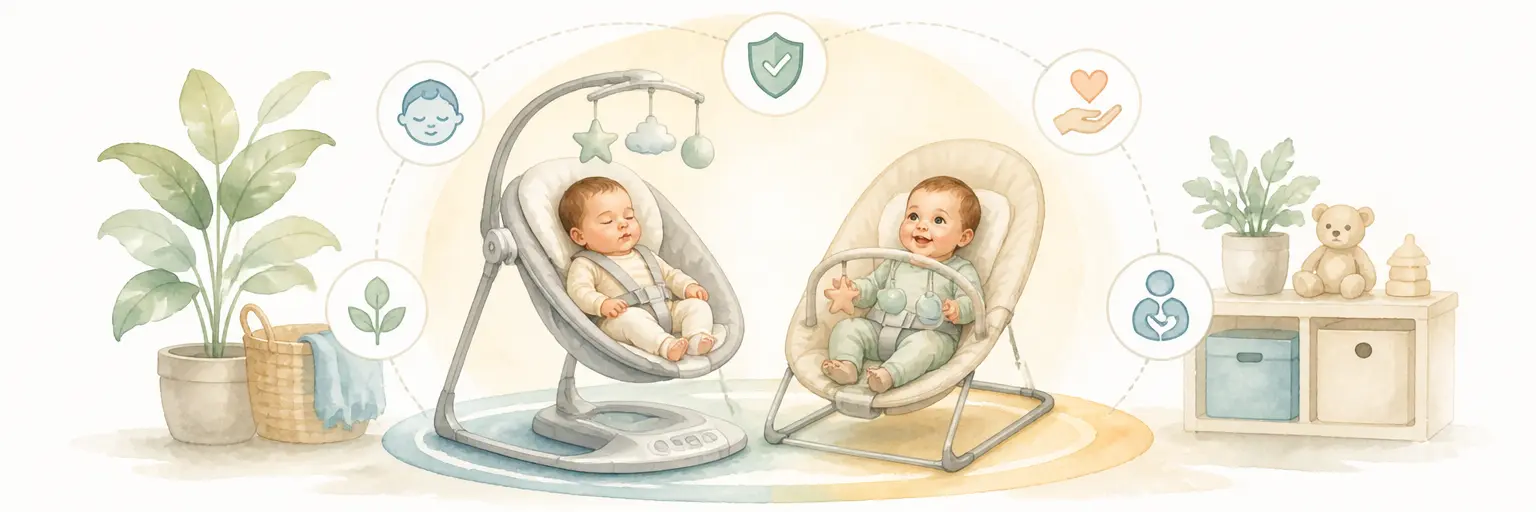
A baby swing usually moves automatically from side to side, front to back, or in a gliding motion. Swings are often larger and may include multiple speeds, timers, sounds, and reclining settings. A baby bouncer is generally smaller and moves when the baby kicks or when a parent gently bounces it. Some bouncers include vibration but do not provide continuous powered movement.
When comparing a baby swing and bouncer, consider your home space, portability needs, power options, cleaning requirements, and your baby’s preferences. A compact bouncer can be convenient for travel and room-to-room use, while a swing may offer more soothing features. Always check the manufacturer’s age, height, weight, and developmental guidance before placing your baby in either product.
🛡️ Baby Swing and Bouncer Safety Rules
The most important baby swing and bouncer safety rule is to use these products only for supervised, awake time. Place the swing or bouncer on a firm, level floor away from stairs, sofas, beds, cords, heaters, windows, pets, and other hazards. Use the built-in restraint system every time, even when your baby appears calm or is only using the product for a few minutes.
Never place a bouncer or swing on a table, countertop, bed, sofa, or other elevated surface, as movement can cause it to slide or tip. Follow the product’s assembly instructions and inspect the frame, recline mechanism, straps, buckles, and fabric regularly. Stop using the product when your baby reaches the maximum weight or height limit, attempts to sit up, rolls over, or reaches another manufacturer-defined milestone.
😴 Can Babies Sleep in a Swing or Bouncer?
Baby swings, bouncers, and rockers are not intended to replace a crib, bassinet, or other approved infant sleep space. If your baby falls asleep in a swing or bouncer, move them as soon as practical to a firm, flat, level sleep surface on their back. Keep the sleep area free from pillows, blankets, toys, positioners, and other soft items.
Inclined seating can allow a baby’s head to fall forward, which may interfere with breathing. For this reason, parents should avoid using a swing or bouncer for routine naps or overnight sleep. Supervision does not make an unsafe sleep surface safe; safe sleep guidance should always take priority over convenience.
✅ Choosing the Best Baby Swing or Bouncer
Look for a product with a stable base, secure three- or five-point harness, smooth adjustment controls, washable covers, clear instructions, and strong construction. A newborn-friendly recline may be useful for babies who cannot sit independently, but the product must still support the baby’s head and body correctly. Check for recalls, safety notices, certification information, and reliable customer reviews before purchasing.
Practical features can improve everyday use, including quiet operation, battery or mains power options, compact folding, machine-washable fabric, adjustable motion, and a timer. Avoid adding aftermarket cushions, head supports, blankets, toys, or accessories that were not supplied or approved by the manufacturer. The safest baby gear is used exactly as directed, rather than modified for extra comfort.
🧼 Cleaning, Maintenance, and Everyday Use
Regular cleaning is important because babies frequently spit up, drool, and spill milk. Follow the care label for washing fabric covers and use mild cleaning products on hard surfaces. Allow all parts to dry completely before reassembly, and never use a product if the harness, padding, frame, or locking mechanism is damaged.
Create a simple inspection routine by checking buckles, stitching, batteries, hinges, and stabilizing feet. Keep cords secured and out of reach, and remove small toy parts that could become choking hazards. Proper maintenance helps preserve hygiene, stability, and safe performance throughout the product’s usable life.
❓ Frequently Asked Questions About Baby Swings and Bouncers
👶 What is the best age to use a baby swing or bouncer?
Many baby swings and bouncers are designed for use from birth when the baby meets the product’s minimum weight and size requirements. Always read the manufacturer’s instructions because age guidance varies. Use the most reclined setting recommended for newborns and stop when your baby reaches the listed limit or begins trying to sit, roll, or climb out.
⚖️ Are baby bouncers safe for newborns?
A baby bouncer may be suitable for a newborn if it provides appropriate head and body support and is used on the floor with the harness secured. Keep your baby within sight and hearing, and use the bouncer only for supervised awake periods. Never use it as a routine sleep space or place it on an elevated surface.
😴 How long can a baby stay in a swing or bouncer?
There is no single time limit for every product, so follow the manufacturer’s instructions and use the device in moderation. Give your baby regular opportunities for holding, tummy time, floor play, and unrestricted movement. If your baby appears uncomfortable, slumps forward, becomes overtired, or needs feeding or a diaper change, remove them from the product.
🔒 Should I use the safety harness on a baby swing every time?
Yes. Secure the harness every time your baby uses a swing or bouncer, even during brief periods. The harness should be snug without being tight, and straps should be positioned according to the instructions. Do not add extra padding or loosen the restraint to accommodate bulky clothing.
🛒 What features should parents look for in a baby swing or bouncer?
Prioritize a stable base, secure harness, suitable recline, clear weight and age limits, washable materials, durable construction, and easy-to-follow instructions. Additional features such as vibration, music, timers, portability, and multiple motion settings are optional conveniences. The most important consideration is correct use, active supervision, and compliance with current safety guidance.