
When to Transition to the Next Size in Baby Clothing
Discover the essentials for a comfortable, practical baby wardrobe with BabyCareHub’s baby clothing guide 👶🧸 Learn how to choose soft, breathable fabrics, safe fastenings, and newborn-friendly layers for every stage. From everyday bodysuits and sleepsuits to seasonal baby clothing for warm summers and chilly winters, find helpful tips for building a versatile wardrobe that supports comfort, easy changing, and healthy development. 🌦️✨
6 articles
Hats for Babies: When and Why They're Essential
Winter Baby Clothing: The Best Ways to Keep Your Baby Warm
DIY Baby Clothes: Fun and Creative Projects for Parents
Understanding Baby Clothing Regulations: Ensuring Safety
Newborn Clothing MustHaves: What You Really Need (and What You Don't)
👶 Baby Clothing Guide: Essentials and Seasonal Wardrobe
Welcome to the Baby Clothing Guide: Essentials and Seasonal Wardrobe from BabyCareHub, your trusted resource for practical newborn and baby care advice. Choosing the right baby clothes can make daily routines easier, support comfortable sleep, and help protect your little one from changing temperatures. This guide explains what clothing essentials babies need, how to select safe and comfortable fabrics, and how to build a practical wardrobe for every season. Whether you are preparing for a newborn, shopping for baby shower gifts, or updating your child’s wardrobe, you will find helpful guidance on baby clothing sizes, newborn outfits, seasonal baby clothes, layering, sleepwear, and everyday essentials.
🧺 Newborn Clothing Essentials for Everyday Comfort
A newborn wardrobe should focus on comfort, convenience, and easy changes. Essential baby clothes often include bodysuits, sleepsuits, footed pajamas, soft trousers, cardigans, socks, hats, and lightweight layers. Wrap-style bodysuits and outfits with wide openings are especially useful during the first weeks because they reduce the need to pull clothing over a baby’s delicate head and neck.
Look for breathable materials, smooth seams, flexible waistbands, and secure fasteners. Practical features such as snap closures at the crotch make diaper changes faster and easier. BabyCareHub recommends choosing a small selection of newborn and 0–3 month clothing, while also having a few larger sizes available because babies grow quickly and sizing can vary between brands.
📏 Baby Clothing Sizes and How to Choose the Right Fit
Baby clothing sizes are usually based on age, height, weight, or a combination of these measurements. Newborn sizes may fit smaller babies for only a short time, while 0–3 month and 3–6 month clothing can provide more room for growth. Always check the manufacturer’s size chart and consider your baby’s body shape rather than relying on age labels alone.
Well-fitting baby clothes should allow free movement without being loose enough to create safety risks. Avoid garments that restrict the hips, pinch around the waist, or cover the hands and face. Check clothing regularly as your baby grows, and remove items that become tight, stretched, damaged, or difficult to fasten.
🌦️ Seasonal Baby Clothing for Warm and Cold Weather
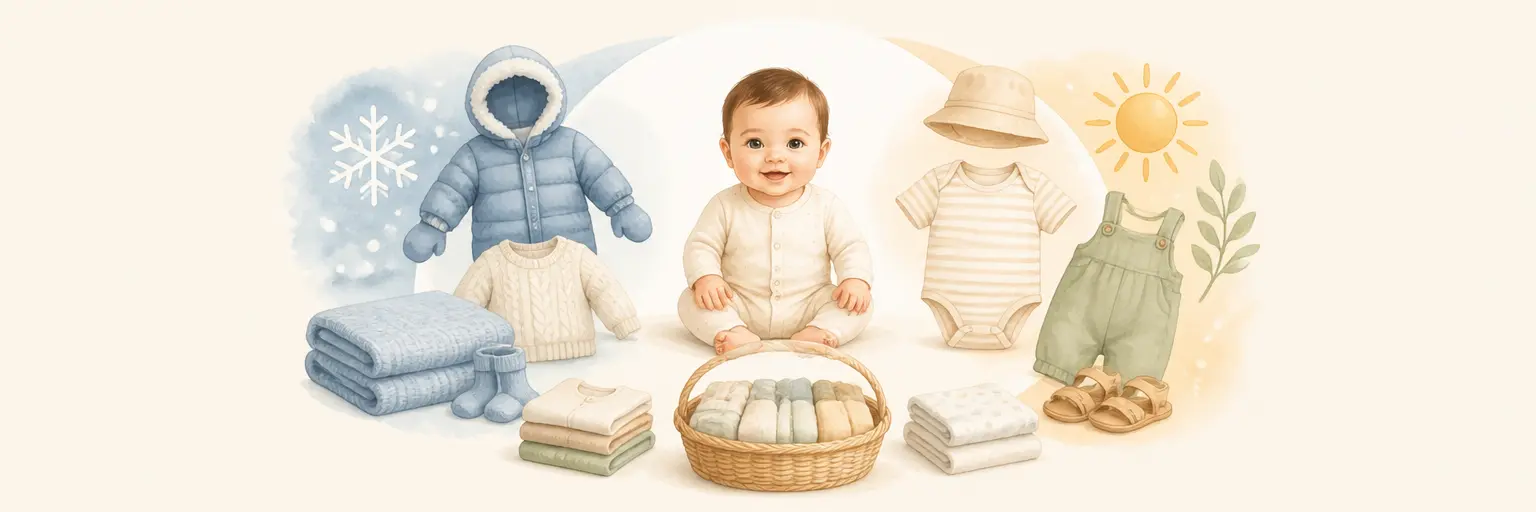
Seasonal baby clothing should protect your child from temperature changes while preventing overheating. In warm weather, choose lightweight cotton bodysuits, breathable rompers, sun hats, and loose-fitting outfits. In colder months, use soft base layers, warm sleepsuits, knitted cardigans, fleece layers, and weather-appropriate outerwear. Dressing babies in layers makes it easier to adjust clothing indoors and outdoors.
Babies can be sensitive to both heat and cold, so check their chest or back rather than relying only on their hands and feet. Layering is often safer and more practical than using one very thick garment. Remove extra layers when entering a warm room, and follow safe sleep guidance by keeping loose blankets, bulky clothing, and accessories away from the baby’s sleeping space.
🛏️ Baby Sleepwear and Safe Nighttime Dressing
Baby sleepwear should be comfortable, breathable, and suitable for the room temperature. Depending on the season, parents may choose cotton pajamas, footed sleepsuits, or wearable blankets designed for infant sleep. Clothing should fit securely around the neck and arms without being tight, and it should allow natural movement of the hips and legs.
For safe sleep, avoid dressing your baby in too many layers or using hats indoors while sleeping. Wearable sleep products should be selected according to the manufacturer’s size and temperature guidance. Check your baby regularly for signs of overheating, such as sweating, flushed skin, or a hot chest, and adjust layers when needed.
🌿 Choosing Safe Fabrics and Skin-Friendly Materials
Newborn and baby skin is delicate, making fabric choice an important part of clothing selection. Soft cotton, organic cotton, bamboo-based fabrics, and other breathable materials may help reduce irritation for many babies. Choose clothing with gentle seams and avoid rough labels, stiff decorations, or fabrics that feel scratchy against the skin.
If your baby has sensitive skin, eczema, or frequent irritation, wash new clothes before use with a mild, fragrance-free detergent. Simple designs with fewer dyes, trims, and embellishments can be easier on sensitive skin. Inspect garments for loose threads, small buttons, beads, or detachable decorations that could become hazards.
🧼 Baby Clothing Care, Washing, and Organization
Baby clothes require frequent washing because of milk spills, diaper leaks, drooling, and food stains. Sort clothing by color and fabric type, follow the care label, and use gentle washing products when appropriate. Stain treatment is easier when spills are handled promptly, but never mix cleaning products or use harsh chemicals on clothing that touches your baby’s skin.
Organize the baby wardrobe by size, season, and clothing type to make dressing and laundry more efficient. Keep frequently used bodysuits and sleepsuits within easy reach, and store outgrown items separately. A simple, organized wardrobe saves time and helps parents quickly identify what fits and what needs replacing.
🛍️ Building a Practical Baby Wardrobe on a Budget
Babies grow rapidly, so a practical wardrobe does not need to include large quantities of every item. Start with versatile basics that can be mixed and matched, including bodysuits, sleepsuits, soft trousers, socks, bibs, and weather-appropriate layers. Choose durable pieces that can withstand frequent washing and daily use.
To manage costs, consider buying multipacks, accepting clean hand-me-downs, and shopping for the next size during seasonal sales. Avoid purchasing too many newborn outfits before birth because babies may outgrow them quickly. Prioritize comfort, safety, ease of dressing, and suitability for your climate over fashion trends.
❓ Frequently Asked Questions About Baby Clothing
How many newborn clothes does a baby need?
Most families can begin with several bodysuits, sleepsuits, soft trousers, socks, hats, and a few seasonal layers. The exact amount depends on how often you do laundry and whether your baby experiences frequent spit-up or diaper leaks. Having around six to eight everyday outfits can provide a useful starting point without overbuying.
What should a newborn wear in different seasons?
In warm weather, lightweight breathable clothing is usually appropriate, while cooler weather calls for layered outfits. Add or remove layers based on the room and outdoor temperature. Always check your baby’s chest or back for comfort and avoid excessive bundling, particularly during sleep or travel.
Should babies wear hats indoors?
Babies may need hats outdoors in cold or sunny conditions, but hats are generally not recommended for routine indoor sleep because they can contribute to overheating or slip over the face. Use weather-appropriate clothing and monitor your baby’s temperature instead.
How can I tell if baby clothes fit correctly?
Clothing should allow your baby to move, bend, and stretch comfortably. Fasteners should close without pulling, waistbands should not leave deep marks, and sleeves or trouser legs should not restrict circulation. Replace garments that become tight, short, damaged, or difficult to put on.
What fabrics are best for babies with sensitive skin?
Soft, breathable fabrics such as cotton or organic cotton are popular choices for babies with sensitive skin. Wash clothes before use with a mild, fragrance-free detergent and avoid scratchy seams, strong dyes, and rough decorations. If irritation continues, speak with a qualified healthcare professional for personalized advice.