
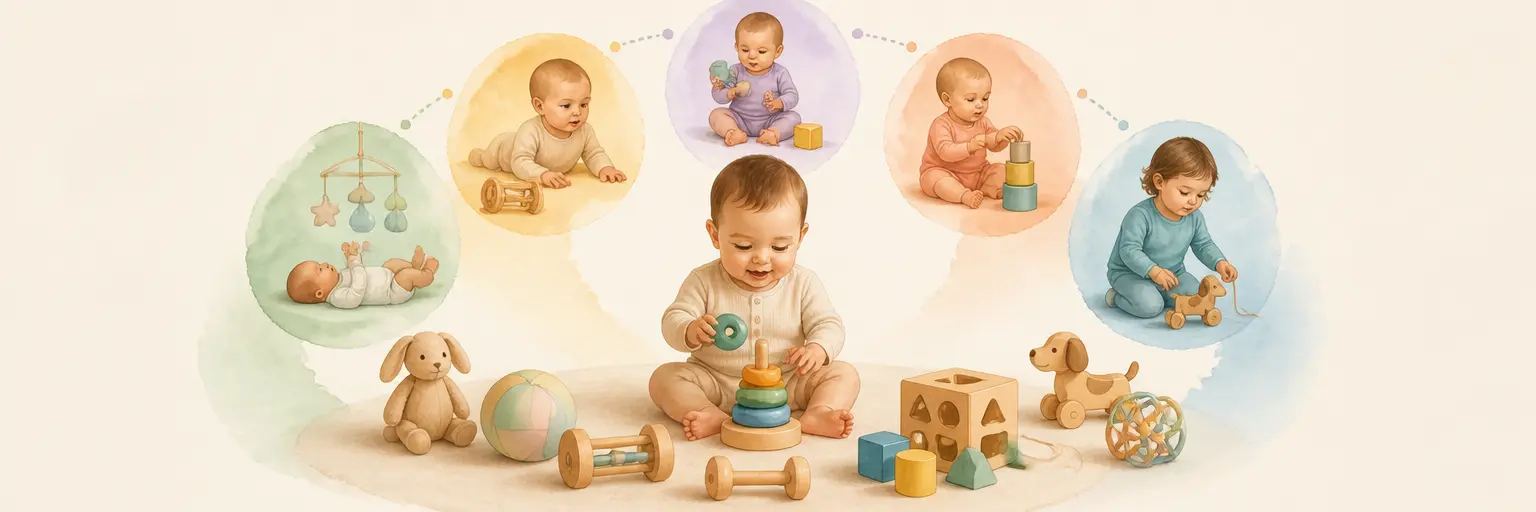
Toys for Baby's First Steps: Promoting Mobility and Confidence
Discover the best baby toys for every stage with BabyCareHub’s expert guide! 🧸 Explore safe, age-appropriate and developmental toys that support sensory learning, motor skills, coordination, creativity, and early cognitive growth. From newborn-friendly rattles to engaging activity toys for growing babies, find trusted recommendations, safety tips, and practical advice to help your little one learn through play. Choose smarter, safer toys for happy development! 👶✨
7 articles
Baby Toys for Every Budget: Affordable Options for Parents
The Joy of Play: Celebrating the Wonder of Babyhood
The Magic of Mobiles: Stimulating Visual Tracking and Focus
Water Play Toys for Babies: Fun and Safe Exploration
The Art of Toy Rotation: Keeping Baby Engaged and Excited
Toys That Encourage Baby's Curiosity and Exploration
🧸 Baby Toy Guide: Age-Appropriate and Developmental Toys
Choosing the right toys for your baby can support early learning, sensory exploration, motor skills, and joyful bonding. This Baby Toy Guide from BabyCareHub helps first-time parents discover age-appropriate baby toys, developmental toys, safe newborn products, and engaging play ideas for every stage of infancy. Explore practical guidance on selecting toys for newborns, infants, and growing babies while keeping safety, simplicity, and developmental needs in mind.
👶 Best Baby Toys by Age and Developmental Stage
Babies develop rapidly, and their toy preferences change as they gain new skills. Our guides explain which baby toys are suitable by age, from high-contrast newborn toys and soft rattles to activity gyms, stacking cups, teethers, and early problem-solving toys. Parents can learn what to introduce during the newborn, three-month, six-month, nine-month, and twelve-month stages.
Each recommendation focuses on how a toy can encourage age-appropriate development without overwhelming your baby. Discover simple play activities that support visual tracking, reaching, grasping, sitting, crawling, standing, and early communication while helping parents create a safe and stimulating play environment at home.
🧠 Developmental Toys for Learning Through Play
Developmental baby toys can encourage important skills through natural, enjoyable play. Find information about toys that support fine motor skills, gross motor development, hand-eye coordination, sensory awareness, early language, cause-and-effect learning, and problem-solving. These resources help parents understand the purpose behind popular infant toys and activity products.
You will also learn how to choose open-ended toys that grow with your child. Soft blocks, nesting toys, sensory balls, baby-safe mirrors, musical toys, and interactive books can provide different learning opportunities as your baby becomes more curious and independent.
🌈 Sensory Toys for Babies and Infants
Sensory play introduces babies to safe textures, sounds, colors, shapes, and movement. Our content covers sensory toys for babies, including textured teethers, crinkle books, soft rattles, sensory balls, activity mats, and toys designed to encourage touch, sight, and hearing. These products can make everyday play more engaging while supporting early sensory development.
Parents will find guidance on choosing gentle, age-appropriate sensory experiences. Learn how to avoid overstimulation, observe your baby’s responses, and offer short, supervised play sessions that match your child’s mood, energy level, and developmental abilities.
🦷 Teething Toys and Comforting Baby Products
Teething can be an uncomfortable stage for many babies. This section explores safe teething toys, chilled teethers, soft silicone options, and other baby products that may provide comfort during gum irritation. You can also learn which features to look for, such as easy-to-hold shapes, suitable materials, and simple designs that are easy to clean.
Safety remains essential when selecting teething products. Our guides encourage parents to check manufacturer recommendations, inspect toys regularly for damage, and avoid products with loose parts, unsafe materials, or features that could create a choking hazard.
🛡️ Safe Baby Toys and Toy Safety Tips
The safest baby toy is one that matches your child’s age, abilities, and stage of development. Learn how to identify safe baby toys by checking labels, construction, size, material quality, and durability. Our content also explains why small parts, long cords, detachable components, and poorly secured batteries can pose serious risks.
Discover practical toy safety habits for daily use, including regular inspections, cleaning routines, safe storage, and active supervision. BabyCareHub helps parents build safer play spaces by encouraging them to follow product instructions and consult current safety guidance when needed.
📚 Baby Books, Music, and Interactive Play
Interactive books, nursery songs, musical toys, and simple conversations can support early communication and social development. Explore first books for babies, high-contrast picture books, touch-and-feel pages, and age-appropriate musical toys that encourage listening, visual attention, imitation, and shared parent-child interaction.
These guides also provide easy ideas for incorporating play into everyday routines. Reading together, singing, naming objects, and responding to your baby’s sounds can strengthen bonding while helping develop early language and cognitive skills.
🧼 Cleaning, Organizing, and Caring for Baby Toys
Baby toys are frequently touched, mouthed, and carried around, making regular cleaning important. Learn how to care for washable baby toys, silicone teethers, fabric books, plastic activity toys, and plush products according to their materials and manufacturer instructions.
Good organization can also improve safety and make playtime easier. Find practical suggestions for rotating toys, removing damaged items, storing products hygienically, and keeping only a manageable selection available so your baby can explore without unnecessary clutter.
❓ Frequently Asked Questions About Baby Toys
What toys are best for a newborn baby?
Newborns often benefit from simple toys such as high-contrast cards, soft rattles, baby-safe mirrors, gentle mobiles, and supervised tummy-time toys. Choose lightweight products with no loose parts and focus on toys that encourage visual tracking, listening, and early reaching.
When should babies start using developmental toys?
Babies can begin using developmentally appropriate toys from birth, provided the products are designed for their age and used under supervision. Start with simple sensory and visual toys, then introduce more interactive products as your baby develops stronger head control, grasping skills, sitting ability, and curiosity.
How do I choose age-appropriate baby toys?
Check the recommended age range, safety labeling, size, materials, and design. Select toys that match your baby’s current abilities rather than choosing products that are too advanced. Avoid small detachable pieces, long cords, sharp edges, and items that could fit completely inside a baby’s mouth.
Are electronic toys necessary for baby development?
Electronic toys are not necessary for healthy development. Simple toys and responsive interaction with parents can provide valuable opportunities for learning. If you choose an electronic toy, use it in moderation and prioritize products that encourage active participation rather than passive screen-like entertainment.
How often should baby toys be cleaned?
Clean toys regularly and whenever they become visibly dirty, are dropped in an unhygienic area, or are shared during illness. Teething toys and frequently mouthed items may need more frequent cleaning. Always follow the manufacturer’s care instructions and inspect toys for cracks, tears, or loose parts.