
Best Toy Brands for Baby's First Year: A Parent's Guide
Discover how to choose developmentally appropriate toys for your baby’s first year 🧸✨ with practical guidance on age, safety, and skill-building. Explore engaging baby toys that support sensory exploration, motor skills, language development, and early learning—from tummy-time essentials to interactive play ideas. Give your little one safe, meaningful ways to grow and discover at every milestone with BabyCareHub.
5 articles
Baby's First Toys: A MonthbyMonth Guide to Developmental Play
Grasping and Exploring: Toys That Encourage Fine Motor Skill Development
Textured Toys: Why Sensory Exploration is Important for Baby
The Power of Play: How Toys Support Baby's Emotional Development
🧸 Selecting Developmentally Appropriate Toys for Baby’s First Year
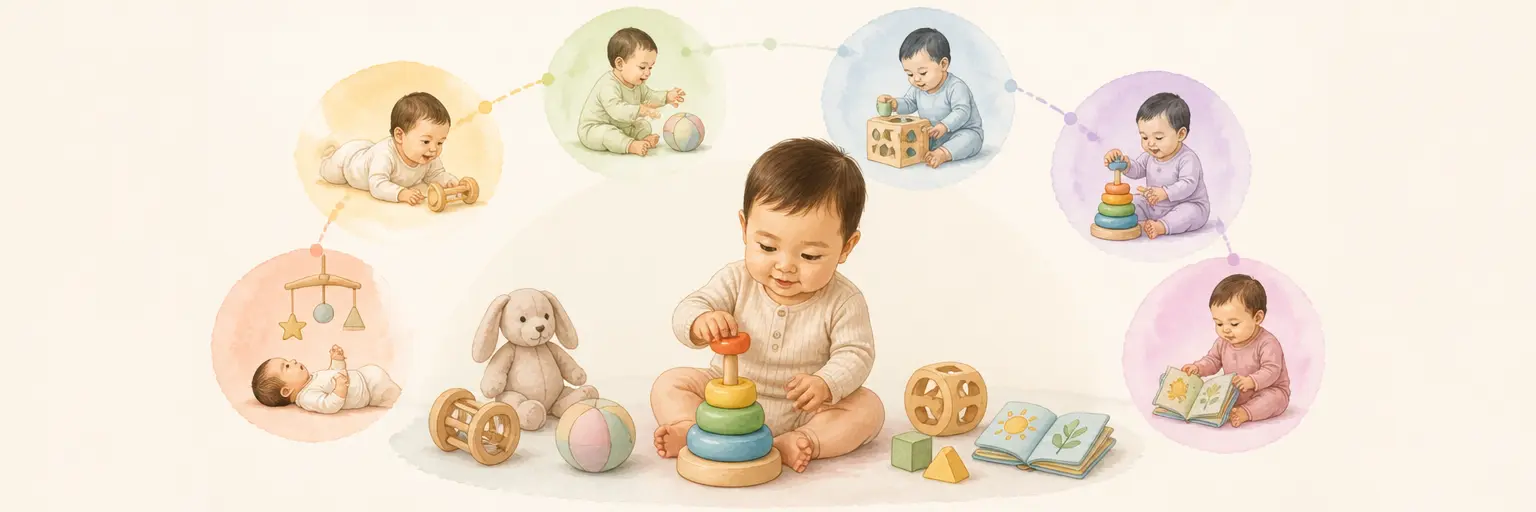
Choosing the right toys for a baby’s first year can support early learning while making playtime safe, engaging, and enjoyable. At BabyCareHub, first-time parents can discover how to select developmentally appropriate baby toys that match a child’s changing abilities, from newborn sensory exploration to active crawling, grasping, sitting, and standing. Learn how age-appropriate toys can encourage cognitive development, motor skills, language growth, sensory awareness, and social-emotional development without overwhelming your baby.
👶 Best Toys for Newborns and Young Babies
During the first few months, babies are beginning to notice faces, sounds, colors, movement, and textures. The best newborn toys are simple, lightweight, and easy to observe, such as high-contrast cards, soft rattles, baby-safe mirrors, crinkle books, and gentle musical toys. These items can encourage visual tracking, auditory awareness, early focus, and sensory exploration.
Parents should choose toys made from non-toxic, washable, and durable materials with no loose parts. Toys should always be used under supervision and kept within an appropriate distance from the baby. At this stage, your voice, face, and interaction remain the most valuable developmental tools, so use toys to support talking, singing, smiling, and responsive play.
✋ Toys That Encourage Grasping and Fine Motor Skills
As babies grow, they begin reaching for objects, holding toys, transferring them between hands, and bringing safe items to their mouths. Developmental toys for babies may include easy-grip teethers, soft blocks, textured balls, stacking rings, and rattles designed for small hands. These toys help build hand-eye coordination, grasp strength, finger control, and early fine motor skills.
Look for toys with handles, varied textures, and simple shapes that are comfortable for your baby to hold. Avoid toys that are too heavy, difficult to grip, or covered with detachable decorations. Encouraging your baby to reach, grasp, shake, and explore at their own pace supports natural learning and builds confidence through play.
🧠 Toys for Cognitive and Sensory Development
Sensory toys introduce babies to different sights, sounds, textures, and movements. Soft activity cubes, textured books, simple cause-and-effect toys, rattles, and baby-safe mirrors can help babies understand that their actions create responses. These experiences support early problem-solving, memory, attention, curiosity, and sensory processing.
Choose toys that offer one or two clear features rather than products with excessive lights, sounds, or buttons. Babies benefit from time to explore without constant stimulation. Simple toys often encourage more creative and focused play, especially when parents describe what the baby is seeing, touching, or hearing.
🧍 Toys for Tummy Time, Movement, and Gross Motor Development
Tummy time toys can motivate babies to lift their heads, turn toward objects, reach forward, roll, and eventually crawl. Recommended options include soft play mats, baby-safe mirrors, colorful activity toys, and lightweight objects placed just beyond comfortable reach. These toys can support neck strength, upper-body control, balance, coordination, and gross motor development.
Always place babies on their backs for sleep and use tummy time only while they are awake and supervised. Adjust toys as your baby’s abilities change, offering encouragement without forcing movement. The goal is to create a safe play environment that invites active discovery rather than expecting babies to meet milestones on a fixed schedule.
🗣️ Toys That Support Language and Social-Emotional Growth
Toys can create opportunities for conversation, imitation, turn-taking, and shared attention. Board books, soft dolls, puppets, musical instruments, and pretend-play objects can support early language development, communication skills, emotional awareness, and social connection. Even very young babies benefit when caregivers name objects, copy sounds, and respond to facial expressions.
Choose toys that encourage interaction instead of replacing it. Read simple books together, sing songs, imitate your baby’s babbles, and demonstrate gentle use of each toy. These everyday moments help babies connect sounds with meaning and learn that communication is enjoyable and responsive.
🛡️ Baby Toy Safety and Age-Appropriate Selection
Safety should be the first consideration when selecting toys for a baby’s first year. Check the recommended age range, inspect toys regularly, and avoid small parts, loose buttons, long cords, sharp edges, magnets, and accessible batteries. Any object small enough to fit through a toilet paper roll may present a choking risk, so keep it away from babies and young children.
Follow manufacturer instructions and supervise play, particularly when babies are mouthing, rolling, crawling, or pulling themselves up. Select toys that are sturdy, easy to clean, and made from baby-safe materials. Remember that developmental labels are useful guides, but every baby develops differently; choose toys based on your baby’s current skills, interests, and safety needs.
❓ Frequently Asked Questions About Baby Developmental Toys
What are the best toys for a baby’s first three months?
Newborns and young babies often enjoy high-contrast cards, soft rattles, baby-safe mirrors, crinkle books, and gentle musical toys. These support visual tracking, listening, sensory awareness, and early interaction. Always choose lightweight, washable toys and supervise use.
How many toys does a baby need during the first year?
Babies do not need a large collection of toys. A small selection of safe, open-ended toys can provide plenty of developmental value. Rotating a few items every several days can renew interest while reducing overstimulation and clutter.
Are electronic toys good for baby development?
Electronic toys can offer sounds, lights, or simple cause-and-effect experiences, but they should not replace hands-on play or caregiver interaction. Simple toys such as blocks, books, rattles, and stacking cups often encourage more active exploration and shared communication.
When should babies start using stacking toys and blocks?
Soft blocks and large stacking toys may be introduced when babies can safely grasp and explore objects, often during the second half of the first year. At first, babies may mouth, bang, or knock them over. Choose large pieces with no small detachable parts and supervise play.
How can I tell whether a toy is developmentally appropriate?
Check the manufacturer’s age recommendation, inspect the toy for safety hazards, and consider whether your baby can use it with reasonable effort. An appropriate toy should encourage exploration without causing frustration or overstimulation. Select toys that match your baby’s current abilities while offering a small, manageable challenge.