
Baby's First Toys: A MonthbyMonth Guide to Developmental Play

Welcome to BabyCareHub, your ultimate guide to navigating the incredible journey of parenthood! Are you ready to unlock the secrets to happy, healthy baby development? We've got you covered. Discover our expert advice on everything from feeding schedules to soothing techniques, and dive right into our comprehensive guide on Best baby toys by month, ensuring your little one gets the perfect playthings to stimulate their growth at every stage. Let's embark on this exciting adventure together!
- Understanding Your Baby's Developmental Milestones: The Foundation for Toy Selection
- Best Baby Toys by Month: A Comprehensive Guide
- Choosing Safe and Appropriate Baby Toys: A Parent's Checklist
- Beyond Toys: Creating a Stimulating Play Environment
- Frequently Asked Questions
- Final Reflection: The Power of Play in a Child's First Year
- Unlock Your Baby's Play Potential!
Understanding Your Baby's Developmental Milestones: The Foundation for Toy Selection
Choosing the best baby toys is more than just picking something cute; it's about selecting items that support your baby's incredible journey of growth and development. This month-by-month guide focuses on selecting developmentally appropriate toys for your little one's first year, ensuring they receive the stimulation needed for healthy cognitive, motor, and social-emotional development.
We'll explore the key milestones to look for at each stage, and suggest toy types that can help nurture your baby's burgeoning abilities. Understanding these milestones is key to finding the best baby toys by month, maximizing their learning potential and fostering a strong parent-child bond through playful interaction.
This guide will equip you with the knowledge to select toys that actively contribute to your baby's overall well-being and development, making playtime both enjoyable and enriching. Remember, every baby develops at their own pace, so use this guide as a helpful reference rather than a rigid schedule.
Cognitive Development in the First Year: What to Expect
Your baby's brain is developing at an astonishing rate during their first year. In the initial weeks, they're primarily focused on basic sensory experiences – sights, sounds, smells, textures, and tastes. As they grow, their cognitive abilities expand dramatically. Here's a glimpse into this exciting journey:
- 0-3 Months: Focus is on high-contrast visuals and simple sounds. They begin to track objects with their eyes and respond to familiar voices.
- 4-6 Months: Babies start to grasp objects, explore their textures, and show interest in cause-and-effect relationships (e.g., shaking a rattle). They also begin to recognize faces and understand simple gestures.
- 7-9 Months: Object permanence emerges (understanding that things still exist even when out of sight). Babies engage in more complex play, experimenting with sounds and actions.
- 10-12 Months: Problem-solving skills begin to develop. They may try to fit shapes into holes, stack blocks, or imitate actions. Language comprehension increases significantly.
This rapid cognitive development necessitates a thoughtful selection of toys. For newborns, high-contrast mobiles and soft textured toys are ideal. As they grow, introduce toys that encourage exploration, manipulation, and problem-solving, such as stacking cups, simple puzzles, and shape sorters. Remember to always supervise your baby during playtime.
Motor Skill Development: From Reflexes to Reaching
Motor skill development encompasses both gross motor skills (large movements like rolling, crawling, and walking) and fine motor skills (small movements like grasping, reaching, and manipulating objects). The progression is remarkable:
- 0-3 Months: Newborns exhibit reflexes like grasping and sucking. They gradually gain head control and begin to lift their heads when lying on their stomachs.
- 4-6 Months: Rolling over becomes a common milestone. They start reaching for and grasping objects with their hands.
- 7-9 Months: Crawling or other forms of mobility emerge. Pincer grasp (using thumb and forefinger) develops, allowing for finer manipulation of objects.
- 10-12 Months: Pulling themselves up to stand and taking their first steps are significant achievements. Fine motor skills improve further, allowing for more precise actions.
To support motor skill development, choose toys that encourage reaching, grasping, and manipulating. Soft blocks, teethers, rattles, and stacking toys are excellent choices in the early months. As they become more mobile, consider toys that encourage crawling, walking, and pushing, such as push-and-pull toys and activity walkers.
Play is crucial for social and emotional growth. Through interaction with caregivers and toys, babies learn about emotions, relationships, and communication.
- 0-3 Months: Babies respond to facial expressions and voices, showing early signs of social engagement. They find comfort in physical closeness.
- 4-6 Months: They begin to smile and laugh more readily, showing increasing enjoyment of social interaction. They may start to show preference for certain people.
- 7-9 Months: Stranger anxiety may develop, reflecting their growing understanding of social boundaries. They begin to engage in simple social games, such as peek-a-boo.
- 10-12 Months: Babies show more complex social interactions, such as waving goodbye or playing simple games with others. They begin to understand shared attention.
Toys that encourage interaction and bonding are invaluable. Soft dolls, cuddly animals, and interactive toys that respond to touch or sound can help build a strong parent-child bond and foster emotional development. Remember that your presence and engagement during playtime are just as important as the toys themselves. Reading books, singing songs, and engaging in face-to-face interactions are essential for social-emotional growth. 🧸
Best Baby Toys by Month: A Comprehensive Guide
Month 1: Sensory Stimulation and Calming Toys
Newborns have limited motor skills, but their senses are rapidly developing. The best baby toys for this month focus on sensory stimulation and calming techniques to soothe fussiness and promote a sense of security. Choosing the right toys can significantly impact your baby's early development and overall well-being. This is a crucial time for establishing positive sensory experiences.
Best Sensory Toys for Newborns: Focusing on Sight, Sound, and Touch
At this stage, high-contrast visuals are particularly engaging for newborns. Think black and white patterns, or bold primary colors. Their hearing is also developing, so soft sounds and gentle music are ideal. Tactile stimulation through soft, textured materials is also important.
Here's a breakdown of excellent sensory toys for month-one babies:
- High-contrast mobiles: These mobiles often feature black and white patterns or bold primary colors, stimulating visual development. The movement also helps to capture their attention.
- Soft, textured books: Books with crinkly pages or different textures provide tactile stimulation. Choose books with simple, high-contrast images.
- Soft rattles: Gentle rattles with soft sounds can be fascinating for newborns. Ensure the rattle is lightweight and easy for tiny hands to grasp (eventually! ).
- Musical toys: Toys that play soft, calming music or nature sounds can be soothing. Avoid toys with loud, jarring noises.
Remember to always supervise your baby while they are playing with toys to ensure their safety.
Recommended Calming Toys for Infants: Addressing Colic and Fussiness with Appropriate Toys
Colic and fussiness are common in newborns. Certain toys can help soothe a distressed baby. The key is to choose toys that provide a sense of comfort and security.
Some options include:
- Soft, cuddly toys: A soft, plush toy can provide comfort and a sense of security. Choose a toy that is appropriately sized and made of soft, hypoallergenic materials.
- Baby swings or bouncers: Gentle rhythmic motion can help soothe a fussy baby. These are not strictly toys, but they can be incredibly effective in calming a crying infant.
- White noise machines: These machines produce a consistent, calming sound that can help to block out distracting noises and soothe a baby to sleep.
Month 2: Encouraging Interaction and Grasping
By month two, babies start to develop their grasping skills and show increased interest in interacting with their surroundings. Choosing toys that encourage grasping, reaching, and exploring different textures becomes vital for their fine motor skill development.
Developing Fine Motor Skills with Textured Toys
This is a great time to introduce toys that help refine hand-eye coordination and strengthen those tiny muscles. The focus should be on toys that encourage grasping and manipulating objects.
Here are some excellent options:
| Toy Type | Description | Benefits |
|---|---|---|
| Teethers | Soft, textured teethers that are safe for babies to chew on. | Soothes teething pain, provides tactile stimulation, and strengthens jaw muscles. |
| Fabric blocks | Soft blocks with various textures and colors. | Encourages grasping and stacking, develops hand-eye coordination. |
| Finger puppets | Small, soft puppets that fit on fingers. | Encourages interaction and storytelling, develops social skills. |
| Crinkle toys | Toys that make crinkling sounds when squeezed. | Provides auditory and tactile stimulation. |
Introducing Rattles and Soft Toys: Stimulating Visual Development with High-Contrast Toys
While high-contrast visuals remain important, you can now introduce more variety in colors and patterns. Rattles become more engaging as babies' grasping skills improve. The sound adds another layer of sensory stimulation.
Consider these choices:
- Rattles with different textures: Rattles made from various materials (wood, plastic, fabric) offer diverse tactile experiences.
- Soft toys with different textures: Introduce a variety of textures like plush, corduroy, and satin.
- Simple shape sorters: These introduce the concept of shapes and problem-solving, though mastery will come later. Choose ones with large, easy-to-grasp pieces.
Remember to always prioritize safety when selecting toys for your baby. Ensure that all toys are age-appropriate and free from small parts that could pose a choking hazard. Regularly inspect toys for damage and discard any that are broken or worn. Enjoy this exciting stage of development with your little one! 🎉
Month 3: Exploring Sounds and Textures
At three months old, your baby is beginning to actively engage with their surroundings. Their senses are developing rapidly, and they are particularly fascinated by sounds and textures. This is the perfect time to introduce toys that stimulate these senses, laying the groundwork for future cognitive development. Think about the joy on their face when they hear a rattle or the wonder in their eyes as they explore a soft, textured blanket.
This sensory exploration is crucial for brain development and overall well-being. Providing a variety of textures and sounds helps your little one learn to differentiate and categorize their experiences, strengthening neural connections and improving cognitive processing. Remember, at this age, simple is best. Avoid overly complex toys with small parts that could pose a choking hazard.
Interactive Toys for Promoting Sensory Exploration
Interactive toys designed for this age group often focus on stimulating auditory and tactile senses. Rattles, for instance, are classic choices for a reason. The sound they make when shaken is captivating for babies, encouraging them to reach, grasp, and shake the toy, strengthening their hand-eye coordination. Similarly, soft toys with different textures—think crinkled fabrics, plush materials, and even slightly bumpy surfaces—offer a rich sensory experience. These toys not only entertain but also help your baby learn about the world through touch.
Consider also toys that make sounds when squeezed or pressed, encouraging cause-and-effect learning. The key is to offer a variety of options, rotating them regularly to keep your baby engaged and prevent boredom. Remember to supervise your baby at all times during playtime to ensure their safety. Observing their reactions to different textures and sounds will give you valuable insights into their preferences and developmental progress.
Introducing Teethers and Crinkle Toys: Choosing Safe and Non-Toxic Toys for your 3-Month-Old
As your baby's gums begin to swell in preparation for teething, introducing safe and non-toxic teethers becomes crucial. Look for teethers made from materials like silicone or natural rubber, avoiding those containing BPA or phthalates. The textures of these teethers can provide soothing relief for your baby's sore gums. Crinkle toys, often made from thin plastic or fabric, provide another engaging sensory experience. The crinkling sound is surprisingly captivating, while the varied textures further stimulate tactile exploration.
Remember to check the toys regularly for any signs of damage or wear and tear. Discard any toy that shows signs of deterioration to prevent potential choking hazards. Prioritizing safety and selecting non-toxic materials is paramount in safeguarding your baby's health and well-being during this crucial developmental stage. Always supervise your baby when they are using teethers or crinkle toys.
Month 4: Building Strength and Coordination
By four months old, your baby's motor skills are rapidly developing. They are becoming stronger and more coordinated, displaying increased control over their movements. This is the perfect time to introduce toys that encourage reaching, grasping, and manipulating objects. These activities are vital for building hand-eye coordination, fine motor skills, and overall physical development. The increased dexterity also contributes to their cognitive development, as they begin to understand cause and effect. For example, shaking a rattle to make a noise is a simple yet powerful lesson in cause and effect.
Toys that Encourage Reaching and Grasping
Toys designed to encourage reaching and grasping should be easily accessible and visually appealing. Consider brightly colored rattles, soft blocks, or textured balls. These toys should be large enough to avoid choking hazards but small enough to be easily grasped by your baby's developing hands. Choose toys with different textures and sounds to keep your baby engaged and stimulate multiple senses.
The act of reaching and grasping is not just about physical skill; it's also a crucial step in developing problem-solving skills. Your baby learns to anticipate the outcome of their actions, further enhancing cognitive development. Remember to offer a variety of toys and rotate them regularly to maintain your baby's interest and prevent boredom.
Introducing Stacking Toys and Blocks: Promoting Tummy Time with Engaging Toys
Stacking toys and large, soft blocks are excellent choices for promoting tummy time and strengthening core muscles. Tummy time is crucial for developing neck and shoulder strength, which are essential for later milestones like sitting and crawling. Stacking toys, even simple ones with only a few pieces, encourage your baby to reach, grasp, and stack the blocks.
This activity enhances fine motor skills and hand-eye coordination. The success of stacking a block, even if it only stays upright for a few seconds, boosts their confidence and encourages further exploration. Large, soft blocks are also ideal for tummy time, providing a comfortable and engaging surface for your baby to push against, strengthening their muscles and improving their overall body awareness.
Remember to always supervise your baby during tummy time and ensure the play area is safe and free from hazards. The combination of fun and physical activity makes these toys invaluable for your baby's overall development.
Month 5: Cause and Effect Play
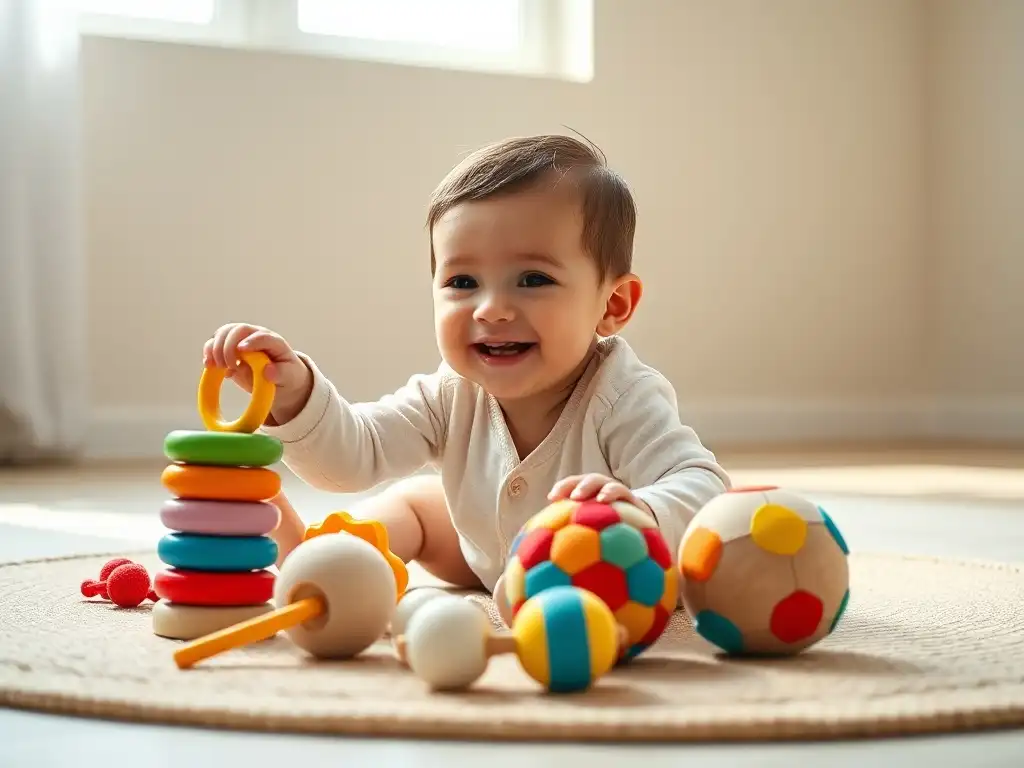
At five months old, your baby is starting to understand that their actions have consequences. This is a crucial stage in their cognitive development, and introducing toys that emphasize cause and effect can significantly boost their learning. They are fascinated by watching things move and react to their touch. This is the perfect time to introduce toys that encourage exploration and discovery through simple actions and reactions.
Babies at this age are also developing their hand-eye coordination, and cause-and-effect toys help refine this skill. The joy of making something happen—a rattle shaking, a toy spinning—is incredibly rewarding for them, fostering a sense of agency and control over their environment. This playful exploration lays the groundwork for future problem-solving abilities.
Toys that Introduce Simple Cause and Effect: Developing Problem-Solving Skills Through Play
Simple toys that offer immediate feedback are ideal for five-month-olds. Think rattles with different textures and sounds, soft books with crinkly pages, or stacking cups that make a satisfying "clunk" when nested. These toys provide a direct link between the baby's action (shaking, turning, stacking) and the resulting sensory experience (sound, texture, visual change).
For example, a toy that plays music when a button is pressed teaches them the connection between pressing the button and the musical reward. This basic problem-solving—understanding the relationship between action and outcome—is a fundamental building block for more complex cognitive skills later in life. Remember to supervise your baby at all times during playtime to ensure their safety.
Choosing Toys that Encourage Exploration and Discovery
When selecting cause-and-effect toys for your five-month-old, prioritize safety and durability. Opt for toys made from non-toxic materials, with no small parts that could pose a choking hazard. Look for toys with bright colors, contrasting patterns, and a variety of textures to stimulate your baby's visual and tactile senses. Consider toys that offer different sensory experiences, like a teether that also makes a noise when squeezed or a soft toy with different textures on each part.
This variety keeps playtime engaging and helps your baby explore different ways to interact with their environment. Remember that the best toys are often the simplest ones. Avoid overly complex or electronic toys at this stage; focus on toys that encourage hands-on interaction and discovery.
Month 6: Sitting and Reaching Toys
Six-month-olds are reaching developmental milestones, including improved head control and the ability to sit unsupported (or with minimal support). This newfound independence opens up a world of possibilities for play! They are now more adept at grasping objects and exploring their environment. Toys designed to encourage sitting and reaching skills can help refine their motor skills and spatial awareness. This is also a great time to introduce bath toys, which add a fun dimension to bath time.
Toys that Support Sitting and Reaching Skills
Toys that encourage your baby to sit up and reach for them are crucial at this stage. Think of activity gyms or playmats with hanging toys that are just out of reach, prompting your baby to stretch, reach, and grasp. These toys help strengthen their core muscles, improve hand-eye coordination, and develop their problem-solving skills as they figure out how to reach and grab the desired toy.
Consider toys with different textures and shapes to stimulate their senses and encourage exploration. Soft blocks, textured balls, and brightly colored rattles are all excellent choices. Remember to supervise your baby at all times, especially when they are sitting up, to prevent falls or injuries.
Introducing Bath Toys: Safe Toy Selection for the 6-Month-Old
Bath time is a great opportunity for playful learning! Introducing bath toys at six months can make bath time more enjoyable and educational. However, it's crucial to choose safe and appropriate toys. Opt for toys made from non-toxic, waterproof materials that are easy to clean and dry. Avoid toys with small parts that could detach and pose a choking hazard.
Floating toys, squeezable bath toys, and cups and containers that can be filled and emptied are all excellent choices. These toys encourage sensory exploration, hand-eye coordination, and problem-solving skills, all while making bath time more fun. Always supervise your baby during bath time, even when using bath toys. Remember to thoroughly rinse and dry all bath toys after each use to prevent the growth of mold and mildew.
Month 7-12: Expanding Skills and Interests
By seven months, your baby is likely sitting up confidently, reaching for objects, and even attempting to crawl or pull themselves up. This stage marks a significant leap in their developmental journey, paving the way for more complex play. Their fine motor skills are rapidly improving, allowing for more precise grasping and manipulation of objects. Cognitively, they are becoming more aware of cause and effect, understanding that their actions have consequences.
This understanding fuels their curiosity and desire to explore their surroundings through play. Their social and emotional development also blossoms, with increased interaction and engagement with caregivers and other individuals. This period is ideal for introducing toys that encourage exploration, problem-solving, and social interaction.
This phase also sees the emergence of object permanence – the understanding that objects continue to exist even when out of sight. This milestone significantly impacts toy selection. Toys that disappear and reappear, like peek-a-boo toys or toys hidden under a blanket, become incredibly engaging and help solidify this crucial cognitive development.
The development of hand-eye coordination is also prominent; toys that require reaching, grasping, and manipulating, such as stacking cups or shape sorters, become increasingly stimulating. Babies at this age also begin to understand cause and effect more clearly. Toys that make sounds when activated or have moving parts directly engage this developing understanding.
Encouraging Independent Play: Promoting Creativity and Imagination with Role-Playing Toys
Independent play is crucial for a baby's development. It fosters self-reliance, problem-solving skills, and creativity. Around 7-12 months, babies begin to understand symbolic play, a precursor to imaginative play. Simple role-playing toys can be introduced to stimulate this development. For example, a toy phone allows the baby to mimic adult behavior, fostering their understanding of social interaction and communication. Soft dolls or stuffed animals offer opportunities for nurturing and comforting behaviors, promoting emotional development. Simple kitchen sets with plastic utensils can encourage pretend play, allowing the baby to explore their environment and engage in imaginative scenarios.
Remember, at this stage, the focus is on simple, safe, and engaging toys. Avoid toys with small parts that pose a choking hazard. Prioritize toys made from soft, non-toxic materials. The goal is to provide opportunities for exploration and discovery, allowing the baby to learn and grow at their own pace.
Observe your baby's interests and tailor the toys accordingly. Some babies may show a strong preference for certain textures or colors, while others might be drawn to sounds or movement. This is a crucial time to nurture their individual preferences and support their burgeoning creativity. The introduction of interactive books, with simple pictures and textures, also contributes positively to their cognitive and language development.
Choosing Age-Appropriate Toys for 7-12 Months
Selecting age-appropriate toys for this age group requires careful consideration. Safety should always be the top priority. Avoid toys with small parts that pose a choking hazard. Look for toys made from durable, non-toxic materials, easy to clean, and free from sharp edges or points. Consider the baby's developing motor skills.
Toys should be easy to grasp, manipulate, and explore. Think about their cognitive development. Toys that encourage cause and effect, problem-solving, and exploration are ideal. For instance, stacking rings help develop fine motor skills and problem-solving abilities. Soft blocks encourage exploration of textures and shapes, while simple shape sorters help develop hand-eye coordination and spatial reasoning.
Furthermore, consider the baby's social and emotional development. Toys that encourage interaction and communication, like soft dolls or interactive books, are beneficial. Remember to supervise your baby during playtime, especially with toys that have small parts or moving components. Regularly check the toys for any damage or wear and tear, and replace them as needed. Rotating toys can help maintain the baby's interest and prevent boredom.
Introduce new toys gradually, allowing the baby time to explore each one fully before introducing another. The best baby toys by month are those that cater to the baby's individual developmental needs and interests while ensuring their safety and well-being. This period is about nurturing their growing independence and fostering their unique talents. Remember to prioritize open-ended play that allows for creativity and imagination.
Choosing Safe and Appropriate Baby Toys: A Parent's Checklist
Choosing the best baby toys by month isn't just about finding something cute; it's about selecting items that are safe, stimulating, and developmentally appropriate. This checklist will guide you through the essential considerations to ensure your baby's playtime is both fun and secure. Remember, a toy's suitability changes as your baby grows, so regular review is key.
Safety Regulations and Certifications: Understanding Toy Standards
Prioritizing your baby's safety is paramount. Before purchasing any toy, familiarize yourself with relevant safety regulations and certifications. Look for labels indicating compliance with standards like those set by the relevant governing body in your country (e.g., the Consumer Product Safety Commission in the US, or equivalent organizations in other countries). These standards address various aspects, including:
- Choking hazards: Toys designed for infants should be large enough to prevent choking. Check for small parts that could detach and pose a risk. The size of the toy should be significantly larger than your baby's mouth.
- Lead and other toxic substances: Regulations limit the presence of lead and other harmful chemicals in toys. Look for toys made from non-toxic materials, and avoid those with a strong chemical odor.
- Sharp edges and points: Inspect toys for any sharp edges, points, or small parts that could cause injury. Smooth surfaces are ideal, especially for younger babies.
- Flammability: Toys should be made of fire-resistant materials to minimize the risk of fire hazards.
Understanding these standards ensures you are selecting toys that meet minimum safety requirements, contributing to a safer play environment for your little one. Remember to always supervise your baby during playtime, even with toys deemed safe. Regular inspections for wear and tear are also crucial, discarding any damaged toys immediately.
Material Safety: Avoiding Choking Hazards and Toxic Substances
The materials used in baby toys directly impact their safety. Some materials pose greater risks than others. Here's a breakdown of crucial considerations:
- Natural materials: Toys made from wood, cotton, or other natural materials are generally considered safer, provided they are properly finished and free from splinters or sharp edges. However, always check for paint or finishes that might contain toxins.
- Plastics: Many baby toys are made from plastic. Ensure the plastic is labeled as non-toxic and BPA-free. Avoid plastics that easily crack or break, as these can create sharp edges or small parts.
- Textiles: Soft toys made from textiles should be washable and free from small, detachable parts. Check labels for material composition and care instructions. Avoid toys with loose buttons, eyes, or other embellishments that could easily be pulled off and become choking hazards.
- Paints and finishes: Paints and finishes used on toys should be non-toxic and lead-free. Look for toys with clear labeling indicating the absence of harmful substances. A strong chemical smell often indicates the presence of potentially harmful volatile organic compounds (VOCs).
Choosing toys made from safe materials is a crucial step in minimizing the risk of exposure to toxins. Always prioritize toys with clear labeling that indicates compliance with safety regulations. Remember to regularly inspect toys for any signs of damage or wear and tear.
Durability and Construction: Choosing Long-lasting and Reliable Toys
Investing in durable and well-constructed toys is a cost-effective strategy in the long run. A sturdy toy will withstand more rigorous play, lasting longer and providing more value for your money. Consider these factors when assessing a toy's durability:
- Seams and stitching: For soft toys, check for strong seams and stitching to ensure they can withstand pulling and tugging. Loose threads or weak stitching can lead to tears and the release of stuffing, posing a choking hazard.
- Material strength: The toy's overall material should be strong and resistant to damage. Avoid toys made from flimsy materials that are easily broken or damaged.
- Construction techniques: Look for toys with robust construction techniques, such as securely fastened parts and well-reinforced joints. Avoid toys with weak joints or parts that easily detach.
A well-made toy will not only last longer but will also provide a safer play experience for your baby. Prioritizing durability ensures your investment is worthwhile and contributes to a safer play environment. Regularly inspect toys for signs of wear and tear, and discard any showing significant damage to prevent potential hazards. This careful approach will help you select the best baby toys by month that are both safe and enjoyable for your child.
Beyond Toys: Creating a Stimulating Play Environment
Choosing the right toys is crucial for your baby's development, but the play environment itself plays an equally significant role in fostering learning and growth. A stimulating environment goes beyond simply providing a space; it's about creating an atmosphere that encourages exploration, discovery, and interaction. This section will focus on optimizing your baby's play space to maximize developmental benefits. This is key to finding the best baby toys by month and ensuring their effective use.
Setting up a Safe and Engaging Play Area
Creating a safe and engaging play area for your baby is paramount. Safety should always be the top priority. This means baby-proofing the area meticulously, removing any potential hazards such as choking hazards (small objects, loose buttons), sharp corners, and anything that could topple over. Consider these crucial elements:
- Floor Coverings: Soft, padded mats or rugs provide cushioning and comfort, reducing the impact of falls. Avoid slippery surfaces.
- Furniture: Use low, sturdy furniture to prevent tipping. Avoid placing heavy objects where your baby could reach and pull them down.
- Storage: Keep toys and other items organized in easily accessible, child-safe storage containers. This prevents clutter and minimizes the risk of accidental ingestion.
- Temperature Control: Maintain a comfortable room temperature, avoiding extremes of heat or cold.
- Lighting: Provide adequate, soft lighting to prevent eye strain and create a calming atmosphere.
Beyond safety, consider the engagement aspects. A stimulating play area should offer a variety of textures, colors, and sounds. Think about:
- Visual Stimulation: Hang colorful mobiles or wall decorations at your baby's eye level. These can capture their attention and stimulate their visual development. Consider rotating these every few weeks to maintain interest.
- Auditory Stimulation: Soft music, nature sounds, or baby-specific music can create a soothing and stimulating auditory environment. Avoid overly loud or jarring noises.
- Tactile Stimulation: Include toys with varying textures—soft fabrics, crinkly papers, smooth wood—to engage your baby's sense of touch. This is particularly important in the early months.
- Space for Movement: As your baby gets older, ensure there's ample space for crawling, rolling, and eventually walking. Consider a playmat with different activity zones.
Remember, the best baby toys by month are only as effective as the environment in which they are used. A well-designed play area complements the toys, creating a holistic developmental experience.
The Importance of Interaction and Engagement in Play
While toys provide opportunities for learning, it's the interaction between you and your baby that truly unlocks their developmental potential. Simply placing toys within reach isn't enough; active engagement is key. This interaction fosters a strong bond, enhances cognitive development, and encourages language acquisition. Consider these points:
- Vocalization and Language: Talk to your baby constantly, narrating your actions, naming objects, and singing songs. Even newborns respond to the sound of your voice. This helps them develop language skills and strengthens their bond with you.
- Face-to-Face Interaction: Make eye contact and engage in playful facial expressions. This helps build social-emotional skills. Babies thrive on connection.
- Responding to Cues: Pay close attention to your baby's cues – whether they are showing interest in a particular toy or wanting to change activities. Respect their lead and follow their interests.
- Turn-Taking and Imitation: Engage in simple games like peek-a-boo or pat-a-cake. These activities teach turn-taking and encourage imitation, crucial skills for social and cognitive development. These simple games are often some of the best baby toys by month, especially in the early months.
- Descriptive Play: When playing with toys, describe what you're doing and what the toy is. This helps expand their vocabulary and understanding of the world around them. For example, “Look, the red ball is bouncing!” or “Let’s stack these colorful blocks!”
Remember, the quality time spent interacting with your baby during playtime is invaluable. It's not just about the toys themselves; it's about the connection and learning that happens through shared experiences. This approach will help you select the best baby toys by month and maximize their impact on your child’s development.
Frequently Asked Questions
What age should I start introducing toys to my baby?
You can start introducing simple, safe toys from birth. Newborns respond well to high-contrast patterns and textures. Focus on sensory stimulation in the early months.
What are some good toys for a 3-month-old baby?
At 3 months, rattles, soft books, and textured teethers are great choices. Look for toys that encourage grasping, kicking, and visual tracking. Remember safety is paramount!
How do I choose the best toys for my baby's developmental stage?
Consider your baby's current abilities when selecting toys. Choose toys that challenge them slightly but are still achievable. This promotes cognitive and motor skill development.
Are electronic baby toys beneficial for development?
Electronic toys can be engaging but should be used in moderation. Prioritize toys that encourage interaction and hands-on play. Too much screen time can hinder development.
Where can I find more information on age-appropriate toys?
BabyCareHub offers a comprehensive month-by-month guide to developmental play and the best baby toys by month, providing detailed recommendations for each stage. Check out our other articles for more in-depth information.
Final Reflection: The Power of Play in a Child's First Year
The journey of a child's first year is a whirlwind of growth and discovery, and the right toys can significantly amplify this incredible process. Providing age-appropriate stimulation during this crucial period lays the foundation for a lifetime of learning and development. Understanding the developmental milestones and selecting toys that cater to them is not just about entertainment; it's about nurturing a child's potential.
The impact of early childhood play extends far beyond the immediate joy it brings. It shapes cognitive skills, fosters emotional intelligence, and builds crucial social-emotional connections. Play is the highest form of research.
- Albert Einstein. This quote perfectly encapsulates the importance of allowing children the freedom to explore, experiment, and learn through play. The toys we choose, therefore, become tools for shaping their future, influencing their creativity, problem-solving abilities, and overall well-being.
Now, consider your own child, or a child you know. What kind of play experiences are they having? Are they being challenged appropriately, or are they perhaps being understimulated or overwhelmed? Take a moment to reflect on the power you hold in shaping their early development through thoughtful toy selection. Use this guide as a starting point, but remember to observe your child's individual interests and adapt accordingly. The most valuable gift you can give a child is the opportunity to learn and grow through the joy of play.
Unlock Your Baby's Play Potential!
Thank you for joining us on this journey into the exciting world of baby's first toys! We hope this month-by-month guide has provided valuable insights into supporting your little one's development through play. Now let's put that knowledge into action!
- Create a personalized play schedule: Based on the developmental milestones discussed, design a weekly play plan tailored to your baby's age and interests. This will help maximize the benefits of playtime.
- Share your favorite toy discoveries: Let's build a community! Which toys have been most successful with your baby? Share your recommendations in the comments below – let's inspire other parents.
- Experiment with sensory play: Don't be afraid to get creative! Try incorporating different textures and sounds into playtime – you might discover your baby's hidden talents.
What exciting play experiences will you create for your baby this week?