
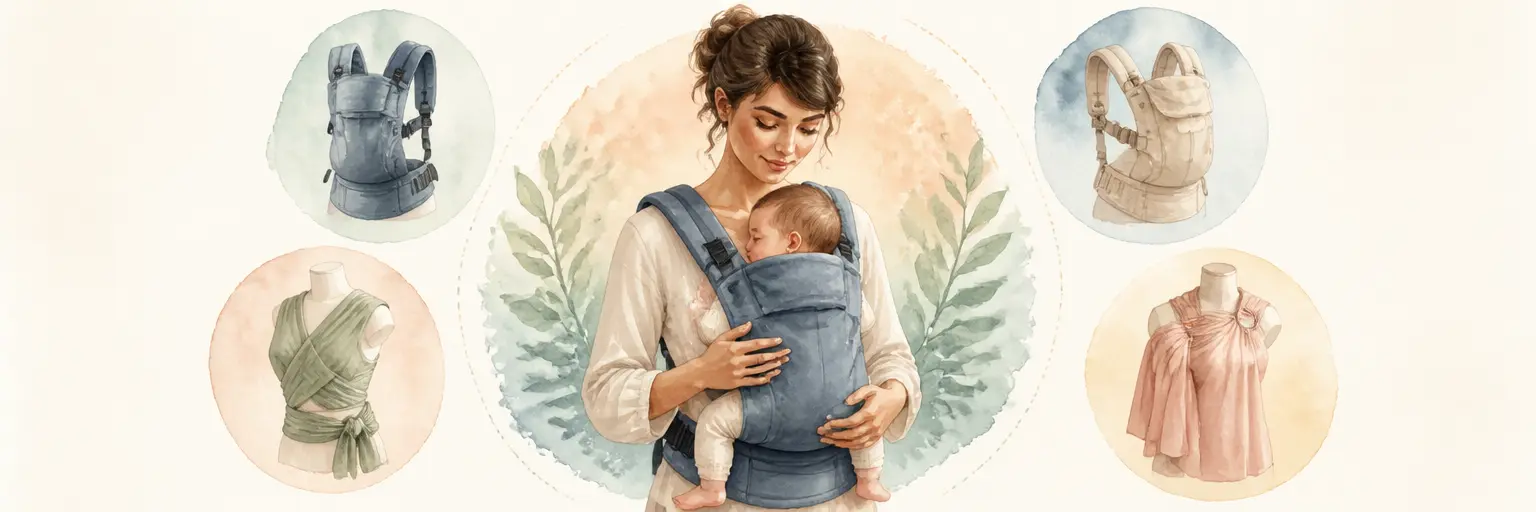
Baby Carrier Demo: See How Different Carriers Fit and Function
Discover the best baby carriers for comfortable, hands-free bonding and everyday convenience. Explore expert tips on choosing a secure, ergonomic carrier that supports your baby’s development while reducing strain for parents. From newborn-friendly wraps to adjustable soft-structured designs, find the perfect fit for walks, errands, and home use. 👶✨
6 articles
Baby Carrier Gifts: The Perfect Present for New Parents
Baby Carrier 101: A FirstTimer's Guide to Comfort & Convenience
Baby Carrier Reviews: Real Parent Experiences and Recommendations
SoftStructured Carriers: The Ultimate Guide for New Parents
Baby Carrier Weight Distribution: Making Babywearing Comfortable for You
Baby Carriers: Finding the Perfect Match for Comfort and Convenience
Choosing the right baby carrier can make daily life easier while keeping your baby close, comfortable, and secure. At BabyCareHub, this subcategory helps first-time parents compare babywearing options, understand essential safety features, and select a carrier that suits their baby’s age, size, development, and family lifestyle. Explore practical guidance on soft-structured carriers, wraps, slings, and backpack carriers to find a comfortable solution for newborn care, errands, travel, walks, and bonding.
👶 Choosing the Right Baby Carrier for Your Family
Every family has different needs, so the best baby carrier depends on your baby’s age, weight, head control, and your preferred carrying position. Readers can learn how to compare newborn baby carriers, ergonomic baby carriers, front carriers, hip carriers, and back carriers while considering adjustability, support, fabric, padding, and ease of use.
This section provides practical tips for matching a carrier to everyday routines. Whether you need a lightweight carrier for quick errands, a breathable option for warm weather, or a supportive design for longer walks, you will find clear information to help you make a confident buying decision.
🛡️ Baby Carrier Safety and Proper Positioning
Safe babywearing begins with correct positioning and regular checks. Learn how to keep your baby’s face visible, airway clear, chin off the chest, and body properly supported. Guidance covers the widely recommended “T.I.C.K.S.” babywearing principles: tight, in view at all times, close enough to kiss, keep chin off the chest, and supported back.
Readers can also discover how to inspect buckles, straps, seams, waistbands, and fabric before every use. Special attention is given to newborn safety, hip-healthy positioning, minimum weight requirements, and situations when a baby carrier should not be used, helping parents carry with greater confidence.
🌿 Ergonomic Comfort for Baby and Parent
A well-designed baby carrier should support your baby’s developing body while distributing weight comfortably for the wearer. Explore features such as an adjustable seat, M-position support, padded shoulder straps, lumbar support, and a wide supportive waistband. These features can help reduce pressure on the baby’s hips, shoulders, and the parent’s back.
This subcategory also explains how to adjust the carrier as your baby grows. You can learn how to achieve a snug fit, balance the weight evenly, and recognize signs that the carrier needs readjustment, such as slipping straps, uncomfortable pressure, poor leg support, or a baby who appears overextended.
🎒 Types of Baby Carriers Explained
Parents can compare the most popular types of baby carriers, including baby wraps, ring slings, mei tais, soft-structured carriers, and framed hiking carriers. Each style offers different benefits in terms of comfort, learning curve, portability, weight distribution, and carrying positions.
Detailed comparisons can help you decide whether a structured carrier is best for everyday convenience, a wrap is ideal for a close newborn fit, or a sling is useful for quick trips. You will also learn which carriers may be better suited to older babies, toddlers, outdoor adventures, or extended babywearing.
🚶 Babywearing for Everyday Activities and Travel
Baby carriers can be useful for shopping, traveling, walking, attending appointments, completing household tasks, and soothing a fussy baby. Find helpful advice on selecting compact, washable, breathable, and travel-friendly baby carriers that fit your routine without creating unnecessary bulk.
Travel guidance includes preparing for airports, public transportation, sightseeing, and changing weather conditions. Readers can also learn how to combine a baby carrier with a diaper bag, stroller, or car seat while remembering that a carrier is not a replacement for an approved infant car seat during vehicle travel.
🧼 Cleaning, Maintenance, and Long-Term Carrier Care
Regular cleaning helps keep a baby carrier fresh and hygienic, especially when it is exposed to milk spills, drool, food, sunscreen, and outdoor dirt. Discover how to follow manufacturer instructions, choose gentle detergents, protect buckles, and dry fabric safely without damaging its structure.
Proper maintenance can extend the life of your carrier. This section explains how to check for frayed webbing, stretched fabric, damaged stitching, broken buckles, and worn padding. Parents will also find reminders to review product recalls and stop using any carrier that no longer provides reliable support.
❓ Frequently Asked Questions About Baby Carriers
What is the safest baby carrier for a newborn?
The safest option is one that is designed for newborns, meets the manufacturer’s minimum weight requirements, and provides secure head, neck, back, and hip support. A newborn insert may be required for some structured carriers. Always follow the product instructions and keep your baby’s face visible and airway unobstructed.
How long can a baby stay in a carrier?
The length of time depends on your baby’s age, health, comfort, and the carrier’s instructions. Take regular breaks to check positioning, temperature, breathing, and circulation. Avoid keeping a baby in one position for excessively long periods, and remove the baby if they appear uncomfortable, slumped, overheated, or distressed.
Are baby carriers safe for a baby’s hips?
Many carriers are designed to support healthy hip development when used correctly. Look for a carrier that allows the baby’s thighs to be supported and legs to form an ergonomic M-position, with knees higher than the bottom. Avoid carriers that allow the legs to hang straight down without adequate support.
What is the difference between a baby wrap and a structured carrier?
A baby wrap is made from fabric that is tied around the wearer and can provide a close, customizable fit, particularly for newborns. A soft-structured carrier uses buckles or clips for quicker adjustments and may offer more convenient support for longer outings. The right choice depends on comfort, confidence, baby’s age, and personal preference.
Can a baby sleep in a baby carrier?
Babies may fall asleep while being worn, but parents should monitor them closely and maintain safe positioning at all times. Keep the face uncovered, the chin away from the chest, and the back properly supported. For routine sleep, move the baby to a firm, flat, separate sleep surface that follows current safe-sleep recommendations.