
Making Sense of Baby Thermometer Packaging: What All Those Symbols Mean
Discover how to choose the best baby thermometer for fast, accurate, and stress-free temperature checks 🌡️👶. Explore digital, ear, forehead, and rectal thermometer options, learn which features support safe readings by age, and find practical tips for caring for your little one’s health with confidence.
4 articles
Understanding Rectal Thermometers: When and Why They're Necessary for Infants
Baby Thermometer Calibration: Keeping Your Device Accurate and Reliable
Baby Thermometer Features: What to Look for When Buying
🌡️ Understanding Baby Thermometer Options for Accurate Readings
Choosing the right baby thermometer is an important part of creating a reliable home health kit. On BabyCareHub, this guide helps first-time parents compare baby thermometer types, understand measurement methods, and choose a practical option for checking a newborn’s or infant’s temperature. You will learn how digital, forehead, temporal artery, ear, and underarm thermometers work, how to use them correctly, and how to improve reading accuracy while keeping your baby comfortable.
👶 Why Accurate Baby Temperature Readings Matter
A baby’s temperature can provide useful information when your child seems warm, unusually sleepy, irritable, or unwell. A dependable infant thermometer helps parents record readings clearly and share accurate details with a pediatrician or other healthcare professional.
Temperature alone does not explain every illness, so parents should also observe feeding, breathing, alertness, wet diapers, skin color, and behavior. For young infants, especially newborns, seek medical advice promptly when a fever is suspected. Always follow local medical guidance and the instructions provided with your thermometer.
📏 Types of Baby Thermometers to Consider
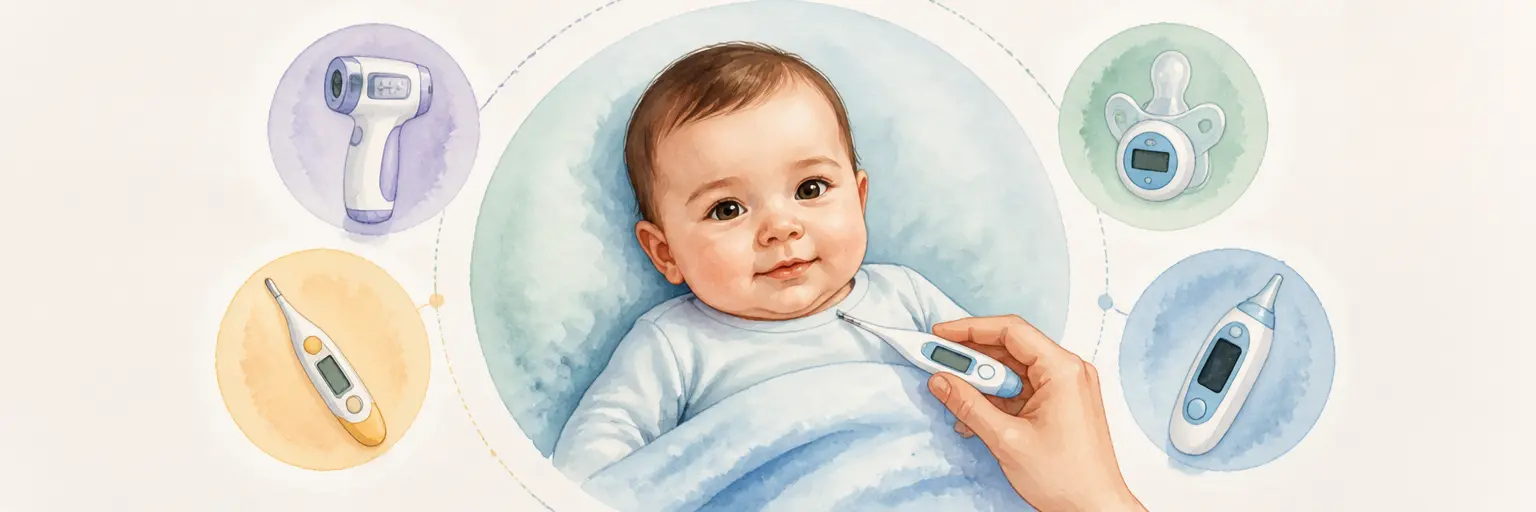
Modern families can choose from several thermometer options, including digital thermometers, rectal thermometers, oral thermometers for older children, axillary or underarm thermometers, temporal artery forehead thermometers, and tympanic ear thermometers. Each style has different benefits, limitations, and age recommendations.
When comparing the best thermometer for a baby, consider measurement accuracy, ease of cleaning, speed, display readability, memory functions, flexible tips, silent modes, and whether the device is specifically designed for infants. A simple thermometer used correctly is often more helpful than a feature-rich product used incorrectly.
🌡️ Digital and Rectal Thermometers for Infants
A digital thermometer designed for rectal use is commonly regarded by healthcare professionals as a highly accurate option for young babies when used correctly. It can provide a dependable core temperature, which is especially important when assessing a newborn or infant who may have a fever.
Use only a thermometer intended for rectal measurement, follow the manufacturer’s instructions, and never force the device. Apply an appropriate amount of lubricant if recommended, keep your baby still, and clean the thermometer carefully after use. Ask a pediatrician to demonstrate the technique if you are uncertain.
🧸 Forehead and Temporal Artery Thermometers
Forehead thermometers and temporal artery thermometers are popular because they can provide a reading quickly without disturbing a sleeping baby. Non-contact models may also reduce the need to touch the skin, making them convenient during nighttime checks or when several family members are ill.
Accuracy can be affected by sweat, hats, blankets, direct sunlight, cold air, incorrect distance, or an improper scanning path. Read the instructions carefully, allow the thermometer to adjust to room conditions when required, and repeat an unexpected reading according to the manufacturer’s guidance.
👂 Ear Thermometers and Age Considerations
Tympanic or ear thermometers measure infrared heat near the eardrum and can be fast and convenient for older babies and children. However, the ear canal must be large enough for correct positioning, and some products may not be recommended for newborns or very young infants.
Earwax, an ear infection, a poor seal, or incorrect placement can affect results. Check the recommended age range before purchasing an ear thermometer, use a clean probe cover when required, and ask a healthcare professional whether this method is suitable for your child.
🛁 Underarm Thermometers for Simple Checks
Underarm, or axillary, temperature checks are easy to perform and are often comfortable for babies. This method can be useful for a quick screening measurement, particularly when a child is sleeping or uncomfortable with other techniques.
Underarm readings may be less precise than some other measurement methods, so follow the device instructions carefully and keep the thermometer positioned securely against bare skin. If the reading is unusual, your baby appears ill, or you suspect a fever, contact a healthcare professional for advice about confirming the temperature.
✅ How to Improve Baby Thermometer Accuracy
For more consistent results, use the same thermometer and measurement method when tracking your baby’s temperature. Check the battery, clean the sensor, avoid measuring immediately after a bath or heavy bundling, and keep a written or digital record of the time, reading, and method used.
Do not compare readings from different body sites as though they are identical. A forehead, ear, underarm, and rectal temperature may vary naturally. The most useful information is a correctly taken reading combined with your baby’s age, symptoms, behavior, and medical history.
🧼 Safe Cleaning, Storage, and Thermometer Care
Clean your thermometer according to the manufacturer’s directions, using only approved wipes or cleaning solutions. Some devices should not be submerged in water, while others may require disposable probe covers. Good hygiene helps prevent the spread of germs between family members.
Store the thermometer in a dry, protected location away from children, extreme temperatures, and direct sunlight. Replace batteries when needed, inspect the casing for damage, and consider keeping a backup digital thermometer in your baby health and wellness kit.
🩺 When to Contact a Healthcare Professional
A thermometer is a helpful tool, but it does not replace medical advice. Contact your pediatrician or healthcare provider if your baby has a concerning temperature, seems difficult to wake, has trouble breathing, refuses feeds, has significantly fewer wet diapers, develops a seizure, or appears seriously unwell.
For newborns and very young infants, suspected fever should be treated seriously. Ask a medical professional which temperature threshold requires urgent attention for your baby’s age and which measurement method they prefer. When in doubt, seek advice rather than relying only on a home reading.
❓ Frequently Asked Questions About Baby Thermometers
What is the most accurate thermometer for a newborn?
A digital thermometer designed for rectal use is often considered one of the most accurate options for newborns when used correctly. Always follow the product instructions and ask a healthcare professional for guidance if you are unsure about safe technique.
Are forehead thermometers accurate for babies?
Forehead and temporal artery thermometers can provide useful readings when used correctly, but accuracy may be affected by sweat, hats, room temperature, or incorrect positioning. Follow the manufacturer’s instructions and confirm concerning results as advised by a healthcare professional.
Can I use an ear thermometer for an infant?
It depends on the product and the child’s age. Many ear thermometers are designed for older babies or children because the ear canal must be large enough for correct placement. Check the recommended age range and consult your pediatrician if uncertain.
How often should I check my baby’s temperature?
Check your baby’s temperature when there is a reason to do so, such as feeling unusually warm or showing signs of illness. Repeated checks should follow medical advice. Record the time, temperature, and measurement method so you can provide clear information to your healthcare provider.
How should I clean a baby thermometer?
Clean the thermometer after each use according to the manufacturer’s instructions. Use approved disinfecting wipes or solutions, avoid immersing the device unless it is specifically waterproof, and use disposable probe covers when recommended. Store it safely after cleaning.