
Decoding Bilingual Baby Development: What to Expect and When

Welcome to BabyCareHub, your ultimate guide to navigating the incredible journey of parenthood! Are you curious about the unique path of bilingual baby development? We understand that raising a child, especially your first, is filled with questions. Discover how your little one's language acquisition might surprise you, and learn the key milestones to watch for as they blossom into a confident communicator. Dive in and unlock the secrets to supporting your child's linguistic journey – it's a fascinating adventure waiting to unfold!
- Understanding Bilingual Baby Development Milestones
- Supporting Your Bilingual Baby's Language Development
- Potential Challenges and How to Address Them
- Long-Term Benefits of Bilingualism in Children
- Frequently Asked Questions
- Final Reflection: Embracing the Bilingual Journey: A Legacy of Language
- Unlock Your Bilingual Baby's Potential
Understanding Bilingual Baby Development Milestones
Raising a bilingual baby is a rewarding journey filled with unique milestones and exciting discoveries. This comprehensive guide delves into the fascinating world of bilingual baby development, offering a detailed look at what to expect and when to expect it. We’ll explore the key developmental stages, highlighting the specific milestones associated with language acquisition in bilingual children.
Understanding these milestones empowers parents to provide the best possible support and nurture their child's linguistic abilities, fostering a strong foundation for future language proficiency and cognitive development. This guide is specifically designed to address the unique challenges and rewards of raising a bilingual child, providing practical tips and insights to help parents navigate this enriching experience. We will explore how bilingual development differs from monolingual development, emphasizing the importance of consistent exposure to both languages and the creation of a supportive bilingual environment.
By the end of this guide, you'll have a clearer understanding of what constitutes typical bilingual development, enabling you to celebrate your child's progress and address any concerns proactively. This article will help you better understand and track your bilingual baby's "Bilingual baby development milestones".
Early Language Acquisition in Bilingual Babies: Birth to 6 Months
The first six months of a baby's life lay the groundwork for future language development, regardless of whether they're exposed to one or two languages. While your baby may not be speaking yet, they are actively absorbing language from their environment. Bilingual babies in this stage demonstrate similar early milestones to monolingual babies, focusing on pre-linguistic skills.
- Sound discrimination: Bilingual babies, from birth, can distinguish between the sounds of different languages. They may even start showing a preference for the intonation and rhythm of one language over the other, depending on exposure.
- Turn-taking in communication: Even before they can speak, babies engage in early communication through eye contact, babbling, and responding to their caregivers' voices. This turn-taking is crucial for developing conversational skills.
- Babbling: You'll hear your baby babbling, experimenting with sounds and intonation. Bilingual babies may blend sounds from both languages, creating a unique and fascinating babbling style. This is perfectly normal and a sign of healthy language development.
- Responding to voices and facial expressions: Your baby will learn to associate voices with their caregivers and respond to their expressions, showing early understanding of social cues crucial for language learning.
Remember, consistency is key. Exposing your baby to both languages regularly, even if it's just through singing songs or reading books, is essential for optimal development.
Bilingual Baby Milestones: 6 to 12 Months - First Words and Understanding
Between 6 and 12 months, significant progress occurs in language acquisition. While the timeline may vary, bilingual babies typically start to understand simple words and commands in both languages. They may even begin producing their first words, often starting with those most frequently heard.
- Understanding simple words: Your baby will start understanding simple words like "mama," "dada," "bottle," "bye-bye," etc., in both languages. They may respond to these words with appropriate actions or expressions.
- First words: This is a very exciting stage! Your baby might start saying their first words, potentially mixing words from both languages. Don't worry if they seem to be mixing up the words; this is typical of bilingual development.
- Following simple instructions: Your baby might start following simple instructions like "Give me the toy" or "Come here," showing an understanding of both the words and their meaning.
- Gestures and pointing: Babies use gestures and pointing to communicate their needs and desires. This is a vital part of language development and is no different for bilingual babies.
This stage requires patience and consistent exposure. Continue to speak both languages to your baby regularly, making it a natural part of your daily interactions.
Recognizing Bilingual Development Progress: 12 to 18 Months
By 12 to 18 months, bilingual babies usually exhibit a more advanced understanding of language, showing a growing vocabulary in both languages and increased communicative skills. While individual progress varies, several key milestones mark this stage.
- Vocabulary growth: Your baby's vocabulary will continue to expand in both languages. They may start using two-word phrases and simple sentences. The rate of vocabulary growth might be slightly slower than monolingual babies, but this is normal for bilingual children.
- Improved comprehension: Your baby's understanding of both languages will significantly improve. They will respond to more complex instructions and questions.
- Increased communication: Your baby will become more confident and proactive in communicating their needs and desires. They will use words, gestures, and other forms of communication to express themselves.
- Code-switching: You might observe your baby code-switching, meaning they switch between languages within the same sentence or conversation. This is a common and perfectly normal phenomenon in bilingual children, demonstrating their ability to differentiate and use both languages effectively.
This stage reinforces the importance of continued language exposure and interaction. Creating a supportive and stimulating environment where both languages are valued and used consistently will help your baby thrive linguistically. Remember to celebrate every milestone, no matter how small, and enjoy the unique journey of raising a bilingual child! 🎉
Bilingual Language Development: 18 to 24 Months - Expanding Vocabulary and Sentence Structure
Between 18 and 24 months, your bilingual baby's language skills will experience a significant leap forward. While the rate of acquisition varies greatly between children, you'll likely observe a marked increase in both vocabulary and sentence complexity in both languages. This stage is characterized by a rapid expansion of their understanding and use of words, leading to more complex communication.
Instead of single words, they'll start stringing together simple sentences, albeit often with grammatical errors that are perfectly normal at this age. For example, instead of saying "Mommy milk," they might say "Mommy want milk," demonstrating a growing understanding of subject-verb-object sentence structure. Remember that this development is not uniform across both languages; your child might be more advanced in one language compared to the other, and that's perfectly acceptable.
This period also sees the emergence of more sophisticated language functions. Your child might start asking simple questions like "Where ball?" or "What that?" They may also begin to narrate simple events, describing what they've just done or what they see happening around them.
This narrative ability is a crucial step in developing more complex communication skills. The use of pronouns, such as "I," "you," and "me," will also likely become more consistent, though mistakes are still to be expected. For instance, they might occasionally mix up pronouns across languages, a common phenomenon in bilingual development. This is not a cause for concern; it's a normal part of the learning process.
The vocabulary explosion in this age range is particularly noteworthy. While the exact number of words varies significantly, you can expect your child to learn dozens of new words in each language every month. This rapid acquisition is facilitated by their increased exposure to both languages through everyday interactions, songs, stories, and conversations. Encourage this process by actively speaking both languages to your child, making sure to use varied vocabulary and sentence structures.
Reading bilingual books, singing bilingual songs, and watching bilingual shows can also significantly contribute to their vocabulary expansion. Remember to be patient and consistent; your child's bilingual journey is a marathon, not a sprint. Celebrate every milestone, no matter how small. 🎉
Supporting Your Bilingual Baby's Language Development
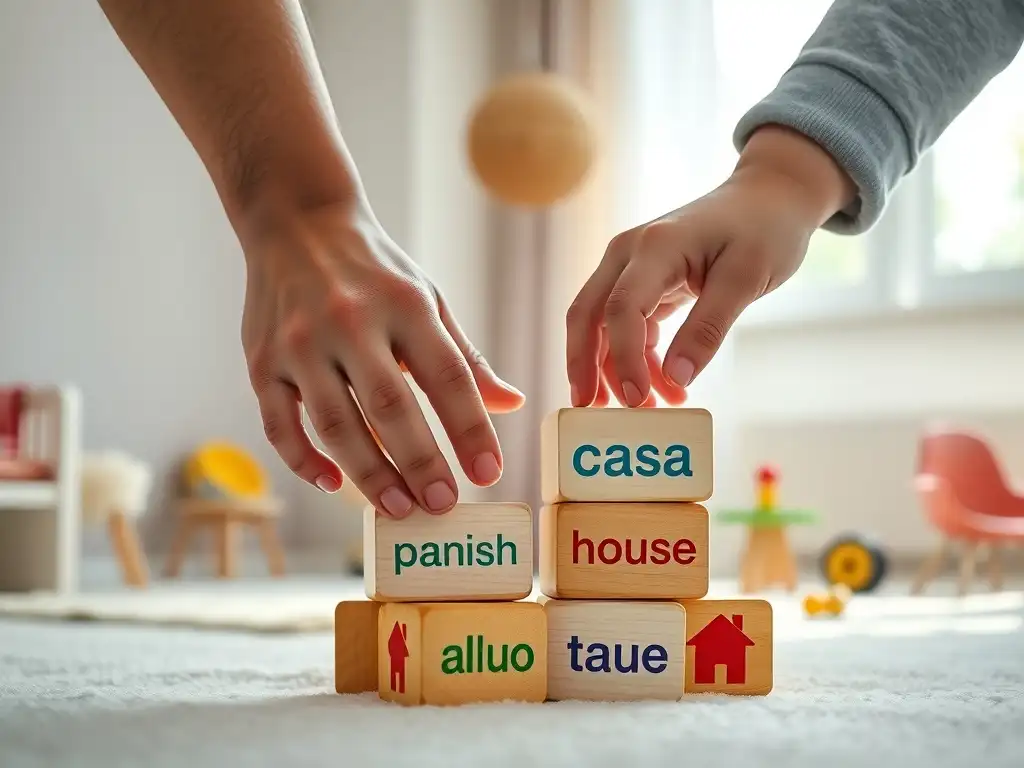
This section delves into practical strategies to nurture your baby's linguistic abilities in two languages, focusing on creating a rich and stimulating environment. Remember, consistent exposure and engaging interaction are key to fostering healthy bilingual development. Early intervention significantly impacts a child's capacity for language acquisition, laying a strong foundation for future cognitive development. We'll explore effective techniques and resources to help your little one thrive in a bilingual world. The journey of raising a bilingual child is rewarding, but requires dedication and a strategic approach.
Creating a Bilingual Environment at Home: Tips for Parents
Creating a supportive bilingual environment at home isn't about perfection; it's about consistency and immersion. Think of it as weaving two languages into the fabric of your daily routines. This involves more than just speaking; it's about engaging your baby with both languages through songs, stories, and playful interactions.
Here are some practical tips:
- Label everything: Label common household items in both languages. This passive exposure helps your baby associate words with objects. Start with simple words like "bottle," "toy," and "shoe" in both languages. Use colorful labels for visual appeal.
- Sing songs and rhymes: Nursery rhymes and songs are excellent tools for language acquisition. Choose songs in both languages and sing them frequently. The rhythmic nature of songs aids in memorization and pronunciation.
- Read aloud regularly: Read books in both languages, even if your baby doesn't understand the words yet. The sound of the language, the rhythm of the story, and the visual stimulation of the pictures are all beneficial. Choose age-appropriate books with colorful illustrations.
- Use both languages consistently: Don't switch back and forth haphazardly between languages during a single conversation. Consistent language exposure, even if it's just one language per caregiver, is more effective than inconsistent mixing.
- Incorporate both languages in playtime: Make playtime interactive by narrating your actions and describing the toys in both languages. This adds a layer of linguistic engagement to your baby's play.
- Watch bilingual shows and videos: While screen time should be limited, age-appropriate bilingual shows can provide additional exposure to both languages. Choose shows with clear pronunciation and engaging visuals.
Remember, patience and consistency are crucial. Don't be discouraged if your baby doesn't seem to grasp both languages immediately. Language acquisition takes time, and each child develops at their own pace.
Strategies for Consistent Language Exposure: One Parent, One Language (OPOL) Method
The One Parent, One Language (OPOL) method is a popular and effective strategy for bilingual language development. This approach involves each parent consistently speaking one language to the child. For example, one parent speaks only English, while the other speaks only Spanish. This creates a clear association between each parent and a specific language.
The benefits of the OPOL method include:
- Clear language association: The child easily learns to associate each language with a specific caregiver.
- Reduced language confusion: The clear separation of languages minimizes the risk of mixing languages or developing language delays.
- Enhanced language proficiency: Consistent exposure to each language promotes faster and more robust language acquisition.
However, the OPOL method is not without its challenges:
- Requires parental commitment: Both parents must consistently adhere to the chosen language. Inconsistent use can confuse the child and hinder language development.
- May not be feasible for all families: Families with only one parent or caregivers who speak both languages fluently may need to adapt this method.
- Potential for language dominance: While generally effective, there's a slight chance one language might become dominant depending on various factors.
It's important to note that the success of the OPOL method depends heavily on consistent implementation and parental commitment. Flexibility and adaptation are key to ensuring the method aligns with your family's unique dynamics and circumstances.
Choosing the Right Bilingual Resources: Books, Toys, and Apps
Selecting appropriate bilingual resources enhances your baby's language development journey. The market offers a wide array of books, toys, and apps designed for bilingual learning. Here's a guide to making informed choices:
| Resource Type | Selection Criteria | Examples |
|---|---|---|
| Books | Age-appropriate, engaging illustrations, clear pronunciation, diverse characters | Bilingual board books, picture books, storybooks |
| Toys | Interactive, stimulating, promote language development, culturally relevant | Bilingual flashcards, shape sorters, puppets |
| Apps | Age-appropriate, interactive games, native speaker voices, positive reinforcement | Bilingual language learning apps for babies |
Remember to prioritize high-quality resources that are engaging, age-appropriate, and reflect your family's cultural background. Consider the child's developmental stage and interests when making selections. Don't hesitate to experiment with different resources to find what works best for your baby. The key is to make language learning fun and enjoyable! Early exposure to diverse resources can significantly enrich your baby's linguistic journey and lay a solid foundation for future bilingual fluency. The possibilities are vast, and the rewards are immeasurable.
Incorporating Bilingual Songs, Rhymes, and Storytelling
Singing songs, reciting rhymes, and sharing stories are fantastic ways to immerse your baby in both languages. The rhythmic nature of songs and rhymes helps with language acquisition, improving pronunciation and memory. Storytelling, on the other hand, introduces narrative structure and expands vocabulary. For example, you could sing "Twinkle Twinkle Little Star" in English one day, and then sing its equivalent in your second language the next. This repetition, even with slight variations, reinforces learning.
Remember to choose songs and rhymes that are age-appropriate and engaging. Use expressive tones and gestures to enhance the experience, making it more interactive and fun for your baby. Don't worry about perfect pronunciation; your enthusiasm and love for the activity will be far more impactful than flawless delivery. Consider using picture books that illustrate the story, further engaging your baby's visual learning.
The repetition of familiar stories and songs provides a sense of comfort and security, while also subtly building their language skills. This consistent exposure to both languages through these fun activities is a key component in achieving bilingual development milestones. You can also find many bilingual resources online, offering a vast library of songs, rhymes, and stories to explore. The key is consistency and making it a joyful part of your daily routine.
Even just 15-20 minutes a day can make a significant difference. Observe your baby's reactions and adjust your approach accordingly – if they seem disinterested in a particular song, try another one! The goal is to make language learning a positive and enjoyable experience.
Potential Challenges and How to Address Them
Raising a bilingual baby is a rewarding journey, but it's not without its potential challenges. Understanding these hurdles and proactively addressing them can significantly contribute to your child's successful language acquisition. This section focuses on common concerns and provides practical strategies to support your little one's bilingual development. Remember, consistency and patience are key!
Addressing Language Mixing in Bilingual Babies
Many parents of bilingual children notice their babies mixing words and phrases from both languages. This phenomenon, often called "code-switching," is perfectly normal and doesn't indicate a problem with language development. In fact, it's often a sign that your child is actively processing and integrating both languages. Think of it as a sophisticated linguistic juggling act!
Instead of correcting your child every time they mix languages, focus on understanding their message and responding in the language you're currently using. For example, if your child says, "Quiero milk," you could reply, "Sí, aquí tienes tu leche" (Yes, here's your milk). This reinforces both languages without causing confusion or frustration.
It's important to remember that the amount of code-switching can vary. Some children code-switch frequently, while others do so less often. There's no "right" or "wrong" way – it's all part of the natural process of bilingual development. Consistent exposure to both languages in meaningful contexts is far more crucial than policing code-switching.
Code-switching is a natural part of bilingual development and shouldn't be viewed as a sign of confusion or delay.
Dealing with Language Delays in Bilingual Children
While language mixing is common, parents may sometimes worry about potential language delays in their bilingual children. It's crucial to distinguish between a true delay and the naturally slower pace of bilingual acquisition. Bilingual children may reach certain milestones slightly later than monolingual peers, but this doesn't necessarily indicate a problem.
Several factors influence language development speed, including the amount of exposure to each language, the consistency of language use within the family, and the child's individual temperament. A child exposed to one language primarily at home and the other at daycare or preschool might show a slower overall progress compared to a child exposed to both languages equally throughout the day.
However, it is important to monitor your child's progress. If you notice significant delays – such as a lack of babbling by 12 months, limited vocabulary by 18 months, or difficulty understanding simple instructions by 24 months – it's essential to seek professional guidance. These are just general guidelines, and individual variations are expected. Early intervention is key to addressing any underlying concerns.
| Age Range | Monolingual Milestone (Approximate) | Bilingual Milestone (Approximate) | Note |
|---|---|---|---|
| 12-18 months | First words | First words in either language | May be slower overall |
| 18-24 months | Simple sentences | Simple sentences in either language or code-switching | Focus on comprehension |
| 24-36 months | Expanding vocabulary, more complex sentences | Expanding vocabulary across both languages | Patience is crucial |
Seeking Professional Help: When to Consult a Speech-Language Pathologist
Early intervention is critical for optimal bilingual development. While most bilingual children develop language skills naturally, sometimes professional guidance is beneficial. Consulting a speech-language pathologist (SLP) is advisable if you observe any of the following:
- Significant delays in language development compared to age-appropriate milestones, even considering the bilingual context.
- Consistent difficulties understanding and expressing themselves in either language.
- Concerns about articulation or pronunciation.
- Limited vocabulary growth despite consistent exposure to both languages.
- Frustration or difficulty communicating effectively.
A speech-language pathologist can conduct a comprehensive assessment to determine if your child requires intervention. They can provide tailored strategies and support to enhance your child's language skills, fostering confident bilingual communication. Remember, seeking professional help is not a sign of failure but a proactive step towards ensuring your child's optimal development. Early intervention often leads to better outcomes. Don't hesitate to reach out if you have any concerns – your child's well-being is paramount.
Long-Term Benefits of Bilingualism in Children
Raising a bilingual baby offers a wealth of advantages that extend far beyond simply knowing two languages. The benefits are profound and long-lasting, impacting cognitive abilities, academic performance, and social-emotional development. Understanding these benefits can empower parents to confidently embrace bilingualism as a valuable asset in their child's life. This section will explore the significant long-term advantages of bilingualism, focusing on cognitive enhancements, academic achievements, and broader social and cultural benefits.
Cognitive Advantages: Improved Problem-Solving and Memory
Research consistently demonstrates a strong correlation between bilingualism and enhanced cognitive abilities. Bilingual children often exhibit superior executive function skills, which encompass a range of higher-level cognitive processes crucial for success in various aspects of life. These skills include:
- Improved working memory: Bilingual individuals demonstrate a greater capacity to hold and manipulate information in their minds simultaneously. This is because constantly switching between languages requires the brain to actively manage and filter information, strengthening working memory capacity. Studies using tasks like digit span tests have shown statistically significant differences in performance between monolingual and bilingual children.
- Enhanced cognitive flexibility: The ability to switch between different tasks or perspectives is significantly improved in bilingual children. This mental agility translates to better performance in tasks requiring cognitive flexibility, such as adapting to changing instructions or problem-solving under pressure. Think of it as a mental workout that strengthens the brain's ability to multitask and adapt.
- Increased inhibitory control: Bilingual children often display better inhibitory control, the ability to suppress irrelevant information or impulses. This translates to improved focus and concentration, essential for academic success and everyday life. They are better at ignoring distractions and focusing on the task at hand.
- Superior problem-solving skills: The constant mental juggling act of managing two languages strengthens the brain's ability to analyze problems from different angles and develop creative solutions. This heightened problem-solving ability extends beyond linguistic contexts, impacting various aspects of cognitive processing.
Academic Success: Enhanced Language Skills and Literacy
The benefits of bilingualism extend significantly into the academic realm. Children raised bilingually often demonstrate superior language skills and literacy compared to their monolingual peers. This advantage manifests in several key areas:
- Stronger vocabulary and metalinguistic awareness: Exposure to two languages from an early age expands a child's vocabulary and enhances their understanding of language structure. They develop a deeper understanding of how language works, a skill known as metalinguistic awareness, which is crucial for reading comprehension and writing proficiency.
- Improved reading comprehension: Studies have shown a positive correlation between bilingualism and improved reading comprehension skills. The cognitive flexibility and enhanced processing speed associated with bilingualism contribute to a child's ability to grasp complex texts and extract meaning effectively.
- Enhanced literacy skills: Bilingual children often excel in literacy tasks, displaying superior skills in reading, writing, and spelling. This advantage stems from the strengthened cognitive abilities and enhanced language awareness fostered by bilingual upbringing.
- Better academic performance overall: The cumulative effect of enhanced cognitive skills and improved language abilities often translates to better overall academic performance, leading to higher grades and increased academic success. This advantage can be seen across various subjects, not just language-related ones.
Beyond cognitive and academic benefits, raising a bilingual child fosters significant social and cultural advantages. These benefits contribute to the child's overall well-being and equip them with valuable life skills:
- Increased empathy and cultural sensitivity: Exposure to multiple cultures through languages creates a greater understanding and appreciation for different perspectives. Bilingual children often demonstrate higher levels of empathy and cultural sensitivity, making them more adaptable and open-minded individuals.
- Enhanced communication skills: Bilingual children develop superior communication skills, adapting their language and communication style to different contexts and audiences. This adaptability is a valuable asset in various social and professional settings.
- Greater global awareness and adaptability: Knowing multiple languages opens doors to a wider world, fostering a greater understanding of different cultures and promoting adaptability in diverse environments. This is particularly valuable in today's increasingly interconnected global society.
- Stronger cognitive reserve: Bilingualism has been linked to a stronger cognitive reserve, potentially delaying the onset of age-related cognitive decline such as dementia. This long-term protection highlights the lasting impact of bilingualism on brain health.
The advantages of bilingualism are multifaceted and far-reaching, impacting not only a child's linguistic abilities but also their cognitive development, academic success, and social-emotional well-being. Embracing bilingualism is an investment in a child's future, equipping them with valuable skills and fostering a richer, more fulfilling life.
Frequently Asked Questions
What are the key developmental milestones for bilingual babies?
Bilingual babies generally reach the same milestones as monolingual babies, though sometimes at slightly different paces. Key milestones include babbling, first words, and forming simple sentences, all potentially occurring across both languages. Keep in mind that each child develops at their own rate.
Will learning two languages confuse my baby?
No, learning two languages will not confuse your baby. In fact, research shows that bilingualism can enhance cognitive development and problem-solving skills. Babies are remarkably adept at distinguishing between languages from a very young age.
How can I support my baby's bilingual development?
Consistent exposure to both languages is crucial. Actively use both languages in your daily interactions, assigning each language to a specific caregiver if helpful. Reading bilingual books and singing songs in both languages are also excellent ways to support development.
Are there any signs of language delay in bilingual babies?
While milestones might appear slower, a significant delay in both languages warrants professional evaluation. Consult your pediatrician if your baby isn't babbling by 12 months, or showing limited comprehension or expression in either language by 18 months.
How can I create a bilingual environment at home?
Surround your baby with bilingual materials, like books, toys, and music. Speak consistently in your respective native languages. Engage in interactive activities like singing songs, reading aloud, and playing games in both languages to reinforce learning.
Final Reflection: Embracing the Bilingual Journey: A Legacy of Language
The ability to speak more than one language is no longer a luxury; it's a powerful asset in our increasingly interconnected world. Understanding the unique developmental milestones of bilingual babies is crucial for parents and caregivers who want to nurture this incredible gift. This knowledge empowers us to support our children's linguistic growth effectively and confidently.
Witnessing the cognitive and social benefits of bilingualism in my own family has profoundly shaped my understanding of its importance. The ease with which my niece navigates two languages, the creative problem-solving skills she demonstrates, and her enhanced cultural awareness are testaments to the richness of bilingual development. The bilingual mind is not merely a mind that can switch between two languages; it is a mind that has been shaped by the experience of living in two linguistic worlds.
This quote perfectly encapsulates the transformative power of bilingualism, extending far beyond simple language acquisition.
Now, consider your own journey. Are you a parent or caregiver embarking on the adventure of raising a bilingual child? Or perhaps you're simply fascinated by the intricacies of language development? Regardless of your background, I urge you to embrace the challenges and celebrate the triumphs of this enriching experience. Remember the milestones discussed, but more importantly, remember the joy of watching a child blossom linguistically, culturally, and cognitively. Let's continue to learn, share, and support each other in fostering a world where multilingualism is celebrated and nurtured.
Unlock Your Bilingual Baby's Potential
Thank you for exploring the fascinating world of bilingual baby development! We hope you found this information valuable. Now, let's put that knowledge into action.
Here are some ways to support your child's language development:
- Create a consistent bilingual environment: Begin incorporating both languages into your daily routines. Even small, consistent efforts make a big difference.
- Engage in playful language learning: Sing songs, read books aloud, and talk to your baby throughout the day in both languages. Even simple interactions significantly contribute to their development.
- Connect with other bilingual parents: Join online forums or local parent groups to share experiences, seek advice, and celebrate milestones together. This offers invaluable support and encouragement.
What creative approaches will you use to nurture your baby's bilingual journey? Let's discuss in the comments below!