
Baby's First Social Interactions: A Journey of Discovery and Connection

Welcome to BabyCareHub, your ultimate guide to navigating the incredible journey of parenthood! Are you ready to unlock the secrets to your baby's blossoming social world? We delve into the fascinating Baby social interaction development stages, revealing the milestones your little one will reach as they connect with the world around them. Discover how these crucial interactions shape their development and learn practical tips to nurture this vital aspect of their growth. Prepare to be amazed by the incredible journey ahead – let's explore together!
- Understanding Baby Social Interaction Development Stages
- Building Blocks of Early Social Interaction: Sensory Stimulation
- Enhancing Baby's Social Interaction Development: Engaging Activities
- Recognizing Milestones in Baby Social Interaction Development
- When to Seek Professional Guidance: Identifying Potential Delays
- Creating a Supportive Environment for Social-Emotional Growth
-
Frequently Asked Questions
- When do babies start showing signs of social interaction?
- What are the key milestones in a baby's social development?
- How can I encourage my baby's social interaction?
- What if my baby seems less interested in social interaction than other babies?
- Are there any signs I should be concerned about regarding my baby's social development?
- Final Reflection: Weaving the Tapestry of Early Social Connection
- Unlock Your Baby's Social Skills!
Navigating the world of newborn care can feel overwhelming for first-time parents. While feeding schedules and diaper changes are understandably top priorities, understanding your baby's social and emotional development is equally crucial. This article delves into the fascinating journey of your baby's first social interactions, exploring the key developmental stages and milestones associated with "Baby social interaction development stages."
We'll examine how those early, seemingly simple interactions lay the foundation for your child's future social skills, emotional intelligence, and overall well-being. From the initial reflexive responses of a newborn to the intentional smiles and gurgles of a few-month-old, we'll guide you through this beautiful and important process, providing insights to help you better understand and connect with your little one. Remember, every baby develops at their own pace, but recognizing these developmental stages can offer valuable context and reassurance as you embark on this incredible parenting journey.
The Newborn Phase: Reflexive Responses and Early Cues
The newborn phase (0-2 months) is characterized by mostly reflexive responses. While not yet intentional social interactions, these early cues are vital building blocks. Newborns possess innate reflexes, such as rooting (turning their head towards a touch on the cheek) and sucking, which are essential for feeding but also contribute to early bonding.
They may also exhibit startle responses or show signs of distress through crying. However, even in these early weeks, you can observe subtle social interactions. For example, a newborn might fixate their gaze on a face for a longer period, demonstrating an early preference for human interaction.
This seemingly simple act lays the groundwork for future eye contact and the development of meaningful connections. The key during this period is responsive caregiving: responding promptly to your baby’s cries, providing skin-to-skin contact, and engaging in gentle touch and soothing sounds fosters a sense of security and trust, crucial for future social development.
Between 2 and 4 months, your baby begins to exhibit more intentional social behaviors. This is a period of significant growth in their ability to perceive and respond to social cues. You'll likely witness the emergence of social smiles – those delightful, genuine smiles that are directed at people, rather than simply a reflexive response. These smiles represent a major leap in social development, indicating your baby's growing awareness of their social world.
Alongside smiles, you'll notice other important social signals: gurgling, cooing, and increased eye contact. These are all ways your baby is communicating and engaging with you. They're actively trying to connect and build relationships.
Encourage these interactions by responding enthusiastically to their sounds and smiles. Talking to your baby, singing songs, and making faces all contribute to strengthening this vital connection. This stage is about fostering a positive and responsive environment that encourages your baby's natural inclination to socialize.
The development of the social smile, typically appearing around 2 months, marks a significant milestone in baby social interaction development stages. Initially, a newborn's smiles might be reflexive, triggered by internal states or physical sensations. However, the social smile is different.
It's a deliberate expression directed towards a person, often in response to a caregiver's smile, voice, or touch. This intentional smile reflects a growing understanding of social reciprocity: the back-and-forth exchange of social cues. The appearance of a social smile signifies a deepening connection between the baby and their caregiver(s), reinforcing the bond and encouraging further interaction.
Observing this milestone is incredibly rewarding for parents, highlighting the powerful impact of responsive caregiving on a baby's social-emotional development. Furthermore, the development of the social smile correlates with other advancements in sensory and cognitive development, such as improved visual acuity and an enhanced ability to process facial expressions. This interconnected growth underscores the holistic nature of early childhood development.
This section delves into the crucial role of sensory stimulation in a baby's early social development. Understanding how your baby perceives and interacts with the world through their senses lays the foundation for building meaningful social connections. We'll explore the impact of various sensory inputs and how parents can actively engage their infants to encourage healthy social interaction development. Remember, consistent and engaging sensory experiences are key to fostering a thriving social brain. Optimizing your baby's sensory experiences directly impacts their capacity for social interaction and attachment.
The Importance of Touch and Physical Contact in Infant Development
Touch is the first sense to develop in utero and remains profoundly important throughout infancy. Physical contact, such as cuddling, holding, and skin-to-skin contact, releases oxytocin, often called the "love hormone," in both the parent and the baby. This hormone fosters a sense of security and trust, crucial components of healthy social interaction. Studies have shown that babies who receive frequent physical affection tend to exhibit better emotional regulation and stronger social skills later in life.
Moreover, touch helps regulate a baby's nervous system, reducing stress and promoting healthy sleep patterns, all of which positively influence their capacity for social engagement. Consider the calming effect of a gentle massage or the soothing comfort of being held close. This tactile stimulation directly impacts the development of neural pathways associated with social bonding. Consistent, loving touch is not merely a comforting gesture; it's a fundamental building block of healthy social-emotional development.
Responding to Your Baby's Cues: Fostering a Secure Attachment
A secure attachment is the bedrock of healthy social interaction. It's built through consistent and responsive caregiving, where parents learn to accurately interpret and respond to their baby's cues. These cues can range from subtle facial expressions and body language to vocalizations and cries.
Responding promptly and appropriately to these signals communicates to the baby that their needs are valued and met, fostering trust and security. For example, a baby's cry might signal hunger, discomfort, or a need for closeness. Learning to differentiate between these cries and responding accordingly helps build a strong parent-child bond which directly translates into the baby's ability to engage socially with others later.
This reciprocal interaction, where the baby's needs are consistently met, cultivates a sense of predictability and safety, essential for healthy social-emotional development and the ability to form secure attachments with others beyond the primary caregivers. Ignoring or dismissing these cues can lead to feelings of insecurity and can negatively impact the baby's social-emotional development. Observing and responding to your baby's cues is an investment in their future social skills.
Babies are naturally drawn to faces, particularly those with high contrast and exaggerated features. This innate preference for faces is a crucial element in their early social interaction development. From birth, babies can distinguish between faces and other visual stimuli, and they actively seek out eye contact.
This visual preference for faces facilitates social learning and the development of social skills. Engaging with your baby through face-to-face interactions, such as making silly faces, singing songs, or simply talking and smiling, reinforces this preference and strengthens the parent-child bond. Furthermore, providing your baby with opportunities to observe and interact with other faces, such as those of siblings, grandparents, or caregivers, broadens their social circle and exposes them to a wider range of social cues.
This early exposure to diverse faces and social interactions is crucial for building social competence and confidence. The development of visual preference for faces is a fundamental stage in your baby’s social interaction development stages, laying the groundwork for future social connections. Remember, consistent engagement with your baby's visual preferences will contribute significantly to their overall social development.
This section delves into practical, stimulating activities to foster your baby's social interaction skills. Remember, every baby develops at their own pace, so celebrate milestones and don't compare your little one to others. The key is consistent, loving interaction. Focusing on baby social interaction development stages helps you tailor activities to their capabilities, maximizing their learning and enjoyment.
Interactive play is crucial for baby social interaction development stages. From birth, babies respond to faces and voices. Simple games like peek-a-boo, which involves hiding and reappearing, teach object permanence and anticipation, fundamental social skills. Another classic, patty-cake, encourages turn-taking and physical interaction, strengthening the bond between parent and child. These seemingly simple games are powerful tools in fostering early social development.
Here's a table outlining some age-appropriate interactive play ideas:
| Age Range | Activity | Benefits |
|---|---|---|
| 0-3 Months | Face-to-face interaction, soft sounds | Promotes bonding, teaches facial recognition, responds to vocal cues |
| 3-6 Months | Peek-a-boo, shaking rattles, mirroring | Develops object permanence, anticipation, and understanding of cause and effect |
| 6-9 Months | Simple games like patty-cake, stacking soft blocks | Encourages turn-taking, fine motor skills, and problem-solving |
| 9-12 Months | Playing with toys that make sounds or light up | Stimulates sensory development, encourages exploration, and social interaction |
Remember to always supervise your baby during playtime and choose age-appropriate toys that are safe and non-toxic. Observe your baby's cues; if they seem tired or frustrated, take a break. The goal is to make playtime fun and engaging, not stressful. The development of social skills is a journey, not a race.
Reading to your baby, even from a very young age, is a powerful way to stimulate language development and foster social interaction. The rhythmic nature of reading aloud soothes babies and helps them learn the patterns of language. The act of cuddling while reading creates a sense of closeness and security, fostering a strong parent-child bond. This bonding is a critical component of healthy baby social interaction development stages.
Even newborns can benefit from hearing stories read aloud. Choose board books with bright colors and simple pictures. Point to the images and name them, emphasizing the sounds of the words. As your baby grows, you can introduce more complex stories and interactive elements, such as asking questions or making sounds.
Here are some tips for successful reading sessions:
- Choose books with engaging visuals and repetitive phrases.
- Use different tones of voice to bring the story to life.
- Make eye contact with your baby and respond to their cues.
- Don't worry about reading perfectly; the focus is on interaction and enjoyment.
- Make reading a regular part of your daily routine.
The benefits extend beyond language acquisition. Reading together creates a special time for bonding and connection, contributing significantly to your baby's social and emotional development. It's a rewarding experience for both parent and child.
Singing and playing music are fantastic tools for stimulating your baby's social and emotional development. Music engages multiple senses simultaneously – auditory, visual (if you’re using instruments or watching a musical video), and even tactile (if you’re dancing or playing instruments together). This multi-sensory experience is invaluable during crucial baby social interaction development stages.
Babies respond positively to the rhythm and melody of music, often exhibiting calming or joyful reactions. Singing lullabies before bedtime helps soothe them and establish a calming bedtime routine. Playing upbeat music can encourage movement and interaction, promoting physical development alongside social and emotional growth.
Consider these options to incorporate music into your baby's daily life:
- Sing familiar songs and nursery rhymes. The repetition helps with language acquisition.
- Play a variety of musical genres to expose your baby to different sounds and rhythms.
- Use musical instruments like shakers or rattles to encourage exploration and interaction.
- Attend baby music classes – these provide opportunities for social interaction with other babies and parents.
Remember, the goal is to create a joyful and engaging experience. Observe your baby's responses and adjust your approach accordingly. The positive effects of music on a baby’s development are profound and extend far beyond simply listening. It's a pathway to connection, communication, and emotional growth.
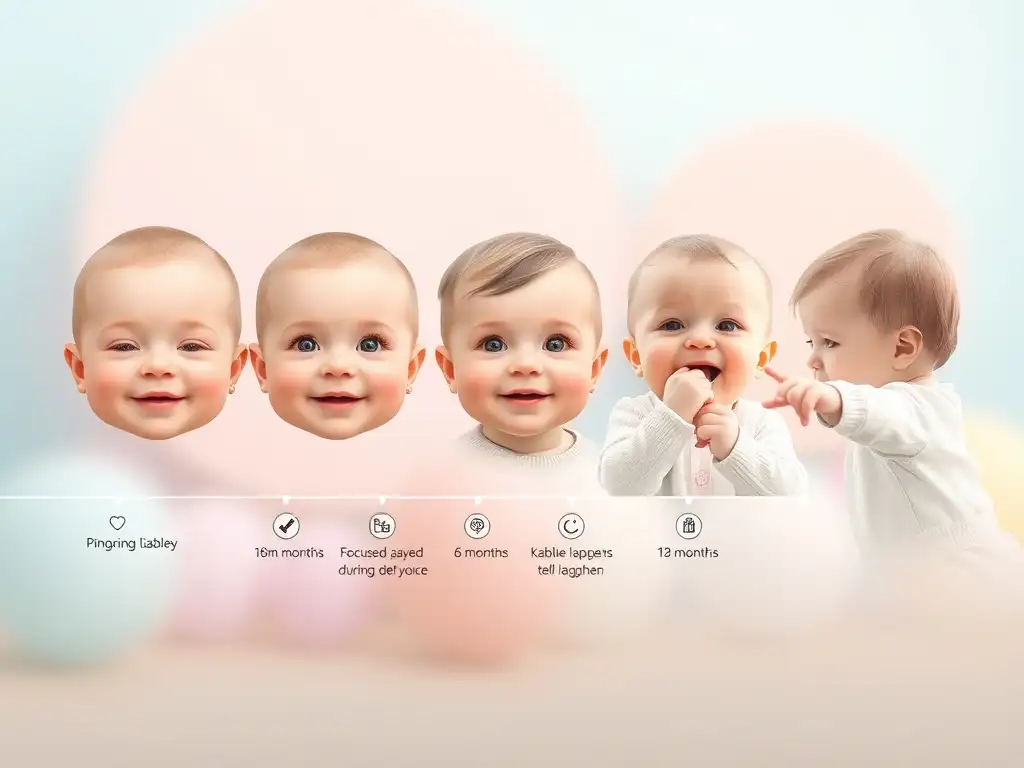
This section details the key developmental milestones in your baby's social interaction, providing a framework to understand and appreciate their journey of connection. Observing these stages helps you understand your baby's unique developmental path and allows you to engage with them in ways that are both stimulating and supportive. Remember, every baby develops at their own pace, and these are simply guidelines. Variations are completely normal. The focus should always be on nurturing a secure and loving environment for your little one. Consistent, loving interaction is crucial for healthy baby social interaction development stages.
During the first three months of life, your baby's social interactions are primarily reflexive. While they may not be engaging in complex social exchanges, crucial foundations are being laid.
- Responding to Faces and Voices: Newborns are drawn to faces, especially those with high contrast features. They will often turn their heads towards sounds, particularly voices, demonstrating an early preference for human interaction. This is a fundamental building block for future social connections. You'll notice them gazing intently at your face during feeding or cuddling.
- Early Smiles: Those first smiles, often appearing around 6 weeks, are not yet truly social smiles, but rather reflexive responses to internal states or external stimuli like a full tummy or a gentle touch. Nevertheless, these early smiles are incredibly rewarding and signify a growing awareness of their surroundings. These initial smiles are a stepping stone towards more intentional social smiles that will emerge later.
- Cooing and Gurgling: Your baby's vocalizations, even if just cooing and gurgling, are early attempts at communication. They are exploring the sounds they can make and experimenting with expressing themselves, a crucial step in developing communication skills, which are intrinsically linked to social development. Respond to these sounds with your own vocalizations to encourage further interaction.
Between 4 and 6 months, your baby's social skills begin to blossom. They become more aware of their surroundings and actively seek interaction.
- Social Smiles: Around 4 months, you will likely see the emergence of true social smiles. These are smiles that are directly in response to your interactions, reflecting a conscious understanding of social engagement. This marks a significant leap in their social development. These smiles are often accompanied by delighted gurgles and happy coos.
- Responding to Emotions: Your baby will start to respond to your emotional expressions. They will notice when you're happy, sad, or excited, and their own responses will reflect this growing emotional intelligence. This is a key aspect of baby social interaction development stages, illustrating their increasing capacity to empathize and understand emotional cues. It's vital to remain emotionally responsive yourself.
- Reaching Out and Grasping: Your baby will actively reach out and grasp for toys or your hands, demonstrating a desire for physical interaction and connection. This physical engagement is crucial for their sensory and social development. Encourage this by offering them brightly colored toys and engaging with them through touch.
By 7-12 months, your baby's social skills are rapidly developing. They are increasingly interactive and engaging in more sophisticated social exchanges.
- Stranger Anxiety: Around 8 months, many babies start showing stranger anxiety, preferring familiar faces and reacting negatively to unfamiliar people. This is a normal developmental milestone, showing they are forming strong attachments and understanding the concept of safety and security. It's important to be reassuring and patient during this phase.
- Playing Games: Your baby will begin to participate in simple games like peek-a-boo and patty-cake, demonstrating an understanding of turn-taking and social interaction. These games are essential for developing cognitive and social skills.
- Pointing and Gesturing: Pointing and gesturing are significant advancements, indicating a growing ability to communicate their desires and share their experiences with you. This is a crucial step in the progression of communication skills, which are fundamental to social interaction. Respond to their gestures to encourage further communication.
This journey of baby social interaction development stages is filled with remarkable achievements. Celebrate each milestone, and remember to provide consistent love, support, and interaction to foster your baby's social and emotional growth. Enjoy this precious time of discovery and connection!
When to Seek Professional Guidance: Identifying Potential Delays
Navigating the world of infant development can be both exhilarating and daunting for first-time parents. While every baby develops at their own pace, understanding the typical milestones in baby social interaction development stages is crucial. However, it's equally important to recognize when a child might be experiencing delays and seek appropriate professional help. Early intervention is key to maximizing a child's potential. This section focuses on identifying potential delays in social interaction and understanding when to seek professional support. The information provided here is for educational purposes and should not replace professional medical advice.
Observing your baby's social interactions is a window into their cognitive and emotional development. While variations exist, certain signs may indicate a potential developmental delay requiring professional assessment. These delays aren't always immediately obvious, requiring attentive observation and comparison against established developmental norms for baby social interaction development stages.
Several red flags warrant attention. For example, a baby who consistently fails to respond to their name by 12 months, shows no interest in social games like peek-a-boo or patty-cake, or avoids eye contact consistently, may be exhibiting signs of a delay. Similarly, an absence of smiles or other positive facial expressions by six months, or a lack of reciprocal interaction during playtime (e.g., not engaging with toys or people), should prompt a consultation with a healthcare professional.
Furthermore, difficulties with communication, such as not babbling by 12 months or showing no understanding of simple gestures like pointing, can be linked to social interaction delays. Remember, these are merely indicators; a comprehensive evaluation by a specialist is necessary for a definitive diagnosis. The following table summarizes key potential red flags categorized by age range:
| Age Range (Months) | Potential Red Flags |
|---|---|
| 0-6 | Limited eye contact, lack of smiles or positive expressions |
| 6-12 | No response to name, lack of interest in social games |
| 12-18 | Limited babbling, difficulty understanding simple gestures |
| 18-24 | Minimal social engagement, difficulty with shared attention |
It's crucial to remember that this table provides general guidelines. Individual variations exist, and a single missed milestone doesn't automatically signify a delay. However, a cluster of these signs, especially across different developmental areas, warrants further investigation.
Seeking Help from Pediatricians and Developmental Specialists
If you observe any of the aforementioned signs, don't hesitate to contact your pediatrician. They can conduct a preliminary assessment, provide reassurance, or refer you to specialists like developmental pediatricians or therapists. These professionals possess the expertise to conduct thorough evaluations, diagnose potential delays, and recommend appropriate interventions.
Early intervention is crucial for optimal development. The earlier a potential delay is identified and addressed, the better the chances of positive outcomes. Interventions may include therapies such as speech therapy, occupational therapy, or physical therapy, tailored to the specific needs of the child. Remember, seeking help is a sign of proactive parenting, not a sign of failure. Many resources are available to support you and your child throughout this journey.
Don't hesitate to utilize these resources; your proactive approach can significantly impact your child's development and well-being. Your pediatrician can guide you towards appropriate resources and support groups in your area. Early intervention programs often offer a range of services designed to help children catch up and thrive. The ultimate goal is to foster healthy social interaction development stages and a positive developmental trajectory for your child.
This section focuses on how to cultivate a nurturing environment that fosters healthy social-emotional development in infants. Understanding the crucial role of caregivers and the building blocks for future social interactions is key to raising a well-adjusted child. Successful social interaction development stages hinge on consistent and responsive caregiving.
Family and caregivers are the cornerstones of a baby's social world. Their interactions lay the foundation for future relationships and emotional intelligence. Consistent, loving care provides a secure base from which the baby can explore their environment and interact with others. Responsive parenting, where caregivers react appropriately to the baby's cues – cries, smiles, gurgles – is crucial. This responsiveness teaches the baby that their feelings and needs matter, fostering trust and emotional security.
A study by [Specific study citation pending] indicated a strong correlation between responsive caregiving and the development of secure attachment in infants. Secure attachment, in turn, is a significant predictor of positive social-emotional development throughout childhood and adolescence. This highlights the importance of prioritizing consistent and sensitive interactions from the earliest stages.
Consider these practical examples:
- Responding to Cries: Promptly addressing a crying baby teaches them that their distress is acknowledged and that they are safe. This builds trust and security.
- Engaging in Face-to-Face Interactions: Making eye contact, smiling, and talking to your baby during playtime strengthens the parent-child bond and encourages social engagement. Babies learn to read facial expressions and understand social cues through these interactions.
- Providing a Predictable Routine: A consistent daily routine provides a sense of security and predictability, which is crucial for emotional regulation and social development. This allows the baby to anticipate events and feel more in control of their environment.
Creating a supportive environment isn't about perfection; it's about consistent effort and genuine connection. Even small acts of affection and attention contribute significantly to a baby's social-emotional growth. Remember, the goal is to create a warm and loving atmosphere where your baby feels safe, loved, and understood. This forms the bedrock of healthy social interaction development stages.
The early interactions a baby experiences directly influence their future social skills. These early experiences shape their understanding of social cues, emotional expression, and relationship dynamics. Building a strong foundation for future social interactions involves actively engaging with your baby, fostering their curiosity, and providing opportunities for social exploration.
This involves more than just responding to the baby's immediate needs. It's about actively participating in social activities:
- Playtime: Engaging in playful activities, such as peek-a-boo, singing songs, and reading books, helps stimulate cognitive and social development. These activities encourage turn-taking, imitation, and communication.
- Introducing Other People: Gradually introducing your baby to other trusted individuals (family members, friends) helps them learn to interact with different people and develop social skills in a safe and controlled environment. This helps them develop comfort with a wider range of social interactions.
- Encouraging Exploration: Creating a safe and stimulating environment allows babies to explore their surroundings independently, promoting self-confidence and social curiosity. This fosters independence and a willingness to engage with new people and situations.
Remember, each baby develops at their own pace. While some babies may be more outgoing and readily engage in social interactions, others might be more reserved. Respecting your baby's individual temperament is crucial. The key is to provide a nurturing and supportive environment that encourages social-emotional growth without forcing interactions. The development of healthy social interaction development stages is a gradual process that requires patience, understanding, and consistent nurturing. Celebrating small milestones and fostering a positive emotional connection are integral parts of this journey.
Frequently Asked Questions
Babies begin showing signs of social interaction very early on. From around 2 months old, they'll start to smile and respond to your voice and facial expressions. Around 6 months, they become more interactive, engaging with toys and people.
Key milestones include smiling (2 months), babbling and responding to names (6 months), showing preferences for certain people (7-9 months), and playing interactive games like peek-a-boo (9-12 months). These are approximate, and every baby develops at their own pace.
Engage with your baby frequently, talking, singing, and making eye contact. Provide opportunities for interaction with other babies and adults, such as playdates or baby groups. Responding enthusiastically to your baby's cues will foster their social skills.
Every baby develops differently; some are naturally more outgoing than others. If you have concerns about your baby's social development, consult your pediatrician. They can assess your baby's progress and offer guidance if needed.
While variations are normal, consult your doctor if your baby shows lack of response to sounds or faces, avoids eye contact consistently, or displays significant delays in reaching expected milestones, such as smiling or babbling. Early intervention is key.
The intricate dance of a baby's first social interactions is not merely a charming spectacle; it's the foundational architecture upon which their future emotional intelligence and social skills are built. Understanding these crucial developmental stages is not just academically interesting, it's fundamentally important for nurturing healthy, well-adjusted individuals. The implications for parenting, education, and societal well-being are profound and far-reaching.
Witnessing the gradual unfolding of a baby's social awareness – from the initial gaze lock to the first delighted giggle shared with a caregiver – is a deeply moving experience. It underscores the innate human need for connection and belonging. The most important thing a father can do for his children is to love their mother.
– Theodore Hesburgh. This quote, while focused on family, speaks to the broader truth: secure early attachments form the bedrock of a child's confidence and ability to navigate the complexities of social interaction throughout life. The impact of these early experiences resonates far beyond infancy, shaping their relationships, empathy, and overall emotional well-being.
Now, consider your own experiences. Reflect on the early moments of connection you remember, and how those interactions might have shaped the person you are today. What can you learn from this journey of discovery to better support the social and emotional development of the children in your life? Embrace the opportunity to nurture these precious first interactions, fostering a secure and loving environment where a child's social tapestry can be richly woven, thread by vibrant thread. Let's work together to create a world where every child has the chance to thrive socially and emotionally.
Thank you for joining us on this journey of discovery into your baby's fascinating social development! We hope you found valuable insights and practical tips. Now, let's put that knowledge into action.
- Prioritize playful interaction: Dedicate at least 15 minutes each day to focused, playful interaction with your baby – singing songs, making funny faces, reading books, or simply cuddling. This is crucial for healthy social and emotional growth.
- Share your experiences: Join our BabyCareHub community forum and share your own unique moments of connection with your little one. Let's learn from each other!
- Introduce a new interactive toy to their playtime this week. Novelty can spark exciting social discoveries and learning opportunities.
Ready to watch your baby blossom into a confident and sociable child? What new games or activities will you try today to nurture their social skills?