
Shadow Play: Fun Outdoor Activities for Baby's Visual Tracking

Welcome to BabyCareHub, your ultimate guide to navigating the incredible journey of parenthood! Are you ready to unlock the secrets to nurturing your little one's growth? We're diving deep into the fascinating world of baby outdoor visual development, exploring how simple activities like shadow play can significantly impact your baby's cognitive development. Discover engaging and effective ways to stimulate your baby's visual tracking and prepare them for a world of exciting discoveries. Let's embark on this enriching adventure together!
- Understanding Baby's Visual Development and Outdoor Stimulation
- Engaging Outdoor Activities to Boost Baby's Visual Tracking
- Safety Precautions for Outdoor Visual Development Activities
- Monitoring Your Baby's Visual Development Progress
- Beyond Visual Tracking: Other Benefits of Outdoor Play for Babies
-
Frequently Asked Questions
- How does outdoor play benefit my baby's visual development?
- What are some suitable outdoor activities for improving my baby's visual tracking?
- At what age can I start engaging my baby in these outdoor visual activities?
- How long should these outdoor visual sessions last?
- Are there any safety precautions I should take when engaging my baby in outdoor visual activities?
- Final Reflection: Cultivating Wonder: The Power of Outdoor Play for Baby's Vision
- Unleash Your Little One's Inner Explorer!
Understanding Baby's Visual Development and Outdoor Stimulation
New parenthood is a whirlwind of emotions and learning experiences. As you navigate the joys and challenges of caring for your little one, you'll quickly discover that their development unfolds at an astonishing pace. One crucial aspect of this development is visual acuity and tracking, skills fundamental to their overall cognitive growth.
This article explores the vital role of outdoor activities in nurturing your baby's visual development, specifically focusing on the engaging and beneficial practice of shadow play. We'll delve into the importance of visual tracking, how outdoor environments stimulate this skill, and offer age-appropriate suggestions to maximize your baby's visual development journey, all while ensuring fun and enriching experiences.
This guide will provide practical tips and insights to help you support your baby's progress in this vital area of development, contributing to a strong foundation for future learning and exploration. Remember, fostering your baby's visual skills is an investment in their future cognitive abilities and overall well-being.
The Importance of Visual Tracking in Early Development
Visual tracking, the ability to follow a moving object with your eyes, is a cornerstone of early childhood development. It's not simply about seeing; it's about processing visual information and coordinating eye movements to maintain focus. This skill is crucial for several reasons:
- Cognitive Development: Tracking objects helps babies understand spatial relationships, distance, and movement. This strengthens their ability to interpret their environment and learn about cause and effect.
- Hand-Eye Coordination: Tracking abilities directly contribute to the development of hand-eye coordination, essential for future milestones like grasping objects, reaching, and eventually, more complex motor skills.
- Language Development: Following faces and objects helps babies connect visual stimuli with sounds and words, laying the groundwork for language acquisition.
- Social-Emotional Development: Engaging in interactive visual activities fosters bonding and strengthens the parent-child relationship, contributing to emotional security and development.
Babies begin developing visual tracking skills from birth, initially focusing on high-contrast objects. As they grow, their ability to track objects improves significantly, allowing them to follow more complex movements and appreciate a wider range of visual stimuli. Outdoor environments, with their dynamic visual landscape, offer an unparalleled opportunity to nurture this crucial development.
How Outdoor Environments Enhance Visual Skills
The natural world provides a rich and stimulating environment for visual development, surpassing the limitations of indoor spaces. Consider the following benefits:
- Dynamic Visual Stimuli: Outdoor settings offer a constantly changing visual landscape. Moving leaves, swaying branches, fluttering butterflies, and clouds drifting across the sky provide endless opportunities for tracking practice. This dynamic stimulation is far more engaging than static indoor objects.
- Natural Light and Depth Perception: Sunlight enhances visual clarity and helps babies develop depth perception. The varied distances of objects outdoors contribute to a better understanding of spatial awareness.
- Improved Focus and Attention: The novelty of outdoor sights and sounds helps maintain babies' attention, improving their ability to focus on specific visual targets. This contrasts with indoor environments where distractions may be more prevalent.
- Enhanced Sensory Integration: Outdoor play combines visual stimulation with other sensory experiences, such as sounds, smells, and textures. This holistic sensory input promotes better brain development and cognitive function.
The combination of natural light, varied textures, and dynamic movement makes outdoor spaces an ideal setting for enriching your baby's visual experiences. This naturally stimulating environment supports the development of visual tracking and other crucial visual skills.
Age-Appropriate Visual Stimulation for Infants
The type of visual stimulation you provide should be tailored to your baby's developmental stage.
- Newborns (0-3 months): Focus on high-contrast objects with slow, deliberate movements. Moving a brightly colored rattle slowly across their field of vision is a good starting point.
- Infants (3-6 months): Introduce more complex movements and a wider variety of objects. Following a brightly colored ball or a slowly moving toy across the grass can be engaging.
- Infants (6-12 months): Engage in shadow play! Use your hands to create simple shapes on a sunny day, or use puppets to create moving shadows. This adds an element of playfulness and encourages active tracking. You can also start introducing simple outdoor toys with moving parts.
Remember to always supervise your baby closely during outdoor activities and ensure their safety. By providing age-appropriate stimulation, you can help your baby develop their visual skills and enjoy the beauty of the outdoors simultaneously. The benefits extend far beyond visual tracking; you are fostering a love of nature and creating lasting memories. 🎉
Engaging Outdoor Activities to Boost Baby's Visual Tracking
This section explores fun and engaging outdoor activities designed to stimulate your baby's visual tracking skills, a crucial aspect of their overall development. We'll focus on techniques that leverage natural elements and simple toys to enhance your baby's ability to follow moving objects, improving their hand-eye coordination and spatial awareness. Remember, consistent engagement with these activities can significantly contribute to your baby's healthy baby outdoor visual development. Always supervise your baby closely during these activities.
Shadow Puppets: A Simple and Effective Technique
Shadow puppets are a fantastic way to engage your baby's visual tracking skills. The simple act of moving a hand or object to create a shadow on a wall or surface captures a baby's attention and encourages them to follow the movement. The unpredictable nature of the shadow's shape also adds an element of surprise, keeping your little one entertained.
Here's how to do it:
- Find the right setting: A sunny day works best, allowing for clear, defined shadows. A light-colored wall or sheet provides the perfect backdrop.
- Start simple: Begin with basic shapes like a bunny (using your fingers) or a bird (using your hand). Move the shapes slowly and deliberately, allowing your baby ample time to follow.
- Increase complexity: As your baby's tracking improves, try more intricate shapes or use small toys to cast shadows. A small stuffed animal or even a rattle will work!
- Incorporate sounds: Adding sound effects – a "quack" for the duck shadow, a "woof" for the dog – will enhance the experience and further stimulate your baby's senses.
Remember to vary the speed and direction of your shadow movements to challenge your baby's visual tracking abilities. Regular practice with shadow puppets can significantly improve your baby's focus and concentration, contributing positively to their baby outdoor visual development. This simple activity is also a wonderful bonding experience for you and your little one! 😊
Playing with Light and Shade: Exploring Natural Shadows
The natural world offers a wealth of opportunities for visual tracking practice. Simply observing and interacting with shadows cast by trees, plants, or even your own body can be incredibly stimulating for your baby's developing visual system.
This activity can be as simple as:
- Taking a walk in the park: Point out the changing shadows as you stroll, narrating the movement and shapes. "Look, the tree's shadow is getting longer!" or "See how the sun makes your shadow dance?"
- Playing with sunlight dappling through leaves: Lie down on a blanket under a tree with dappled sunlight filtering through the leaves. Point out the light and dark patches, and watch your baby's eyes follow the shifting patterns. This helps with contrast sensitivity, an important aspect of visual development.
- Using toys in sunlight: Place toys in sunny spots and watch the shadows they cast. Move the toys and encourage your baby to follow the changing shadows, enhancing their ability to track movement across different distances. This is a fun way to boost their baby outdoor visual development.
Remember to always protect your baby's eyes from direct sunlight. A light hat or shade can help. This approach provides a natural and engaging way to foster your baby's visual tracking abilities. The changing light and shadows provide constant stimulation, making this a dynamic learning experience.
Moving Toys and Objects: Tracking Across Different Distances
This activity focuses on improving your baby's ability to track objects at varying distances. The key is to gradually increase the distance between your baby and the moving object, challenging their visual tracking skills progressively.
Here's how to approach this:
- Start close: Begin by moving a brightly colored toy slowly back and forth in front of your baby at a very close distance. Ensure the object is easily visible and within their field of vision.
- Gradually increase distance: As your baby becomes more proficient at tracking the toy at close range, slowly increase the distance. You might start by moving the toy a few feet away, then gradually increasing it to several feet.
- Vary the speed and direction: Don't just move the toy horizontally. Try vertical movements, diagonal movements, and even circular motions. Varying the speed will also challenge your baby's visual system.
- Use different types of toys: Experiment with different types of toys—rattles, stuffed animals, or even brightly colored balls—to keep your baby engaged and interested.
This method of stimulating baby outdoor visual development is focused and effective. The incremental increase in distance ensures your baby’s visual system is challenged appropriately, leading to improved tracking skills over time. Remember to make it fun and playful! 🎉
Nature Walks: Stimulating Visual Exploration in Diverse Environments
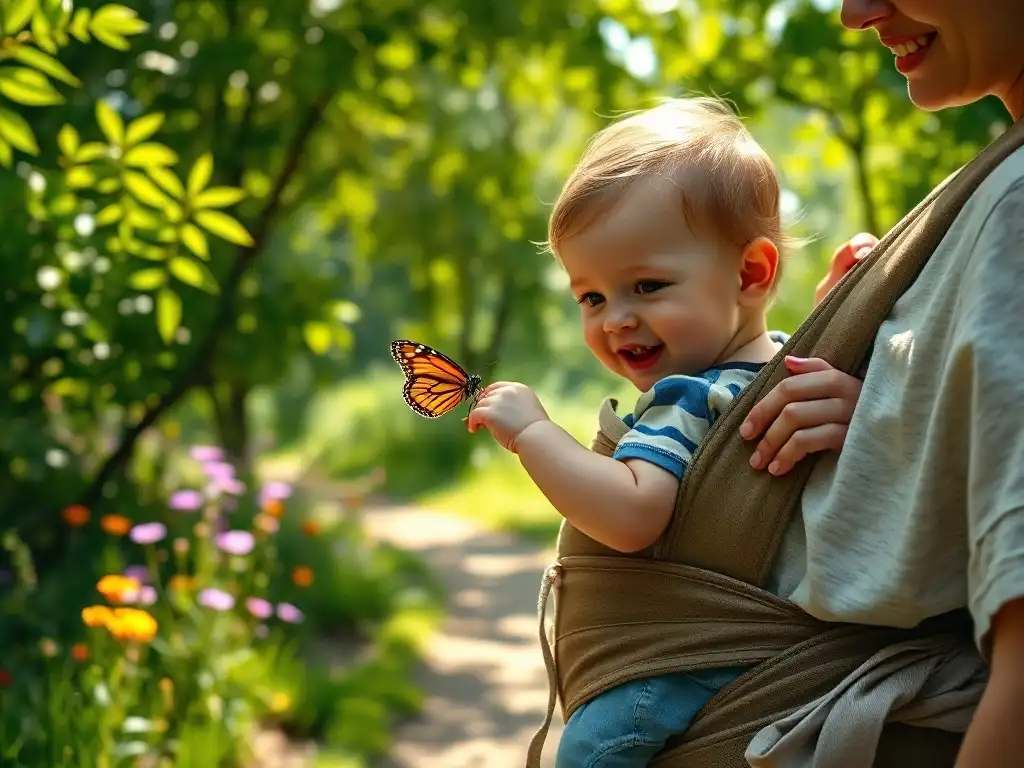
Nature walks offer a fantastic opportunity to enhance your baby's visual tracking skills in a dynamic and engaging way. The constantly shifting scenery—from swaying trees and fluttering leaves to colorful flowers and busy insects—provides a rich tapestry of visual stimuli. Remember to choose a safe and comfortable path, avoiding uneven terrain or potential hazards. The key is to keep the walk slow and relaxed, allowing your baby ample time to observe their surroundings.
For newborns and very young infants, shorter walks are ideal. Focus on holding them close, allowing them to take in the world from your arms. As they grow older and develop better head and neck control, you can use a stroller or carrier that allows for varied viewing angles. Point out interesting sights, using simple language like, "Look, a pretty bird!"
or "See the fluffy clouds?". This verbal accompaniment helps connect their visual experience with language development, further enriching the activity. Vary your routes to introduce new visual landscapes. A walk through a park with different textures and colors will provide a more stimulating experience than a repetitive walk down the same street.
Observe your baby's reactions; if they seem overwhelmed or tired, shorten the walk or take a break. Remember that consistency is key; regular nature walks will contribute significantly to their overall visual development and appreciation of the natural world. Consider incorporating different times of day to expose your baby to varying light conditions and shadows, further enhancing their visual perception. The gentle sounds of nature can also add a calming and enriching dimension to the experience, promoting a sense of wellbeing alongside visual stimulation.
Interactive Outdoor Toys: Engaging Visual Tracking Games
Interactive outdoor toys can transform simple visual tracking into a fun and engaging game. These toys should be brightly colored, have contrasting patterns, and ideally, make sounds or move in predictable ways. For example, a brightly colored ball gently rolled across the grass will encourage your baby to follow its movement with their eyes.
Similarly, a mobile hanging from a tree branch with various textured objects will engage their visual attention as it sways gently in the breeze. Remember to always supervise your baby closely while they are playing with these toys, ensuring their safety and preventing accidental ingestion of small parts.
Consider toys designed specifically for visual stimulation, such as rattles with contrasting colors and textures, or soft toys with different patterns and sounds. These toys can be used in a variety of ways. For example, you can gently move a rattle back and forth in front of your baby to help them track its movement. Or, you can hang a soft toy from a tree branch and let your baby reach for it, encouraging them to follow its movement.
The key is to make the activity playful and engaging, adapting it to your baby's developmental stage and interests. Remember that the goal is not to force your baby to engage, but rather to provide opportunities for them to explore and develop their visual skills at their own pace. Introducing different toys regularly keeps the activity fresh and prevents boredom.
Rotate toys every few weeks to maintain a stimulating visual environment and encourage their continued engagement. Observe their reactions and adjust the complexity of the activity accordingly; if they seem frustrated or uninterested, simplify the game or try a different toy. The consistent engagement with interactive outdoor toys significantly contributes to improved visual tracking and hand-eye coordination, vital aspects of your baby's overall development.
Safety Precautions for Outdoor Visual Development Activities
Engaging your baby in outdoor visual development activities is a fantastic way to stimulate their cognitive growth and enhance their sensory experiences. However, ensuring your little one's safety is paramount. This section outlines crucial safety measures to prioritize while enjoying these enriching experiences. Remember, a safe environment is the foundation for successful and enjoyable baby outdoor visual development.
Sun Protection for Sensitive Baby Skin
A baby's delicate skin is highly susceptible to sunburn. Even on slightly cloudy days, the sun's UV rays can cause damage. Therefore, sun protection should be a top priority when planning outdoor activities for visual development.
Protecting your baby from harmful UV rays requires a multi-pronged approach. Firstly, limit direct sun exposure, especially during peak hours (10 am to 4 pm). Opt for shaded areas, such as under a tree or an umbrella. Secondly, dress your baby in lightweight, loose-fitting clothing that covers their arms and legs. Look for clothing with a high Ultraviolet Protection Factor (UPF) rating for optimal protection.
Thirdly, apply a broad-spectrum, mineral-based sunscreen with an SPF of 30 or higher to all exposed skin areas, reapplying every two hours or after swimming. Remember to avoid applying sunscreen to the baby's eyes and mouth. Finally, consider using a hat with a wide brim to shade your baby's face and neck. Remember to check the label for specific age recommendations before using any sunscreen on your baby.
It's crucial to remember that even with these precautions, babies can still get sunburned. Monitor your baby for signs of sunburn, such as redness, swelling, or blisters. If you notice any signs of sunburn, move your baby to a shaded area, offer cool compresses, and consult your pediatrician if necessary. Consistent sun protection is key to safeguarding your baby's delicate skin during outdoor visual development activities. This proactive approach ensures your baby remains safe and comfortable while exploring the world around them.
Choosing Safe Outdoor Play Areas
Selecting a safe and suitable outdoor environment is crucial for your baby's safety and well-being during visual development activities. The area should be free from hazards and provide a stimulating yet secure space for exploration.
Several factors need careful consideration when choosing a play area. Firstly, avoid areas with heavy traffic, such as busy streets or parking lots. Secondly, inspect the ground for potential hazards, including sharp objects, uneven surfaces, animal droppings, and poisonous plants. Thirdly, ensure the area is free from standing water to minimize the risk of drowning or exposure to harmful bacteria.
Additionally, consider the presence of insects and other potential allergens. If you are concerned about insect bites, using insect repellent specifically designed for babies might be necessary. Finally, opt for areas with adequate shade to protect your baby from excessive sun exposure. A park with mature trees, or a shaded patio, can provide the ideal setting.
| Factor | Safe Choice | Unsafe Choice |
|---|---|---|
| Location | Quiet residential street, shaded park | Busy road, construction site |
| Ground Surface | Soft grass, sand | Concrete, gravel, uneven terrain |
| Hazards | None | Sharp objects, broken glass, standing water |
| Insect Protection | Insect repellent (baby-safe) | None (in areas with high insect activity) |
| Shade Availability | Ample shade provided | Direct, intense sunlight |
Remember, a well-chosen play area is the first step towards a safe and enjoyable outdoor visual development experience for your baby. Prioritizing safety minimizes risks and allows you to focus on the enriching interaction with your child.
Supervision and Constant Monitoring of Baby's Activities
Even in the safest environment, constant supervision is crucial. Never leave your baby unattended, even for a moment, during outdoor visual development activities. A baby's development is rapid, and their movements can be unpredictable. Maintaining close proximity and constant vigilance are essential to ensure their safety.
Active supervision means more than just being in the same area. It involves paying close attention to your baby's movements, actions, and reactions. Be aware of potential hazards that your baby might encounter, and intervene promptly if necessary. For example, if your baby is reaching for a potentially dangerous object, gently redirect their attention or remove the object. Furthermore, you should be prepared to respond quickly to unexpected situations, such as a fall or a sudden change in your baby’s behavior.
Remember, your baby's safety is your top priority. Consistent and attentive supervision ensures a safe and stimulating environment for visual development, allowing you to fully enjoy these precious moments together. This constant engagement builds a strong bond between you and your baby while promoting their healthy development.
Appropriate Clothing for Weather Conditions
Dressing your baby appropriately for the weather is crucial for their comfort and safety during outdoor visual development activities. Overheating can lead to discomfort and fussiness, hindering their engagement in the activities. Conversely, being too cold can make them irritable and susceptible to illness. Always check the weather forecast before heading out and dress your baby in layers. This allows you to easily adjust their clothing as the temperature fluctuates throughout the day.
For sunny days, a lightweight, breathable cotton onesie or outfit is ideal. Don't forget a wide-brimmed hat to protect their delicate skin from the sun's harmful UV rays. Consider using a high SPF sunscreen specifically formulated for babies, applying it liberally and reapplying as needed, especially after swimming or sweating. Remember, even on cloudy days, the sun's rays can still cause damage.
On cooler days, opt for layers such as a long-sleeved shirt, a light sweater or jacket, and warm pants or leggings. Avoid overly bulky clothing that restricts movement. Pay close attention to your baby's hands and feet, as these extremities tend to get cold more quickly. Mittens or booties can provide extra warmth, but ensure they are not too tight. If it's windy, a light windbreaker or a blanket can add an extra layer of protection.
In rainy weather, waterproof outerwear is essential to keep your baby dry and warm. Look for rain suits that are both waterproof and breathable to prevent overheating. Always ensure that your baby's clothes are dry before dressing them again, as damp clothing can lead to chills. Remember, regardless of the weather, always monitor your baby's body temperature to ensure their comfort and prevent overheating or chilling. A slightly warm body temperature is a sign that your baby is comfortable.
Sun Protection and Shade
Protecting your baby's eyes and skin from the sun is paramount during outdoor play, especially when focusing on visual development activities. The sun's harmful UV rays can damage their delicate skin and eyes, leading to sunburn, heatstroke, and long-term eye problems. Therefore, providing adequate shade is crucial.
Always choose a time of day when the sun is less intense, ideally early morning or late afternoon, to minimize sun exposure. Seek out shady areas under trees or use a stroller canopy or umbrella to provide protection from direct sunlight. Remember that even on cloudy days, the sun's rays can still penetrate and cause damage.
A wide-brimmed hat is an essential accessory to shield your baby's face, ears, and neck from the sun. Look for hats with a brim of at least 2-3 inches. Consider using sunglasses designed for babies, ensuring they are appropriately sized and offer adequate UV protection. These sunglasses will protect their eyes from the sun's glare and harmful UV rays.
Apply a high SPF sunscreen specifically formulated for babies, paying particular attention to exposed areas like their face, arms, and legs. Reapply the sunscreen frequently, especially after swimming or sweating. Regularly check your baby for signs of sunburn, such as redness, blistering, or swelling. If you notice any signs of sunburn, seek medical attention immediately.
Safe Surfaces and Environments
Choosing a safe and suitable environment is crucial for your baby’s outdoor visual development activities. The surface where your baby plays should be soft and even to prevent falls and injuries. Avoid hard surfaces like concrete or asphalt. Grass is a good option, as is soft sand or a cushioned play mat specifically designed for outdoor use.
The area should be free from hazards such as sharp objects, broken glass, or poisonous plants. Inspect the area carefully before letting your baby play, removing any potential dangers. If you're using a stroller or carrier, make sure the wheels are suitable for the terrain and that the surface is even to prevent tipping.
Keep the area clean and free from debris such as leaves, twigs, or stones that could pose a choking hazard for your baby. Be mindful of insects and other small creatures that could bite or sting your baby. Use insect repellent that is safe for babies, applying it according to the product instructions. Also, be aware of the potential for allergens in the environment, such as pollen or grass.
If your baby has known allergies, consult your pediatrician before exposing them to outdoor environments. Always supervise your baby closely during outdoor play to ensure their safety and well-being. Remember, a safe and controlled environment is crucial for a positive and enjoyable experience.
Monitoring Your Baby's Visual Development Progress
Tracking your baby's visual development is crucial for ensuring healthy growth. While shadow play is a fun outdoor activity to stimulate this development, understanding the typical milestones helps you gauge your baby's progress and identify any potential concerns early. Remember, every baby develops at their own pace, but recognizing general patterns is vital. This section focuses on how to monitor your little one's visual acuity and tracking abilities.
Recognizing Milestones in Visual Tracking
Visual tracking, the ability to follow a moving object with the eyes, is a key developmental milestone. Here's a timeline of typical visual tracking achievements in babies:
- Birth to 2 Months: Newborns have limited focus, typically only able to see objects within 8-12 inches. They may briefly follow a moving object, but their gaze is often unsteady. Expect them to react to bright lights and faces.
- 2 to 4 Months: Visual tracking improves significantly. Babies can now follow moving objects more smoothly and for longer periods. They start to show interest in patterns and bright colors.
- 4 to 6 Months: Depth perception begins to develop. Babies can now reach for objects and judge distances more accurately. They enjoy watching objects move across their field of vision.
- 6 to 12 Months: Visual tracking is well-established. Babies can follow fast-moving objects with ease and show a strong preference for faces and familiar objects. They can also track objects moving in all directions.
This table summarizes key milestones:
| Age Range | Visual Tracking Milestone | Other Developmental Indicators |
|---|---|---|
| Birth - 2 Months | Brief, unsteady following of moving objects; reacts to light and faces | Strong startle reflex; responds to sounds |
| 2 - 4 Months | Smoother, longer following of moving objects; interest in patterns | Head control improves; smiles socially |
| 4 - 6 Months | Developing depth perception; reaches for objects; enjoys watching moving objects | Rolls over; sits with support |
| 6 - 12 Months | Excellent visual tracking; follows fast-moving objects; preference for faces | Crawls; pulls to stand; may say first words |
Remember, these are just guidelines. Some babies may reach these milestones earlier or later than others. The key is to observe your baby's progress and note any significant deviations from the norm. Consistent monitoring is key for early intervention if needed. Enjoy the journey of watching your baby discover the world through their eyes! ✨
When to Consult a Pediatrician about Visual Development Concerns
While variations in developmental timing are normal, certain signs warrant a consultation with your pediatrician. These could indicate underlying visual problems requiring professional attention. Early detection is crucial for optimal visual development. Here are some red flags to watch out for:
- Persistent crossed eyes (strabismus): If your baby's eyes frequently cross or turn outwards, it's important to seek professional advice.
- Excessive eye rubbing: Constant rubbing of the eyes could indicate discomfort or irritation.
- Sensitivity to light: Unusual sensitivity or aversion to bright light might signal a problem.
- Lack of eye contact: While babies don't maintain eye contact consistently, a complete lack of it could be a concern.
- Difficulty following moving objects: Significant delays in tracking objects, even at an older age, should be investigated.
- Head tilting or squinting: These actions can indicate the baby is compensating for a vision problem.
Don't hesitate to contact your pediatrician if you have any concerns about your baby's visual development. Early intervention can often prevent long-term issues and ensure your child enjoys optimal vision. Early intervention is key for baby outdoor visual development.
Creating a Stimulating Home Environment to Complement Outdoor Activities
While outdoor activities like shadow play are fantastic for visual development, supplementing them with a stimulating home environment is equally important. This ensures continuous stimulation and reinforces the skills learned outdoors. Consider these enriching activities:
- High-contrast toys: Use toys with bold colors and patterns to capture your baby's attention. Black and white or high-contrast designs are particularly effective in the early months.
- Mobile with moving parts: A mobile above the crib can help track moving objects.
- Mirrors: Babies are fascinated by their reflections. A safe mirror can provide hours of engaging visual exploration.
- Sensory bins: Fill containers with safe, textured objects for tactile and visual exploration.
Remember, creating a stimulating and enriching environment supports your baby's overall development, complementing the benefits of outdoor play. A balanced approach ensures comprehensive development and lays a strong foundation for future learning and exploration. This holistic approach is key to supporting baby outdoor visual development.
Beyond Visual Tracking: Other Benefits of Outdoor Play for Babies
Outdoor play isn't just about enhancing your baby's visual tracking; it's a holistic developmental booster, impacting various aspects of their growth. While shadow play specifically targets visual development, the broader context of outdoor time offers a wealth of additional benefits. Engaging your little one in outdoor activities contributes significantly to their physical, cognitive, and social-emotional well-being. This section delves into these crucial benefits, providing a more comprehensive understanding of why outdoor time is so vital for your baby's development.
Improved Motor Skills Development Through Outdoor Activities
Outdoor environments provide unparalleled opportunities for babies to develop their motor skills. The varied terrains, from soft grass to slightly uneven pathways, challenge their balance and coordination. Simple activities like crawling on a blanket spread on the lawn, reaching for dangling toys suspended from a tree branch, or even kicking their legs while lying on their back in the sun, significantly contribute to gross motor skill development. This enhanced physical activity helps strengthen muscles, improve balance, and refine their overall body control.
Think of it this way: a baby learning to crawl indoors on a flat surface is working with a limited set of challenges. Outdoors, they encounter different textures, inclines, and obstacles, forcing them to adapt and refine their movements. This adaptive learning process is crucial for developing strong, coordinated movements. Even seemingly small actions, like reaching for a brightly colored leaf, strengthen their hand-eye coordination and fine motor skills. Consider these examples:
- Crawling on grass: Improves leg strength and coordination, while also introducing varied tactile sensations.
- Pushing a toy along the ground: Strengthens upper body muscles and enhances hand-eye coordination.
- Reaching for hanging toys: Improves arm strength and hand-eye coordination, while also encouraging spatial awareness.
The benefits extend beyond just the physical; improved motor skills also lay the groundwork for future developmental milestones, such as walking and running. The more varied and engaging the outdoor activities, the faster the development of these essential skills.
Sensory Stimulation and Cognitive Development
Outdoor play is a sensory feast for babies. The sights, sounds, smells, and textures of the natural world provide a rich tapestry of sensory stimulation that significantly impacts cognitive development. The varied stimuli help babies process information, improve their attention spans, and develop problem-solving skills. The dynamic environment constantly presents new challenges and learning opportunities.
Consider the following:
- Visual stimulation: Sunlight filtering through leaves, the movement of clouds, the vibrant colors of flowers – all contribute to visual acuity and depth perception.
- Auditory stimulation: The chirping of birds, the rustling of leaves, and the gentle breeze – these sounds stimulate auditory processing and language development.
- Tactile stimulation: The textures of grass, sand, and leaves provide a rich tactile experience, enhancing sensory exploration and fine motor skills.
- Olfactory stimulation: The smells of flowers, grass, and soil stimulate the olfactory system, contributing to a richer sensory experience.
This rich sensory input isn't just entertaining; it's crucial for brain development. Studies have shown a strong correlation between sensory experiences in early childhood and enhanced cognitive abilities later in life. By providing diverse sensory experiences through outdoor play, you're actively contributing to your baby's cognitive growth and development. This stimulating environment helps them learn to process information, solve problems, and build a stronger foundation for future learning.
While often overlooked, the social and emotional benefits of outdoor play are equally significant for baby's development. Being outdoors provides opportunities for interaction with caregivers and, as they grow older, with other children. These interactions are crucial for developing social skills, emotional regulation, and self-confidence.
The sense of freedom and exploration associated with outdoor play fosters independence and self-reliance. The feeling of accomplishment from mastering a new skill, like crawling across a grassy patch, boosts their self-esteem. Furthermore, the calming effect of nature can help reduce stress and anxiety, promoting emotional well-being.
The social aspect is equally important. Even simple interactions with caregivers during outdoor activities, like pointing out interesting sights or sounds, strengthen the bond and foster communication. As your baby grows, outdoor play provides opportunities for interaction with other children, teaching them valuable social skills like sharing and cooperation.
These social interactions are essential for developing empathy, understanding social cues, and building healthy relationships. Providing opportunities for social interaction through outdoor play contributes to your child's healthy emotional and social development. The combination of physical activity, sensory stimulation, and social interaction makes outdoor play an invaluable tool for fostering a well-rounded and thriving baby.
Frequently Asked Questions
How does outdoor play benefit my baby's visual development?
Outdoor play provides rich visual stimulation, exposing your baby to varied colors, shapes, sizes, and movement, which aids in the development of visual tracking and depth perception. The natural light also helps.
What are some suitable outdoor activities for improving my baby's visual tracking?
Shadow play is excellent! Try hanging mobiles with contrasting colors or moving objects slowly across their field of vision. Nature walks also offer lots of visual stimuli.
At what age can I start engaging my baby in these outdoor visual activities?
You can begin introducing simple activities from around 2 months old, focusing on high-contrast objects and slow movements. Always supervise closely.
How long should these outdoor visual sessions last?
Keep sessions short and sweet, initially around 5-10 minutes, gradually increasing as your baby's attention span grows. Observe for signs of fatigue.
Are there any safety precautions I should take when engaging my baby in outdoor visual activities?
Always ensure direct sunlight is avoided to protect your baby's eyes. Use age-appropriate toys and keep a close eye on your baby to prevent accidents. Apply sun protection as needed.
Final Reflection: Cultivating Wonder: The Power of Outdoor Play for Baby's Vision
The simple act of playing outdoors significantly impacts a baby's visual development, shaping their perception of the world and laying the foundation for a lifetime of learning. We've explored how engaging with shadows, sunlight, and natural textures stimulates crucial visual tracking skills, fostering cognitive growth and a deep connection with their environment. This isn't just about improving eyesight; it's about nurturing a child's innate curiosity and fostering a love for the natural world.
The impact of early childhood experiences on visual development, and indeed on overall development, is profound and lasting. It's a privilege to witness the wonder in a baby's eyes as they track a dancing shadow or reach for a brightly colored leaf. This simple act of observation, this engagement with the world around them, is a powerful testament to the importance of providing enriching sensory experiences. The greatest discovery of all time is that a person can change his future by merely changing his attitude.
– Oprah Winfrey. This rings true for the development of our children; by actively shaping their environment, we can positively influence their future.
Now, consider your own role in fostering your baby's visual development. What simple outdoor activities can you incorporate into your daily routine? Think beyond structured playgroups; consider the magic of a simple walk in the park, the fascination of watching clouds drift by, or the joy of exploring textures in your garden. Embrace the power of nature, and watch as your baby's world expands, one shadow, one sunbeam, one playful interaction at a time. Let's create a world where every baby has the opportunity to thrive, visually and beyond.
Unleash Your Little One's Inner Explorer!
Thank you for exploring fun ways to boost your baby's visual development! We hope you found inspiring ideas to nurture their growing understanding of the world. Now it's time to put those ideas into action.
- Create a shadow puppet show! Gather a flashlight and your hands (or some simple cutouts) and let the playful shadows dance across the wall. This is a great way to encourage their eye-tracking skills.
- Enjoy shadow play outdoors! Take your shadow play outside for a change of scenery and let your baby follow the shadows' movements in natural light. This adds a new dimension to the activity.
- Share your creativity! Let us know in the comments what creative shadow puppets you and your baby create. We'd love to hear about your experiences!
What exciting shadow adventures will you and your baby share today?